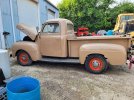
Classic cars- original or build

Didn't flat heads have cooling issues? I'm big into "living history", so i'm in the restoration camp - although I'm not super against swapping an engine to correct design issues from the original model.

Also - if you're looking to get rid of it... I may be interested. I may also just kick the tires. Was looking at these a while back on a whim and had some ideas.

edit: I don't know why I read it as you were looking to get rid of it. Other than I have been drinking...
Wishful thinking! It's not a high dollar classic. And I probably wouldn't seek one out other than the sentimental value. Some of the resto mods look really sharp. But I'm not sure I'd be up for that. Ill think I'll keep it original as I can. A new interior is probably in order. The bright red wheels gotta go too. But bigger fish to fry.

Gotta wrap up the garage apartment, then I can get this over and see what i can do.
 
The red rims actually look good with the stock two peice hub caps… mini chrome moon covers over the inside and a chrome ring on the outside..just saying..
 
Answer: it depends. Is the vehicle already in pristine, original condition? Is the vehicle worth more in that condition due to rarity? Most of the muscle cars I'd be inclined to resto-mod them, better electronic ignition, better suspension, moderate engine work, etc. I don't care for 20" wheels, widebody kits, or anything else that bastardizes what the overall car looks like. If this is a vintage 1960s Ferrari or Porsche, I'd be more inclined to leave it stock.

In the case of a 1953 F100, I always think they look pretty cool when lowered a bit and painted up with a wood bed. You can freshen up the flathead V8, but I'd probably just toss a stroked 302/351W in there and a decent auto trans and have a fun street truck.

1761625432098.png
 
You can also upgrade the important stuff, like brakes and seat belts, and leave the other stuff for later. I like original, but safe.
 
Nice thing about vehicles that old, run a fused hot wire with a switch to the coil and a new set of points and your engine electrical is done. Put on a one wire delco remy alternator and your charging system is done, then you only have to worry about your lights if you plan on driving at night, (blinkers were not required until ‘54).
Remember now: Those old vehicles were 6-volt systems. Where will you find a 6-volt alternator? Cars were already 12-volt long before alternators showed up.

When I did my '51 International, I wanted it looking sort of like a tradesman's work truck, but it also had to be practical and safe. The whole electrical system except for the instruments was converted to 12 volt. I put a Ford 300 inline 6 in in it, which already had the 12V alternator and starter and ignition. 12 volt lights throughout, converting the front park lights to a dual-filament bulb socket for turn signals. The rear lights were just off the shelf trailer lights. I found a turn signal switch from an old conversion kit, and built a turn signal system, complete with a relay to fire 4-way flashers. For the coolant temp and fuel level gauges, which ran on 7 volts (nominal 6-volt charging value) I built a regulator using an LM117T chip and a couple of resistors to feed them the 7 volts. The oil pressure was mechanical, the ammeter did not care what the voltage was, only the amperage passing through it.

I installed seat belts and shoulder harnesses. I installed a dual brake master cylinder from a Dodge van and had a dual braking system.

The Ford's 3-speed transmission used a much different shifting affair than the International's so I built that too. Used the original shift lever and column.

The three-on-the-tree was fun. Once in a while I'd give flight students a ride back to campus if I was going into town, and their reactions were priceless. One day I shifted from first to second, and the student said, "What did you just do??" He thought I had changed from Drive to Reverse!

They also thought the vacuum-powered wipers were hilarious.

 
IMHO restomods are overdone and lack character to a certain degree. However...if you wanted to go through the headache of swapping the drivetrain out for something more modern I wouldn't blame you, just leave the rest of the vehicle (like the interior) original.

Can't stand seeing digital dashes in old vehicles. Every older vehicle I've owned I've swapped back or sourced original replacements for radios, interior panels, etc. I want the old school feel of what it was like to drive the car when it was new.
 
That’s in a lot better condition than I was envisioning! Make it mechanically sound (stock) and drive it. It’s already ready. (I can see why somebody would bought it and stored it in a shed letting it appreciate in value)
 
Yeah that truck looks to be in solid shape.
Make it safe to drive and get your Grand Mother in it for a ride.
Then decide what you want to do with it...Parades, car shows, family gatherings come to mind.
That's nice!
 
Last edited:
Rat rods should use replica kits and originals should stay original.

Most popular 'classics' have a plethora of reproduction parts. My G503 used replica parts because I was never gonna spend the time and money to go 'factory original'.
 

I would put on a set of these and call it done. That will tone down the red wheels then the red accents with the trim script (plus it should have them already).
 
Do you trust 20+ year old rubbers?
I actually would, but not those tires on the truck. They show indicators of sitting flat for a long time. They’d probably hold air and stay together but they’ll be so flatspotted that it’ll shake your tooth fillings out if you drive it fast.
 
I think those red wheels look just fine. Besides some percentage of the population is colorblind.

As far as the tires go, 20 years is nothing. I wouldn’t drive it on the interstate, but I wouldn’t hesitate any 35 mph zone to get to the local burger joint. It’s a cruiser.
 
I think those red wheels look just fine. Besides some percentage of the population is colorblind.

As far as the tires go, 20 years is nothing. I wouldn’t drive it on the interstate, but I wouldn’t hesitate any 35 mph zone to get to the local burger joint. It’s a cruiser.
Both my dad and sister are colorblind. My sister found out in high school and was devastated.

I say 20+ years old since that's how long its been sitting since he had it. No clue how old they actually are. Not worth chancing it and having one come apart and dealing with the hassle. Or potential damage
 
If it is complete and all together then I'd be inclined to keep it original. If it is not complete or otherwise not together, then modify it as necessary to make it your own.
 
“Imaginary Farms”?


<—-guy with a toolbox in the back of his ‘92 F150 and lives in the ‘burbs.
 
Just put the engine back in my great grandfathers 52 F1. Stuck with the 215 straight 6 but converted to 12 volt and electronic ignition. Pulled it out of the garage on our KY farm. It’s been there since 66.

CgIbsv8.jpeg


No patina added

1q5zOwm.jpeg
 
That’s in a lot better condition than I was envisioning! Make it mechanically sound (stock) and drive it. It’s already ready. (I can see why somebody would bought it and stored it in a shed letting it appreciate in value)
Agreed. I figured we were dealing with more damage and rust/bad paint. This is a good candidate to just update some tires and clean it up a bit. Aside from converting to 12V, I'd just run the flathead in it and cruise down main street in style.
 
And a very cool farm truck!
Not yet. Gotta figure out how to get it from grandpa's shop to my garage without grandma knowing and spoiling the surprise. That also means moving a ton of my uncle's **** to move grandpa's **** to get the truck on a trailer. Hoarders man.
 
Drive it? Seriously if it drove into the shed and the engine is not locked up, it shouldn’t take very much to “fairy” it home.
 
Drive it? Seriously if it drove into the shed and the engine is not locked up, it shouldn’t take very much to “fairy” it home.
The shop is right in front of the house. I'd like to be a bit covert and have it be a surprise it's all fixed up before she even knows it's gone.
 
Having an active “apiary” with receipts to show even a dollar of profit a year can often reduce property tax significantly (reclassified as agricultural instead of residential, and the tax basis is very different).
 
Back
Top