
Cherokee down, MD 6/20/2026 - 3 Fatalities

Baked Potato

Pattern Altitude
Joined
Jul 31, 2022
Messages
1,658
Display Name
Baked Potato
Reported three dead near Bowie MD, en route to KGAI. I see one social media post that states it was N249WF, which is listed on the WIFA website as one of their trainers based at GAI.

Somewhat unrelated, but there is a pretty inconvenient TFR all weekend that just skirts GAI but seems to allow landing there while avoiding it.


Track log shows a slow descent over a couple of minutes (nowhere near GAI, though in the vicinity of W00). Loss of power, or an attempt to get to W00? I have not tried to look this up on LiveATC.
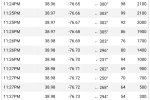
Screenshot_20260621-102718.png
 
Last edited:
Impact at 11:35 per iphone. Dozed off, and wandered? woke, noted bad heading, but missed altitude? OTH airspeed falling with descending...the wander nay have resulted from loss of power and trying to get restarted with fuel selector changes.
 
Note that ASN currently lists N8445S as the accident aircraft, which I think is incorrect. While N8445S is also a WIFA PA-28, it landed successfully at KGAI about 15 minutes after N249WF crashed.
 
this happened inside the SFRA so there will be an ATC recording
 
Note that ASN currently lists N8445S as the accident aircraft, which I think is incorrect. While N8445S is also a WIFA PA-28, it landed successfully at KGAI about 15 minutes after N249WF crashed.
That is incorrect. It was N249WF
 
132.775 (SFRA East) is not covered by LiveATC. However, listening to PCT on 124.55 you can hear the ATC side of the conversation on the 0300Z and 0330Z audio files.

Appears N8445S and N249WF were operating with the latter about 10 miles in trail of the former.

ATC scolds both aircraft for talking over each other but clears both into the SFRA around 0308Z.

Both Cherokees are called as traffic to a medical helicopter transiting SW to NE.

Around 0326Z, ATC queries 9WF if he requires assistance. Appears 9WF wants to land (divert?) at Freeway as ATC calls Freeway at 11 o’clock and 3 miles.

ATC queries 9WF at 0328Z with no apparent response (query is repeated).

By 0332Z, Arundel 1 (N911AP/B407) is vectored to location where radar contact lost. Arundel 1 was already up operating unrelated to 9WF. Unclear if Arundel 1 response is due to ATC loss of radar contact or in response to iPhone crash alert.

Arundel 1 orbits in the general area of the crash, making at least two passes directly over the now-known crash location at 0338Z and 0339Z. Unknown if 9WF crash location observed at this time.

Apparently N8445S requests to backtrack to help with 9WF search but PCT says no, stay clear of on-station LEO helicopter. Advises 45S to proceed to destination (KGAI) and pass along information via phone upon landing.
 
More accurately the plane apparently was an Archer II, not a Cherokee. It's quite similar to the Cherokee 180 however.
 
More accurately the plane apparently was an Archer II, not a Cherokee. It's quite similar to the Cherokee 180 however.
A PA-28-anything is more safely called a Cherokee (at least the news didn't report it as a Cub). In fact, the official marketing name of hte PA-28-181 is the "Cherokee Archer II."
 
Last edited:
Hope it's not another wing spar thing.
 
Hope it's not another wing spar thing.
I don't think the track supports that. Looks to me like they tried to divert to W00 and either didn't make it due to lack of power or lost SA trying to find it
 
In fact, the official marketing name of hte PA-28-181 is the "Cherokee Archer II."
I may be wrong, but I believe the PA-28-180 latter year models were the Cherokee Archer, due to its Hershey bar wing. The -181 is the Archer exclusively with the tapered wing. I could be mistaken.
 
I may be wrong, but I believe the PA-28-180 latter year models were the Cherokee Archer, due to its Hershey bar wing. The -181 is the Archer exclusively with the tapered wing. I could be mistaken.
Somewhat correct.

The original 180HP to the Cherokees was a PA-28-180B branded the Cherokee 180, roughly around 1962. This continued through the C, D, E, F, and G through 1972. These all had the Lycoming O-360-A3A engine.

In 1974, they switched to the O-360-A4A and added the "Cherokee Archer" designation.

In 1974, they tranitioned to the tapered wing and all the models got the 1 andded to their "HP" designation. This is also when the 150HP was branded the Warrior and the 160HP a few years later the Warrior II. In 1976 the 180HP PA-28-181 Cherokee Archer II was released.

In 1994, there was the Archer III (no Cherokee in the name) that had a number of changes (28V electrical, new windows and cowling, new instrument panel, higher gross weight).

Then there were a few oddballs. There was a diesel powered Archer DX and DLZX and the stripped down Pilot 100/100i models (which is still produced today).
 
Somewhat correct.

The original 180HP to the Cherokees was a PA-28-180B branded the Cherokee 180, roughly around 1962. This continued through the C, D, E, F, and G through 1972. These all had the Lycoming O-360-A3A engine.

In 1974, they switched to the O-360-A4A and added the "Cherokee Archer" designation.
I have a 1966 PA-28-180C with a Lycoming O-360-A4A as the original engine.
 
These things are like tractors… don’t exactly follow a script very well. Seems to be at the whim of the floor manager that day…
 
Local news reports showing heavy equipment entering woods in the back parking lot of Rita’s to recover wreckage. While heavily wooded, this area is only 200 ft wide from that back parking lot to the back yards of the adjacent townhomes. Crash location is about 250 ft from last ADS-B position. Despite these relatively small distances and immediate commencement of emergency response, it still took 4 hrs to locate the wreckage.

Reminds me of the 2008 crash of MSP’s Trooper 2 (N92MD) in Walker Mill Park. Took 2 hrs to locate that wreckage (and 1 survivor) despite having good radar, ADS-B, and cell phone ping data.
 
Somewhat correct.

The original 180HP to the Cherokees was a PA-28-180B branded the Cherokee 180, roughly around 1962. This continued through the C, D, E, F, and G through 1972. These all had the Lycoming O-360-A3A engine.

In 1974, they switched to the O-360-A4A and added the "Cherokee Archer" designation.

In 1974, they tranitioned to the tapered wing and all the models got the 1 andded to their "HP" designation. This is also when the 150HP was branded the Warrior and the 160HP a few years later the Warrior II. In 1976 the 180HP PA-28-181 Cherokee Archer II was released.

In 1994, there was the Archer III (no Cherokee in the name) that had a number of changes (28V electrical, new windows and cowling, new instrument panel, higher gross weight).

Then there were a few oddballs. There was a diesel powered Archer DX and DLZX and the stripped down Pilot 100/100i models (which is still produced today).
All correct with one exception. The first "Archer 1" was the "Challenger" in 1973. It's identical to the 74 Archer, just a different name.

EDIT - Actually two exceptions. The Challenger (Archer 1) was the first one with the extended cabin that allowed actual adults with legs to sit in the back seat. :).
 
Last edited:
Somewhat correct.

The original 180HP to the Cherokees was a PA-28-180B branded the Cherokee 180, roughly around 1962. This continued through the C, D, E, F, and G through 1972. These all had the Lycoming O-360-A3A engine.

In 1974, they switched to the O-360-A4A and added the "Cherokee Archer" designation.

In 1974, they tranitioned to the tapered wing and all the models got the 1 andded to their "HP" designation. This is also when the 150HP was branded the Warrior and the 160HP a few years later the Warrior II. In 1976 the 180HP PA-28-181 Cherokee Archer II was released.

In 1994, there was the Archer III (no Cherokee in the name) that had a number of changes (28V electrical, new windows and cowling, new instrument panel, higher gross weight).

Then there were a few oddballs. There was a diesel powered Archer DX and DLZX and the stripped down Pilot 100/100i models (which is still produced today).
I miss pilawt.
 
Maryland State Police reporting that the two passengers were student pilots and that the aircraft may have been participating in a “training exercise.” Other sources note that the pilot received his PPL less than 3 weeks prior to the accident.

Still puzzled how the police helicopter did not pick up a thermal signature as it passed over the crash site multiple times, minutes after the crash.
 
I do not think that all of our State Police helicopters have thermal imaging equipment.

The wreckage was spread out over a hundred feet, and on the ground under fully leafed out trees, which would have absorbed most of the thermal energy.

If fuel exhaustion was the cause, he engine would have cooled significantly during the glide.

It is a real shame they did not put it down on Rt 50, or 301, both multi lane, and at that hour, traffic should have been moderate. The clover leaf has good lighting, and portions are 4 lanes wide.
 
Reminds me of the 2008 crash of MSP’s Trooper 2 (N92MD) in Walker Mill Park. Took 2 hrs to locate that wreckage (and 1 survivor) despite having good radar, ADS-B, and cell phone ping data.
It took close to ten hours to find the crash site of the MSP helicopter in 1986 and it crashed in the middle of Baltimore City. I was a newly minted paramedic when that happen. My Lieutenant was part of the team that found them. Of course, while I had a cell phone at that point, they were pretty rare at the time. Weahter was crap however (contributed to the crash).
 
It is a real shame they did not put it down on Rt 50, or 301, both multi lane, and at that hour, traffic should have been moderate. The clover leaf has good lighting, and portions are 4 lanes wide.
Looks like they were well north of US-50 when they started the diversion which was about even with Brandywine Auto Parts (junkyard) when and then flew across MD Route 3 (Crane Highway). Other than the highway and some ball fields at White Marsh Park, it was pretty heavily wooded. They almost made it to the Bowie Marketplace (old Belair Shopping Center). Oddly, they had not turned direct toward Freeway.
 
Oh this is right near me. 2 passengers at 9:30 pm less than three weeks later after getting PPL? No way I'd do that, personally.
 
Preliminary Report for N249WF

While receiving flight-following services, the pilot transmitted a partially unintelligible radio call, stating that he was near Fort Meade. The pilot subsequently selected transponder code 7700, and when asked by ATC if he needed assistance, he stated that he wanted to proceed to Freeway Airport (W00), Bowie, Maryland. ATC gave radar vectors to Freeway Airport and asked if he had the airport in sight. The pilot's last transmission was that he did not have the airport in sight. No further radio transmissions were received, and radar contact was lost.
 
Another interesting thing:

According to preliminary Automatic Dependent Surveillance-Broadcast (ADS-B) data, the airplane departed Montgomery County Airpark (GAI), Gaithersburg, Maryland, about 1630 and flew to Ocean City Municipal Airport (26N), Ocean City, New Jersey, where it landed about 1741. The airplane later departed 26N about 2128 and conducted three touch-and-go landings before landing again about 2144. It subsequently departed about 2210 for the return flight to GAI.

Were those stop-and-goes instead of touch-and-goes? I'm guessing the pilot was establishing night currency before taking the passengers up.
 
Another interesting thing:


Were those stop-and-goes instead of touch-and-goes? I'm guessing the pilot was establishing night currency before taking the passengers up.
Could easily be; I've done exactly that (and to a full stop, not to a "rural stop sign stop".)
 
My personal opinion on that: if you have to do three takeoffs and landings to regain currency just before picking up passengers, you shouldn't fly with passengers.
Currency versus proficiency, I guess. I've done it, usually the day before, if I don't remember any recent night ops. I didn't even look at the log, I just did some laps.
 
My personal opinion on that: if you have to do three takeoffs and landings to regain currency just before picking up passengers, you shouldn't fly with passengers.
Night at my home airport, for passenger purposes, is 10:52 pm until 5:03 am today. I am virtually never night current in the summer. What should a pilot in my situation do before flying with passengers at night in the late fall when night means more like 7:00 pm until 9:00 am?

If getting current before taking passengers somewhere at night was this person’s mission, I don’t think that the need to do so proves lack of proficiency. It does prove some degree of respect for the FARs, certainly more than a lot of pilots have.
 
What should a pilot in my situation do before flying with passengers at night in the late fall when night means more like 7:00 pm until 9:00 am?
Not fly pax at night until you've done a lot more than three take-offs and landings. Or plan on staying up late a few summer nights to retain proficiency.

I might not aim for a "currency" flight in July (I'll still fly qualifying night time), but I will absolutely plan on flying in early June and and mid-late August at a time that satisfies the requirement and keeps the skills in good shape.

We all beat the drum on being a safe instrument pilot and not attempting serious IFR if all we've done is the minimum number of approaches in the previous six months. Night flying should be no different.
 
Not fly pax at night until you've done a lot more than three take-offs and landings.
How many more, and within how many days before taking passengers? Do you have hard personal minimum numbers for night currency?

It is possible to be current but not proficient. But it is also possible to be proficient but not current. And you can maintain currency with passengers but not regain it. So, if you have lost your currency, you first decide if you have enough residual proficiency to regain it without an instructor and then, based on how you did on your currency-restoring takeoffs and landings, you decide how much more practice you need before risking passengers’ lives.

At least that’s my MO because I don’t think drawing a numerical line in the sand will get me better results than the legal minimums. I flew very little last winter, for example, and as a result I will probably end up flying substantially more than 3 laps around the pattern before I feel comfortable taking my family on their next night flight. But there are times when I am only 1 takeoff short and don’t need to fly patterns all through the night to demonstrate to myself that I am ready for passengers.

I also don’t generally feel qualified to judge others for having their own safety calculus, as long as it fits within the FARs. As I alluded to above, people who follow the rules are at least slightly more likely to also think about safety before they fly. And the best thing about POA is learning how others approach safe flying and occasionally adding to our own skills as a result.
 
Night at my home airport, for passenger purposes, is 10:52 pm until 5:03 am today. I am virtually never night current in the summer. What should a pilot in my situation do before flying with passengers at night in the late fall when night means more like 7:00 pm until 9:00 am?

If getting current before taking passengers somewhere at night was this person’s mission, I don’t think that the need to do so proves lack of proficiency. It does prove some degree of respect for the FARs, certainly more than a lot of pilots have.
I am in the same situation re: night currency. I have plenty of cross country flights in my logbook with night hours that don't legally count toward currency because the takeoff was earlier than 1 hr after sunset.

Not fly pax at night until you've done a lot more than three take-offs and landings. Or plan on staying up late a few summer nights to retain proficiency.

I might not aim for a "currency" flight in July (I'll still fly qualifying night time), but I will absolutely plan on flying in early June and and mid-late August at a time that satisfies the requirement and keeps the skills in good shape.

We all beat the drum on being a safe instrument pilot and not attempting serious IFR if all we've done is the minimum number of approaches in the previous six months. Night flying should be no different.
I think you are making a lot of assumptions / judgments here. In my experience, it can be easy to maintain proficiency in night flight yet struggle to maintain legal night currency for passengers.

Several times, I have flown with a passenger to dinner somewhere, then had to go do three stop-and-goes before bringing them home, even though I had hours of night flight and multiple night landings in the last 90 days, simply because I didn't have the night takeoffs. For instance, sunset time today where I live is 8:25 pm. It's unlikely that I will start a flight at 9:30pm, but it's not uncommon that I might start a 3 hr flight at 7 or 8pm. At the end of such a flight, if I don't expect to carry passengers at night anytime soon, I might taxi back to the hangar and put it away. If I think I might want to take a passenger, then I might take advantage of having the plane out at night to knock out a quick 3 stop-and-goes to be legal.

I live in a flat, urban location where problems with cumulogranite and black hole effect are minimal. I am also instrument rated and proficient. I do not believe I am being unserious about safety or am otherwise being irresponsible in how I manage my night passenger currency.
 
Last edited:
I am in the same situation re: night currency. I have plenty of cross country flights in my logbook with night hours that don't legally count toward currency because the takeoff was earlier than 1 hr after sunset.
Same. I definitely have more night landings than takeoffs. I just checked my logbook to be sure. Yes, I log night takeoffs. Yes, I know that’s a little strange. My ratio is 159:114. So, at least 45 times, I have taken off during the day and landed at night.

Edit: I don’t log day takeoffs. So there is actually a chance that, at some point, another pilot did the takeoff and I landed at night. But if that ever happened, I don’t remember it and it is surely not common. So I stand by my count of 45, even though it is technically possible that the total is less. I probably won’t go through the logbook itself to verify. Probably.
 
Last edited:
Night currency sucks in the summer. My home airport especially. The last time I landed at night one side of the edge lights that are 40 yards off the runway edge were out. Runway only 40' wide. No approach slope lighting ever since the trip color vasi became inop years ago. Real fun as a student. Especially with deer around.
 
But it is also possible to be proficient but not current.
QFT. Which the FAA apparently knows because it requires what it requires.

I'm actually out of currency for carrying passengers even though I fly almost every week. I'll have no qualms about my proficiency after three quick takeoffs and landings this weekend.
 
More accurately the plane apparently was an Archer II, not a Cherokee. It's quite similar to the Cherokee 180 however.
Out of 10 pilots chosen at random, how many could tell the difference at 50 feet? 5 feet?
 
He was following the magenta line, most likely.
Young confident buck. Night, with passengers.
"How hard could it be?"
 
Stop and goes on a 2900' runway? I guess it's possible but I wouldn't. But I also wouldn't have done a night XC with two pax two weeks after I got my PPL so who knows.
 
All correct with one exception. The first "Archer 1" was the "Challenger" in 1973. It's identical to the 74 Archer, just a different name.

EDIT - Actually two exceptions. The Challenger (Archer 1) was the first one with the extended cabin that allowed actual adults with legs to sit in the back seat. :).
And the ‘73 Challenger has the Hershey Bar wing. Great airplane. I own one.
 
The 7700 squawk stands out to me more than 3 prior to/landings that may or may not have been needed for currency. They clearly must have known there was something wrong. I see no mention of a fire, running out of fuel seems like a possibility.
 
Back
Top