
francisco collazos
Line Up and Wait
- Joined
- Jun 11, 2021
- Messages
- 650
- Display Name
- ciscovet
Well if crashing into something doesn't do you in, the subsequent fire will.I'm talking about vertical structures, building, bridges etc.

Well if crashing into something doesn't do you in, the subsequent fire will.I'm talking about vertical structures, building, bridges etc.


Yeah I know we have the benefit of hindsight and the ultimate outcome, but if i had enough control to move the plane towards water, it's probably the last thing I'd consider.

At landing speeds, water is a pretty solid object.
Has to be the rudder trim? No? What force would it take to hold the rudder full deflection in flight with a centered trim tab?
Yes so jammed somehow.But even with the trim stuck hard over, surely two grown men pushing with both legs would be able to overpower it?

I've not been able to clearly view a video frame that reveals the amount of rudder deflection during flight compared to photos or maintenance manual illustrations that depict a fully hard over to the stops position. In other words, how bad was it?best data point I've seen yet (it's amazing how much cameras there are in this world now, wild). Skid is obvious, rudder surface deflection, no apparent (to me) presence of external lock, able to maintain wings level at high enough speed. I'm assuming cables control the 310 rudder? Some redditors suggest cables jumping the pulley, or things backing out jamming the thing? It's clear to me that a locked center rudder in the 310 with engines operating would be perfectly landable. This is not that, appears a jammed while deflected control situation.
Combined with the pilot's apparent inability to raise the gear, does that indicate a mechanical failure which locked the rudder in deflection and also prohibited gear retraction? I'm not aware of a condition that would cause that, but I'm not sufficiently knowledgeable about the gear and rudder mechanical interactions on twin Cessna aircraft either. Unfortunately, the post crash fire likely destroyed any pertinent evidence.
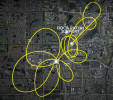
Yeah I know we have the benefit of hindsight and the ultimate outcome, but if i had enough control to move the plane towards water, it's probably the last thing I'd consider.


How many pilots look back at the rudder during the "Controls Free and Clear" check?One theory that crossed my mind, what if it wasn't jammed but simply reversed, coming out of recent MX and all.
WHen I was training (need to get that started back up) I was very deliberate in my control checks. Each control surface had eyes on it to see correct movementHow many pilots look back at the rudder during the "Controls Free and Clear" check?
How many pilots look back at the rudder during the "Controls Free and Clear" check?
I sometimes try to spot the shadow, but generally I accept "pedals free and clear" as good enough. With a taildragger, any control discontinuity would manifest itself as an inability to turn during ground ops. Obviously with a nose wheel aircraft it is a different story.How many pilots look back at the rudder during the "Controls Free and Clear" check?


Like the Cessna singles that the control lock covers the mag/start switch.Ed,
I’d offer an amendment; gust locks *that allow you taxi and takeoff while in place” are stupid.
Designing a gust lock that makes it impossible to start the aircraft while in place avoids all the “was it on the checklist” or “did they use the checklist” debate.
Spoke to a friend who was on the ground and talking to him on the radio. It was not a gust lock. Big mystery why the rudder jammed. Will have to wait on NTSB.
His account of the radio calls was harrowing as hell.

Nope... A plane I flew during training later had a pilot try that. Luckily he managed to recognize how f***ed he was quickly enough to pull power and lawn dart into the runway from a low enough altitude that everyone walked away.I'm good with the Cessna pin through the yoke shaft too. Pretty sure you could yank that sucker out in flight if you forgot.

It would be unlikely to have just one thing go wrong. Trouble comes in bunches.just a thought, was it a rudder issue? from the track, once the problem started in the initial left turn the airplane never seem to go straight. it appeared to alwas be in a left turn. if there was just a rudder problem, it would seem probable that an experienced aerobatic pilot, with both engines running could get it to go in a somewhat straight line with some combination of differential thrust, and aileron input. I think there was more than one problem going on here, possibly a problem with ailerons and rudder. but that is just me spitballing after the fact. he did a great job fighting it until the end. RIP all aboard.
just a thought, was it a rudder issue? from the track, once the problem started in the initial left turn the airplane never seem to go straight. it appeared to alwas be in a left turn. if there was just a rudder problem, it would seem probable that an experienced aerobatic pilot, with both engines running could get it to go in a somewhat straight line with some combination of differential thrust, and aileron input. I think there was more than one problem going on here, possibly a problem with ailerons and rudder. but that is just me spitballing after the fact. he did a great job fighting it until the end. RIP all aboard.
Rudder was jammed full left. That was the issue. No doubt. I spoke personally to a highly credible witness.
Well that paints a scary picture.Prelim is out: https://data.ntsb.gov/carol-repgen/api/Aviation/ReportMain/GenerateNewestReport/199995/pdf
Of note:
The accident flight was the first flight after the airplane’s annual inspection had been completed
The airplane’s rudder was found near the initial impact point and exhibited impact and thermal damage. The rudder trim tab remained attached to the rudder and displayed minor impact damage. Flight control cable continuity for the right rudder was confirmed and was continuous from the rudder pedal attach point to the rudder bellcrank attach bracket; however, the rudder bellcrank attach bracket had separated from the rest of the bellcrank. There were no visible signs of fretting between the rudder cable attach bracket and the rudder bellcrank. The left rudder cable was fractured near the rudder pedal attach point and at the rudder bellcrank. The separated cable ends exhibited a splayed, broomstrawed appearance, consistent with tension overload separation. Both cables were attached to their correct installation locations. The rudder trim actuator remained attached to the vertical stabilizer, and the rudder trim chain remained attached to the actuator’s sprocket. The rudder trim rod end extension was measured to be 1.5”, which corresponded to 21° trim tab trailing edge right (left rudder). Both rudder trim cables were fractured in the cockpit consistent with tension overload.
.

why not? Don't you trust cErTifiEd hands? They're certified you know....First flight After annual?

Would that result in a hard-over rudder? You (I) wouldn't think so, but I've never looked inside a 310.So, rudder not connected to pedals?
Sounds to me like the bellcrank separated, jamming the rudder, and they broke the cables trying to force it free.So, rudder not connected to pedals?
That was my takeaway. That took a lot of force.Sounds to me like the bellcrank separated, jamming the rudder, and they broke the cables trying to force it free...
Two grown men pushing with both legs, probably.That was my takeaway. That took a lot of force.

As a mechanic I have had the privilege of repairing wind-damaged control surfaces and systems. It's a real risk. The control column gust locks might limit the control surface movement, but the cables and pulleys are still taking loads and moving slightly, and suffer wear. I remember replacing the cables in a 30?-year-old Cessna 180 floatplane with only 1100 hours total time on it. Parked in an open-sided hangar using just the control column lock. The cables were all worn where they passed over pulleys and fairleads. All the hinges were worn. The wind did that.Fair point. But I wonder how much of that risk is imagined vs genuine. There are a lot of old wives tales out there.
so how to make sure u r safe?As a mechanic I have had the privilege of repairing wind-damaged control surfaces and systems. It's a real risk. The control column gust locks might limit the control surface movement, but the cables and pulleys are still taking loads and moving slightly, and suffer wear. I remember replacing the cables in a 30?-year-old Cessna 180 floatplane with only 1100 hours total time on it. Parked in an open-sided hangar using just the control column lock. The cables were all worn where they passed over pulleys and fairleads. All the hinges were worn. The wind did that.
I have seen smashed control surface travel stops. Seen bent aileron pushrods due to the sudden stop of a mass-balanced aileron against the bellcrank stop. Seen damaged flaps in an older Maule; spring-loaded-return flaps are famous for that.

