D55Baronpilot1
Filing Flight Plan
- Joined
- Jul 29, 2026
- Messages
- 8
- Display Name
- D55baron
That is a great byline, I'm a LOP person in my continental engines. My previous A36 LOP went over 2000 strong hours!

I believe Lycoming used density altitude5000ft when it 100f on the ground is a little different than when it is -20f.
So, yeah, I call BS
Tim
Can we at least update to the current pope?


Stated another way, the air flow through a carburetor at idle isn't sufficient to pull fuel in to the jet via the venturi effect, so the idle bypass allows fuel to be drawn directly from the manifold vacuum.Idle needs a higher mixture than the normal mixture setting at "full rich" typically will provide. On the carbs, they just have an alternate path for dealing with the low power settings so the mixture becomes largely spurious.
On the injected Continentals, the mixture works all the way down, but there's an additional "mixture rise" adjustment that raised the mixture over the "full rich" at idle settings. There's a whole procedure for calibrating it. Getting this wrong often leads to the engine dying on landing when the throttle is full back once you slow down.


Let's just skip all this nonsense and go straight to high vs low wing.

All limits are arbitrary to some extent. The speed limit is not 65 because you die at 66. Cylinders don't melt at 501 degrees. Some smart people sit down and come up with a threshold, like "above 5K you lean for T/O, below you don't" and we accept it as earned wisdom. That works out pretty well for much of life, and is more practical than everyone making up their own limit.

Very well then: You dislike Mike Busch for...reasons. Fair enough.Of course I didn’t. But like my A&P and unlike people like Busch, I was definitely, personally on the hook for the decisions I made with the data for the patient/airplane in front of me. That’s why I had liability insurance. I doubt Busch needs that.
LOL. Yeah. He’d have hurt feelings. Not much more.
Add: there are those who follow Don Gryder religiously as well and he’s not always wrong.
One “beef” I have with Busch is his seemingly relentless public attacks on other A&Ps in the name of promoting his services. I get frequent emails from Savvy bragging about the tens of thousands of dollars they’ve saved some pilot from the opinion of some dastardly A&P. The stories may be true - they also seem disingenuous.


Thanks for taking time to put a little effort into the issue. There is quite a lot of information available online, free of charge, for your thoughtful consideration. Flyingcheesehead and Wayneda40 mentioned John Deakin (speaking of verbose...), who, along with Braly and others, invested a great deal of time, money, and effort into understanding the issue and creating an easy way to present it to pilots. If you doubt the credibility of those sources, perhaps your perspective would benefit from a deep dive into the hidden mysteries of the combustion process in a piston engine, a complex study in physics, chemistry, etc. but a journey that your background has prepared you to undertake.So...
First, as stated earlier, I've never dissed LOP operations and, although I only have a lowly normally-aspirated O-360, I've seen where I could lean even that engine to below peak EGT and see the CHTs start to drop. If I had a fuel injected engine with GAMIs I'd operate LOP consistently.
<snippity snip>
And again, the thread title is a good one.

Well, there's no malpractice insurance in aviation, no. I'd be he has liability insurance, though.Of course I didn’t. But like my A&P and unlike people like Busch, I was definitely, personally on the hook for the decisions I made with the data for the patient/airplane in front of me. That’s why I had liability insurance. I doubt Busch needs that.
If it was definitively shown the LOP is bad for your engine, he'd lose his entire business and livelihood. That's skin in the game.LOL. Yeah. He’d have hurt feelings. Not much more.
Broken clock is right twice a day, blind squirrel sometimes finds a nut, etc...Add: there are those who follow Don Gryder religiously as well and he’s not always wrong.
Yeah, but if that were the premise of the thread, you wouldn't find enough disagreement for it to last very long.In defense of @Llewtrah381, it is possible to simultaneously think that LOP operations are fine and the Mike Busch is a blowhard.
You really need to go looking for the data before you argue against it.Savvy says CHT is actually a proxy for internal cylinder pressure. But CHT is affected by more than just ICP. Bad baffling, high OAT, and a handful of other things will raise CHT without ICP being raised. Basically, there are times when CHT can be above desired temps yet ICPs will not be unduly high. CHT is not a perfect proxy for ICP and ICP is the "real" threat (debatably, other than metallurgy and temps).
I've heard mention of people being concerned about the cylinder metallurgy and temperature - that it loses X% of its strength at y degrees. I haven't been able to find good data for that and am not sure if that's linear (I doubt it) or exponential. I'm sure the data is out there - I just haven't seen it.

Hah! I'm gonna have to remember that one.Furthermore, when an A&P tells me that I shouldn't cruise LOP, I ask "which is damaging my engine, the lower pressures or the lower CHTs?" and without fail I'll get the deer-in-the-headlights look. None of them has been able to tell me what the exact failure mode is that is triggered by LOP.
aww heck naw, he went thereOr training wheels vs tailwheels.
I did, as noted above. Can you help me find it? ChatGPT (yeah, I know...) seems to say it wasn't publicly released, as I noted.You really need to go looking for the data before you argue against it.
I'm not sure what you're referring to here. Do you mean the CHT is linear up to a certain EGT (fuel flow) and then the CHT drops? Or do you mean cylinder life is linear but then drops off when going above 400? I can't tell but I think you mean the first (and I'd honestly like to see a graph or data for the latter).It is roughly linear up until about 400º, and then it really goes south quickly. That's where the 400º thing comes from.
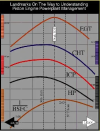
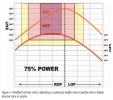
TruthIn defense of @Llewtrah381, it is possible to simultaneously think that LOP operations are fine and the Mike Busch is a blowhard.
Yeah, ChatGPT is full of crap as usual. I mean, it's a really helpful tool when used correctly, but that caveat only applies to maybe 5% of queries at best!I did, as noted above. Can you help me find it? ChatGPT (yeah, I know...) seems to say it wasn't publicly released, as I noted.
Nope, I was referring to metallurgy. Cylinder strength vs temp is relatively linear up to 400 and then accelerates significantly.I'm not sure what you're referring to here. Do you mean the CHT is linear up to a certain EGT (fuel flow) and then the CHT drops? Or do you mean cylinder life is linear but then drops off when going above 400? I can't tell but I think you mean the first (and I'd honestly like to see a graph or data for the latter).
Kinda. And depending on the engine, the actual limits may be different (your 435º is one of the lowest I've heard). That said, our local engine guru @Ted said it best: "Limits are not goals." Unless you're talking takeoff fuel flow, but I digress. Getting your cylinders to the limit temp is pretty much guaranteed to result in premature replacement. 400 should keep them happy for a much longer time.And is this for Conti or Lycoming? Makes a difference.
Who knows, because we can't really measure it directly. CHT is one indication of ICP, but as you noted, other factors affect CHT as well: Airspeed, OAT, cowl flap position, baffling, etc...Oh - and what's too high of an ICP?
Limits are absolute, hard-stop numbers above which you must not operate. 380/400 is a guideline to promote maximum engine longevity.Basically, I'm honestly trying to understand why the Lycoming guidance to stay below 435 (not 400) is bad and I'm not seeing a good explanation either in this thread or on Savvy stuff.

How was it wrong in this case? And let’s say it was: can you point to the data? I couldn’t find it via other meansYeah, ChatGPT is full of crap as usual. I mean, it's a really helpful tool when used correctly, but that caveat only applies to maybe 5% of queries at best!
Source? And if true, why is Lycoming’s limit 100 degrees higher than this?Nope, I was referring to metallurgy. Cylinder strength vs temp is relatively linear up to 400 and then accelerates significantly.
You do realize the 435 was not a limit (which is 500) and that it’s a recommendation, right? Please re-read my quote from the Lycoming manual(your 435º is one of the lowest I've heard)
A "self-sealing" conspiracy theory is a belief system structured so that any evidence against it is reinterpreted as proof of its truth, making it completely immune to disconfirmation. The term describes the closed-loop, circular logic that seals the theory off from external reasoning or factual correction

Add: that has to be the most befuddling statement in this whole thread: if the reason for monitoring CHT is to use it as a proxy for ICP (per Busch) yet we don’t know what is a good or bad ICP, then why do we care about CHT? And again, more ICP translates to more airspeed, so knowing how high we can get it safely is of significance.Who knows, because we can't really measure it directly.
Therefore, it you run at the temperature limits specified by Lycoming and CMI, you will find there is very little to no margin.
Lycoming doesn’t say that.Lycoming is full of it. if thier certified motors require full rich to 10k they would not get certified.
I said little to no margin, and this is based on the anecdotal comments, here and everywhere.Why do you think Lycoming and CMI engineers do not build margins into their operating limits?

And finally, to those who say "I don't fly LOP, I just lean until rough and then enrichen a bit": Many engines, when leaned that way, will be on the lean side of peak. You just won't know it for sure without an engine monitor.
What you say is correct - without an engine monitor, you won't really ever know for sure, but a mix of ROP and LOP between the cylinders is a likely possibility when you've done the "lean until rough, then enrichen" thing.I don't really know where I'm operating. OTOH, if I only lean until I first see an RPM rise with the engine still smooth, I'm pretty sure I'm ROP and my baby Beech will go a teeny bit faster.
Am I missing something?
Sounds like you're not doing it correctly. And yes, correct ground leaning can help keep sparkplugs from fouling and cleaner in general as multiple engine gurus an I believe Continental and Lycoming now (older POHs don't show it) recommend ground leaning.And most people's ground leaning does absolutely diddly. We were given an instruction to do so in the 152s that I learned to fly in at BJC. I've subsequently learned that just backing the mixture back a bit at idle doesn't do anything as the idle loop isn't affected by the mixture control until you get right to the idle cut off point.
That's why a digital engine monitor is one of the best investments you can make for engine longevity and safety

Here is how I pick: When I am flying to go visit the in-laws, and arriving a bit later is a good thing, I fly LOP and save some gas. If I have the in-laws on board and I want to drop them off asap, I fly ROP and save some time. Different tools for different problems.
Granted, but without an engine monitor, what leaning technique do you recommend?
It simply didn't find the data. And then it made up several plausible but incorrect answers instead.How was it wrong in this case?
You need to find all of John Deakin's columns, and READ THEM.And let’s say it was: can you point to the data? I couldn’t find it via other means
If you exceed the limit, damage and failure are imminent and your engine might quit before the flight is over.Source? And if true, why is Lycoming’s limit 100 degrees higher than this?
No, I just saw you say it enough times without further context that I thought it was the limit for your engine.You do realize the 435 was not a limit (which is 500) and that it’s a recommendation, right?
We can't directly measure ICP. However, ICP has an effect on CHT, along with the other items I noted earlier. If you see a higher CHT even though you're at a lower OAT, that should tell you something. Gotta use your brain.Add: that has to be the most befuddling statement in this whole thread:
Again, most things won't kill your engine instantaneously. There's no binary, black and white value of ICP that is good or bad. It's about finding the right spot along the scale that leads to the best combination of performance and engine longevity to minimize cost.if the reason for monitoring CHT is to use it as a proxy for ICP (per Busch) yet we don’t know what is a good or bad ICP, then why do we care about CHT?
Then do whatever you wish. I don't have to pay for your engine, so I really don't care what you do.This is really starting to feel like unsubstantiated dogma.
Lean until you save enough on gas to afford an engine monitor.Granted, but without an engine monitor, what leaning technique do you recommend?


It's not the hottest cylinder. It's the leanest cylinder, the one that will peak first.Put an EGT gauge on the hottest cylinder, lean to peak on that, then either leave there for best economy or enrich 100-125 for best power. As done in days of yore.
I heard praying works pretty well!Granted, but without an engine monitor, what leaning technique do you recommend?


 avweb.com


