Caution - Religious discussion, click here only if you can handle this topic.

I've owned two airplanes: Turbo Arrow (Continental TSIO 360) and an Arrow II (Lycoming IO 360) and always run both LOP in cruise. Better economy, less carbon buildup observed at annuals compared to other similar engines. The Lycoming was well past TBO and not making metal.
 
I can respect that.

Next up on the blasphemy tour:

View attachment 153831
And most people's ground leaning does absolutely diddly. We were given an instruction to do so in the 152s that I learned to fly in at BJC. I've subsequently learned that just backing the mixture back a bit at idle doesn't do anything as the idle loop isn't affected by the mixture control until you get right to the idle cut off point.
 
And most people's ground leaning does absolutely diddly. We were given an instruction to do so in the 152s that I learned to fly in at BJC. I've subsequently learned that just backing the mixture back a bit at idle doesn't do anything as the idle loop isn't affected by the mixture control until you get right to the idle cut off point.

Is this because of the fuel circuitry on most aviation carburetors?

On a big bore injected Continental how is leaning occurring at various throttle positions when the mixture control is used? (Anyone that has a link or page number to a manual would be appreciated for this lazy man.)
 
Completely agree on 5,000 being nonsense. It's an arbitrary number. Once at some arbitrary number then its ok to start leaning?

5,000 is not total nonsense. NA engines lose ~3% power per 1000ft. So an engine at 5000 is making ~85% rated sea level power. So maybe Lycoming thinks 85% is a low enough power to allow pilots to start leaning in climb.
 
Is this because of the fuel circuitry on most aviation carburetors


On a big bore injected Continental how is leaning occurring at various throttle positions when the mixture control is used? (Anyone that has a link or page number to a manual would be appreciated for this lazy man.)

Idle needs a higher mixture than the normal mixture setting at "full rich" typically will provide. On the carbs, they just have an alternate path for dealing with the low power settings so the mixture becomes largely spurious.

On the injected Continentals, the mixture works all the way down, but there's an additional "mixture rise" adjustment that raised the mixture over the "full rich" at idle settings. There's a whole procedure for calibrating it. Getting this wrong often leads to the engine dying on landing when the throttle is full back once you slow down.
 
And most people's ground leaning does absolutely diddly. We were given an instruction to do so in the 152s that I learned to fly in at BJC. I've subsequently learned that just backing the mixture back a bit at idle doesn't do anything as the idle loop isn't affected by the mixture control until you get right to the idle cut off point.
I mean, you don't back it off just a little bit. You lean to the point that the engine is just barely running smoothly, which is right up against idle cut-off. My engine demonstrates that it is indeed running very lean because if I try to goose the engine a bit during taxi at that super lean mixture setting, she will stutter until I give the mixture knob a turn or two.


Those guys don't know anything about engines. They just want you to blow up your engine so they can sell you a new one. And also lawyers wrote it. Or something.
 
My point exactly. George has done the original research and has skin in the game. Mike is the salesman with no real risk exposure

Lycoming says don’t do it. So if my engine is damaged from LOP, is George paying since he has skin in the game and where do I get that in writing?
 
I can respect that.

Next up on the blasphemy tour:

View attachment 153831

And most people's ground leaning does absolutely diddly. We were given an instruction to do so in the 152s that I learned to fly in at BJC. I've subsequently learned that just backing the mixture back a bit at idle doesn't do anything as the idle loop isn't affected by the mixture control until you get right to the idle cut off point.
I learned C-152 "ground leaning" at PVU. Right after mag check, watch for the rpm rise then drop. Richen back up a couple turns and head for the runway. If we hadn't done this in the summer I'm not sure we would have been able to climb out.
 
Idle needs a higher mixture than the normal mixture setting at "full rich" typically will provide. On the carbs, they just have an alternate path for dealing with the low power settings so the mixture becomes largely spurious.

On the injected Continentals, the mixture works all the way down, but there's an additional "mixture rise" adjustment that raised the mixture over the "full rich" at idle settings. There's a whole procedure for calibrating it. Getting this wrong often leads to the engine dying on landing when the throttle is full back once you slow down.

Lycoming fuel injected engines have a separate idle mixture adjustment that sets the mixture at low power settings. If correctly set, additional ground leaning is not necessary to avoid fouling. Many pilots are oblivious to how to determine if it is correctly set, so they manually lean instead. It does not hurt anything, but neither does it accomplish anything.

 
My point exactly. George has done the original research and has skin in the game. Mike is the salesman with no real risk exposure
So it seems that your "point" has nothing to do with LOP operation--you are instead expressing your opinion of the messenger.

You wrote, "has he done any tests on engines in a test cell where variables are controlled, to back up his gospel-like assertions?" As I and others pointed out, that research was done by others, most notably here George Braly at GAMI. Are Braly's findings and conclusions invalid when endorsed and recommended by Mike Busch?

Your rebuttal of Busch continued with arguments based on your opinion instead of fact ("my impression...and to my knowledge...") which undermines the credibility of your position. If this topic is important enough to motivate you to post here, then why not do the research necessary to evaluate Mike Busch on the basis of actual fact?

"...but I’m happy to be shown I’m wrong." If so, then the pursuit of that happiness should begin with an unbiased and intellectually honest inquiry into the matter.
 
Not touching any knob in the climb until you reach cruise is solid advice. Leaning in this configuration is a no-no.

Now, no LOP running? They need to provide data to support LOP ops are bad. I am certain they have tested this. Don't make general statements- show me data that supports your recommendations.

So if I am located at an airport with a density altitude of 6000 MSL, do you advocate I don’t lean for takeoff and what the difference between a full power take off and a climb at 6000 feet?

My apologies - I left a word out. I meant to say "Additional" leaning. Once it's set leave it. So to answer your question, yes, on the ground you need to lean depending on local conditions. I 100% disagree with Lycoming on this fixed 5,000' comment. Lean to the point where the motor is producing max power and running the best. As I said a few posts ago - I wish they would show their data. How did they come up with 5,000 and not 6,000, or 5,000? Tese type of comments smell of lawyer wording as opposed to engineering recommendations.

For those of you really leaning in the climb, what kind of oil temp and and cylinder temps you seeing? I fly a Continental and I know the two are different. I'm not so worried about EGT as I am about CHT and oil temps. And if you listen to GAMI, running LOP lowers pressures inside the cylinders. https://gami.com/paulferraris_leanofpeaksaga.pdf
 
Alas, a lot of advice is given based on low altitude pilots that doesn't necessarily apply to those operating from high DA airports (with NA engines). Yeah, we peaked the RPMs at runup and the richened slightly before takeoff back. You're NOT at 100% power with. Full throttle at 6000 is closer to a cruise power setting (though you do need to watch the climb angle as slower speeds will raise temperatures).
 
A "self-sealing" conspiracy theory is a belief system structured so that any evidence against it is reinterpreted as proof of its truth, making it completely immune to disconfirmation. The term describes the closed-loop, circular logic that seals the theory off from external reasoning or factual correction.
That's what they want you to think.
 
Not touching any knob in the climb until you reach cruise is solid advice. Leaning in this configuration is a no-no.
I did have one other thing to say about this. Leaning in the climb is not a no-no, it's absolutely necessary to get maximum (book) performance.

Running LOP in the climb, however, is not a good idea. If you get busy in the climb and you're ROP, the mixture will get more rich and move away from the red box. If you get busy in the climb and you're LOP, it'll move into the red box. Additionally, best power is usually found around 100-125ºF ROP, so being LOP means you're leaving a lot of climb performance on the table, just as you would be if you were full rich.

So, lean in the climb to keep roughly the same EGTs as you had at takeoff.

My point exactly. George has done the original research and has skin in the game. Mike is the salesman with no real risk exposure
That doesn't make Mike wrong, though.

5,000 is not total nonsense. NA engines lose ~3% power per 1000ft. So an engine at 5000 is making ~85% rated sea level power. So maybe Lycoming thinks 85% is a low enough power to allow pilots to start leaning in climb.
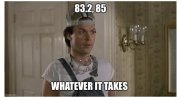
Not really. An engine at 5000 feet can make *up to* 83.2% power, *if* it is properly leaned to best power mixture. An engine at 5000 feet that's full rich is not going to make that much power.

Lycoming says don’t do it. So if my engine is damaged from LOP, is George paying since he has skin in the game and where do I get that in writing?
If your engine is damaged from ROP, you think Lycoming is going to pay for it? How are you (or Lyc or GAMI) going to prove that it was damaged because of LOP or ROP?
 
All limits are arbitrary to some extent. The speed limit is not 65 because you die at 66. Cylinders don't melt at 501 degrees. Some smart people sit down and come up with a threshold, like "above 5K you lean for T/O, below you don't" and we accept it as earned wisdom. That works out pretty well for much of life, and is more practical than everyone making up their own limit.
 
Last edited:
My compliments to the OP. This is indeed properly titled. ;)
On this point, we agree. But who are the faithful and who are the heretics?

Some advocate operating ROP because the engine manufacturer recommends doing so. That's not dogma--that's a perfectly rational and reasonable position based on guidance published by an authoritative source.

Some advocate operating LOP because about a century of piston engine research and development, combined with recent technological advances and hundreds of thousands of actual flight hours of LOP operation, have proved that the concept is sound and the methods and procedures used are effective. That's not dogma--that's perfectly rational and reasonable based on a mountain of factual information and data regarding the well-understood properties of internal combustion engines.

Note that one may choose to operate using either methodology without condemning the other, and that, too, would be perfectly rational and reasonable.

So then, who here are the yapping, yammering dogs of dogmatic doctrine? I suggest that they are those who reject LOP operation without ever having made the effort to understand it, and they attempt to debunk LOP without providing a shred of credible, factual evidence in rebuttal.

Dr. Llewtrah, in post #24 you identify yourself as a physician. I have great respect for anyone intelligent and disciplined enough to gain admission to med school, and even more respect for those who graduate. However, when you introduce yourself as a physician, with specialized training in scientific methodology and experience evaluating studies and assertions (argument from authority, as it were), I have high expectations regarding the quality of your arguments about scientific matters such as the thermodynamic properties of internal combustion engines and how those properties may be effectively managed in an aircraft engine. Instead, you offer only an opinion, which you support with nothing more substantial than statements like "to my knowledge" and "my impression is." Thus your credibility as an expert is vacated and you become merely another SGOTI, just like yours truly, and your stated opinion on this topic is just more dogma.

 
Last edited:
On this point, we agree. But who are the faithful and who are the heretics?

Some advocate operating ROP because the engine manufacturer recommends doing so. That's not dogma--that's a perfectly rational and reasonable position based on guidance published by an authoritative source.

Some advocate operating LOP because about a century of piston engine research and development, combined with recent technological advances and hundreds of thousands of actual flight hours of LOP operation, have proved that the concept is sound and the methods and procedures used are effective. That's not dogma--that's perfectly rational and reasonable based on a mountain of factual information and data regarding the well-understood properties of internal combustion engines.

Note that one may choose to operate using either methodology without condemning the other, and that, too, would be perfectly rational and reasonable.

So then, who here are the yapping, yammering dogs of dogmatic doctrine? I suggest that they are those who reject LOP operation without ever having made the effort to understand it, and they attempt to debunk LOP without providing a shred of credible, factual evidence in rebuttal.

Dr. Llewtrah, in post #24 you identify yourself as a physician. I have great respect for anyone intelligent and disciplined enough to gain admission to med school, and even more respect for those who graduate. However, when you introduce yourself as a physician, with specialized training in scientific methodology and experience evaluating studies and assertions (argument from authority, as it were), I have high expectations regarding the quality of your arguments about scientific matters such as the thermodynamic properties of internal combustion engines and how those properties may be effectively managed in an aircraft engine. Instead, you offer only an opinion, which you support with nothing more substantial than statements like "to my knowledge" and "my impression is." Thus your credibility as an expert is vacated and you become merely another SGOTI, just like yours truly, and your stated opinion on this topic is just more dogma.
When have I EVER said I didn’t “believe” in LOP, in this thread or elsewhere?

What I’ve observed is that, IMHO, Mike Busch declares things as if they’re gospel without carrying any risk for his opinions and not having done any research personally. My A&P carries more risk than he. In a time when some rando podcaster can voice medical opinions based on what they’ve gathered from ChatGPT and sound as “authoritative” to (some) people as someone whose life has been about scientifically researched medicine, I just personally don’t choose to accept his positions as gospel no matter how passionately he says them. He may well be totally correct - but not just because he is who he is. I have some questions about his positions on CHT, for example; he may be right about his positions but I’d like to see good evidence that his positions are validated.

Please be careful not to put words in my mouth.
 
What I’ve observed is that, IMHO, Mike Busch declares things as if they’re gospel without carrying any risk for his opinions and not having done any research personally.
When you treat your patients, did you do the research personally? Or did you rely on others' research to reach a personal professional opinion that you share with them? :dunno:

I just personally don’t choose to accept his positions as gospel no matter how passionately he says them. He may well be totally correct - but not just because he is who he is.
No, it's because the research has been done by others.

I have some questions about his positions on CHT, for example
Such as? Let's see whether Mike is the only one spouting them, or if we can find additional evidence.
 
When have I EVER said I didn’t “believe” in LOP, in this thread or elsewhere?
Did I claim that you don't "believe" in LOP? Nope. (You enclosed the word believe in quotation marks, but the source of your quote is not clear.)

But nevermind all that.

You claim that Busch doesn't have "skin in the game." Mike Busch built a company on the premise that there are better ways to operate and maintain engines compared to traditional methods, using advancements in technology and a revised understanding of cylinder and engine health. If subscribers found that his guidance resulted in engine damage, he'd lose a hell of a lot of skin. In that case he'd probably need a doctor, Doc.

What I’ve observed is that, IMHO, Mike Busch declares things as if they’re gospel without carrying any risk for his opinions and not having done any research personally.
In the words of The Dude, "Well, you know, that's just like, uh, your opinion, man!" How do you know how much research he has done personally?

He may well be totally correct - but not just because he is who he is.
Right. I don't think anyone, including Busch himself, would argue otherwise.

I have some questions about his positions on CHT, for example; he may be right about his positions but I’d like to see good evidence that his positions are validated.
You're probably not going to see that evidence here. Maybe you can open a dialogue with him instead of posting dismissive comments on PoA.

Please be careful not to put words in my mouth.
Maybe the problem is that I'm not bright enough to understand the precise nature of your beef with Busch. It seems to be coming from somewhere other than the man's advocacy of LOP operations.

Disclaimer: I'm not a subscriber to SavvyAviation, and have no relationship to Busch, Savvy, Braly, et al.
 
5,000 is not total nonsense. NA engines lose ~3% power per 1000ft. So an engine at 5000 is making ~85% rated sea level power. So maybe Lycoming thinks 85% is a low enough power to allow pilots to start leaning in climb.
It's not nonsense. But it's still arbitrary. Why not 6,000'? You still would have enough %hp to not be out of the danger zone if you're not paying attention.

Taking off from sea level full rich you might be 200 degrees rich of peak. At 5,000' you might be 300 rich of peak. So not only have you lost horsepower from the altitude. But you've lost more power from having a sub optimal fuel air ratio as you haven't adjusted for it.

If your Chts are OK, why wouldn't you lean to take off egt? Youre still rich of peak.
 
5000ft when it 100f on the ground is a little different than when it is -20f.
So, yeah, I call BS :D

Tim
 
@Racerx, I agree it’s arbitrary, I was just trying to find some scientific/technical reason for picking 5000 as the number. At least we won’t forget it lol.
 
Not touching any knob in the climb until you reach cruise is solid advice. Leaning in this configuration is a no-no.

Now, no LOP running? They need to provide data to support LOP ops are bad. I am certain they have tested this. Don't make general statements- show me data that supports your recommendations.
Leaning before takeoff is a thing, I assume that's OK. It is for me.
If your engine is happy with the mixture full forward when it's 15°F it will simply be too rich at 96°F (given similar baro.)
Engines aren't crazy complicated, and electronics have taken care of this in your car (along with ignition timing) forever.
It's sad that systems that cost hundreds (at mfg level) in cars cost tens of thousands in aircraft.
 
When you treat your patients, did you do the research personally? Or did you rely on others' research to reach a personal professional opinion that you share with them?
Of course I didn’t. But like my A&P and unlike people like Busch, I was definitely, personally on the hook for the decisions I made with the data for the patient/airplane in front of me. That’s why I had liability insurance. I doubt Busch needs that.
If subscribers found that his guidance resulted in engine damage, he'd lose a hell of a lot of skin
LOL. Yeah. He’d have hurt feelings. Not much more.

Add: there are those who follow Don Gryder religiously as well and he’s not always wrong.

One “beef” I have with Busch is his seemingly relentless public attacks on other A&Ps in the name of promoting his services. I get frequent emails from Savvy bragging about the tens of thousands of dollars they’ve saved some pilot from the opinion of some dastardly A&P. The stories may be true - they also seem disingenuous.
 
Last edited:
Back
Top