
Let'sgoflying!
Touchdown! Greaser!
i suppose I feel the same, but would like to see the actual stats (b/c I’ve been wrong too many times b4)I would believe they absolutely do.

i suppose I feel the same, but would like to see the actual stats (b/c I’ve been wrong too many times b4)I would believe they absolutely do.

No, it just increased the value of Bic pens. Suddenly, half of your local CFI‘s will have their “3 bounces and some systems training”.Correct. As a 501 SP owner, I’m really glad I am not impacted but this is still bureaucratic BS and ****es me off. A lot of people just had their $1-2+M airplanes massively reduced in utility and value overnight by this change.

I view the CAB as more of a predecessor to the NTSB than the FAA, and the CAA being the predecessor of the FAA. A lot of the stuff the CAB did doesn't even exist any more.And even if you go back in history, when the original predecessor to the FAA, the Civil Aeronautics Board was formed was mainly due to a single aircraft accident... the one that killed Knute Rockne. The CAB, the CAA, and now the FAA merely are pushed to make the changes others want even though it makes little sense in the big picture. Unfortunately, the list is rather long.
Only if you wanted to fly it by yourself. If you fly together all the time, it probably got cheaper!@kaiser does this screw up our plans of buying a cheap old citation?
That does significantly devalue the planes for those who operated them as sole pilot owner/operators. They bought a plane to get themselves around quickly, and now they have to either spend a bunch of money for a full time SIC or try to arrange (and pay) contract guys whenever they want to fly - It really kills the utility for that type of owner.By requiring an SIC?
I think that we might see things like TBMs that are close in performance to old Citations become a little higher in demand, especially with their much-lower operating costs.Yes. Trying to coordinate schedules with a second pilot, especially when owner flown, removes a lot of the utility.
The article I read stated that the FAA found that the accident rate for the ones operated single pilot was double the two-crew accident rate. Since the entire premise of the single-pilot jets was that they were to "demonstrate an equivalent level of safety" but yet they clearly do not have an equivalent level of safety, they killed it.i suppose I feel the same, but would like to see the actual stats (b/c I’ve been wrong too many times b4)
The article I read stated that the FAA found that the accident rate for the ones operated single pilot was double the two-crew accident rate. Since the entire premise of the single-pilot jets was that they were to "demonstrate an equivalent level of safety" but yet they clearly do not have an equivalent level of safety, they killed it.
While it's currently limited to the older waivered Citations, I wouldn't be surprised if they take a look at some of the newer stuff as well as some of the stuff from other manufacturers. I think something like a CJ4 or Phenom equipped with G5000 is probably easy enough to fly with one pilot, I wouldn't be surprised if some more types become two-crew only.

*AD 2020-26-16 [and proposed repetitive update] has entered the chat*It seems like low frequency, high risk events always make them overreact
Beats having a 172 pilot flying a jet in IMC in an emergency.Suddenly, half of your local CFI‘s will have their “3 bounces and some systems training”.
*Equals* having a 172 pilot flying a jet in IMC in an emergency.Beats having a 172 pilot flying a jet in IMC in an emergency.
Presumably the FAA did that...Yes I think any summarized data needs to be scrutinized by multiple statisticians familiar with with the industry.
Random people in the right seat? Not great.Sadly, my experience with a second pilot was usually not favorable, I was glad to break out of that world.
Except for a few, usually their input was distracting (unimportant observations, breaking sterile cockpit, needless anxiety, triplications, failing to make callouts, overanticipation of events, etc)
And make the SIC type not the joke that it currently is.*Equals* having a 172 pilot flying a jet in IMC in an emergency.
I wonder how long it'll be before they start requiring PIC type ratings for all crewmembers at this rate, or at least requiring a checkride for SIC types.

Beats having a 172 pilot flying a jet in IMC in an emergency.
Trained, standardized people in the right seat? Awesome.
My bad, the Bureau of Air Commerce was created 1934 after the Rockne accident to increase aviation oversight and safety in the industry, which then led to the creation of the CAA. The CAB came about in 1940 and closed doors in 1985. Regardless, in the context of this thread, it was the high profile nature of the Rockne crash that led to an increase regulatory oversight then, which could also be the reason for this change given the high profile of Biffle's accident.I view the CAB as more of a predecessor to the NTSB than the FAA

That does significantly devalue the planes for those who operated them as sole pilot owner/operators. They bought a plane to get themselves around quickly, and now they have to either spend a bunch of money for a full time SIC or try to arrange (and pay) contract guys whenever they want to fly - It really kills the utility for that type of owner.
The accident aircraft required a legal SIC when crashed.How so? The change requires legal SIC's.

Thinking back to when my copilot blew out his knee playing tennis and couldn't fly for a month, that rule sure came in handy. But I didn't recruit "local CFI's", I called in a few otherwise highly qualified, but not current in a Citation, acquaintances of mine to fill in. Of course, I coordinated their qualifications with the underwriter, too, and actually conducted the training myself.No, it just increased the value of Bic pens. Suddenly, half of your local CFI‘s will have their “3 bounces and some systems training”.
Not necessarily. If the SIC seat in the plane carried more respect, more people would honor it with a qualified person sitting there all the time. But to say, "Aw, this is the same plane as an SP, so safety-wise, all we really need is one qualified pilot," is to have a culture like led to my trip in that Sabreliner above. I suspect the real root cause of the disparity in accident rates has nothing to do with the "exemption" for Part 25 airplanes, but everything to do with the lack of qualified SIC's. That "exempted" pilots had more accidents is a simply a result of sample size. The reason for the "change" has everything to do with the FAA's inability to govern individual pilot compliance, as opposed to one entity, the manufacturer.This change would have made no difference in the biffle accident.

Help me understand why SP owners, like you, are twice as safe as SP exemption pilots flying similar airplanes. The 550 I flew started life as an SP 551 and had a "sex change" making it a Part 25 aircraft which we flew with two pilots. IIRC, the only difference in equipment was the addition of a transponder ident button on the pilot control wheel. I'm surprised you aren't included in this change, in other words. Maybe give it some time?
Grounding? Seriously?So this whole distinction was picayune to begin with this and this sudden change by the FAA quasi-grounding the fleet for most owner/operators is absolute BS.

Totally an academic discssion for me, but you are assuming SP = can't afford SIC. Assuming I could afford to operate a Citation, SIC would be a rounding error. What would be a pain is losing the ability to just go whenever I feel like it. Even if I hire a FT SIC, not sure I could put their life on hold - e.g. Don't drink 24/365 as just one example.Ah yes, the "What do you mean it's $75 to service the lav?" type guys. Or the "I need to take the crew car for 3 hours, but I won't buy gas here because it's too expensive" and of course "What do you mean a ramp fee?" types.
And of course "Can't we just put that inspection off another year?" types.
I personally know a couple of these "owners" that fly SP that in reality shouldn't. And it's got nothing to do with utility.
Thanks, that was a nice response, and I agree with your conclusion about the future likelihood of not being included. That said, I am a firm believer in "two heads are better than one" and "four eyes better than two".I believe you are being rhetorical and you know all this but I’ll answer anyway for broader benefit - SP pilots are NOT safer than SPE pilots on essentially the same airframe - it’s all due to administrative quirks of FAA certification in the 70s/80s as the plane was first certified part 25 (two pilot) and then two variants (501 and 551) were certified under part 23 commuter category single pilot. My CE-500 allows me to fly 501 or 551 single pilot and the other types (500, 550, 560) with an SIC. The airframe differences are infinitesimal and you’d have to really stretch things to claim the ident button on the yoke is a viable reason why my plane can be single pilot without an exemption but the 500 or 550 requires another body.
So this whole distinction was picayune to begin with this and this sudden change by the FAA quasi-grounding the fleet for most owner/operators is absolute BS.
On your last point, obviously I hope not but I also don't think so. The FAA would have to revise the TCDS for the single pilot certificated types which is very different than revoking a bunch of training entities exemption letters and rendering the SPE pilot authorizations invalid. To change the C501’s TCDS to require a two pilot crew would be a really big step up in heavy handedness - and the slippery slope alone (knowing every other single pilot jet like all the new 525s, Phenoms, PC24, etc are all certificated the same way and would become exposed) would result in a a huge amount of industry backlash. With this action, Textron, Embraer, etc are probably not bothered at all that a couple of hundred owners of very old jets may need to consider upgrading to a newer plane. But if they saw the risk that the FAA changes the rules to say no more single pilot jets at all, I think they would really push back.
No assuming anything.Totally an academic discssion for me, but you are assuming SP = can't afford SIC. Assuming I could afford to operate a Citation, SIC would be a rounding error. What would be a pain is losing the ability to just go whenever I feel like it. Even if I hire a FT SIC, not sure I could put their life on hold - e.g. Don't drink 24/365 as just one example.
The hassle factor far exceeds the incremental cost.
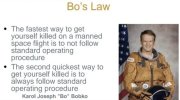
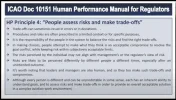
Curious, how much time did you spend in a Part 121 cockpit, or a Part 135 multicrew cockpit? How about a Part 91 multicrew jet cockpit?@Doc Holliday you really don’t want to have a surgeon that rigorously adheres to standards. Left handed vs right handed will change how they want to approach a surgery. As will tall or short. Standards are inherently weak as they can never account for context. If you look at “the nine competencies,” you’ll note part of it is knowing when to modify and when to ignore the standards. Know when to flush the procedure. Note Sully skipped sixteen steps to turn on that APU. To paraphrase Patton, “if everyone is adhering to the standards, no one is thinking.” (“If everyone is thinking the same thing then someone isn’t thinking.”)
View attachment 155333
View attachment 155334
Grounding? Seriously?
Totally an academic discssion for me, but you are assuming SP = can't afford SIC. Assuming I could afford to operate a Citation, SIC would be a rounding error. What would be a pain is losing the ability to just go whenever I feel like it. Even if I hire a FT SIC, not sure I could put their life on hold - e.g. Don't drink 24/365 as just one example.
The hassle factor far exceeds the incremental cost.

Remind me never to get in an airplane with you.You can be over-standardized. Standards are great for creating common language and common understanding, expectations, appreciation for roles and responsibilities. But in roles and responsibilities they help for you to notice when such aren’t being met so as to be able to cover down or mitigate. We too often however, strive to meet or hold the standard when context demands different.
I don’t disagree with you in general. I will say I still don’t think it would have affected biffle. Those guys demonstrated a level of hubris that would have been impervious to any intervention.Thinking back to when my copilot blew out his knee playing tennis and couldn't fly for a month, that rule sure came in handy. But I didn't recruit "local CFI's", I called in a few otherwise highly qualified, but not current in a Citation, acquaintances of mine to fill in. Of course, I coordinated their qualifications with the underwriter, too, and actually conducted the training myself.
Now, when I was a "local CFI", I had a job interview with a company flying a Sabreliner that consisted of a typical business trip as SIC. I didn't know the rules, if there were any in those days, but knew I wasn't in any way knowledgeable about the airplane. Heck, I didn't know how the Gable heads worked in the panel until the captain showed me the transfer switch. So, I asked him, an old military pilot, "If something happened to you, aren't you concerned about me flying this thing?" He flipped the script as he turned and looked me straight in the eye, "Don't you think you're good enough to get this thing back on the ground?" Choosing between life and death, I chose life, "Yeah, I think I can do it."
Not necessarily. If the SIC seat in the plane carried more respect, more people would honor it with a qualified person sitting there all the time. But to say, "Aw, this is the same plane as an SP, so safety-wise, all we really need is one qualified pilot," is to have a culture like led to my trip in that Sabreliner above. I suspect the real root cause of the disparity in accident rates has nothing to do with the "exemption" for Part 25 airplanes, but everything to do with the lack of qualified SIC's. That "exempted" pilots had more accidents is a simply a result of sample size. The reason for the "change" has everything to do with the FAA's inability to govern individual pilot compliance, as opposed to one entity, the manufacturer.
Not what the FAA found. They compared single pilot accidents of "exempted" Citation pilots with single pilot accidents of pilots who didn't need an exemption because they flew the planes already certified for single pilots. The differences in the aircraft flown is nil. It's a change of convenience, imo. The operators of "exempted" flights were non-compliant and too hard to police. Why that's the case is arguable.The article I read stated that the FAA found that the accident rate for the ones operated single pilot was double the two-crew accident rate.

Probably not the best person to quote since he lost his legs violating the rules (low level acro).“Rules are for the obedience of fools and guidance of wise men” - Douglas Bader (and Harry Day)
Curious, how much time did you spend in a Part 121 cockpit, or a Part 135 multicrew cockpit? How about a Part 91 multicrew jet cockpit?
Probably not the best person to quote since he lost his legs violating the rules (low level acro).
Nice dodge of my question.Aiming straight at part 121:
“Actions that get taken to improve the safety of ultra-safe organizations are those that would fit less safe organizations. For example, these may be recommendations to create a more detailed policy on some aspect of the operation or design of the system. Or a recommendation to intervene in the behavior or attitude of people through an awareness campaign. They may be new calls for standardization, the broadcasting of a particular procedure, or stringent reminders to follow an existing rule or procedure. Such recommendations are fit for less safe systems, or even unsafe ones. That is where they have had demonstrated effect. But in ultra-safe organizations, such recommendations have no longer much effect in increasing safety.
Safety actions taken in ultra-safe (near-zero) organizations are often repetitions or retreads of those taken in a less safe organization. They miss the point and do not help in creating additional safety.” - Sidney Dekker, The Field Guide to Understanding ‘Human Error’

I’d recommend reading what’s required of a SIC that satisfies the single-pilot exemption.*Equals* having a 172 pilot flying a jet in IMC in an emergency.
That would be “nobody” flying a jet in IMC in an emergency, would it not?I’d recommend reading what’s required of a SIC that satisfies the single-pilot exemption.

This is my experience. I am a single-engine CFI (though I do have a lot of multi experience), and for several years I flew right seat in several different Citations when the customer wanted two pilots. I was not trained in any of those airplanes, and I do not have a type rating in any airplane. My only qualification was five years as a US Air Force pilot. I enjoyed these Part 91 trips until the insurance company mandated two type-rated pilots. I was too old to justify the investment.Even before the FAA stepped up with this, insurance companies have already been requiring a two man crew, even for some C525.
Thanks, that was a nice response, and I agree with your conclusion about the future likelihood of not being included. That said, I am a firm believer in "two heads are better than one" and "four eyes better than two".
