Angle, or Vx/Vy on takeoff?

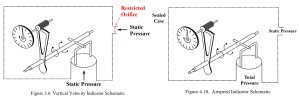
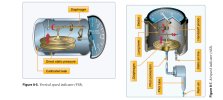
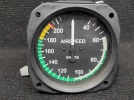
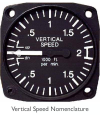
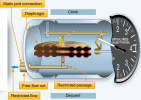
I know what you’re thinking, “rho will be in both numerator and denominator hence cancel out,” but if this be true, it would also work for the airspeed. The airspeed is no more than a pressure differential gauge as is the VVI. Airspeed is still afflicted, why would you think VVI inoculated? IMG_1559.jpeg

IMG_1567.jpeg

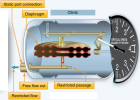
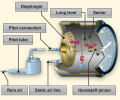
See any differences in these? Why would you expect them to function differently?

That's a geometric way of looking at it. As the airplane descends along a glidepath, any increase in speed will increase the descent rate. Quite normal.
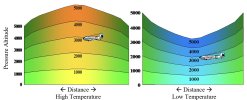
Exactly, and while you’re speeding along the glide path you have increased in TAS but you still see the same IAS…

You don’t see it in literature because as @dtuuri pointed out, the errors tend to be small, hence typically inconsequential except for this one case though you don’t typically see it here either as you correctly pointed out, you don’t typically check VVI on final as you’re instead working a glide path or glide slope. And, as you pointed out, you’re not looking at it going into round out and flare. But your round out and flare becomes a sight picture based on true height and true distance. In other words, being unaware can set you up to get bitten (more on that in another comment).

Meanwhile, believe you alluded to temperature in another comment, and such gets it right. (Though the conclusions drawn in that comment are completely wrong and rather dangerous. Response to that will have to wait for another comment. As will illuminating other misunderstandings you seem to have one that is actually lethal.) While considering temperature, remember temperature is really the big driver of density altitude. Field elevation and pressure play, but it really is the big T. You’d think P would have similar weight but consider how little the range your altimeter setting changes at a given field, such reflects a lack of range in the P and thus P’s more limited influence.

“Imagine doing climb testing on a hot day from 5000 to 6000 feet pressure altitude. You think you are measuring the time to climb 1000 feet, but on this day the 5000 foot pressure altitude contour and the 6000 foot pressure altitude contour are 1075 geopotential feet apart. Because climbing is an exercise in gaining potential energy, the amount of potential energy to be gained is dependent on geopotential feet, not on pressure altitude feet. Therefore, the climb will take longer because more geopotential altitude must be gained.” - Russ Erb

Not only will the altimeter have shown only a thousand feet change, the VVI will have acted accordingly. If the climb took you a minute, you would have seen 1000 fpm not 1075 fpm. Think about your cold weather modifiers for approaches. If you fail to do them, you will see normal altitudes and normal VVIs despite being low and shallow. You might pick up on it for having a further forward power setting for being shallow, but as both cold and dense helps engines, maybe not.

IMG_1486.jpeg
 
I know I promised some criticism of your comments but first story time. Hey, you get to read a little of my experience. It directly relates to the topics, so I’m ok typing.

Once upon a time while flying a plane that normally lands not flared and normally lands near sea level, I was traveling across the continent. I landed in Albuquerque on what we might consider a warm day. I did my normal thing, onspeed AOA with a three degree path. Indicated speed looked normal for my weight while VVI read normally. And WHAM!!! I hit hard. Why? Because tVVI is faster than iVVI just as TAS is faster than IAS. A bit of talking around, turns out I wasn’t the only one to experience this in this particular model of airplane. Many have thus reducing likelihood you might think of things like a sudden sinky, for which there was none perceived.

Now as it happens sometime down the road, I had to pass through ABQ again. But I remembered the non-flared landing with high density altitude hits harder as your actual VVI is bigger than indicated VVI. So I elected to flare. Well, not really me, I told my student to give me a practice precautionary approach from which we’d flare as we always flare out of those. The student did and flared at a normal sight picture yet we fell out and hit hard relative to a flare (though within normal non-flare touchdown). Before touchdown, sensing falling out, he correctly gave it a shot of power. Yes, he had a tVVI bigger than iVVI but in this case we really had a TAS vs IAS issue as now his turn radius was bigger thus round out took more space. And also we had a slower engine response issue. Again, talking around, we weren’t the only ones in this sort of plane to experience this.

Three issues all related to density altitude involving differing round out and flare concerns:
- tVVI vs iVVI
- Larger turn radius making a round out and flare take more space
- More sluggish engine response

These all got incorporated into our briefs. But I don’t think they made it to any written materials. I’m no longer affiliated so I don’t know if they’re still taught.
 
More baloney…

The air's density affects its pressure, which affects the altimeter's accuracy.

But the VSI/VVI? No correction charts, no internal correction machinery.

It's pressure that matters to it, not air density. We do not need to pad airspeed to allow for it.

What you miss entirely is that true airspeed increases as altitude or temperature increase. The air's density falls and so does drag. Since the true airspeed rises, the lift also rises and counters the loss of lift due to the decrease in density. We continue to use the indicated airspeed for approaches or stall speeds even though the true airspeed has increased and the lift remains the same. Adding airspeed or decreasing descent rate is therefore useless.
See your self contradiction? “The air’s density affects its pressure… it’s pressure that matters to it, not air density…”

As to the instrument itself, a lack of correcting mechanism and a lack of charts does not mean the instrument is error free. Could just as easily be (and is) that we accept and tolerate the errors in it.

I didn’t miss that TAS increases with altitude and temperature, this is the very heart of my argument. VVI has the same issues. Where TAS increases, tVVI will too.

Nobody said to pad the airspeed. Start the round out earlier, yes, maybe a shot of power to reduce VVI or cushion in the flare, yes, but no one said anything about pad the speed.

You’re arguing TAS has gone up in less dense air saying such reduces drag. You mention “the lift also rises” and in this I believe you’re getting to the speed increase increasing lift as opposed to an angle of attack increase increasing coefficient of lift thus increasing lift. And here is where you fail. A speed increase does increase lift but it also increases parasitic drag. You could do things to increase lift the other way via Cl but it will increase induced drag. You did not decrease drag. You’ll have a similar total drag for a given IAS (really for the same EAS).

Here comes the big kicker, we don’t use IAS for stall. We use AOA for stall. AOA is what matters for approaches.

Nonsense. What small-airplane pilots uses the altimeter when rounding out and flaring? These airplanes are never equipped for Cat III instrument landings. Airplanes that are certified for that have autoland and radar altimeters. That's airliner stuff.

Indicated airspeed is what matters in any approach. At higher altitudes or density altitude, the true airspeed will be higher than indicated, but the air's effect on the wings is exactly the same as on the airspeed indicator, and the same ASI applies in any approach. The stall will come at the same indicated airspeed. True airspeed will vary, but that only matters for navigation since the actual airspeed and groundspeed is affected.

Note that the stall speeds are given in INDICATED speeds, and the Calibrated airspeed is given for reference. Note, too, that neither altitude nor temperature figure into that indication. The indicated speed is lower than the calibrated speed due to the pitot tube's angle to the line of flight in the stall attitude.
AOA is what matters on any approach. Onspeed AOA. IAS is a limited and hazardous substitute.

Stall speeds are a really poor proxy for critical AOA. AOA matters, IAS only matters for Vne and it only matters to Vne if dynamic pressure be the limiting factor (like with the Guppie in its first dive test) as typically Vne is flutter driven and flutter cares about TAS. You want AOA on the low end. Mach is better than speed in the high end. Airspeed only for in between. If you really had to use a speed as proxy, you’d want EAS not CAS nor IAS, but mechanical systems have trouble doing EAS (glass can). The reality is, though, onspeed AOA is better than Vref as it is weight and load adjusted, AOA gives you weight adjusted best range, max endurance, best glide, best gliding turn, best sustained turn, best instantaneous turn, and better does Vx and Vy, AOA combined with accelerometer gives you weight adjusted Va. AOA needs no adjustment for accelerated stall. Indicated speed is actually a horrible reference.

As to radar altimeters, look into the Garmin GHA-15 and the Recreational Mobility Flare Assist.

 
See your self contradiction? “The air’s density affects its pressure… it’s pressure that matters to it, not air density…”

As to the instrument itself, a lack of correcting mechanism and a lack of charts does not mean the instrument is error free. Could just as easily be (and is) that we accept and tolerate the errors in it.

I didn’t miss that TAS increases with altitude and temperature, this is the very heart of my argument. VVI has the same issues. Where TAS increases, tVVI will too.

Nobody said to pad the airspeed. Start the round out earlier, yes, maybe a shot of power to reduce VVI or cushion in the flare, yes, but no one said anything about pad the speed.

You’re arguing TAS has gone up in less dense air saying such reduces drag. You mention “the lift also rises” and in this I believe you’re getting to the speed increase increasing lift as opposed to an angle of attack increase increasing coefficient of lift thus increasing lift. And here is where you fail. A speed increase does increase lift but it also increases parasitic drag. You could do things to increase lift the other way via Cl but it will increase induced drag. You did not decrease drag. You’ll have a similar total drag for a given IAS (really for the same EAS).

Here comes the big kicker, we don’t use IAS for stall. We use AOA for stall. AOA is what matters for approaches.


AOA is what matters on any approach. Onspeed AOA. IAS is a limited and hazardous substitute.

Stall speeds are a really poor proxy for critical AOA. AOA matters, IAS only matters for Vne and it only matters to Vne if dynamic pressure be the limiting factor (like with the Guppie in its first dive test) as typically Vne is flutter driven and flutter cares about TAS. You want AOA on the low end. Mach is better than speed in the high end. Airspeed only for in between. If you really had to use a speed as proxy, you’d want EAS not CAS nor IAS, but mechanical systems have trouble doing EAS (glass can). The reality is, though, onspeed AOA is better than Vref as it is weight and load adjusted, AOA gives you weight adjusted best range, max endurance, best glide, best gliding turn, best sustained turn, best instantaneous turn, and better does Vx and Vy, AOA combined with accelerometer gives you weight adjusted Va. AOA needs no adjustment for accelerated stall. Indicated speed is actually a horrible reference.

As to radar altimeters, look into the Garmin GHA-15 and the Recreational Mobility Flare Assist.
1553.jpg
 
I know what you’re thinking, “rho will be in both numerator and denominator hence cancel out,” but if this be true, it would also work for the airspeed. The airspeed is no more than a pressure differential gauge as is the VVI. Airspeed is still afflicted, why would you think VVI inoculated?
The VSI measures differential pressure, so yes, density cancels out. The actual pressure doesn't matter, just the difference, and the actual indication is the rate of change of that difference.

The ASI also measures differential pressure, but In this case the pressure it's measuring is the dynamic pressure of the moving air, which density factors into, against the static pressure that density doesn't factor into.

Please explain to me how we get TAS from IAS without mentioning density.
 
Fixed this comment but it was way earlier in the thread so you may have missed it. Wasn’t a correction, merely an addition to make it make more sense, “Unlike Vx and Vy, AOAx and AOAy account for weight, but all except AOAx specifically in jets change with altitude.”

The published V speed is specific to a max gross weight aircraft at forward cg and at sea level. For a jet, AOAx is constant, but AOAy is not. For a prop, neither AOAx nor AOAy are constant. This is because of propeller inefficiencies, otherwise, AOAy would occur at min power required AOA and be constant. Note the Fly Onspeed organization recommends using onspeed AOA in lieu of both Vx and minimum power required AOA. Unlike Vx and Vy, AOAx and AOAy account for weight, but all except AOAx specifically in jets change with altitude.

Believe such may have had more robust discussion in the service ceiling thread. https://www.pilotsofamerica.com/community/threads/what-impacts-service-ceiling.154951/
 
Please explain to me how we get TAS from IAS without mentioning density.
We're not talking about TAS and neither was the OP. As others have pointed out IAS (or CAS) is what matters for Vx, Vy, or Vs.
 
We're not talking about TAS and neither was the OP. As others have pointed out IAS (or CAS) is what matters for Vx, Vy, or Vs.
No, IAS or better CAS or better still EAS all actually do rather poorly for Vx and Vy as they’re only valid at sea level at max gross weight at forward cg. And, yes, we are talking TAS as the thread expanded to a more robust discussion of things at play while getting to Vx, Vy, alternate ways to climb and generally energy management.

And you were very much talking TAS

The VSI measures differential pressure, so yes, density cancels out. The actual pressure doesn't matter, just the difference, and the actual indication is the rate of change of that difference.

The ASI also measures differential pressure, but In this case the pressure it's measuring is the dynamic pressure of the moving air, which density factors into, against the static pressure that density doesn't factor into.

Nice try at retreating from the newer point in conversation

Please explain to me how we get TAS from IAS without mentioning density.
For this matter, tell me about Vy and Vx and be accurate about what they actually are without discussing density.

Again, this really ties over to

 
Maybe you presume to understand aerodynamics, but your reading skills suck. He mentioned density TWICE in the post you responded to.
Maybe you need to reread that, “density cancels out… the static pressure that density doesn't factor into.” Density doesn’t factor into static pressure? PV=nRT… P=nRT/V, what is n/V?
 
Maybe you need to reread that, “density cancels out… the static pressure that density doesn't factor into.” Density doesn’t factor into static pressure? PV=nRT… P=nRT/V, what is n/V?
Apparently your writing skills match your reading skills. You said nothing about factoring into. You merely said “mentioning.”
 
Once upon a time while flying a plane that normally lands not flared and normally lands near sea level, I was traveling across the continent. I landed in Albuquerque... I did my normal thing, onspeed AOA... And WHAM!!! I hit hard.
That thar is Navy talk.
 
This is one hell of a thread considering OP was simply a low time pilot asking about climb speed, as opposed to a test pilot school student. To this end, please let me add this for practical clarity….

Overall, effective climb pitch is a function of AoA (not pitch, which is different). Many larger or faster planes, say a fighter jet where precession performance is essential, AoA indicators re installed. However, in small aircraft such as a c172 heavy with very narrow weight and performance envelopes resulting in minimum performance differences in AoA, and manufacturers too cheap to install such an AoA indicator, optimum AoA is converted to simple airspeed…..and although such speeds change with weight and air density (think density altitude that performance charts reference), the change for small aircraft is so minimal most POH will only publish one, say Vy, speed for a sample weight. I seem to recall a c172 optimum Vy is 73-78 ish, but with little effect in performance. The other good thing about using airspeed as a reference is obviously always knowing your airspeed energy. I wasn’t around for original c172 testing so they may have used simple old school techniques to derive speeds, but most models are based on AoA references, but expect they had AoA on test aircraft.

So, you are indirectly flying a AoA with many published airspeeds. Larger aircraft with modern computers have sensitive AoA indicators and know weight as well as ambient conditions (pressure, temp) that can more exactly depict optimum air speed per target AoA… so pilots reference airspeed, as well, but results are the same.

But there’s nice to know, cool to know, and need to know stuff for a pilot at different levels in training,,,,,for most, need to know that most performance is based on AoA which is converted to a CAS (but again, IAS and CAS is minimal on such aircraft with little or no factor (i only knew one dorky CFI that converted all c172 and PA128 climb speeds from cas to IAS at different weights Who drove most others nuts and is likely still a virgin to this day… so don’t be this guy). There’s better stuff to know as a low time pilot…mostly don’t over complicate it.
 
@AlphaPilotFlyer and yet a light sport plane with rather limited weight and performance envelopes, the Icon A5, uses AOA as its primary reference is most procedures.

https://www.iconaircraft.com/wp-content/uploads/2024/05/ICA016024-A_POH-A5-ALL-CHAPTERS-ISSUE-A.pdf

Yes airspeed, TAS, is your energy while IAS reflects it. But AOA is your energy relative to sufficiency.

How in the world do you find time to fly the airplane with all this esoteric math that has little practical application.

Exactly why knowing it helps and using AOA is great; AOA is constant, only one set of numbers no changes with most all the other factors. No math required real-time flying. Performance is about flow dynamics and AOA is that while IAS, CAS, EAS are merely engineering concepts to try to replicate it. With speed, you don’t know your energy compared to sufficiency. You have to calculate such. And try to do it real-time. With AOA, you know, no mental work required.


https://www.flyonspeed.org/post/applied-aoa

Note pressure diff AOA systems as well as Airfoil Performance Monitor (APM) let you take off on it too while vane, stagnation point, and INS derived can’t do that. APM, it actually gets to flow even better than AOA does.


Now back to one of my other points, “don’t over complicate it,” yeah we simplify in lots of training in ways that create blatant errors which again renders the whole idea of “primacy” as bunk. How is it anyone manages to step up levels of understanding in the face of primacy?
 
I know what you’re thinking, “rho will be in both numerator and denominator hence cancel out,” but if this be true, it would also work for the airspeed. The airspeed is no more than a pressure differential gauge as is the VVI. Airspeed is still afflicted, why would you think VVI inoculated?
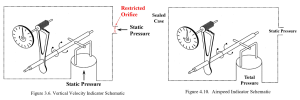
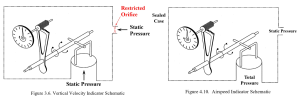
Your diagrams are faulty. Look:
1789834436429.png
On the left we have the VSI. YOU have added a restrictor into the inlet. But that's wrong. That capsule is also conected to the static port, WITHOUT a restrictor. Like so:
1789837218671.png

Next, your airspeed indicator has no pitot pressure input. None at all. How's that supposed to work? This is what it should be:

1789835484708.png


Physics tells us that K=1/2MV^2. Kinetic energy is equal to one-half of the mass times the square of the velocity. This means that kinetic energy, the impacting force of the air against the pitot tube, rises by the square of the increase in speed. This is why the airspeed indicator's scale is not linear, and that nonlinearity would be much worse without the mechanical stuff inside that mitigates it (such as the springiness of the capsule). Note the nonlinearity here:
1789837577700.png
Some really good ASIs have almost all the nonlinearity worked out.

That MV^2 means something. It means that dynamic pressure, from the pitot, varies a lot as we climb and the Mass decreases. The pitot pressure decreases much more steeply than the static pressure does, so we have an indicator that underreads with density altitude increases.

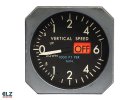
But the VSI operates on static pressure alone. Dynamic pressure does not enter into it. The altimeter is affected by altitude and temperature, since both of these govern the linearity of the air column in the atmosphere. Colder air shrinks the air column so that at a given altitude we see the instrument indicating higher than true. Warmer temps make a lower indication. With cold air we are farther up the column of air, since more of it is below us. In warm air there is more of it above us. All at the same true altitude.

Once upon a time while flying a plane that normally lands not flared and normally lands near sea level, I was traveling across the continent. I landed in Albuquerque on what we might consider a warm day. I did my normal thing, onspeed AOA with a three degree path. Indicated speed looked normal for my weight while VVI read normally. And WHAM!!! I hit hard. Why? Because tVVI is faster than iVVI just as TAS is faster than IAS. A bit of talking around, turns out I wasn’t the only one to experience this in this particular model of airplane. Many have thus reducing likelihood you might think of things like a sudden sinky, for which there was none perceived.
Clumsy flying. When we flight instructors had hard landings, we'd blame a "gust of gravity." We went on long cross countries with students, and landed at airports from sea level to high mountain airports, and never had hard landings due to lower air density. we did notice a big difference on groundspeeds on landing, of course, with the groundspeed being much lower at the low/cold airport. If you are approaching at a high/hot airport, the ground will go by faster and unless you pay attention to the indicated airspeed, you might get fooled into slowing down and end up with lots of sink and a hard touchdown.
See your self contradiction? “The air’s density affects its pressure… it’s pressure that matters to it, not air density…”
The VSI only figures the change in differential pressure within it. Density does not bother it, at least not at any altitude any GA airplane will fly. In space it will not work at all, but then neither will the airspeed or altimeter. The altimeter will have long since pegged out.
Please explain to me how we get TAS from IAS without mentioning density.
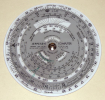
I showed you in the section about K=MV^2. M is mass, or density.

If you are actually a "pilot," you will know this thing.
1789836764784.png

I see scales for airspeed and altitude correction. I do not see any scale for VSI correction. Nor is there one on the CR-6 that I have on my desk here. There are conversions for temperature (F to C), nautical miles to statute, feet to meters, Imperial gallons to US gallons and litres, Mach number, and fuel and oil pounds or Kg. But no vertical speed conversions. Obviously, no one but you thinks there are errors worth accounting for.
 

Attachments

  • 1789834283992.png
    1789834283992.png
    533.4 KB · Views: 0
  • 1789834812116.png
    1789834812116.png
    471.2 KB · Views: 0
Now back to one of my other points, “don’t over complicate it,” yeah we simplify in lots of training in ways that create blatant errors which again renders the whole idea of “primacy” as bunk. How is it anyone manages to step up levels of understanding in the face of primacy?
I learned to fly back in the 1970s. I was taught some stupid stuff that was NOT in the textbooks, and later on when I went to earn my CPL I had to unlearn the bad stuff. This is not easy. And after I became an instructor I saw the same thing in my students. Some of them had earned their PPLs at other schools, and we had to teach them to fly all over again. It was not easy convincing them that they had been misled. Sometimes we had to use some aggressive methods, like spinning out of a skidding descending turn. Their eyes would get real big and they would never skid that turn again. Some of them could not navigate without the GPS. Many could not make a decent landing. We often wondered how they had gotten past their checkrides.

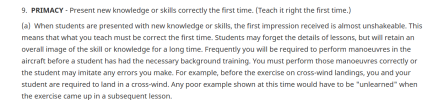
So don't tell me that Primacy is not a factor. I had firsthand experience with it. People a lot smarter than you developed the Seven Learning Factors, and this is what they have to say about Primacy:

1789838377157.png

If you have ever raised kids, you will know this, or else your kids are brats. Let them get away with some forbidden thing just once, and you will have a hard time stopping them the next time. Our society is full of proof of this.

Moreover, failing to "step up levels of understanding in the face of Primacy" is just an excuse for incompetence. And sometimes is it because the student is unteachable. Ran into some of those, too.

I also taught an Aircraft Systems course in college. That included, among many other subjects, all the instruments and how they worked and what their shortcomings were.
 
@Dan Thomas

IMG_1577.jpeg


Looks logarithmic to me. As to kinetic energy, it cares about TAS not IAS. That is why takeoff and landing rolls change with density altitude. 1/2 mV squared applies to TAS not IAS. As to location in diagrams of restrictor valve, where the static line branches in parallel be it inside or outside of the instrument is immaterial to how it works. Most tend to only have one connection hence are like your diagram but that has no consequence to function. As to pitot tube, it is the same as ram pressure which is the same as total pressure. My figure showed total pressure, that is pitot pressure.
 
Last edited:
So don't tell me that Primacy is not a factor. I had firsthand experience with it. People a lot smarter than you developed the Seven Learning Factors, and this is what they have to say about Primacy:

How many times have you messed something up the first time you try it? Yet somehow you still learn it? Hmmm…
 

Attachments

  • IMG_1578.jpeg
    IMG_1578.jpeg
    12.4 KB · Views: 0
  • IMG_1581.jpeg
    IMG_1581.jpeg
    48.5 KB · Views: 1
  • IMG_1579.jpeg
    IMG_1579.jpeg
    70.2 KB · Views: 1
  • IMG_1580.jpeg
    IMG_1580.jpeg
    49.6 KB · Views: 1
@Dan Thomas

View attachment 155134


Looks logarithmic to me. As to kinetic energy, it cares about TAS not IAS. That is why takeoff and landing rolls change with density altitude. 1/2 mV squared applies to TAS not IAS.
And this one is linear:

1789838840588.png

They make that 6000-foot unit nonlinear so that the lower end is easier to read, for approaches and so on. No one is going to approach at 6000 fpm unless they're Space Shuttle pilots.

And K=1/2MV^2 IS all about IAS AND TAS. Stop deflecting. The ASI reads lower (IAS) than TAS when M is lower.
 
@AlphaPilotFlyer and yet a light sport plane with rather limited weight and performance envelopes, the Icon A5, uses AOA as its primary reference is most procedures.

https://www.iconaircraft.com/wp-content/uploads/2024/05/ICA016024-A_POH-A5-ALL-CHAPTERS-ISSUE-A.pdf

Yes airspeed, TAS, is your energy while IAS reflects it. But AOA is your energy relative to sufficiency.


Exactly why knowing it helps and using AOA is great; AOA is constant, only one set of numbers no changes with most all the other factors. No math required real-time flying. Performance is about flow dynamics and AOA is that while IAS, CAS, EAS are merely engineering concepts to try to replicate it. With speed, you don’t know your energy compared to sufficiency. You have to calculate such. And try to do it real-time. With AOA, you know, no mental work required.


https://www.flyonspeed.org/post/applied-aoa

Note pressure diff AOA systems as well as Airfoil Performance Monitor (APM) let you take off on it too while vane, stagnation point, and INS derived can’t do that. APM, it actually gets to flow even better than AOA does.


Now back to one of my other points, “don’t over complicate it,” yeah we simplify in lots of training in ways that create blatant errors which again renders the whole idea of “primacy” as bunk. How is it anyone manages to step up levels of understanding in the face of primacy?

I get your points about fundamental knowledge and perceived dummying down of such topics. But, I would suggest such drumming down is imperative to certain missions to include fundamental pilot stuff. For most ga pilots, published AFM data is simple airspeed references, even on big aircraft, so there is no real reason to dive further into what would be theoretical for most beyond basic AoA knowledge currently and historically taught. Sure, some need to get into topic deeper such as engineering needed or advance pilots flying advance planes that use this tier of tech, but most will have no practical need for it. I would argue the role of test pilot should be to determine what data the end user pilot really needs and how best to convey it in performance tables, system descriptions, procedures, ECT. A pilots brain is like a hard drive in that both can only store so much info, and even less in a quick recall RAM…. Why need to know the back end programming of why everything is?

I would ask you consider this….. up to the early 1990s many airlines used Qfe altimeter settings for approach and landing (pilots would calculate what altimeter setting was needed to touch down zero/sea level indication)….. as with AoA indicators the thought was it’s simpler and safer as pilots were essentially flying the same approach each time and a safer reference in terms of topography. It had its issues regardless. Most only changed from Qfe when altimeter manufacturers stopped making altimeters with the extended pressure adjustments. Point being, it was a better reference in many ways but not practical in most others.

For ga pistons, AoA indicators bring practical challenges as well and faced industry push back when topic come up. They seem cheap enough now, at least in the experimental world, so things may change. I expect someone in the exp world has come up with an app or program that is accurate and reliable AoA indicator with relevant depiction of optima based on stage of flight, or maybe even a APM on the cheap, but not likely using it as primary instrument.

I don’t think we will see AoA as a primary instrument anytime soon widespread for typical reasons, at least in standard certified ga…. I think the icon is certified in lsa or primary, but agree that it would be helpful for many reasons if only as additional reference.

But pilot training has changed over time…. I had to memorized dozens of numbers and be able to explain in painful detail how things worked for my first type rating….but it was a analog plane with dials, gages, switches, handles, selectors and a flight engineer to keep track of it that often looked like the wizard of oz behind the curtain. Now flight engineers have gone the way of the radio operator and navigator with progress (as likely copilots in the near future). … I would argue the need to know basis of training is valid based on training level, and knowing exactly why is no longer needed or useful for most topics for most pilots. Those that do will be better informed, but will they be better pilots in a practical sense? With that knowledge allow them to select a better altitude or cruise speed beyond that of the computerized flight plan which uses dozens of data points and real time data from other aircraft data linked to the computer? Especially if likely against policy. ?
 
Dan Thomas takes a lot of flack from those here who customarily fly very high dollar aircraft.

I am just an ordinary pilot, who did most of my flying in single engine Cessna's and Piper's'
They were IFR equipped, with traditional "steam guages", plus very good radios.

I did not know Mr. Thomas until recent years, but I flew just as he describes, as the manufacturers informed me.
I have landed at Wray with a density altitude of 3,500 feet higher than actual altitude. Being an experienced pilot, I noticed the runway coming up faster than normal, and started my flare early. We made a smooth landing. After consulting Mr. Cessna's POH, I took on limited fuel due to the expected performance. Departure took us to higher altitudes than we normally fly, to Colorado Springs, with a cruise density altitude of over 13,000 feet. Another smooth landing.
Departing Colorado Springs in the morning, my log book shows 10,700 foot DA. We had just 2 of us, 1 medium suitcase, and just enough gas for a reasonable reserve at a lower airport to the east. Once again, the booklet from Mr. Cessna provided accurate description of the performance we received.

Many here are sill flying those old 2 and 4 passenger aircraft, safely, and arriving at our destinations, without falling out of the sky for lack of an AOA indicator.

My E6B calculated the correct values for the present conditions, particularly in flight.

Partial glass was a mess, as all my first flights were in bumpy air, and miss pushing touch screen buttons sent me into unknown modes that were hard to get out of...just me with inadequate training.

I have also flown as pilot in a full glass, autopilot, and the famous "dead pilot" switch. Thank goodness, it was a beautiful VFR day, and all my attention was outside, while the owner monitored the engine. My turns seemed co ordinated, but the display lacked T&B indicators to verify that. On request, the owner pushed a few buttons, and a tiny ball appeared, no needle for turn rate.

Do not get me wrong, the modern technology is great, just do not bash the old for minor imperfections.

Dan Thomas may be a couple of percent wrong on some things, but he is 100% right on most things. He also consistently provides the source of his data, and that data is the same that has kept my planes in the air for many years.
 
And this one is linear:

They make that 6000-foot unit nonlinear so that the lower end is easier to read, for approaches and so on. No one is going to approach at 6000 fpm unless they're Space Shuttle pilots.
Doesn’t change the fact that the measure has a squared aspect to it. Zoom close enough to any curve and you have a straight line.
 
published AFM data is simple airspeed references, even on big aircraft,
There is a rub on this. Published data isn’t there to help the pilot, it is to satisfy the regulator. And the regulations have horrible inertia. Hence that other link previously repeated below. And also the reference to the A5 with its procedures. Funny, the A5, they too had to meet the same regulators, so you see speeds in the front matter, but generally no speeds in the procedures.

 
I see scales for airspeed and altitude correction. I do not see any scale for VSI correction. Nor is there one on the CR-6 that I have on my desk here. There are conversions for temperature (F to C), nautical miles to statute, feet to meters, Imperial gallons to US gallons and litres, Mach number, and fuel and oil pounds or Kg. But no vertical speed conversions. Obviously, no one but you thinks there are errors worth accounting for.
Define “accounting” please. Do you mean calculate? Or do you mean consider? I never said you need to calculate the errors iVVI to tVVI. I only suggested if you’re used to low density altitude, start round out a little earlier and maybe give a touch of power to cushion. In fact, I also gave suggestion as to how to avoid calculating by going to AOA for stuff you’re used to using speed to do. Consideration in the ways I’m writing allows you to avoid much more calculating.
 
I have landed at Wray with a density altitude of 3,500 feet higher than actual altitude... I noticed the runway coming up faster than normal, and started my flare early. We made a smooth landing… Departure took us to higher altitudes than we normally fly, to Colorado Springs, with a cruise density altitude of over 13,000 feet. Another smooth landing.

Now a different thought with the TAS-EAS-CAS-IAS and the absolute alt vs indicated alt discussion:
Who thinks about indicated VVI vs real VVI? Indicated alt vs real while landing at high density altitude airports? Or sea level ones if your normal field is high field elevation? There is a difference and if you’re used to closer to sea level, you may want to start a round out a little earlier maybe cushioning with a little shot of power as you do or land with power if heading to the high field elevation field (hopefully you picked a longer one already and maybe a little bit longer still for landing with power). And if you’re used to the high ones, you may want to drive it in just a little bit more if going to a low one. In that Improve your Landings with AOA and Power Techniques, there was mentioned a more discrete ratchet like “chip and hold” method for round out and flare especially for those changing airplanes often such that seat and eye height to ground vary; such technique would also serve well with significant density altitude changes of landing site from normal landing site.

So, we’re in violent agreement?

Though to be fair, TAS and turn radius are more factor here, tVVI v iVVI just gets us to the point. Curious, did the manuals discuss any sort of handling aspects and differences, or were your mentions to them really more perf data?

Now as it happens sometime down the road, I had to pass through ABQ again. But I remembered the non-flared landing with high density altitude hits harder as your actual VVI is bigger than indicated VVI. So I elected to flare. Well, not really me, I told my student to give me a practice precautionary approach from which we’d flare as we always flare out of those. The student did and flared at a normal sight picture yet we fell out and hit hard relative to a flare (though within normal non-flare touchdown). Before touchdown, sensing falling out, he correctly gave it a shot of power. Yes, he had a tVVI bigger than iVVI but in this case we really had a TAS vs IAS issue as now his turn radius was bigger thus round out took more space. And also we had a slower engine response issue. Again, talking around, we weren’t the only ones in this sort of plane to experience this.

Three issues all related to density altitude involving differing round out and flare concerns:
- tVVI vs iVVI
- Larger turn radius making a round out and flare take more space
- More sluggish engine response
 
Last edited:
This thread is living somewhere between these two extremes. Genuine question, who looks at a VSI when flaring?

"Theory is when you know everything but nothing works. Practice is when everything works but nobody knows why."​

 
There is a rub on this. Published data isn’t there to help the pilot, it is to satisfy the regulator. And the regulations have horrible inertia. Hence that other link previously repeated below. And also the reference to the A5 with its procedures. Funny, the A5, they too had to meet the same regulators, so you see speeds in the front matter, but generally no speeds in the procedures.

That's SOP for pilot operating handbooks. The critical numbers are up front, not in the procedures sections. More numbers are found in the Performance section: takeoff, climb, cruise and landing data.

Here is the Cessna 172S AFM (formerly called a POH). It is 499 pages long. You read it and see if you can find ANY mention of adjusting approach speed for landing at high-altitude airports. https://www.befa.org/wp-content/uploads/2019/12/POH-Cessna-172S.pdf
See if it mentions anything about the VSI errors. It's content is regulatory, sure, but it is primarily meant to protect Cessna from lawsuits when pilots break the airplane when they ask it to do something it was not designed to do. If the VSI had errors that could compromise landings, they would have mentioned it. If the round-out radius is bigger, it's because the true airspeed is higher. That's geometry at work again, not a VSI problem. The groundspeed and true airspeed will usually be higher, but we are controlling altitude and flaring and landing VISUALLY here, not by reference to instruments other than airspeed. That's for Cat II and III pilots, and in Cat III the airplane does it for you, since you cannot see the runway. At all.

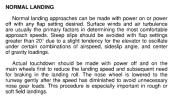
Here's what the 172S AFM says about landing:

1789846828994.png
"Surface winds and air turbulence are usually the primary factors in determining the most comfortable approach speeds." Funny that they didn't mention VSI errors, or even density altitude?
 
Once upon a time while flying a plane that normally lands not flared and normally lands near sea level, I was traveling across the continent. I landed in Albuquerque on what we might consider a warm day. I did my normal thing, onspeed AOA with a three degree path. Indicated speed looked normal for my weight while VVI read normally. And WHAM!!! I hit hard. Why? Because tVVI is faster than iVVI just as TAS is faster than IAS. A bit of talking around, turns out I wasn’t the only one to experience this in this particular model of airplane. Many have thus reducing likelihood you might think of things like a sudden sinky, for which there was none perceived.
I've done plenty of takeoffs, flying & landing at high DA, up to 9,000'. My experience is different from this. Fly the same IAS you would at sea level, and the landings turn out just fine. You're going faster since IAS reads low, but that's expected and intended.

Now as it happens sometime down the road, I had to pass through ABQ again. But I remembered the non-flared landing with high density altitude hits harder as your actual VVI is bigger than indicated VVI. So I elected to flare. Well, not really me, I told my student to give me a practice precautionary approach from which we’d flare as we always flare out of those. The student did and flared at a normal sight picture yet we fell out and hit hard relative to a flare (though within normal non-flare touchdown).
When this happens it's usually because the pilot mis-judges the sight picture. A bunch of factors can cause that, one of which is being at high DA, since you're moving faster even if the IAS is the same. Occam's razor suggests these common explanations are sufficient; the math/physics discussion is interesting academically but I don't find it leads to practical advice to do things differently. The simple advice of flying the same IAS and landing as normal, works just fine for me. YMMV.
 
This thread is living somewhere between these two extremes. Genuine question, who looks at a VSI when flaring?
Not me.

"Theory is when you know everything but nothing works. Practice is when everything works but nobody knows why."​

The difference between theory and practice is less in theory than it is in practice. ;)
 
Wow, seven pages of words from an OP/Student who asked if using a pitch attitude for Vy was good training.

All the spam cans seem to have published Vx and Vy values. Good. Memorize those, and use them as a starting point. Sometimes you'll find that a few knots (mph) faster or slower actually improves climb performance - these are old, heavily beaten up, often rebuilt airframe and systems, so who knows if the Vy of 67 for a 152 will give the best climb rate. But it's a great place to start and it won't be very far off.

The real problem I suspect is that pilots are not exposed to actual short and soft fields early in their training, so all the Vx and Vy stuff is really just demonstration. Real short strips with actual 75-100' trees at the end (there are no 50' obstacles in my experience - the FAA has the market on those and they are infrequently installed) teach the pilot to feel for airspeed that will get them safely over the trees - probably ends up being near Vy or Vx if it's short and time to distance matters, but who knows - the view out the window is what matters, not the airspeed indicator.

All the spam cans should be able to flown by a competent pilot without any airspeed indicator or VSI fairly early in the training. The sound alone of the aircraft and engine are pretty good proxies for energy/airspeed. Even higher performance aircraft can be flown in this manner - power + pitch gets one a long way all by itself.

As for slips, again, go into a short strip with real obstacles at the end and slip to just about touchdown - looking at the airspeed indicator, erroneous or not, is not part of the equation. As for AoA, other than the aforementioned Icon A5, don't think any light GA aircraft use that as a primary reference. Works very well in that aircraft and the AoA gage is front and center.

I was more concerned with OP's reflection that original CFI was not inclined to let OP touch the controls much - too much "demo'ing" - don't think my first CFI ever really did anything but serve as a safety blanket and one time on first landing suggested a bit more flare, so after that worked on keeping the nose wheel off the ground as long as possible with enough elevator authority so it didn't drop at the end but rather could be flown back to the runway. Anyhow OP moved on and probably this thread should too!
 
me reading through this thread :o

...
Yeah, the discussions that evolve in threads like this one give the impression that no one actually knows how to fly. And trudging through some of the more technical posts, it becomes easy to see why aerodynamics theory gets dumbed-down in pilot training materials. But on the upside (although perhaps only speaking for myself), dissensus represents an opportunity to learn and re-examine our own closely-held dogma in the light of new information. Hats off to you for sticking it out.

There's an old saying (and book title): "attitude is everything." And it applies to flying airplanes in that, by "attitude" we mean pitch attitude, and by pitch attitude we mean angle of attack (AoA or α). AoA is everything.

When we fly an airplane, what we are really doing is flying the wing, and we fly the wing by using pitch inputs to control its α. By now you've figured-out the fact that AoA and airspeed are directly correlated, and therefore to maintain a specific airspeed such as Vy, you must establish and maintain the pitch attitude that results in the AoA for that airspeed.

From the point of liftoff, the quantity of fuel onboard determines how much energy we have available and the throttle determines how fast we consume it, but AoA determines what we actually do with it.
 
Back
Top