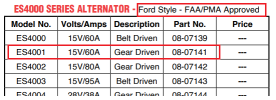
In trouble shooting a charging system malfunction as a result of a failed runup check, I'm getting various field resistance reading at the field terminal. The reading will vary from 400 ohms plus or minus to open, depending on rotating the alternator and where it's stopped. It is a PlanePower ES4001. The Zeftronic trouble shooting guide suggests this would be a brush problem. Would it be better to replace or attempt a repair? If repair, where would be a good shop to have it looked at (San Diego area)?

You are using an out of date browser. It may not display this or other websites correctly.
You should upgrade or use an alternative browser.
You should upgrade or use an alternative browser.
Alternator Field Question: Repair or Replace?
- Thread starter farmrjohn
- Start date


Dan Thomas
Touchdown! Greaser!
- Joined
- Jun 16, 2008
- Messages
- 12,389
- Display Name
- Dan Thomas
Some Mopar alternator brushes can be serviced on-aircraft, but not the one the OP has. For one, it's gear-driven and hard to access. For another, it's a Ford alternator design that has to come apart to look at the brushes.Brushes are something you can attempt with the alternator on-aircraft. Get an A&P to look at it.
The field resistance in a 14-volt alternator should be between 3 and 5 ohms. Getting readings between open and 400 ohms is a bad sign, indicating that the brushes wore down until they popped out and the springs behind them then arced on the slip rings. That means a new alternator.
From a Plane Power installation manual:
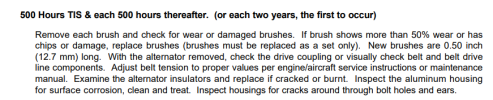
Every 500 hours that alternator needs to come off and get properly inspected. This avoids brush failure and alternator destruction. A Plane Power alternator is no different than any other small-aircraft alternator. There is no magic to it. It's just a repurposed automobile alternator.
Last edited:
Thanks for the confirmation of "bad sign" I guess. The alternator has less than 500 hours since new and was set to come off next annual in August for that 500 hour service. It is more than two years old though (installed 1-8-22) so I missed that one. Time to try and find a replacement. Spruce says expect deliver next July. Ugh, ongoing supply chain issues.The field resistance in a 14-volt alternator should be between 3 and 5 ohms. Getting readings between open and 400 ohms is a bad sign, indicating that the brushes wore down until they popped out and the springs behind them then arced on the slip rings. That means a new alternator.
From a Plane Power installation manual:
View attachment 152500
Every 500 hours that alternator needs to come off and get properly inspected. This avoids brush failure and alternator destruction. A Plane Power alternator is no different than any other small-aircraft alternator. There is no magic to it. It's just a repurposed automobile alternator.
Last edited:
They do, but for heavy duty vehicles. Common street cars still have brushes, unless it's a hybrid.They make plenty of dc brushless motors now, does anyone make brushless alternators?
I suppose if our little spam cans had brushless alternators, owners would run them until the bearings failed. At least now, failed brushes act as an early warning system.

AlphaPilotFlyer
Line Up and Wait
- Joined
- Dec 15, 2020
- Messages
- 509
- Display Name
- AlphaPilotFlyer
my local alternator shop rebuilds those ...I think it's an old Ford model. so parts are common. I would check local shops but they are getting scarce.... i believe he charged $200 for complete overhaul but sounds like your brushes are worn so it's not that difficult, you could even do it yourself as it's pretty straight forward and have your a&p inspect and install it ...I would suggest at least getting it bench tested when done ....some auto parts stores can do this but most don't understand external regulators or extra terminals, but most auto electric shops do.
the a&p may insist new parts come from PMA manufacturer
the a&p may insist new parts come from PMA manufacturer
What were the voltage readings you were getting during your troubleshooting process?In trouble shooting a charging system malfunction as a result of a failed runup check,
Here's a Plane Power T/shoot guide for reference.
Dan Thomas
Touchdown! Greaser!
- Joined
- Jun 16, 2008
- Messages
- 12,389
- Display Name
- Dan Thomas
If it has failed within 500 hours from new, it was probably built with a defect. I think Plane Power is owned by Hartzell now ( formerly Kelly) and for decades those guys have had factory screwups. One of their habits is to put way too much grease in that Ford alternator rear bearing, and when the rotor shaft goes in that grease is extruded. It gets flung around by the rotor and gets on the slip rings, dissolving some of the brushes' graphite that then forms a resistive sludge, limiting field current and therefore output. I filed numerous Service Difficulty reports, with nothing changing at their end. It was so bad that I finally started opening and fixing new alternators before I installed them.
Hartzell doesn't even follow the service manuals they sell. It's sad.
Hartzell doesn't even follow the service manuals they sell. It's sad.
Update. I actually found a new one in stock and ordered same. I also took the old one to a shop, they said it's a broken wire in the rotor and asked if it was still under warranty due to the young age. They didn't have one to use as a replacement. Oh, and as everyone knows, prices have gone up: $998 in 2022 vs. $1415 in 2026. The core charge remained the same though.
Dan Thomas
Touchdown! Greaser!
- Joined
- Jun 16, 2008
- Messages
- 12,389
- Display Name
- Dan Thomas
A broken wire in the rotor? The only time I encountered that was when the rotor windings had overheated and burned out, and that was due to some student leaving the master and alternator switches on after a flight. See, the ALT switch turns the regulator on, and it immediately sends field current to the rotor. Since the engine isn't running yet, the alternator isn't turning and producing voltage, so the regulator sends as much field current as it can to that rotor. Maybe three or four amps. The alternator isn't running, so its cooling fan isn't turning either. All this same stuff happens if the master and ALT switches are left on; that rotor winding heats up, slowly, and cooks the varnish insulation off the copper wiring, and it will eventually burn out, especially if it shorts to the iron rotor armature, which grounds through its bearings. Poof goes the wire.Update. I actually found a new one in stock and ordered same. I also took the old one to a shop, they said it's a broken wire in the rotor and asked if it was still under warranty due to the young age. They didn't have one to use as a replacement. Oh, and as everyone knows, prices have gone up: $998 in 2022 vs. $1415 in 2026. The core charge remained the same though.

Katamarino
Pattern Altitude
- Joined
- Dec 14, 2011
- Messages
- 2,231
- Location
- YPJT
- Display Name
- Katamarino
- Home Airfield
- Jandakot YPJT
Given the trash quality that GA suppliers seem to send out, I'd be more confident in a refurbished unit than in a new one.Honestly, if it’s been on the plane a while, replace the alternator. By the time you chase brushes, slip rings, and labor, a new unit gives you peace of mind.

I've bought two reman chrysler 60-amp alternators for two different airplanes and both ended up being defective out of the box.
I couldn't count how many alternators I've replaced in automotive applications and farm equipment over a lifetime and I've never had that happen. Kind of frustrating when essentially the same part that costs 4-10x as much to be 'certified' and theoretically more reliable seems to actually be far less reliable.
I couldn't count how many alternators I've replaced in automotive applications and farm equipment over a lifetime and I've never had that happen. Kind of frustrating when essentially the same part that costs 4-10x as much to be 'certified' and theoretically more reliable seems to actually be far less reliable.

A good alternator shop can repair most failure modes on these 'Airboat' alternators. It seems that they happen to use the same ones on aircraft, so I am told. 

Gary Ward
En-Route
- Joined
- Jan 16, 2020
- Messages
- 3,639
- Location
- Lawrenceburg, Indiana
- Display Name
- Challenger1
- Home Airfield
- I67
I have had good luck with overhauled alternators from Aerotech of Louisville Ky.
They have overhauled a ford style for me on Monday morning after I called Saturday morning to order. My wife dropped off the core and picked up the overhauled unit at 11 am that Monday.
Then another time they had it stock and I drove down to get it. Plane was only down for 6 hours.
Good people and shop.
Last edited:
Dan Thomas
Touchdown! Greaser!
- Joined
- Jun 16, 2008
- Messages
- 12,389
- Display Name
- Dan Thomas
Those bearings can outlast the brushes by five times or more. I seldom replaced bearings, and our alternators typically ran through three engines. By that time, the slip rings were too thin to dress anymore. In most alternators, dust can get in and it scores up those slip rings. If they're not cleaned up on the lathe, they eat the new brushes a lot faster. This is one reason that the alternator needs to come off and get opened up as per OEM manual instructions.I suppose if our little spam cans had brushless alternators, owners would run them until the bearings failed. At least now, failed brushes act as an early warning system.
I had as many problems with new alternators as with refurbished ones. The overhaulers are sometimes as dumb as the OEM. Before I retired, the shop owner had the engine shop across the airport doing our alternators, and they were failing. I took one apart and drove over there and showed them those gunked-up slip rings and brushes, and they denied incompetence even though we could see the grease splattered around the brush cavity.Honestly, if it’s been on the plane a while, replace the alternator. By the time you chase brushes, slip rings, and labor, a new unit gives you peace of mind.
Same as above. They are not following the manuals. Right there in the old Electrosystems manual (superseded by Kelly and then Hartzell) it told one to clean all the old grease out of that needle bearing, and put a pea-sized amount of grease in it and work it into the needles. No more than that, and yet overhaulers at all levels were nearly filling that bearing. It could hold a teaspoon of grease that way, and the shaft squeezes it out to create its mayhem.Given the trash quality that GA suppliers seem to send out, I'd be more confident in a refurbished unit than in a new one.
Yeah, tested for one minute maybe. It takes a few hours for the grease damage to happen. Better to just follow the manual and reinstall it and it will run fine.Makes sense. Refurbs are actually tested, new ones just get shipped.
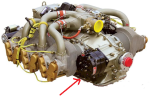
Same basic units but at many times the price. Beware, though: many are gear-driven, either off the side of the front of the case, or off the back of the engine. You will never buy one of those at the auto shops, and they will never have seen it unless someone else has tried them on it, maybe someone with an O-200 or -300, or an IO-520 or -550. You will pay a premium for such a low-volume item.A good alternator shop can repair most failure modes on these 'Airboat' alternators. It seems that they happen to use the same ones on aircraft, so I am told.
Dave, my comments were tongue in cheek. The belt driven alternators are repurposed units that are within repair capabilities of competent alternator shops. If they are told it is not used in aviation….ala airboat..some shops will work on them. At least a couple of them in my area have been known to do so. Legal for installation back in an aircraft? Of course not.