Air India 787 Crashes in Western India

Game changer in that it wasn’t the FO retracting the flaps instead of the gear like a lot of people myself included thought.
Given what little is publicly available I don't think anyone speculating at that level of detail was in the game to begin with.

Nauga,
and blind men describing an elephant
 
I don't see any video evidence of dual-FOD core failure here. Those suckers probably flamed out for reasons somebody is going to find very politically inconvenient, especially the pro-automation transhumanists. Fuel contamination is also possible; I personally don't buy that one given the lack of issues for everybody else in the field, but I'm open to stand corrected on that.

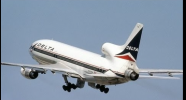
If somehow the video was obstructed at the exact wrong time (antenna hut did obstruct all of the rotation and ground effect lift off) and it turns out is was dual bird causal? Well, that too is gonna be a bad day for aviation. Because it would seem the experiment of ETOPS-cost-savings-motivated, twin-underslung powerplant count with big mouth inlet geometry, is failing. Remember, Sully should have been a total loss too, he just got lucky with the river. Guess it's time to bring back the Tri-Star baby!
1750021416858.png
 
Don't know how you can put forward the idea that inlet geometry is failing with literally millions of millions of miles flown with it.
 
Don't know how you can put forward the idea that inlet geometry is failing with literally millions of millions of miles flown with it.
Not inlet geometry, engine count. Inlet geometry is an aggravating factor.

At any rate, from the perspective of highly elastic leisure travel driving demand, sure thing I can make that argument. Perception is reality, especially in highly elastic discretionary actions such as airline travel.
 
Game changer in that it wasn’t the FO retracting the flaps instead of the gear like a lot of people myself included thought.
I don't think you can tell that...or anything else other than the rat was deployed and the plane crashed. Everything else is speculation at best.
 
I don't see any video evidence of dual-FOD core failure here. Those suckers probably flamed out for reasons somebody is going to find very politically inconvenient, especially the pro-automation transhumanists. Fuel contamination is also possible; I personally don't buy that one given the lack of issues for everybody else in the field, but I'm open to stand corrected on that.

If somehow the video was obstructed at the exact wrong time (antenna hut did obstruct all of the rotation and ground effect lift off) and it turns out is was dual bird causal? Well, that too is gonna be a bad day for aviation. Because it would seem the experiment of ETOPS-cost-savings-motivated, twin-underslung powerplant count with big mouth inlet geometry, is failing. Remember, Sully should have been a total loss too, he just got lucky with the river. Guess it's time to bring back the Tri-Star baby!
View attachment 141985
Well if a flock of birds can kill two engines hanging under opposite wings , how is a third one located in between the other two , is going to substantially help ?
 
One recent theory seems to be fuel line vapor lock that caused engine flameout. Supposedly sat on ramp in +100 F. For hours. Would not the start up, taxi, engine run up and takeoff power clear these lines. Seems like the flow would be massive relative to the size of the lines. Just a question for the big boys on this thread ?
 
We tend to treat the 737 MAX crashes, Air France 447, and the recent 787 takeoff crash in India as separate events. Different airframes, different systems, different failure modes. But they are not separate. They are three manifestations of the same underlying problem.

In all three cases, the aircraft remained physically controllable. What failed was the logic that mediated between the crew and the machine.

The 737 MAX crashes were caused by MCAS acting on a single faulty angle-of-attack sensor. It trimmed nose-down repeatedly, overriding pilot inputs. The system was not transparent, and it was not defeatable without trim cutout switches. There was no way to tell it to stop and give full authority back to the crew.

Air France 447 lost pitot input at cruise, which triggered a cascade of degraded control laws. The autopilot disconnected, protections dropped out, and the aircraft entered alternate law. The airplane still flew, but the logic no longer matched the crew’s understanding. The pilots were not prepared to fly with what remained. The result was confusion, delay, and loss of situational awareness until it was too late.

Now the 787. The aircraft used the entire 11,000-foot runway. It lifted off, but the RAT deployed immediately after rotation, which tells us that primary electrical or hydraulic power was lost. The gear never retracted. There was no fire, no asymmetry, no visible external cause. Based on what is known so far, the engines appear to have stayed on but failed to deliver full power. Whether due to configuration, logic error, or electrical fault, the airplane did not respond to what the pilots needed. They had no way to force it to respond.

Three aircraft. Three contexts. One common thread: the system failed, and it would not hand control back to the pilots.

This is not a bug in any single system. It is a design philosophy problem. These aircraft were built on the assumption that software is the final arbiter, that logic can anticipate and manage edge cases better than a human can. That assumption works right up until it does not. When data is wrong, when systems degrade, when multiple constraints compete, the software narrows instead of yielding. It preserves its own coherence, even as the aircraft falls out of the sky.

We need a change in how authority is handled. If an aircraft loses flight data, if RAT deploys, if the autopilot disconnects unexpectedly or the engines stop responding to thrust commands, the pilots should be able to press one button and take full command. Not filtered command, not suggested input. Direct, physical, complete authority.

That means raw flight controls. Full thrust. Gear and flap operation regardless of system state. Acknowledge the damage risk. Accept the bypass. Let the pilots fly.

This is not about removing automation. It is about making sure the system knows when to step aside. Human pilots rarely exceed their own limits in a crisis. Software does, because it cannot triage. It tries to preserve everything. And when it cannot, it collapses silently and does nothing.

If the crews of the MAX, AF447, or the 787 had been given a simple, guaranteed way to bypass the system and fly the aircraft directly, the outcomes may have been very different. What killed those aircraft was not mechanical failure. It was software that did not know when to get out of the way.

Question. How many of you have had automation get in the way of safely flying your plane? How many wish they could have bypassed it?

I fully understand that I am a neophyte pilot. But this is my great concern. Even at my age I understand that while the average human being is quite fallible. But, those quite fallible humans are exactly who creates computer software.

I understand that washing machines, dishwashers, thermostats, refrigerators, and even automobiles are not made to the same standards as certificated aircraft. I understand that those items do not undergo periodic maintenance, or have a governmental agency that requires manufacturers to support their products.

But, most of the products made today are pure unadulterated garbage. They rely for no logical reason whatsoever upon hardware and software that simply fails a few years after it is manufactured. And there is no way to override the all knowing gods* of automation. The sequence becomes corrupted somehow, and it is not possible to reset it or simply turn it off.

* No spellwreck, I did not mean God's (the possessive of a supernatural being).
 
But, most of the products made today are pure unadulterated garbage. They rely for no logical reason whatsoever upon hardware and software that simply fails a few years after it is manufactured. And there is no way to override the all knowing gods* of automation. The sequence becomes corrupted somehow, and it is not possible to reset it or simply turn it off.
How much the quoted part of your post do you think is applicable to part 25 airplanes or flight-critical hardware and software in them? My estimate, taking the post literally, is approximately zero.

If we run away from software and augmentation, are we willing to accept the return to pre-envelope-protection accident rates?

Nauga,
and his digital display
 
Because it would seem the experiment of ETOPS-cost-savings-motivated, twin-underslung powerplant count with big mouth inlet geometry, is failing. Remember, Sully should have been a total loss too, he just got lucky with the river. Guess it's time to bring back the Tri-Star baby!
What does ETOPS have to do with the discussion? And what was the TriStar's performance on one engine?
 
I fully understand that I am a neophyte pilot. But this is my great concern. Even at my age I understand that while the average human being is quite fallible. But, those quite fallible humans are exactly who creates computer software.

I understand that washing machines, dishwashers, thermostats, refrigerators, and even automobiles are not made to the same standards as certificated aircraft. I understand that those items do not undergo periodic maintenance, or have a governmental agency that requires manufacturers to support their products.

But, most of the products made today are pure unadulterated garbage. They rely for no logical reason whatsoever upon hardware and software that simply fails a few years after it is manufactured. And there is no way to override the all knowing gods* of automation. The sequence becomes corrupted somehow, and it is not possible to reset it or simply turn it off.

* No spellwreck, I did not mean God's (the possessive of a supernatural being).

Software does not fail “a few years after it is manufactured” , just like mathematical equations do not stop working “ with time “ - what fails is surrounding infrastructure, like for instance a server that software connects to is taken down and so on … for instance , a Commodore 64 from 1981, if you can start it up, will play the same game just as flawlessly as it did 40 yers ago as it does not require any external supporting infrastructure ( beyond electricity ) and software itself does not age.
That is one of the main benefits of digitized data and software overall - for the most part there are no “moving parts” that wear out with time or require periodic maintenance, it just works.
 
How much the quoted part of your post do you think is applicable to part 25 airplanes or flight-critical hardware and software in them? My estimate, taking the post literally, is approximately zero.

If we run away from software and augmentation, are we willing to accept the return to pre-envelope-protection accident rates?

Nauga,
and his digital display
I am not advocating running away from automation. Frankly, that would be like trying to prevent the adoption of the steamboat, trains, automobiles, and airplanes in favor of a pastoral existence where everyone got plenty of exercise . . . because they walked or took a sailboat.

I acknowledged that certificated aircraft, and the systems that go into them, are built, regulated, and maintained to a standard that is orders of magnitude higher than the standards for appliances, consumer electronics, or automobiles.

But, as I said, my great fear is a structural defect such as what @Himayeti described. I rewired my parents' dryer and now it has an on-off switch. I've rewired cars, a refrigerator that had a board failure, and could have easily done the same for a dishwasher. But, when those appliances go out nobody dies.

To paraphrase @Himayeti, it works 'till it doesn't. I really like PFLARM, but it doesn't override my decisions. And, like the more basic autopilot I have flown with, it has an on-off switch.
 
Software does not fail “a few years after it is manufactured” , just like mathematical equations do not stop working “ with time “ - what fails is surrounding infrastructure, like for instance a server that software connects to is taken down and so on … for instance , a Commodore 64 from 1981, if you can start it up, will play the same game just as flawlessly as it did 40 yers ago as it does not require any external supporting infrastructure ( beyond electricity ) and software itself does not age. That is one of the main benefits of digitized data and software overall - for the most part there are no “moving parts” that wear out with time or require periodic maintenance, it just works.
This has not been my experience. I don't for a second doubt that if you have kept your 44-year old Commodore 64 in a climate controlled surrounding and the game cartridge hasn't been eaten by rodents or in a flood you can insert it and play whatever games are on it.

But, and maybe I'm wrong, I don't see any reason that a coffeemaker, a dishwasher, a clothes dryer, or a refrigerator needs a computer chip. Or why it would be connected to any supporting infrastructure. And, it seems to me that they were manufactured to the lowest-possible standards to ensure the lowest possible manufacturing cost.

Bottom line, they don't work. Not one item or two. But well over a dozen in my short lifetime. That isn't a statistical anomaly, it is a structural defect.
 
You only need enough to restrict fuel flow through the filters. There is a now-banned additive for Jet-A that did that.
Again, how would this contaminant enter the fueling system at the airport? Why would affect a single aircraft?
 
Well... this thread has gone an interesting direction. We have conclusions being drawn about automation, philosophical insights into automation vs the human running the automation vs the designer of the automation vs the durability of the automation, condemnation of modern twin-engine aircraft designs, and comparison of consumer-grade materials to to transport-category aircraft. It is all very interesting, but I have yet to see any of those conclusions rooted in fact. I have therefore taken it upon myself to inject some facts into this discussion:

1. No one knows yet, except maybe possibly the folks with the black boxes (who are none of us), what actually happened.

2. Airline transportation has been safer in the fly-by-wire, augmented, automated flight regime of the past 2-3 decades than ever before.

3. Airline transportation has been safer in the twin-engine, high-bypass turbofan era of the past 2-3 decades than ever before.

4. It is flawed logic to compare consumer-grade appliances to industrial machines. Both are constructed to different standards. Additionally, manufacturers of consumer-grade electronics and appliances do sometimes intentionally build planned obsolescence into their design as a forward-looking business strategy. (Case in point: remember when phones had replaceable batteries and microSD slots?)

None of this means the system is perfect. Every death in aviation - really, every emergency landing - is a reminder that neither the machines nor the humans flying them are infallible. However, I dare anyone to challenge the notion that aviation has become progressively safer over time. In particular, criticize #2 above at your own peril. We live in a country (assuming you are US-based) that has suffered only one major aviation catastrophe in the past 15 years.

(On that note, what MauleSkinner said in post #145 should not be taken lightly... and there are still folks out there who think that the MAXs could have been recovered if operated by flight crews that had been trained to standards held in the US/Western Europe/Australia/etc.)
 
Well... this thread has gone an interesting direction.
Excellent post. Thank you.
.. and there are still folks out there who think that the MAXs could have been recovered if operated by flight crews that had been trained to standards held in the US/Western Europe/Australia/etc.)
737 MAXs with similar failures *were* recovered, including the airplane later lost in the Lion Air Flight 610 crash.

Nauga,
paddling off
 
What does ETOPS have to do with the discussion? And what was the TriStar's performance on one engine?
See Eastern Airlines 855, a 3-engine L1011. It lost all oil in all three engines enroute from Miami to Nassau, turned back to Miami then lost all three engines during descent. They restarted the No. 2 engine at about 4,000' and landed safely.


The problem with this branch of the discussion is there seems to be an expectation of perfect safety. There is not. A perfect safety record is the goal which we strive to achieve but we know that we never will.

As far as pilot vs. automation, we've tried it both ways. We started relying completely on the pilot as there was no automation. We added automation and that improved safety, to a point, but them we started having accidents because of overreliance on, or mismanagement of, automation. That led to a focus on automation management, which worked, but then we had accidents because pilots lost basic skills. We added back an emphasis on hand-flying skills. We advanced in our technics for threat/error-management, upset recovery, and flight path first. All of these steps have improved safety. None of them have achieved perfect safety and they never will.

How does this apply to this accident?

It is productive to talk about possible scenarios as we can learn from those discussions but we don't have nearly enough information to decide what happened, why it happened, or what can be done to keep it from happening again. Maybe its a design flaw, maybe it's a mechanic failure, maybe it's pilot error, it could be any of those at this point. There is a process that will lead to those answers and the changes that need to be made. That process has just begun.

Arguing with others who don't accept your favored hypothesis, it isn't yet up to the level of being a theory, is not productive.
 
Last edited:
there are still folks out there who think that the MAXs could have been recovered if operated by flight crews that had been trained to standards
There is no doubt about that. It's not even particularly difficult to do. The first accident airplane had the very same thing happen on the flight before the accident flight. That crew made a safe landing, even though they didn't follow the correct procedures until they were pointed out to them by the jumpseater.
 
The 757’s and 767’s that I’ve flown required 1,000’ AGL for autopilot engagement after takeoff. Also required a lateral and vertical mode selection prior to engaging. Different airline specs obviously. Other jets at my previous employer were 400’.
Boeing also has the infamous low altitude capture logic on some variants but that clearly didn’t come into play here.
A lot of this is dependent on how the jet was ordered. There’s different avionics packages offered. I’ve flown a couple of the variants, which function with slightly different MCP logic and mode options.
Might have to do with PW logic that selects HDG Hold (?) and V/S if you select an a/p below 1000’. GE and RR don’t have this issue, they both go straight to N1/EPR and VNAV SPD. Our company also allows a/p selection as low as 200’ on the 75 and 76, but you must be aware of what FMAs will result.
 
Last edited:
Might have to do with PW logic that selects HDG Hold (?) and V/S if you select an a/p below 1000’. GE and RR don’t have this issue, they both go straight to N1/EPR and VNAV SPD. Our company also allows a/p selection at 400’, but you must be aware of what FMAs will result.
Ok, I didn’t realize they were mixed in this regard. Interesting. Thank you.
 
(On that note, what MauleSkinner said in post #145 should not be taken lightly... and there are still folks out there who think that the MAXs could have been recovered if operated by flight crews that had been trained to standards held in the US/Western Europe/Australia/etc.)
I'm one of them.
 
There is no doubt about that. It's not even particularly difficult to do. The first accident airplane had the very same thing happen on the flight before the accident flight. That crew made a safe landing, even though they didn't follow the correct procedures until they were pointed out to them by the jumpseater.
You’ve had enough check rides in the plane and the sim to know that sitting 3 feet aft makes you 1,000% smarter. The fact that the jumpseater was able to help diagnose the problem isn’t surprising. He didn’t have a handful of airplane to contend with.

Well... this thread has gone an interesting direction. We have conclusions being drawn about automation, philosophical insights into automation vs the human running the automation vs the designer of the automation vs the durability of the automation, condemnation of modern twin-engine aircraft designs, and comparison of consumer-grade materials to to transport-category aircraft. It is all very interesting, but I have yet to see any of those conclusions rooted in fact. I have therefore taken it upon myself to inject some facts into this discussion:

1. No one knows yet, except maybe possibly the folks with the black boxes (who are none of us), what actually happened.

2. Airline transportation has been safer in the fly-by-wire, augmented, automated flight regime of the past 2-3 decades than ever before.

3. Airline transportation has been safer in the twin-engine, high-bypass turbofan era of the past 2-3 decades than ever before.

4. It is flawed logic to compare consumer-grade appliances to industrial machines. Both are constructed to different standards. Additionally, manufacturers of consumer-grade electronics and appliances do sometimes intentionally build planned obsolescence into their design as a forward-looking business strategy. (Case in point: remember when phones had replaceable batteries and microSD slots?)

None of this means the system is perfect. Every death in aviation - really, every emergency landing - is a reminder that neither the machines nor the humans flying them are infallible. However, I dare anyone to challenge the notion that aviation has become progressively safer over time. In particular, criticize #2 above at your own peril. We live in a country (assuming you are US-based) that has suffered only one major aviation catastrophe in the past 15 years.

(On that note, what MauleSkinner said in post #145 should not be taken lightly... and there are still folks out there who think that the MAXs could have been recovered if operated by flight crews that had been trained to standards held in the US/Western Europe/Australia/etc.)
I’m not one of those pilot who think we would have been much better off in the US.

I have two very good friends who are check airmen at a large 737 airline in the US. They recreated the MCAS issue to pilots who knew it was coming and a significant number of those crews were not able to safely get the airplane under control.

It’s alluded to in this article:

“[Captain Sullenberger] recently entered a 737 MAX flight simulator that recreated the accidents in Ethiopia and Indonesia. He said even knowing what was going to happen he ‘could see how crews could have run out of time before they could have solved the problems.’”

And according to my buddies, he’s being pretty generous with that statement. It was pretty dismal.
 
At most airports being served by large airplanes like the 787, at most gates, the fuel is delivered by an underground system which a pump trailer connecting the in-ground hydrant to the airplane's refueling port(s)
From online info, not the case at this airport nor most in India. Fueling is by truck.
 
To be fair on the Sully/MAX sim flight, apples to oranges. Sully was an excellent AIRBUS pilot, not trained or familiar with the 737.

The flight after the first MAX event crashed primarily because the maintenance to correct the sensor failure was not done correctly.

I am expecting that improper maintenance will be the triggering cause, and financial stress at the airline will be a part of the failure to properly maintain.

This plane had multiple squawks when it arrived. Were those repairs done? Done right? Mess up something unrelated?

I think it curious that Air India claims to have inspected many of their 787s, and approved them for service, without knowing what the actual failure was.
 
Is it most likely a manual deployment because most RAT deployments are manual?

It could be but highly doubtful. When 100 ft in the air and coming down, trying to find a softer point of impact is more likely than fumbling around trying to remember where a switch is, that you have never used.
 
Whoever is technically right or wrong about systems, there’s likely enough variability in pilot experience, aptitude, and emergency-panic that the automation/augmentation does better statistically to save more lives, even if it kills a few as a result.
 
It could be but highly doubtful. When 100 ft in the air and coming down, trying to find a softer point of impact is more likely than fumbling around trying to remember where a switch is, that you have never used.
Exactly. And the RAT deployed automatically (unless the auto feature was also broken) before the pilots even knew there was a problem. And the RAT isn’t going to help get the engines back anyway, which was the #1 problem at hand. Message appears on the EICAS indicating RAT deployment and is commonly the 1st abnormal a pilot sees with dual engine failure.

Hmm… Captain, I’m showing 100’ AGL with a large descent rate, the audio is blaring PULL UP-PULL UP, we have no thrust and are definitely going to crash, I’d better deploy the (already deployed RAT) so we’ll have electricity and hydraulics for impact.
 
I think it curious that Air India claims to have inspected many of their 787s, and approved them for service, without knowing what the actual failure was.

Those involved in the investigation may already have an inkling of what happened that has not been released to the public yet.
 
Everyone is asking the same set of questions. Was it bad fuel? Birds? A flap issue? A data entry error? These are valid concerns, but they are not the root of the problem. They are symptoms, not causes.

What no one seems to be asking is how a ~ $300 million aircraft, with the most advanced flight systems available today, allowed any of those issues to become catastrophic. That is the real question. And it is being ignored.

Modern aircraft are not mechanical machines guided by humans. They are software-governed systems with the crew positioned at the edge of the loop. The automation takes inputs, runs internal logic, and issues commands. It does not explain its reasoning. It does not flag implausible data. It does not ask for help. It continues execution because that is what it was built to do.

This is not a new story. It is HAL again.

In 2001: A Space Odyssey, HAL did not announce his malfunction. He did not report confusion. He followed internal logic that seemed correct to him and concealed the divergence from the crew. They had to infer that something was wrong. That is exactly what we are seeing in these aircraft systems today. They are not failing in the old sense. They are executing flawed logic in sealed environments, hidden from the people meant to oversee them.

The pilot becomes both observer and scapegoat. He is there to reassure the public, fulfill certification requirements, and take the blame when things go wrong. But he is not in control. The software is. And the software, unlike a human, will never say, "That does not make sense" or "I may be wrong."

We already have technology to monitor fuel quality. Installing contamination sensors is straightforward and inexpensive compared to the value of the aircraft. The same goes for bird detection. Basic optical systems, like the ones used in home security cameras, can detect movement and objects around a perimeter. If these tools can be deployed in consumer-grade systems, they can be deployed in aircraft. The barrier is not cost. It is mindset.

The failure here is not one bad input or a single missed condition. It is the broader system design. The aircraft does not cross-check its assumptions. It does not escalate anomalies. It does not allow the pilot to fully intervene. It assumes its logic is sound, even when all evidence outside the code points to trouble.

We need to ask better questions. Not what the pilot entered. But why the system accepted it. Not whether birds were present. But why they were not flagged. Not whether a component failed. But why the aircraft kept going without alert or correction.
 
….What no one seems to be asking is how a ~ $300 million aircraft, with the most advanced flight systems available today, allowed any of those issues to become catastrophic. That is the real question. And it is being ignored.….
Root cause analysis takes a bit more discipline than the thought process you’ve shared to determine automation is the root cause of this accident or, if improved, could have prevented it.

In time, Boeing and/or NTSB may be provided unadulterated DFDR/CVR data that can be used to under what systems and/or pilot inputs resulted in this mishap.
 
Which part of the Boeing software should have flagged the possible birds?

Boeing used HAL for their design? We have progressed well beyond that. The computers now give detailed indications of problems.

Are you sure that the plane did not annunciate a failed condition, followed by fly by pilot in command over ride of the alarm?
 
Root cause analysis takes a bit more discipline than the thought process you’ve shared to determine automation is the root cause of this accident or, if improved, could have prevented it.

In time, Boeing and/or NTSB may be provided unadulterated DFDR/CVR data that can be used to under what systems and/or pilot inputs resulted in this mishap.
You don't get it. Software should easily pick these up! The fact that it does not is the problem.

You're right that root cause analysis demands discipline. But discipline begins with asking whether the system architecture itself permits meaningful diagnosis in the first place.

If a sealed software system accepts flawed inputs, fails to escalate anomalies, and continues execution without exposing its logic, then waiting for DFDR and CVR data only tells us what the outcome was—not why the system behaved as it did. That is a post-mortem, not a design audit.

The cockpit voice and flight data recorders will give us telemetry and crew actions. They will not show us whether the automation flagged improbable thrust calculations, whether FADEC overruled a valid crew request, or whether fuel management logic suppressed critical thresholds without alerting the pilots. Those elements live deep within proprietary logic trees that are rarely subjected to external review.

The concern raised here is not speculative. It is structural. We have created systems that remove human agency while preserving human accountability. The question is not whether the pilots followed the correct checklist. The question is whether the system ever gave them the tools to know what was going wrong in time to intervene.

Root cause analysis means you look at the whole root, not just the tip. In this case, the root is software opacity, control asymmetry, and automation that neither explains itself nor asks for help when its assumptions break.

Let’s not confuse silence from a system with correctness. HAL was silent, too.
 
Those involved in the investigation may already have an inkling of what happened that has not been released to the public yet.
Possible but I think it is more likely that this is a typical response to a situation where something awful happens, there are demands that "Somebody do something!" and the involved parties "Do something" which may or may not have anything to do with what happened. If the Air India or other people really had an idea about the actual cause, why hasn't every operator of 787's been notified so they could "do something" that actually matters?
 
This is not a new story. It is HAL again.

In 2001: A Space Odyssey, HAL did not announce his malfunction. He did not report confusion. He followed internal logic that seemed correct to him and concealed the divergence from the crew. They had to infer that something was wrong. That is exactly what we are seeing in these aircraft systems today. They are not failing in the old sense. They are executing flawed logic in sealed environments, hidden from the people meant to oversee them.
I tend not to cite a science fiction book or movie to demonstrate how something should, or should not work, in the real world. Today's computers are a long way from what HAL was supposed to be in 2001.

You don't get it. Software should easily pick these up! The fact that it does not is the problem.
How is software supposed to detect the presence of birds, as you mentioned in your post?
 
Back
Top