Years later, odd reaction and another rant

murphey

Touchdown! Greaser!
PoA Supporter
Joined
Aug 21, 2008
Messages
12,628
Location
Colorado
Display Name
murphey
Home Airfield
KFTG
About 8 years ago I started instrument (again) with a fairly new (in experience) CFII but not in years. After the brand-new, very young newbie CFI for my private, I thought this was the answer. All the newbie wanted was to book hours and leave. Back to the CFII - Teaching was his retirement career after ATC. To me, not the best teacher, I spent more than 10 hrs doing Plan A, the only "teaching moment" was "do it again". No constructive criticism, no explanation how to correct the problems. Allegedly, one of the top instructors at the school. The final straw was returning to the airport - no traffic, light breeze, so I called tower and asked if I could practice quartering tailwinds. Sure, no problem. CFII was NOT happy, kept demanding I go around and enter the pattern for a traditional landing. I finally shut him up with "I'm the PIC, I own this airplane". After landing I returned to the office and informed them I was no longer a customer of the school and left. The owner, who've I known for years, made no attempt to contact me and ask about the situation.

I discovered later that the CFII had been reporting to the Chief Pilot (who was also the owner) that I was progressing very well. I guess the CFII lied because my credit card was good. At least that's my opinion.

Fast forward to this past weekend. One of the other instructors was visiting an aviation but not flying event we were holding at the airport. I asked if X was still there, yep, and I commented that's why I wasn't. The instructor wanted to know why, and I mentioned the Plan A disaster (without the landing episode). What I found interesting was the astonishment on the part of the CFII and no attempt to say "probably a difference in learning style, why not try with me or another instructor?"

There I was, a possible returning customer, and they just ignored the opportunity.

What is it with the aviation training business? Many years prior, I stopped by the biggest flight school in Denver (no, not ATP) and the person at the desk couldn't do anything except hand me the list of requirements for the instrument, couldn't answer questions, couldn't even find a CFII to talk to me. Supposedly all the CFIs have to spend some time at the desk so there's knowledgeable person when potiential customers walk in. I'm baffled.

By the way, I gave up on the instrument after that attempt. I see no reason to waste any more money. My longest trips are 4 hours, and I can always wait out the weather.
 
What is it with the aviation training business? Many years prior, I stopped by the biggest flight school in Denver (no, not ATP) and the person at the desk couldn't do anything except hand me the list of requirements for the instrument, couldn't answer questions, couldn't even find a CFII to talk to me. Supposedly all the CFIs have to spend some time at the desk so there's knowledgeable person when potiential customers walk in. I'm baffled.
I think it's a lesson in economics, really.
If you have enough customers where you can afford not to care about getting +1 more, then you can afford to shrug it off. Juice isn't worth the squeeze to them, even if getting that customer back would require nothing more than a polite invitation.

It's kind of like the A&P space. Many of the shops are less than diligent about giving updates, returning calls, giving reasonably accurate ETAs, etc. In an alternate universe where they're not inundated with work opportunities -- they might put more focus on the sales/customer relationship aspect of the business. But until that happens they're free to pick/choose the work and count on customer necessity to drive traffic.
 
If I were a CFI or a chief pilot, and one of my students shut me down with "I'm the owner", I would tell that student to go elsewhere. I certainly would not chase them out the door begging them to come back.
Ed - remember the first part of the rant....hours (and lots of dollars) for zero teaching. Lying to the chief pilot. By this time I was fed up with spending lots of money for no benefit and the landing was the last straw. I expect a CFI to encourage practicing other-than-perfect-condition landings when the opportunity permits, but not this one. Colorado has a number of one-way airports and any time I have the chance to practice, I'll take it. As I said, no one else anywhere near the airport and the tower ok'd it. I certainly wouldn't do it under any other conditions.

I pay a CFII to analyze what I'm doing wrong and provide instruction. I won't pay a CFII for sitting there and watch me screw up. Flying is not an experimental learning situation. If he had bothered to provide constructive comments after the flights (remember, this had been going on for multiple lessons) I would not object, but he never did. Only thing he ever said was "schedule the next lesson".
 
Way back when I was an active instructor I had a ''my airplane'' student on a student certificate at the time. I saw him load passengers and take off, returning several hours later at night, without passengers. I asked him about it and he told me, ''No one will ever tell me I can't fly my plane.'' I requested he find another instructor. Later I found out I was not the first instructor to give him the boot. I understand that was different from your experience. Sounds like to me your CFI was not a very capable communicator.

As for not pursuing possible students, I don't understand that. My paycheck depended on having students, so I always made time to talk to possible customers. I guess the salesman in me would take over.
 
Sounds like someone lost a slipper and is upset they haven’t been found out as the princess they think they are…

Quitters never win and winners never quit.

I could potentially complain about all of my instrument instructors as my ifr was a serious uphill struggle. The reality was my brain just needed lots of repetitions, self reflection, and failure before things improved.

If I were paying someone to teach, I would do what they said. If I wanted to practice non standard stuff, well it’s my airplane, I’ll go do that when I am not paying a passenger.
 
About 8 years ago I started instrument (again) with a fairly new (in experience) CFII but not in years. After the brand-new, very young newbie CFI for my private, I thought this was the answer. All the newbie wanted was to book hours and leave. Back to the CFII - Teaching was his retirement career after ATC. To me, not the best teacher, I spent more than 10 hrs doing Plan A, the only "teaching moment" was "do it again". No constructive criticism, no explanation how to correct the problems. Allegedly, one of the top instructors at the school. The final straw was returning to the airport - no traffic, light breeze, so I called tower and asked if I could practice quartering tailwinds. Sure, no problem. CFII was NOT happy, kept demanding I go around and enter the pattern for a traditional landing. I finally shut him up with "I'm the PIC, I own this airplane". After landing I returned to the office and informed them I was no longer a customer of the school and left. The owner, who've I known for years, made no attempt to contact me and ask about the situation.

I discovered later that the CFII had been reporting to the Chief Pilot (who was also the owner) that I was progressing very well. I guess the CFII lied because my credit card was good. At least that's my opinion.

Fast forward to this past weekend. One of the other instructors was visiting an aviation but not flying event we were holding at the airport. I asked if X was still there, yep, and I commented that's why I wasn't. The instructor wanted to know why, and I mentioned the Plan A disaster (without the landing episode). What I found interesting was the astonishment on the part of the CFII and no attempt to say "probably a difference in learning style, why not try with me or another instructor?"

There I was, a possible returning customer, and they just ignored the opportunity.

What is it with the aviation training business? Many years prior, I stopped by the biggest flight school in Denver (no, not ATP) and the person at the desk couldn't do anything except hand me the list of requirements for the instrument, couldn't answer questions, couldn't even find a CFII to talk to me. Supposedly all the CFIs have to spend some time at the desk so there's knowledgeable person when potiential customers walk in. I'm baffled.

By the way, I gave up on the instrument after that attempt. I see no reason to waste any more money. My longest trips are 4 hours, and I can always wait out the weather.

It’s not entirely clear what you're trying to get at. If your instructor wasn’t providing feedback after each flight, that’s definitely a concern - but did you bring it up with him? Communication is a two-way street.

When I have students who fly very well, at the end of the flight all I could offer were a few minor comments. Still, I always ask, “Do you have any questions for me?” Most of the time, they say no, and I walk away feeling like I didn’t do enough as an instructor. Other times, for students who need a lot of work, I end up giving a lot of feedback and I worry if I am being too critical. It really depends on each individual case.

As for the quartering tailwind - that's certainly a reasonable expectation to practice that scenario. But there may have been other factors behind your instructor’s decision. Sounds like there was a good amount of communication block between both of you.

As for your third instructor, I’m not sure what you were expecting. He’s not going to criticize another instructor without knowing the full story - that would be unprofessional. Frankly, anyone who trashes a fellow instructor just to win over a new customer, without understanding the full context, is stooping pretty low.
 
Sounds like someone lost a slipper and is upset they haven’t been found out as the princess they think they are…
When I'm teaching, my students expect me to provide constructive feedback, and to help them improve their software skills. I'm paid to do that. When I'm a student, I expect the same constructive feedback from my teachers.

As for the quartering tailwind landing....I'm paying his hourly fee. I was no longer under the hood, it was not dangerous, a 5 kt quartering tailwind, not putting anyone in jeopardy, best I can assume was that he just didn't like the fact that I invoked PIC privs. Many of you agree that I shouldn't have added the "it's my airplane" comment, fine, I'll agree to that. Landing with the quartering tailwind was the fastest and shortest way to get back on the ground.
Quitters never win and winners never quit.
There is a limit to my Return on Investment.
I could potentially complain about all of my instrument instructors as my ifr was a serious uphill struggle. The reality was my brain just needed lots of repetitions, self reflection, and failure before things improved.

If I were paying someone to teach, I would do what they said. If I wanted to practice non standard stuff, well it’s my airplane, I’ll go do that when I am not paying a passenger.
The CFII never said anything other than "book the next lesson". I kept screwing up Plan A, I received zero evaluation, zero analysis, zero instruction. Continuing to make the same mistakes only reinforces the same mistakes and eliminates improvement. Yes, I kept bringing this up but zero change on the part of the CFII. After 4 lessons I saw no reason to continue spending money. At the time there were only 3 CFIIs, including the owner, but he only took CFI students, and the 3rd instructor wasn't full-time and completely booked.

An instrument rating out here in Colorado is for people who travel extensively, or a stepping stone to the Commercial and CFI but that's never been my goal. In Colorado, 90% of the time when it's IMC, little spam cans do not go flying. Icing, high winds, mountains, etc. It's a rare day when a light fog rolls in with light winds. This past Saturday was one of those rare days. By 9am it completely cleared up for a sunny (and hot) day.

----------
Those of you who disagree with my comments, consider me chastised.

As I said, I had no intention of continuing with the instrument rating many years ago. I consider this the end of the discussion.
 
Maybe the mistakes you were making were not as major as you thought they were. A guy can get a long long way with instrument flying just going out by yourself and flying approaches, holds and variations. You don't have to be under the hood to really gain a lot. You can get really quick and very familiar with setting up the equipment in the plane and making it do what you want it to. Dial in the power, flaps settings.....etc. to see what works best. Then just have the instructor ride along while you are under the hood to get the requisite hours.

The tail wind landing deal would make me mad too though. I do a lot of flying into uncontrolled fields, lots of just vfr practice approaches and will almost always take one with a tailwind or crosswind. I find the more challenging the more enjoyable.
 
Maybe the mistakes you were making were not as major as you thought they were. A guy can get a long long way with instrument flying just going out by yourself and flying approaches, holds and variations. You don't have to be under the hood to really gain a lot. You can get really quick and very familiar with setting up the equipment in the plane and making it do what you want it to. Dial in the power, flaps settings.....etc. to see what works best. Then just have the instructor ride along while you are under the hood to get the requisite hours.
When I say I screwed up Plan A time after time after time, I'm not kidding. These were major mistakes, none of the segments of the designed maneuvers were ever correct, and I knew it. I didn't know how to correct my mistakes.
The tail wind landing deal would make me mad too though. I do a lot of flying into uncontrolled fields, lots of just vfr practice approaches and will almost always take one with a tailwind or crosswind. I find the more challenging the more enjoyable.
 
When I say I screwed up Plan A time after time after time, I'm not kidding. These were major mistakes, none of the segments of the designed maneuvers were ever correct, and I knew it. I didn't know how to correct my mistakes.
It could be totally different in the mountains, I have limited time in that environment. If you are ever in flat country it may be worth flying some procedures just for fun. Back when I did it I was all over the place under the hood.Then after just going day vfr with no pressure and playing around with the procedures getting the feel for the order of things then adding the hood later it really came together. I am not sure why instructors go straight to under the hood, probably for the hood hours needed. If you fly them in vfr to get the feel first to me it was much easier to do things under the hood.
 
Why were you paying a CFII to watch you practice landings?
 
Last edited:
I swear half of the pilot community has a touch of the 'tism when it comes to any non flying interaction.
 
I swear half of the pilot community has a touch of the 'tism when it comes to any non flying interaction.
I swear pretty much all of the pilot community has a touch of several "disorders", any of which would be disqualifying if actually diagnosed and reported to the FAA.

That said, I also believe that pretty much anything in the DSM is a spectrum and everyone is on the spectrum somewhere, but it doesn't get diagnosed as such until a particular level. The elimination of Asperger's and the naming of the "Autism Spectrum" may just be the first one to go that direction.
 
When I'm teaching, my students expect me to provide constructive feedback, and to help them improve their software skills. I'm paid to do that. When I'm a student, I expect the same constructive feedback from my teachers.

As for the quartering tailwind landing....I'm paying his hourly fee. I was no longer under the hood, it was not dangerous, a 5 kt quartering tailwind, not putting anyone in jeopardy, best I can assume was that he just didn't like the fact that I invoked PIC privs. Many of you agree that I shouldn't have added the "it's my airplane" comment, fine, I'll agree to that. Landing with the quartering tailwind was the fastest and shortest way to get back on the ground.

There is a limit to my Return on Investment.

The CFII never said anything other than "book the next lesson". I kept screwing up Plan A, I received zero evaluation, zero analysis, zero instruction. Continuing to make the same mistakes only reinforces the same mistakes and eliminates improvement. Yes, I kept bringing this up but zero change on the part of the CFII. After 4 lessons I saw no reason to continue spending money. At the time there were only 3 CFIIs, including the owner, but he only took CFI students, and the 3rd instructor wasn't full-time and completely booked.

An instrument rating out here in Colorado is for people who travel extensively, or a stepping stone to the Commercial and CFI but that's never been my goal. In Colorado, 90% of the time when it's IMC, little spam cans do not go flying. Icing, high winds, mountains, etc. It's a rare day when a light fog rolls in with light winds. This past Saturday was one of those rare days. By 9am it completely cleared up for a sunny (and hot) day.

----------
Those of you who disagree with my comments, consider me chastised.

As I said, I had no intention of continuing with the instrument rating many years ago. I consider this the end of the discussion.
I'm not seeing any discussion of the part A problems on here? But you'll blame the CFII here? I guess it was all his fault, not yours?
 
I pay a CFII to analyze what I'm doing wrong and provide instruction. I won't pay a CFII for sitting there and watch me screw up. Flying is not an experimental learning situation. If he had bothered to provide constructive comments after the flights (remember, this had been going on for multiple lessons) I would not object, but he never did. Only thing he ever said was "schedule the next lesson".
Did you ever ask him what you were doing wrong and how to correct it? If you didn't then this is on you just as much as him.
 
Reference please?
There are plenty of cases saying that a CFI giving instruction is always “deemed” to be PIC.

People argue about its meaning all the time. My reading is that it’s a rule about CFI responsibility since there are legal instructional situations where the CFI cannot be PIC. (OTOH, there are situations in which the CFI must be PIC.)

Others take it further than that but this is the first time I’ve heard anyone say it removes the ability of the qualified owner to be the PIC of their own aircraft. I have been in teaching situations in which I put the owner is PIC in writing. It doesn’t remove my “deemed PIC” responsibility.
 
I could potentially complain about all of my instrument instructors as my ifr was a serious uphill struggle. The reality was my brain just needed lots of repetitions, self reflection, and failure before things improved.

If I were paying someone to teach, I would do what they said. If I wanted to practice non standard stuff, well it’s my airplane, I’ll go do that when I am not paying a passenger.
I used the same instructor for my private and instrument and we were pretty tired of each other at the end of it. :p Once you understand the theory and the practice of instrument flying I have found just having a safety pilot along I could practice the things I knew I needed to build on and the usual cost was a beer afterwards. Learning something new, ensuring you're ready for the check ride was a time to spend the time with an instructor.

I don't have a CFI or II but have considered it. The Navy sent us through a significant program to become instructors and I think I'd enjoy doing it again.
 
Sounds like someone should have used plan B.

What is the plan A you’re talking about?

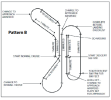
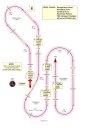
It was maneuvers under the hood to simulate different parts of holding patterns and maneuvers. Something similar to this, although I believe there were altitude changes involved as well.


lLAyK.jpg
 
It was maneuvers under the hood to simulate different parts of holding patterns and maneuvers. Something similar to this, although I believe there were altitude changes involved as well.
Yes. The "traditional" Pattern A (Some have re-lettered them and changed some) is pretty much what you showed. Pattern B includes both configuration and altitude changes. Great for scan and anticipation development

1752500681294.png
 
Yes. The "traditional" Pattern A (Some have re-lettered them and changed some) is pretty much what you showed. Pattern B includes both configuration and altitude changes. Great for scan and anticipation development

View attachment 142841
Even though A and B were in frequent use when I got my IR, I never did either one. We just went and flew approaches as soon as I understood what the plate said.
 
Even though A and B were in frequent use when I got my IR, I never did either one. We just went and flew approaches as soon as I understood what the plate said.
Were they ever a part of the ACS/PTS?
 
Were they ever a part of the ACS/PTS?
Not as far as I know. The PTS/ACS maneuvers are called "instrument approaches" :D" which use all of the skills in the patterns.

The patterns themselves are are initial training maneuvers. Preliminary stepping stones before beginning to do approaches. Like @EdFred, my instructor didn't use them. I've only used them when I see a problem they might help overcome.

Edit: I have a copy of the 1994 Instrument PTS (just after my checkride). Not there. I think but am not sure that the PTS concept started in 1986.
 
Last edited:
Yes. The "traditional" Pattern A (Some have re-lettered them and changed some) is pretty much what you showed. Pattern B includes both configuration and altitude changes. Great for scan and anticipation development

View attachment 142841

That’s what I was thinking of when it Pattern A was first mentioned by Russ. What doesn’t make sense to me is using either of those on the first or second flight for an instrument student unless there’s a real good reason (assess student’s reported proficiency).

Ass effective practice and skills development, basic flight by reference to instrument skills and scan pattern are fundamentals necessary to start patterns a/b.
Absolutely. You have to have a scan before you can begin to apply it to published maneuvers.
 
Last edited:
My read of 61.51(e) says both the instructor and student can log the time as PIC. Same applies when you're flying under the hood with a safety pilot, both of you can log the time as PIC.

Regarding who the FAA (or insurance company) will consider to be PIC... I don't know - is there a regulation for that? Pragmatically, it won't matter unless something bad happens. I think it's a grey area, because occasionally in flight reviews over the years, the CFI had me write and sign a brief statement saying I was PIC for the flight. He wouldn't be doing that unless he knew the FAA would normally consider the CFI (him) to be PIC, but the fact that he did it suggests that is by convention, not by regulation.
 
In Colorado, 90% of the time when it's IMC, little spam cans do not go flying. Icing, high winds, mountains, etc. It's a rare day when a light fog rolls in with light winds.
After completing an IR, I am coming to a similar conclusion r/e actual IFR east of Lake Michigan. A friend commented once "there's about 5 days in the year when you can actually use an instrument rating in Michigan" Most of the time, It's either VFR , or thunderstorms, or icing.
 
My read of 61.51(e) says both the instructor and student can log the time as PIC. Same applies when you're flying under the hood with a safety pilot, both of you can log the time as PIC.
The logging rules are completely irrelevant to the question of who is the the person who
(1) Has final authority and responsibility for the operation and safety of the flight;​
(2) Has been designated as pilot in command before or during the flight; and​
(3) Holds the appropriate category, class, and type rating, if appropriate, for the conduct of the flight.​
(the regulatory definition of "pilot in command").

It can also be irrelevant to the assignment of responsibility since one can be responsible for a deviation or incident without being in command.
 
Last edited:
Regarding who the FAA (or insurance company) will consider to be PIC... I don't know - is there a regulation for that? Pragmatically, it won't matter unless something bad happens. I think it's a grey area, because occasionally in flight reviews over the years, the CFI had me write and sign a brief statement saying I was PIC for the flight. He wouldn't be doing that unless he knew the FAA would normally consider the CFI (him) to be PIC, but the fact that he did it suggests that is by convention, not by regulation.
It's not "regulatory." It arises out of a number of cases in which a CFI claimed they were not PIC on an instructional flight. The FAA doesn't care who you designate during that instructional flight when it comes to responsibility. It might be the instructor; it might be the student; it might be both. I can't guess the reason that your CFI does it, but the only reason I do it when I do it is when I am concerned that I don't meet the pilot's open pilot warranty. It's to protect my client, not myself.
 
It's not "regulatory." It arises out of a number of cases in which a CFI claimed they were not PIC on an instructional flight. The FAA doesn't care who you designate during that instructional flight when it comes to responsibility. It might be the instructor; it might be the student; it might be both. I can't guess the reason that your CFI does it, but the only reason I do it when I do it is when I am concerned that I don't meet the pilot's open pilot warranty. It's to protect my client, not myself.
I did add his flight school as a named insured on my policy, but he still wanted that statement.
 
I did add his flight school as a named insured on my policy, but he still wanted that statement.
Like I said, I can't guess his reasons. Maybe he thought it would mean something to the FAA. Maybe he thought naming the flight school doesn't protect him personally in case of a claim (that makes sense unless the flight school policy endorsement included all the instructors as well as the school. Maybe for the same reason as I do it. Maybe for a completely different reason.
 
After completing an IR, I am coming to a similar conclusion r/e actual IFR east of Lake Michigan. A friend commented once "there's about 5 days in the year when you can actually use an instrument rating in Michigan" Most of the time, It's either VFR , or thunderstorms, or icing.
Having lived in Michigan my whole life, that's not even close to being accurate. Especially considering the Grand Rapids area has more cloudy days on average than sunny days. Are you solid IMC the whole flight? Not usually, but busting through a 1,000 foot thick layer that may start anywhere from 500AGL to 3000AGL? Absolutely. Even in the winter, just because it's cloudy doesn't mean it's icy. I pop through often when it's a stratus layer, get on top, and go.
 
A lot of folks knock the younger CFI's ... guess I was lucky years back needing transition training when I bought the Tiger (5 hrs insurance requirement). Did it flying home central Texas to El Paso.

CFI was 21 years old, when I asked his age, he responded if it might be a problem with me ... I indicated none whatsoever. He was flying gliders at 11 years old, took multiple check rides on his 16th birthday and had a TON of flying hours and experience. His knowledge for all the avionics capabilities including all sorts of "tricks" using the new to me Garmin 530, stormscope, etc. One of the best pilots I've ever flown with ...
 
Back
Top