Wind direction and impossible turn

Ed Haywood

Final Approach
Joined
Jul 12, 2020
Messages
7,624
Location
Tampa FL
Display Name
Ed
Home Airfield
FD77
I was doing some tight pattern work yesterday and examining options if I lost power at various points. Thinking about various scenarios, I had an insight I haven’t seen discussed often in Impossible Turn threads.

Takeoffs are usually into the wind, or as close as runway options permit. If not aligned, after rotation the pilot normally crabs into the wind.

If you turn back with a headwind, you increase your ground speed by double the wind speed. That significantly increases your energy and lowers survivability in a crash.

Yesterday the wind was 15 mph straight down the runway. My stall speed is 54mph. Let’s assume “impact” airspeed of 60mph if I am maneuvering to avoid ground obstacles. If I lost power at 500’ AGL and landed straight ahead, my ground speed would be 45mph. If I turned back and failed to reach the airport environment, my ground speed would be 75mph.

Someone with more physics chops than me can calculate the energy difference between 45 and 75mph. Is it linear? But I don’t need to do math to know I would rather land off airport at 45 than 75.

My mindset on turn back had been if I was close, give it a shot. Worst case either way, I land off airport. But I realize now that is wrong. Between the higher arrival speed and less time to select and maneuver to a suitable touchdown point, worst case for a failed turn back is likely to be much less survivable than straight ahead, ESPECIALLY in a headwind.
 
Pretty sure the number you’re looking for is 1/2MV squared, so force goes up as the square of the speed, so, yeah, makes a huge difference
 
The energy increase is exponential. That's largely irrelevant if you're landing. Not so much of you're crashing. If you've got a great place to land in front of you and your engine's out, take it. But landing on the runway with X energy sure beats crashing into trees, buildings, mountains, etc at sqrtX energy.

If you want to get practice with downwind landings, start flying gliders. It's part of the syllabus.
 
I assume you need an EAA membership to view this, but...

"When an engine fails shortly after takeoff, pilots face a critical decision: Attempt the "impossible turn" back to the runway or commit to landing straight ahead. This webinar examines the factors that make this maneuver possible versus impossible, including altitude requirements, distance from the runway, and aircraft performance considerations. Learn practical techniques for quickly assessing whether you have sufficient height and proximity to attempt the turn, plus step-by-step procedures for executing a safe return to the runway when conditions permit. We'll also cover proper decision-making for when landing ahead is the only viable option, helping you prepare for this high-stakes scenario before it happens."

Things I recall off the top of my head: high performance aircraft - you can never make it back - you are too far away.
Drifting downwind helps.
45 degrees of bank.

 
I was doing some tight pattern work yesterday and examining options if I lost power at various points. Thinking about various scenarios, I had an insight I haven’t seen discussed often in Impossible Turn threads.

Takeoffs are usually into the wind, or as close as runway options permit. If not aligned, after rotation the pilot normally crabs into the wind.

If you turn back with a headwind, you increase your ground speed by double the wind speed. That significantly increases your energy and lowers survivability in a crash.

Yesterday the wind was 15 mph straight down the runway. My stall speed is 54mph. Let’s assume “impact” airspeed of 60mph if I am maneuvering to avoid ground obstacles. If I lost power at 500’ AGL and landed straight ahead, my ground speed would be 45mph. If I turned back and failed to reach the airport environment, my ground speed would be 75mph.

Someone with more physics chops than me can calculate the energy difference between 45 and 75mph. Is it linear? But I don’t need to do math to know I would rather land off airport at 45 than 75.

My mindset on turn back had been if I was close, give it a shot. Worst case either way, I land off airport. But I realize now that is wrong. Between the higher arrival speed and less time to select and maneuver to a suitable touchdown point, worst case for a failed turn back is likely to be much less survivable than straight ahead, ESPECIALLY in a headwind.
I believe a decision to make the turn back to the airport @ 500 AGL is really bad ADM.
 
Any turn back decision has to consider terrain and surface conditions. What speed the return to earth is made isn’t the highest priority.

In my opinion? The impossible turn is made impossible by visual decisions rather than airspeed decisions. It’s the old downwind turn argument.
 
In my opinion? The impossible turn is made impossible by visual decisions rather than airspeed decisions. It’s the old downwind turn argument.
Yup. Illusions created by drift. In the turn to downwind, the airplane will appear to be slipping heavily and the pilot will tend to apply more rudder, starting a skid that often results in a stall and spin. One has to keep the ball centered, and ignore the visual illusion.
 
My last two flight reviews with two different instructors have included no-power landings from midfield downwind to a full stop. No emergency but a good reminder of how quickly my plane comes down when making a 180° turn with no power, even at best glide speed. I’ll be ready for it at my next flight review.
 
“…Someone with more physics chops than me can calculate the energy difference between 45 and 75mph. Is it linear…”

I don’t know but it sure seems like one of those the square of things
 
“…Someone with more physics chops than me can calculate the energy difference between 45 and 75mph. Is it linear…”

I don’t know but it sure seems like one of those the square of things
I think it's a cube of things. :dunno:

75 mph is 1.6666 times more speed than 45 mph. So, 1.6666 x 1.6666 x 1.6666 = 4.6 times more energy to be dissipated by the crash. What say you young engineers? I haven't had physics since high school in 1964, so I wouldn't bet on my own guess.
 
Kenetic energy = 1/2 Mass * Velocity squared

Every pilot should know that because it is one of the terms in Bernoulli's equation (except density replaces mass) [/smartass]
 
If you want to get practice with downwind landings, start flying gliders. It's part of the sysyllabus.

One of the first things on the syllabus. Along with sustained flight at the edge of controlability, and sticking 100% of your landings.
 
I assume you need an EAA membership to view this, but...

"When an engine fails shortly after takeoff, pilots face a critical decision: Attempt the "impossible turn" back to the runway or commit to landing straight ahead. This webinar examines the factors that make this maneuver possible versus impossible, including altitude requirements, distance from the runway, and aircraft performance considerations. Learn practical techniques for quickly assessing whether you have sufficient height and proximity to attempt the turn, plus step-by-step procedures for executing a safe return to the runway when conditions permit. We'll also cover proper decision-making for when landing ahead is the only viable option, helping you prepare for this high-stakes scenario before it happens."

Things I recall off the top of my head: high performance aircraft - you can never make it back - you are too far away.
Drifting downwind helps.
45 degrees of bank.

Straight ahead? Maybe. Something less than 180° may be acceptable and provide a better outcome. Every pilot should have a plan of what to do and where to turn before they push the throttle open.

A pilot needs to examine his/her takeoff profile. Do you prefer Vx? Vy? Stsy in ground effect until at cruise speed and then climb? When do you choose one over the other? How will it change your emergency plan?
 
Kenetic energy = 1/2 Mass * Velocity squared

Every pilot should know that because it is one of the terms in Bernoulli's equation (except density replaces mass) [/smartass]
No doubt you are correct, Professor. But can you help me spot the fault in my logic? In Stick and Rudder, Wolfgang Langewiesche writes that to cruise twice as fast takes eight times the power, i.e., a "cube" effect (2^3). From that, I surmised the opposite to be true. If more power per instant is required to go faster, then the same amount of power per instant ought to be required to cancel out the go faster power. I'm also thinking in terms of a sudden stop, too.
 
The energy increase is exponential. That's largely irrelevant if you're landing. Not so much of you're crashing. If you've got a great place to land in front of you and your engine's out, take it. But landing on the runway with X energy sure beats crashing into trees, buildings, mountains, etc at sqrtX energy.
Least bad option is a good option. Flat spots on the airport or close by are good too. I tremble to think about y'all that fly out of some big city airports where the choices for emergency landing off airport are going to hurt, bad.

A close friend has survived two takeoff engine failure turnbacks from low altitude, I forget the AGL exactly. His saving grace was having a plan and executing immediately. I also don't know what angle of bank he used but from my days of doing low level 180 autorotations in helicopters I think is down to muscle memory to keep things coordinated in a steep turn with that nose way down. No time to think, just do.

Too bad most of us don't have Bob Hoover skills but I can visualize 'diving turn at the ground' while sensing the energy state of the airplane. Armchair observation from here, YMMV. A few years ago I got some dual in a 172 where my CFI friend did the maneuver exactly that way. He was fearless it seemed but then again he's a retired Navy f-18 pilot.
 
Last edited:
No doubt you are correct, Professor. But can you help me spot the fault in my logic? In Stick and Rudder, Wolfgang Langewiesche writes that to cruise twice as fast takes eight times the power, i.e., a "cube" effect (2^3). From that, I surmised the opposite to be true. If more power per instant is required to go faster, then the same amount of power per instant ought to be required to cancel out the go faster power. I'm also thinking in terms of a sudden stop, too.
It’s the cube of power, but isn’t it the square of thrust?
 
No doubt you are correct, Professor. But can you help me spot the fault in my logic? In Stick and Rudder, Wolfgang Langewiesche writes that to cruise twice as fast takes eight times the power, i.e., a "cube" effect (2^3). From that, I surmised the opposite to be true. If more power per instant is required to go faster, then the same amount of power per instant ought to be required to cancel out the go faster power. I'm also thinking in terms of a sudden stop, too.

Power is a function of how fast you are doing work (force * distance) - if drag was constant with speed, Power would increase with speed squared. But since drag basically goes up with speed squared, power ends up being a function of speed cubed.
 
No doubt you are correct, Professor. But can you help me spot the fault in my logic? In Stick and Rudder, Wolfgang Langewiesche writes that to cruise twice as fast takes eight times the power, i.e., a "cube" effect (2^3). From that, I surmised the opposite to be true. If more power per instant is required to go faster, then the same amount of power per instant ought to be required to cancel out the go faster power. I'm also thinking in terms of a sudden stop, too.
That's drag at work, not kinetic energy.

1/2MV² means that 75 MPH will have 2.77 times the impact of 45 MPH. If my math is right.
 
Straight ahead? Maybe. Something less than 180° may be acceptable and provide a better outcome. Every pilot should have a plan of what to do and where to turn before they push the throttle open.
^^^^ This!

Every airport, every plane is a bit different. A plan on the ground is critical. At my airport on the normal runway straight ahead is dense townhouses, A 15 degree turn to the left and it's much less dense, 30 degrees or more and you have roads, fields, and airport property. Depending on things...you may make the impossible turn, maybe not. But running into anything other than dense townhouses is preferred.

Every situation is different and a one-size-fits-all solution is a bad idea. If you can't make it all the way back, the old rule applies. Don't stall and hit the softest thing you can as slow as you can.

Planning and a takeoff brief are good.
 
Power is a function of how fast you are doing work (force * distance) - if drag was constant with speed, Power would increase with speed squared. But since drag basically goes up with speed squared, power ends up being a function of speed cubed.
If pie are round, and cornbread are square, what are cubed?
 
My PPL instructor taught:

Lose power before over the trees, flaps 20, stay above stall speed, aim between 2 trees.
High enough to clear first trees, not reach the parkway? Same as above, pick smaller trees that will bend when you hit them.
Clear all the trees? Dive a little for better safety from stall, turn and land on either pavement or grass, according to traffic.

Away from home, no more than a 45 degree turn, best place you see, never change your mind. Flaps 20 for minimum speed as you arrive on terra firma.
 
I believe a decision to make the turn back to the airport @ 500 AGL is really bad ADM.
That depends very much on the airplane, the terrain, the weather, and the airport. You have to know your limits and parameters.
 
If you turn back with a headwind, you increase your ground speed by double the wind speed. That significantly increases your energy and lowers survivability in a crash.
Will it? What if in front of you happens to be a lake, a junk yard or maybe even a high school (yes, they really do build them near airports in some places).

So I think my decision to turn would be #1 HOW HIGH am I and is there even a chance. Next would be, as you did point out, is it better to go straight or turn back. This is something that hopefully you decided before you even left home or the motel by looking at Google Maps. If I know that going forward is not the best option and I *AM* high enough to turn around, landing (any way, shape or form) on the runway or anywhere on the reletively flat airport environment may be the best option.
 
Danial field, Augusta Ga has 2 runways, crossing near the nw ends at about 60 degrees, or 120, depending in what you were gong to do.

Early summer, 1957.

One of my instructors was test flying a Piper J3 with a replaced engine, and about 50 feet up, it quit. He dropped the nose for airspeed, steep right turn 120 degrees, lined up, and landed on the other runway.

Fast, correct reaction by a skilled pilot who KNEW THE CHARACTERISTICS AND LIMITATIONS OF THAT AIRCRAFT, made that impossible turn appear easy. Obviously, that was a down wind landing.

There were several witnesses, including the mechanic, so truly accurate recounts were common to hear. My next lesson had that in the preflight briefing.
 
Lose power before over the trees, flaps 20, stay above stall speed, aim between 2 trees.
Be careful of that advice. There's a difference between aiming between two trees once on the ground to let the wings absorb impact and aiming between two trees while still in the air. In addition to removing all the drag and ability to control the airplane, it makes the FAA unhappy because your pilot certificate says, "airplane," not "missile."

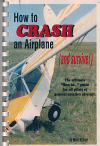
That comment is from Mick Wilson. He was ra retired FAA safety program manager and accident investigator. He wrote "How to Crash and Airplane and Survive" based on a survey of accident reports. I was lucky enough to hear him live.

1757259883422.png
 
I think the best advice I ever heard is
“Fly the aircraft as far into the crash as possible “
Meaning don’t stall it don’t spin it keep control as long as possible.
 
Be careful of that advice. There's a difference between aiming between two trees once on the ground to let the wings absorb impact and aiming between two trees while still in the air. In addition to removing all the drag and ability to control the airplane, it makes the FAA unhappy because your pilot certificate says, "airplane," not "missile."

That comment is from Mick Wilson. He was ra retired FAA safety program manager and accident investigator. He wrote "How to Crash and Airplane and Survive" based on a survey of accident reports. I was lucky enough to hear him live.

View attachment 144865
At the end of the runway, there was no choice but hit trees, they were close together. We considered worst case was hitting one dead on and, and literally stopping dead, and falling to the ground. With the wings stripped off, the fuel might be left behind, and the final impact had a chance of being with the ground at a modest angle.

I have read that book, and generally find the logic very good.
...which all goes back to one of the recurrent themes in the thread. What do to or not do is environment and situation specific.
 
I think the best advice I ever heard is
“Fly the aircraft as far into the crash as possible “
Meaning don’t stall it don’t spin it keep control as long as possible.
I think that may be the sole universally correct piece of advice.
 
I believe a decision to make the turn back to the airport @ 500 AGL is really bad ADM.
It depends on the airplane. Ultralight? 500' is plenty. Lancair? Not so much. In between, Cub, 172, Bonanza... it varies. What's on the ground changes things, too. Every takeoff is different.
 
It depends on the airplane. Ultralight? 500' is plenty. Lancair? Not so much. In between, Cub, 172, Bonanza... it varies. What's on the ground changes things, too. Every takeoff is different.
Bingo. Climb gradient, takeoff roll length, glide ratio, winds, stall speed, pilot experience. Not an infinite number of variables, but they all matter and you're best served by having a plan before you begin the takeoff roll.
 
It depends on the airplane. Ultralight? 500' is plenty. Lancair? Not so much. In between, Cub, 172, Bonanza... it varies. What's on the ground changes things, too. Every takeoff is different.
In a glider, 200' is usually more that enough.
 
Back
Top