Wheel Pants

What wheel pants would you install?


  • Total voters
    21

WDD

Final Approach
PoA Supporter
Joined
Oct 16, 2019
Messages
8,855
Location
Atlanta / Marietta
Display Name
Vintage Snazzy (so my adult children say)
Home Airfield
KPUJ
So, getting new tires on the 182 and I'll also be putting wheel pants on. They were off the plane when I got it two years back. Would be nice to get 2 - 3 more knots of speed because, why not. But -

Besides the main wheels, should the nose also get pants?

I have the pants but none of the installation hardware. The nose looks like a bit of work, and I'm not sure of how well the tow bar will work.

Nighty percent of my flying will be on asphalt.
 
Not all wheel pants are created equal. As to partial, it's the other way around: Nose strut/wheel is the biggest contributor to drag down low, due to the presence of the thrust wake. You'd want to prioritize the nose strut, which is why airplanes like Mako retract nose only.

The biggest contributor on the mains is a poor blending with the leg (interference drag), lack of leg fairing proper, or exposed brake assembly. That's why the old leaf spring cessna or equivalent piper vintage only advertised a 3mph gain, whereas the later styled, brake-covering and leg-blending variant (late 70s for both OEMs) pants increases speed closer to 5-7knots.

So it depends on what wheel pant vintage you're talking about. The old ones are worthless; if you're not covering the brake assembly, they're cosmetic only. The later production 182 pants are worth keeping on imo. The higher you go, the less it matters. Advantage fixed gear turbo.

Can you even get 130 knots (true) out of a non-turbo 182 without pants? Legit asking; only thing I've flown in that space was an older 206 a while ago and I can't remember what that thing did on bare wheels and way too much GPH.
 
Last edited:
Putting the pant on the nosewheel will give you the most benefit. The nosewheel is right behind the prop disk and faces airstream drag plus additional drag from the accelerated propwash.
 
Can you even get 130 knots (true) out of a non-turbo 182 without pants?

At 7-9 thousand I am getting 135 TAS without pants. LOP, about 13 gph.

The old ones are worthless; if you're not covering the brake assembly, they're cosmetic only.

Well, learn something new and maybe change course. The pants I have are the original 1974 182P model variety, and they don't cover the brakes. Also, while I have the pants, I don't have the mounting hardware. Bolt - $19, Spacer, $50. OK. Main mounting plates and required stiffeners - $2,068. Not the pants, just the hardware. Yikes

So about $2250 for hardware to mount fairings that you say don't do anything? Damn.............
 
At 7-9 thousand I am getting 135 TAS without pants. LOP, about 13 gph.


Well, learn something new and maybe change course. The pants I have are the original 1974 182P model variety, and they don't cover the brakes. Also, while I have the pants, I don't have the mounting hardware. Bolt - $19, Spacer, $50. OK. Main mounting plates and required stiffeners - $2,068. Not the pants, just the hardware. Yikes

So about $2250 for hardware to mount fairings that you say don't do anything? Damn.............
329d7a1a-54e8-4fb2-9344-ce7196c71a8d.jpg

77fe7aa1-f6ff-4e61-b6b8-31bd8138ceaa.jpg

The fairings cover the brakes. The most challenging part is getting the the right length/type screws' so not to interfere with the tire. Took me a couple try's to get them right.
If your plane does not have the main mounting plates it can get expensive.
There's no difference in tow bars needed. Most tow bar will work.

I bought it without wheel pants mounted but made sure they were included in the deal when I saw them laying around his hangar. Turned out he didn't have any of the mounting hardware or the top of the front wheel pant. The plane did have the mounting plates for the mains. I found 2 used fairings for it.

I have 1700 hrs on them and do quite a bit of grass landings. They have held up good so far. I prefer them mostly for the looks.
 
Last edited:
Can you even get 130 knots (true) out of a non-turbo 182 without pants? Legit asking; only thing I've flown in that space was an older 206 a while ago and I can't remember what that thing did on bare wheels and way too much GPH.

I fly a 180 with 29" Bushwheels, I get 130kts true at 18" and 2300 rpm. Burning about 11gph.
 
At 7-9 thousand I am getting 135 TAS without pants. LOP, about 13 gph.


Well, learn something new and maybe change course. The pants I have are the original 1974 182P model variety, and they don't cover the brakes. Also, while I have the pants, I don't have the mounting hardware. Bolt - $19, Spacer, $50. OK. Main mounting plates and required stiffeners - $2,068. Not the pants, just the hardware. Yikes

So about $2250 for hardware to mount fairings that you say don't do anything? Damn.............
oh wow, I couldn't touch 135 without flogging the Arrow at rental power. Granted at 10gph I could do 138ktas solo/135 family up, but that capped me below 8k to make that power, which I didn't cruise at much. In fariness, for an almost 70% capex delta, I was happy to tote my little family at 130 on 9gph, which is how I operated the thing for 13 years. I was never happy with the climb rates, especially when the kiddo started growing. Digressing.

The google fu says P model was the first year of tubular legs and new style pants, yours should have come with these...
1785377511606.png
...Not these
1785377616209.png

Top ones are good for 5+ knots inclusive of the leg fairing; bottom ones are good 2 knots with all three installed, aka trash. Somethings not adding up.

At any rate, top ones, go with them. Bottom ones, leave at home, you already make good speed on FG, for my standards at least. 182 is a great all-around performance value.
 
My P has the serial number that has the “old” style pants.

So, I might just leave them off with the new tires. Someday I guess I could get the Knotts to U pants, which BTW requires an additional $2000 of mounting hardware. And since it’s an STC needing a 337, I would get to pay an A&P IA to install and sign off. And I get to pay the painter ……
 
I remove and install mine regularly depending on what kind of ops I'm doing and what the weather is.

An unappreciated benefit of pants is they function like fenders on a bike, keeping spray from the wheels from getting all over the bottom of the wings when operating from a wet grass strip.
 
Changing pants requires W & B revision.

Much easier to write the Report once for all configurations anticipated.

Particularly so if you are paying to have it done.
 
I remove and install mine regularly depending on what kind of ops I'm doing and what the weather is.

An unappreciated benefit of pants is they function like fenders on a bike, keeping spray from the wheels from getting all over the bottom of the wings when operating from a wet grass strip.
For sure on the spray under the wings, It makes a mess in wet muddy grass without them.
 
Last edited:
Our club voted no wheel pants to make maintaining proper air pressure easy.

Tires lasted much longer. After an underinflated tire shredded on landing, in strong cross wind, messed up the wheel, and produced an excursion of the narrow runway, the economics were clear.

Wheel pants are just good for a better resale price.
 
Last edited:
What about neon wheel spinners?
Rex Kramer.jpg
“Striker, listen, and you listen close: Flying a plane is no different than
riding a bicycle, just a lot harder to put baseball cards in the spokes.”
 
  • Like
Reactions: WDD
My 175 came with fairings on the main wheels only. I took them off to air up the tires, and then flew. Only lost 2-3 MPH. They’re still sitting on a shelf. The speed difference isn’t enough to matter, and since the fairings don’t have the access doors for the valve stem, they have to come off every time I want to check pressure.

If I had the bucks for a set of Knots2U fairings, I’d put them on.
 
If I had the bucks for a set of Knots2U fairings, I’d put them on.
I don't believe wheel fairings are going to be a thing for my airplane. Just not what I want to spend $ on. Maybe I'll change my mind, but I doubt it.

My current fairings aren't an option, as the main gear fairings are the old style and I now understand won't do much. The nose won't fit because the previous owner put on a 6 inch rim vs the required 5 inch.

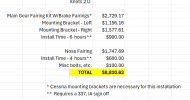
Here is what it would cost me for K2U, not including painting:

1785439279391.png
 
I don't believe wheel fairings are going to be a thing for my airplane. Just not what I want to spend $ on. Maybe I'll change my mind, but I doubt it.

My current fairings aren't an option, as the main gear fairings are the old style and I now understand won't do much. The nose won't fit because the previous owner put on a 6 inch rim vs the required 5 inch.

Here is what it would cost me for K2U, not including painting:

View attachment 153877
That’s exactly why I haven’t gotten them.
 
  • Like
Reactions: WDD
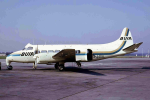
The deHavilland Heron.
1785441543971.png
Mark I - with fixed gear - 7,965 pounds empty - 160 knot cruise.
Mark II - retractable - 8,150 pounds empty - 159 knot cruise.
 
Kind of impressive how wheel fairings have improved over the years. Pre shutdown vs re start are different. Todays’s Cirrus is fixed gear that has a great cruise speed due in part to the attention to aerodynamics of fairings, etc.
 
SO, I learn new things everyday. To recap:
The previous owner put on over sized tires, but gave me the old wheel pants. I now need new tires, so now is great time to put on the wheel fairings. Got to be easy, right? (buh ha ha ha ha ha ha ha ha ha ha)

1) My main wheel fairings that came with the plane are the old style which apparently don't add much to the cruise speed.

2) I have none of the main fairing metal mounting plates. Small pieces of sheet metal. Hey, it's sheet metal. I could make it without too much difficulty, but that wouldn't be legal. Need to buy it. How much could that cost?? Turns out, $2700.

3) The nose fairing would be somewhat helpful with cruise speed, and the fairing I have is for the standard 5 inch rim. The previous owner somehow put a 6 inch rim on the nose. I can use this fairing if I bought a new rim, bearings, seals, whatnot ($1000??). And pay the A&P to convert it back. $600 in labor? Or buy a new nose fairing to fit a 6 inch wheel with a 6.00 - 6 tire for a $2000 there abouts. And pay the A&P to install, since it has an STP and needs a 337.

Morale of the Story: Once again, planes are always going to be interesting and give you "surprises!". :cool: All in all, first world problem.
 
Last edited:
I remove and install mine regularly depending on what kind of ops I'm doing and what the weather is.

An unappreciated benefit of pants is they function like fenders on a bike, keeping spray from the wheels from getting all over the bottom of the wings when operating from a wet grass strip.
I'm curious about the effects of that mud and grass on a fabric covered aircraft. I have no ownership experience with one, and knowing you recently had those surfaces recovered, I'm curious about maintenance requirements and the ability to prevent staining and other similar issues.
 
I'm curious about the effects of that mud and grass on a fabric covered aircraft. I have no ownership experience with one, and knowing you recently had those surfaces recovered, I'm curious about maintenance requirements and the ability to prevent staining and other similar issues.

With modern polyurethane paints, no effect other than washing more often. On older finishes like ceconite or polyfiber, might accelerate aging a bit, I suppose. UV is a much bigger issue.
 
I don't believe wheel fairings are going to be a thing for my airplane. Just not what I want to spend $ on. Maybe I'll change my mind, but I doubt it.

My current fairings aren't an option, as the main gear fairings are the old style and I now understand won't do much. The nose won't fit because the previous owner put on a 6 inch rim vs the required 5 inch.

Here is what it would cost me for K2U, not including painting:

View attachment 153877
Curious to know how a 6 inch rim on the nose wheel works with a standard nose fork?
 
2) I have none of the main fairing metal mounting plates. Small pieces of sheet metal. Hey, it's sheet metal. I could make it without too much difficulty, but that wouldn't be legal. Need to buy it. How much could that cost?? Turns out, $2700.
You could make the parts under the owner produced parts rules.
 
SO, I learn new things everyday. To recap:
The previous owner put on over sized tires, but gave me the old wheel pants. I now need new tires, so now is great time to put on the wheel fairings. Got to be easy, right? (buh ha ha ha ha ha ha ha ha ha ha)

1) My main wheel fairings that came with the plane are the old style which apparently don't add much to the cruise speed.

2) I have none of the main fairing metal mounting plates. Small pieces of sheet metal. Hey, it's sheet metal. I could make it without too much difficulty, but that wouldn't be legal. Need to buy it. How much could that cost?? Turns out, $2700.

3) The nose fairing would be somewhat helpful with cruise speed, and the fairing I have is for the standard 5 inch rim. The previous owner somehow put a 6 inch rim on the nose. I can use this fairing if I bought a new rim, bearings, seals, whatnot ($1000??). And pay the A&P to convert it back. $600 in labor? Or buy a new nose fairing to fit a 6 inch wheel with a 6.00 - 6 tire for a $2000 there abouts. And pay the A&P to install, since it has an STP and needs a 337.

Morale of the Story: Once again, planes are always going to be interesting and give you "surprises!". :cool: All in all, first world problem.

Ouch!

Seems like that money could go towards better plane investments.
 
  • Like
Reactions: WDD
I'm curious about the effects of that mud and grass on a fabric covered aircraft. I have no ownership experience with one, and knowing you recently had those surfaces recovered, I'm curious about maintenance requirements and the ability to prevent staining and other similar issues.

Forgot to mention, sandy grass strips are hell on brakes. I've decided to order a stack of caliper o-rings and replace at every annual. Also probably going to start pulling the brakes off quarterly to clean and regrease. What a mess.
 
Pants can fill up with a considerable amount of mud and debris.

The added weight and friction can substantially increase take- off distance.
 
All the clubs and schools I have been at, often buying used planes or getting planes on lease back, we always removed them…. Sometimes at the opposition of lease back owner. Our experience with rental fleets with different pilots and heavy use was it’s impossible to inspect tire condition for pre flights and one more thing to remove each 100 hour, inspection, tire change. Wasn’t uncommon for tire flat spots to go unreported as the next guy couldn’t see anything before taking the plane and a lot of who’s responsible for buying new tire finger pointing took place.


They added weight as well, and collected dirt, especially if operating off soft fields. Economically they made no sense and added to op cost for these reasons especially since most rentals were not cross country flights where 2-3 kts was a factor compared to training missions. Lower private use airplanes different and not such a factor and look cool and retro.

We took them off our c172 once we installed a exp engine and began flight testing, mostly because we did a lot of touch and goes with intended hard landings for structural data, and short field ops to get performance data, so went thru a lot of main tires and pants would have ment more work (BYW, we found the monster rethread tires lasted much longer than all the new tires we tried). We tried selling the pants and later give them away but no takers, so tossed them into the dumpster. Seems most thought the same, and likely same reason why you don’t see them on most trainers.

Next time changing tires, spray paint the wheels a cool color and it looks cooler than pants, even an aluminum color for that original look. I’ve seen a neon green which stood out on the ramp, as well as white which blended with hull for a cool look…. No A&P needed as its simple corrosion control, whereas removing pants requires w&b correction
 
Back
Top