What single engine trainer to buy?

The RV-12 is already being produced under the existing LSA rules. MOSAIC simply widens the definition of LSA to faster and more complex aircraft (and gets rid of the term "LSA").

MOSAIC makes it a lot easier to manufacturer aircraft than under part 23, but it's still an expensive proposition to develop and certify a new design. Not something that's practical if you're only building a few planes.
Please see what I quoted to better understand why I used "RV-12". Otherwise, I've full agreement with you.
 
Not something that's practical if you're only building a few planes.
MOSAIC opened a number of design options that did not previously exist for SLSA. However, whether those options can be "practical" to produce at lower numbers has yet to be seen. Once the new Part 22 standards and guidance are released, then perhaps we can see if that statement holds true. But based on the current ASTM standards the jury is still out with some of those new design options on that topic.;)
 
Last edited:
The flight school local to me is flying a 172M and an SR20. I understand the Cirrus to be approximately double the hourly rate, but it seems to get just as much flight time.

I’m making the assumption it creates generally less headaches day to day with keeping it in the air.
 
Last year I flew a 1965 172G on a pre-buy flight and ultimately an inspection (I ended up not buying it after the pre-buy inspection). I looked and the last time I flew a 172 was back in 1981.

Once in the air I instantly remembered how easy these planes are to fly - TO, cruise, maneuvers, landing - all aspects of flight a 172 is a great airplane to learn in and fly.

There is a reason for the popularity and relatively high prices they demand.
 
I’ve got a buddy getting his CFI, that’s looking to buy an airplane to provide instruction, and he’s asking me for input. He’s a fellow Army helicopter driver, and he did have his FW PPL before he went to Army flight school. When it comes to singles, I don’t know what I don’t know. My first inclination is a tried and true 172, even though those prices are seemingly through the roof with all the flight schools lapping them up. But what model? As we know some years are to be avoided, with “gotcha” ADs and such.

Again, I don’t know what I don’t know. Or is a 172 even the way to go? Cherokee 160/180? I started my aviation career in the Army, so I skipped the GA single engine slog (don’t even have a PPL). My only SE time is a little over 50 hours in a Cherokee 180, and that was just to get my CSEL. Been flying my 310 ever since as far as GA is concerned.

He’s chomping at the bit to procure an aircraft and begin instructing. Any input would be appreciated. Thanks fellas.
If he'd like to use the bird for more than just instructing, the Cherokee 180 should be his first pick. The 140 and 160 are both good, but the 140 really only has enough useful load for (very) short hops with 2 or 3 people. The 160 is good too, if he needs to save a bit more money.
 
Most flights in single engine training aircraft are two people. Hence why I liked the PA28-140. I'm going back a few years now but we also ran them on mogas so a saving there two.

The problem I find is we haven't really moved on. P-mentor anybody?
 
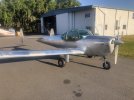
I own 2 aircraft. My daily driver is a 1965 Alon A2 Aircoupe. Back in the day they could solo a new pilot in one day.

Stall-prof, spin-proof design. Although some folks have proven otherwise. You’d have to work pretty hard to kill yourself in one.

Not really practical for a flight school and has a very limited payload. There are about 150 left flying. But loads of fun and a great way to learn all the basics.
 
The Cessna 150/152's are certainly worthy of consideration although a flying club I'm in has phased them out recently in favor of 172's for entry level training as they've found they cost as much as 172's to maintain. All the 172's, except the earlier models with Continental O-300 145 HP engines, are seriously overpriced these days IMO. Well-kept early 172's are wonderful airplanes, but some students may not appreciate their virtues and see only a very old airplane. The Cherokee 140, 180, Warrior, and Archer are fabulous trainers and basic personal use planes. Cherokee 140's (of which most actually have 150 HP engines) are bargains these days. They all best Cessna 150/152's in useful load, if looked at essentially as two-place trainers, but are also often capable of carrying more than two under carefully planned circumstances. The late model 140's (circa 1970-1976) usually had dual toe brakes, as well as features from the then new Warrior/Archer series such as more modern throttle and mixture controls, an elevator trim wheel between the front seats, improved sound-proofing and cabin ventilation, and a standard six-pack. These are superb trainers and just fun to fly. They are defintely not for routine mountain flying, and fall short of the useful load of 172's, but what they are meant for, they do very well. The late model Cherokee 180's and early Warriors and Archers compete head-to-head with more modern 172's, and are going to cost more of course, but sill notably less than 172's with comparable specs (especially STC'd 160 and 180 HP 172's).

 
Last edited:
The Cessna 150/152's are certainly worthy of consideration although a flying club I'm in has phased them out recently in favor of 172's for entry level training as they've found they cost as much as 172's to maintain. All the 172's, except the earlier models with Continental O-300 145 HP engines, are seriously overpriced these days IMO. Well-kept early 172's are wonderful airplanes, but some students may not appreciate their virtues and see only a very old airplane. The Cherokee 140, 180, Warrior, and Archer are fabulous trainers and basic personal use planes. Cherokee 140's (of which most actually have 150 HP engines) are bargains these days. They all best Cessna 150/152's in useful load, if looked at essentially as two-place trainers, but are also often capable of carrying more than two under carefully planned circumstances. The late model 140's (circa 1970-1976) usually had dual toe brakes, as well as features from the then new Warrior/Archer series such as more modern throttle and mixture controls, an elevator trim wheel between the front seats, improved sound-proofing and cabin ventilation, and a standard six-pack. These are superb trainers and just fun to fly. They are defintely not for routine mountain flying, and fall short of the useful load of 172's, but what they are meant for, they do very well. The late model Cherokee 180's and early Warriors and Archers compete head-to-head with more modern 172's, and are going to cost more of course, but sill notably less than 172's with comparable specs (especially STC'd 160 and 180 HP 172's).

What about that wing spar AD? Will more AD's come out? Certainly used prices reflect the uncertainty about Cherokee wing spars.
 
Cirrus SR-20?

Of course, whenever any GA-related question is asked, the correct answer is always “Bonanza”. Naturally, the instructor would probably want to avoid taking any students who happen to be doctors.
 
What about that wing spar AD? Will more AD's come out? Certainly used prices reflect the uncertainty about Cherokee wing spars.
Uncertainty about this is an issue I agree. To the extent I understand the spar issues (and it's a little complicated as well as aircraft-history-specific), my own Cherokee likely has a much greater life left in it than I do before it needs a new wing spar. That said, replacing the wing spar still seems financially feasible if necessary, and someday I grant it could be. It's a big deal to do so of course, but would likely cost less than the major repair facing all aircraft owners (eventually): rebuilding or replacing the engine. A new spar will also increase the value of any PA-28.
 
Last edited:
What was the trainer that inspired the rhyme "one a day into Tampa bay"?
 
I own 2 aircraft. My daily driver is a 1965 Alon A2 Aircoupe. Back in the day they could solo a new pilot in one day.

Stall-prof, spin-proof design. Although some folks have proven otherwise. You’d have to work pretty hard to kill yourself in one.

Not really practical for a flight school and has a very limited payload. There are about 150 left flying. But loads of fun and a great way to learn all the basics.
I second the motion....aircoupe a great airplane, and for a cheap trainer, allbeit for smaller lighter occupants, it can get a student thru most certs quickest, but maybe not the best for building pilot skills, but I've yet to see one ifr so new pilots would likely have to transition to the usual suspects for ifr. it's a great time builder for sure simply based on cost....I know 2 guys that bought one a did just that.

I expect there's a mogas stc to significantly lower cost, and there's a company in Colorado that bought a lot of the IP and tooling and some stc so most parts still a new and realisticly cheaper than other cert stuff. as you mentioned, there's not a lot still flying but got a great safety history and insurance is likely cheaper. especially compared to any 4 seater.

experimentals for compensated training brings a lot of uncertainty and would avoid it for your mission. established faa policy allows training in all categy of experimentals but can't charge for rental without specific loda approval which you will not likely get for basic training. also. you would have to come up with mauals and inspection plans and likely time limited parts plan. if going in this direction path of least resistance would be starting exp flying club.

what ever you decide. id strongly suggest it can burn mogas so the avgas issues won't be of concern and keep op cost low. oh, yea, look at ADs and any service bullitins that may become ADs and cost of compliance which can make your plane become worth only the price of parts.

please let us know what you went with. good luck.
The TCDS for the early 65/75/85 hp engines were certified with 73 octane.
The TCDS for the C90: Fuel: Aviation Gasoline, minimum grade 80/87
The O-200 specifies 100LL.

If I were going to buy auto gas, I would buy non-ethanol pump gas. The ethanol can do more hidden damage than I even want to think about. The various seals and hoses will most probably degrade at the worst possible time. A rebuilt carburettor is right about 1k. Replacing hoses and lines that degraded because of ethanol would be painful in too many ways to contemplate.

The aircoupe total fuel capacity is 26 gallons and only burns 5.7 gal/hr. I wouldn’t hesitate to mix with 100LL.
 
Last edited:
My plane can burn MoGas as it sits today. However, Ethanol Free MoGas is never going to be 100 Octane. I like the idea of 100 octane more than I like the idea of cheaper and lead free.

As well, given the difficulty of getting 50, 60 gallons of ethanol free premium octane auto gas to the airport each time I want to top off, no place to store it, etc., I'm just going to use the 100 LL.
 
The TCDS for the early 65/75/85 hp engines were certified with 73 octane.
The TCDS for the C90: Fuel: Aviation Gasoline, minimum grade 80/87
The O-200 specifies 100LL.

If I were going to buy auto gas, I would buy non-ethanol pump gas. The ethanol can do more hidden damage than I even want to think about. The various seals and hoses will most probably degrade at the worst possible time. A rebuilt carburettor is right about 1k. Replacing hoses and lines that degraded because of ethanol would be painful in too many ways to contemplate.

The aircoupe total fuel capacity is 26 gallons and only burns 5.7 gal/hr. I wouldn’t hesitate to mix with 100LL.
we burn regular ethanol car gas in our exp c172.... we simply changed out the fuel system seals with ethanol compatible.. we left the original o ring in one of the wing drains to see if it would hold up but it began leaking about 6- 8 months later, not sure if entirely due the the ethanol. either way, changing seals out was cheap and easy. but obviously cert bird needs stc for non ethanol.

as far as getting the mogas gas to plane, 5 gal cans with siphon tube works good for top off. we also removed anti siphon valve from older SUV and use a 12v gas transfer pump from a farm supply so fill car up at Costco then fill plane Right from car fill cap...works great but get bad looks from fuel truck .

not as easy as calling fuel truck over and have full serve, but savings is well worth it, especially since my field avgas is $8. many fields also have car gas for field cars and equipment, but almost always with ethanol .

plz post a photo of your aircoupe. tailwheel or tri? I have some time in a 1958 (?) and flew with canopy open over California beaches... super cool plane and you can't help but love flying when in it.
 
The TCDS for the early 65/75/85 hp engines were certified with 73 octane.
The TCDS for the C90: Fuel: Aviation Gasoline, minimum grade 80/87
The O-200 specifies 100LL.

If I were going to buy auto gas, I would buy non-ethanol pump gas. The ethanol can do more hidden damage than I even want to think about. The various seals and hoses will most probably degrade at the worst possible time. A rebuilt carburettor is right about 1k. Replacing hoses and lines that degraded because of ethanol would be painful in too many ways to contemplate.

The aircoupe total fuel capacity is 26 gallons and only burns 5.7 gal/hr. I wouldn’t hesitate to mix with 100LL.

There are a number of Petersen STCs that approve of the use of mogas in 0-200 powered aircraft, so I don't think it's an octane thing, Cessna 150s were approved to use 80/87 avgas.

There are a number of gas stations around here that have Rec 90 gasoline, which is ethanol free. It sells for the same price as unleaded premium, which was $4.29 per gallon yesterday. If you are close to a lake, you may find a few stations that sell it, as it was originally formulated for marine use. Outboard engines require 89 AKI octane, and older boats sometimes have problem with ethanol in their fuel.
 
we burn regular ethanol car gas in our exp c172.... we simply changed out the fuel system seals with ethanol compatible.. we left the original o ring in one of the wing drains to see if it would hold up but it began leaking about 6- 8 months later, not sure if entirely due the the ethanol. either way, changing seals out was cheap and easy. but obviously cert bird needs stc for non ethanol.

as far as getting the mogas gas to plane, 5 gal cans with siphon tube works good for top off. we also removed anti siphon valve from older SUV and use a 12v gas transfer pump from a farm supply so fill car up at Costco then fill plane Right from car fill cap...works great but get bad looks from fuel truck .

not as easy as calling fuel truck over and have full serve, but savings is well worth it, especially since my field avgas is $8. many fields also have car gas for field cars and equipment, but almost always with ethanol .

plz post a photo of your aircoupe. tailwheel or tri? I have some time in a 1958 (?) and flew with canopy open over California beaches... super cool plane and you can't help but love flying when in it.
IMG_6172.jpeg
IMG_5087.jpeg
 
I have no hangar or any other place to store fuel and fuel containers. It’s just that much easier to buy what’s at the airport fuel pump.

And as pointed out, whatever engine modification to burn MO gas would have to accept 100LL as well.
 
How does this work when you fly to a distant airport and need fuel?
Engine is flex fuel so can burn different types of fuel, including AVGAS. The local CFIs I loan it to to build time usually take a couple of 5 gal cans and use crew car to fuel it up, or get car gas from airport pump if they got it, to keep the cost at a minimum.
 
Back
Top