What a day yesterday...

Gary Ward

En-Route
Joined
Jan 16, 2020
Messages
3,639
Location
Lawrenceburg, Indiana
Display Name
Challenger1
Home Airfield
I67
4:45am as I am getting ready for work, I hear multiple booms near the house and all power goes off. It's about 5 below outside. I thought a electrical transformer blew up. All kinds of cops show up. This was luckily 3 doors up from our home and not in our front yard.
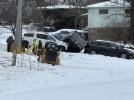
I back out of the drive leaving for work and can see a couple poles down and a auto almost upside down between 2 parked cars in the neighbors driveway. Wow

So work is 2 miles away and the whole neighborhood is black. Whole shopping center dead and most traffic lights are off! Turns out about 5000 customers were effected including our business 2 miles away.

I dispatched drivers with a flash lite. Luckily we had enough heating oil on between our 3 trucks to run one to get started since our 3 phase pumps were not working for our bulk plant. Then the propane trucks go to a different plant which is 11 miles away and had power. At 5 ° we are really under pressure to get delivery's done before people runout of fuel.

Then come home at 5 pm and they are still working on it. Some customers got power back on at 10:30am, some at 1-2pm and some at 4pm. At 4 pm it was down to 17 homes without power and ours and our neighbors were last to get the power back on at 3:18 am this morning.
I watched the guy snap the fuse/breaker back on with long long pole standing on the ground and the neighborhood lit up! So just under 24 hours in really cold temps for 17 of us. Those workers did a great job in rough conditions.
We were the only ones that stayed home. All the other neighbors left and stayed with family or friends I guess?

We have always had a small millivolt infer red gas heater in the basement that runs off our outside underground LP tank. During this kind of weather I run it on low to keep the basement warmer and our floors warmer. First thing I did yesterday before leaving for work is to turn it up on high. It kept our small home warm all day and night at about 63. My wife and doggie was there all day.
I get up today at 7am and they have the wrecked pickup in the street in front of the house loading it up. They waited to recover the wrecked truck until every thing else was repaired and cleared. It was a mess, pictures to follow here in few minutes.
 
Last edited:
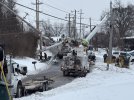
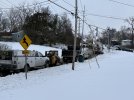
See the new metal pole laying there before they put it up? Duke guy said metal poles won't give like wood ones.
IMG_6178.jpegIMG_6177.jpeg
2 New metal poles up with 2 wires attached at 5:30 pm. Duke guy said the others are going to be tricky and they might not make the 10 pm estimate time to finish. He was right it was 3 in morning before they finished. Thanks Duke for a job well done.
IMG_6188.jpeg
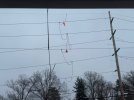
I believe they put these jumpers in place to get power to some until repairs were made? Not, Thanks Craig for the correction, grounding jumpers makes much more sense.
IMG_6179.jpeg
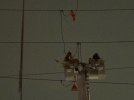
Here they are taking them down, 2 lineman working in close timing taking them off. And the bucket trucks had here were giant cause those poles are high.
IMG_6206.jpeg
 
Last edited:
Wow!
Any word on the condition of the driver? Both pre and post-accident?
 
Here’s the pickup this morning at 7am 27 hours later. Dude was drunk and ran off uninjured. He turned himself in later I heard. Duke guy said somehow the truck got airborne and hit the pole up in the air. IMG_6208.jpeg
He messed up a nice truck it looks. Airbags probably saved his life.
IMG_6211.jpeg
 
Last edited:
What-a-day is right.
Was the upside down/sideways truck the cause or a victim of the problem?

edit: I just saw your post about the buy being drunk.
 
Was he wearing this shirt?


b9ab9274cad76bda1ea49ce02f5bb396.jpg
 
That was a high risk job from the beginning. Those top wires are 2 separate 69,000 v or higher, 110,000 more likely Before serious work could be done, that had to be switched dead and locally grounded.

Those big ones feed entire substations, and the system must be rearranged with remote switching to get the rest of the system back to near normal.

At that temperature the high voltage gloves those guys need to wear are nearly rigid. The coldest that I have worn mine was around 20 degrees.

Very tough work, and much worse after the sun goes down, and artificial light is needed. Long nights this time of year. Any warmth from the sun is gone too. The large additional risk is another drunk....

I was not an overhead lineman, but did a lot of switching for them outside my normal work.

Kudos to Duke, write them a letter. Ask it to be copied and forwarded to every man who worked any part of that event.

In your public facing business, you know that customers only complain, and practically never say Thank You for a job well and quickly done. A major hit with that gig feeder on top in yo9ur present weather can take much longer than the took.
 
FYI: Those are grounding jumpers to keep any potential voltage on the line shorted to ground while the crew is working on things down wire. Most POCO's have rules against working hot lines for most situations. The normal process is crew comes in and breaks circuits either side of the work area, then ties every normally hot line to ground, then repair work can begin. Even if a yard switch feeding the branch is open, the lines still get grounded for crew safety. I on occasion catch a utuber from Canada that's a lineman and he talks about the various processes he has to go thru on repairs.
 
That's impressively quick for so much damage. It's helpful that it was a single event. Quite a few years ago, we had an ice storm and lost power for two and a half days, with temperatures hovering around freezing most of the time. The house temperature stayed around 40.
 
Slightly off topic, but several of my neighbors recently had a power outage. Our neighborhood has all underground utilities. After about 3 days of trying, the power company (FPL) couldn't find the problem. They had those "call before you dig" people come in and put hundreds of those little colored flags everywhere. After about a week they found where an underground line had been cut.

If we had those old fashioned, ugly power poles they would have fixed it in a day.

And we still have those stupid flags all over the neighborhood.
I didn't realize how many poles and wires we had overhead after living here for 40 years until yesterday. I agree they are ugly. It's my starter home 2 miles from work. Someday I hope to move away! lol
 
Last edited:
See the new metal pole laying there before they put it up? Duke guy said metal poles won't give like wood ones.
I've noticed the bolts that attach the metal poles are visibly necked down; presumably they are undersized so there's a weak link in the event of a collision.
 
TIL people still use heating oil. Ripped my old tank out when I rebuilt the garage. Half buried in the ground rusting out.
 
TIL people still use heating oil. Ripped my old tank out when I rebuilt the garage. Half buried in the ground rusting out.
Pretty common in the NE. Not sure why it's still so prevalent there. Energy density? Wife's grandmother still had an oil furnace here in IL till she passed about 5 years ago. At least 50 years old. Not too many around still, pretty much everyone is on propane unless you can get NG in town. I don't think you can buy "heating oil" here any more... you just get #2 dyed diesel like we burn in our tractors. I belive they are different in name only.

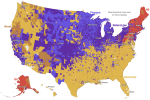
I'm kind of amazed how many places have "wood" as the primary fuel.

2023-fuel-data-viz.png
 
FYI: Those are grounding jumpers to keep any potential voltage on the line shorted to ground while the crew is working on things down wire. Most POCO's have rules against working hot lines for most situations. The normal process is crew comes in and breaks circuits either side of the work area, then ties every normally hot line to ground, then repair work can begin. Even if a yard switch feeding the branch is open, the lines still get grounded for crew safety. I on occasion catch a utuber from Canada that's a lineman and he talks about the various processes he has to go thru on repairs.
:yeahthat:

Exactly. Just opening the lines won’t protect against some dimwit homeowner inadvertently backfeeding the line with a portable generator. Grounding jumpers are essential.
 
If you want some good video and info on lineman work, pull up "bobsdecline" on utube.
 
Pretty common in the NE. Not sure why it's still so prevalent there. Energy density?

I suppose infrastructure? Digging up all the streets to run gas lines would be expensive.
 
Pretty common in the NE. Not sure why it's still so prevalent there.
The infrastructure exists, so the price is competitive. We had an oil furnace in our house in CT until about 10 years ago (actually it was burning kerosene because the tank was above ground). I finally replaced it with three direct vent propane heaters, which are cleaner, silent, and require no electricity (so we have heat even during an extended power failure).
 
Pretty common in the NE. Not sure why it's still so prevalent there. Energy density?

Think about the age of the housing developments. And the progression of wood to coal... a natural next step would be oil heat. And perhaps people didn't like the idea of gas (gas explodes dontcha know...). My sister still doesn't really like the gas heat, gas stove, gas water heater, gas drier...

I have this vague impression that gas heat wasn't more economical until after the oil embargos in the 70's with the resulting explosion (no pun) in the price of oil.
First thought was older homes...but we had the same progression here in the midwest: wood/coal...oil...now propane/NG. Why did we move on from oil and the NE didn't? It's not like that infrastructure existed here...it had to be built. For that matter, we have a huge amount of storage/transport infrastructure for diesel that is idle all winter when the tractors aren't running.

Another interesting thing on that map I posted is that you can see how expensive electricity is in IL. Southern IL should be using electricity like the rest of the midsouth. I think that's what's going on in CA as well.

It'd be interesting to see how that map has changed over the last 100 years. I wonder if I can find that on the internet.
 
Last edited:
CA banned all new development using natural gas despite the fact they have a ton of their own natural gas production. Can't fix stupid.
 
First thought was older homes...but we had the same progression here in the midwest: wood/coal...oil...now propane/NG. Why did we move on from oil and the NE didn't?

But the northeast has in fact been converting steadily to gas. But, I'm willing to bet there are more old homes in the northeast than the midwest.

My house was built in the late 60's (1968 I believe) and it's gas, and all the houses in this little development are gas.

My parent's house the next town over was built in 1957 and it's oil. It is one of the newest houses built in that part of town. And I'm pretty sure it's still oil (but it was sold in 2008 so I haven't been in that house for almost 18 years)
 
I’d guess that when an oil furnace dies, there’s a cost difference between a new oil furnace and changing over to gas. Granted it was in the late 70s, but already having 500 gallon oil storage in the basement probably outweighed a changeover.
 
CA banned all new development using natural gas despite the fact they have a ton of their own natural gas production.
It is actually more efficient to burn that natural gas to create electricity and then use that electricity in a heat pump, compared to just burning that gas in your furnace. With less overall emissions, because you can control them better at a massive powerplant than at 10 million individual homes.
 
It is actually more efficient to burn that natural gas to create electricity and then use that electricity in a heat pump, compared to just burning that gas in your furnace. With less overall emissions, because you can control them better at a massive powerplant than at 10 million individual homes.

More efficient until the temps get below around 25 F. The exact point depends the heat pump and the gas-fired furnace/boiler. And, yes, there is a difference between carbon efficiency (IYKWIM) and dollar efficiency
 
Glad you got power back up! That does look like a mess. Linemen do work that I wouldn't want to do.

Pretty common in the NE. Not sure why it's still so prevalent there. Energy density? Wife's grandmother still had an oil furnace here in IL till she passed about 5 years ago. At least 50 years old. Not too many around still, pretty much everyone is on propane unless you can get NG in town. I don't think you can buy "heating oil" here any more... you just get #2 dyed diesel like we burn in our tractors. I belive they are different in name only.
In part because a lot of the NE is more rural than you'd think. Off the main streets there's no natural gas here, unfortunately. So it's oil or propane. Too cold for heat pumps to work year round here, but they have legislation that more or less requires it in NY for new homes. And more of the people that can least afford it will probably be using the worst heat possible for efficiency, even taking into consideration the "C" word, I2R heating.
 
Back
Top