Uavionix AV30C install question

DKirkpatrick

Pre-takeoff checklist
Joined
May 18, 2011
Messages
375
Display Name
DKirkpatrick
Home Airfield
KORK
Hello. Would like to install two AV30C electronic indicators in the panel (new panel) of my C-172D. Any one have a good guess on installation time? It's a new metal six-pack design currently housing a steam gauge DG and Attitude indicator. The Garmin GPS-175 and SL30 n/c and indicators are wired through an approach fast stack board.
A good guess is much appreciated. THANKS, dan
 
I did the same in my 172N a few years ago. Total cost back then was $6k all-in. This included entirely removing the vac pump & system. If you have a GPS-175, you should consider connecting it to the AV-30C that serves as your DG/HI, turning it into an HSI. uAvionix just certified the adapter for this, the AV-HSI.

Options with the dual AV-30C installation:
1. pitot-static connection: nice to have, but legally it turns your AI or DG into an altimeter, which will add to your pitot-static costs every 2 years
2. temperature probe: nice to have, in combination with the pitot-static, the AV-30 will display density altitude.
3. magnetometer, the AV-Mag, turns the AV-30 in DG mode into an electronic compass, so you don't have to adjust for drift.
4. HSI connector to your panel GPS, the AV-HSI

The $6k I spent a few years ago did include pitot-static and temp probe, but didn't include AV-Mag or AV-HSI, since those did not exist at that time. I added the AV-Mag last year. The install can be labor intensive, since they need to find a spot free of EMI and do a bunch of wiring and calibrations. Labor estimates range from 4 to 24 hours depending on who you ask.
 
I put mine in in a day, with the harness made ahead of time. I have the magnetometer and the OAT probe
 
Hello. Would like to install two AV30C electronic indicators in the panel (new panel) of my C-172D. Any one have a good guess on installation time? It's a new metal six-pack design currently housing a steam gauge DG and Attitude indicator. The Garmin GPS-175 and SL30 n/c and indicators are wired through an approach fast stack board.
A good guess is much appreciated. THANKS, dan
 
All in, probably a work week.

The actual installation is simple and quick. Pull the old instruments, mount the new, and connect the harness and tubes. Maybe an hour or two for each.

Much variability depends on the current state of your aircraft. How difficult is access behind your panel? How easy is it to add circuits to your bus? Do you have room for more breakers or fuses? What kind of tubing do you use for pitot static? Is your GPS already wired for serial out?

Building the harness is not difficult, but depends on your experience, tools, and shop materials. First time out, plan on a full day browsing the pin outs, planning the wiring, and gathering the stuff to do it. If you have experience with DB connectors and a shop with wires, terminals, crimpers, etc, you can bang it out in a couple of hours.

The harness is not complex. Each unit gets a DB15 with power and ground, plus whatever auxiliary connections you want. Standard 2 unit install would have OAT to AHI only, and AV-MAG, Nav, and DB9 update connectors to both AHI and DG. AV-MAG is 3 wires, OAT is 2, updates are 2, Nav is one. So maybe 9 or 10 wires per shell. More if you connect to audio or control one of those uAvionix wing ADS-B out units.

Mag and Nav will each require splitting a cable to share with each unit. Everything is shielded on the STC, which is overkill, but it is a PITA to ground all the drains.

Installing the AV-MAG can add a half day to full day depending on location. Gotta find the right spot, run the cable, and probably make a bracket. I would not even consider installing an AV-30 in DG mode without a MAG. Might as well add an AV-LINK while you are at it.

Finally, add time to update the firmware, configure the unit, and test. Not hard, but again eats up time monkeying with menus, plus a few test flights to adjust trim settings and work out display preferences. Oh yeah, and an hour or two to swing the mag on both units; more if you have to improvise a rose.

 
Last edited:
All in, probably most of a work week the first time. With experience, closer to a day per unit.

The actual installation is simple and quick. Pull the old instruments, mount the new, and connect the harness and tubes. Maybe an hour or two for each.

Much variability depends on the current state of your aircraft. How difficult is access behind your panel? How easy is it to add circuits to your bus? Do you have room for more breakers or fuses? What kind of tubing do you use for pitot static? Is your GPS already wired for serial out?

Building the harness is not difficult, but depends on your experience, tools, and shop materials. First time out, plan on a full day browsing the pin outs, planning the wiring, and gathering the stuff to do it. If you have experience with DB connectors and a shop with wires, terminals, crimpers, etc, you can bang it out in a couple of hours.

The harness is not complex. Each unit gets a DB15 with power and ground, plus whatever auxiliary connections you want. Standard 2 unit install would have OAT to AHI only, and AV-MAG, Nav, and DB9 update connectors to both AHI and DG. AV-MAG is 3 wires, OAT is 2, updates are 2, Nav is one. So maybe 9 or 10 wires per shell. More if you connect to audio or control one of those uAvionix wing ADS-B out units.

Mag and Nav will each require splitting a cable to share with each unit. Everything is shielded on the STC, which is overkill, but it is a PITA to ground all the drains. Dealing with shielding adds several hours to the harness building.

Installing the AV-MAG can add a half day to full day depending on location. Gotta find the right spot, run the cable, and probably make a bracket. I would not even consider installing an AV-30 in DG mode without a MAG. Might as well add an AV-LINK while you are at it.

Finally, add time to update the firmware, configure the unit, and test. Not hard, but again eats up time monkeying with menus, plus a few test flights to adjust trim settings and work out display preferences. Oh yeah, and an hour or two to swing the mag on both units; more if you have to improvise a rose.
 
. If you have a GPS-175, you should consider connecting it to the AV-30C that serves as your DG/HI, turning it into an HSI. uAvionix just certified the adapter for this, the AV-HSI.

Weirdly, the big benefit of the AV-HSI is the CDI and glideslope functionality. The pseudo HSI display just needs Nav serial input. That gives you course deviation, but it's not scaled, so not legal for IFR. Unimportant if you are VFR only.

Another nifty gadget is the AV-LINK. It connects via WiFi to a portable ADS-B receiver so you can display traffic. I love it, though do hate switching between that and my DG/HSI view. uAvionix really needs to add a heading bug to the traffic view.

The AV-LINK is super easy to install. No wires, just plug in between the harness and unit. Unsure whether the LINK and the HSI can both be installed on one unit simultaneously.


PXL_20250501_002419230.jpg
 
... Installing the AV-MAG can add a half day to full day depending on location. Gotta find the right spot, run the cable, and probably make a bracket. I would not even consider installing an AV-30 in DG mode without a MAG. Might as well add an AV-LINK while you are at it. ...
I second this advice. I installed my AV-30 units before AV-Mag was available, and the drift was quite poor - worse than a mechanical DG. And that is despite ensuring it's level and the trims were set. In discussion with uAvionix support, they told me they stopped trying to make the DG better (reduce drift) by improving the software (for example with Kalman filtering) but instead they shifted their focus to getting the AV-Mag certified. Which they did.
 
I second this advice. I installed my AV-30 units before AV-Mag was available, and the drift was quite poor - worse than a mechanical DG. And that is despite ensuring it's level and the trims were set. In discussion with uAvionix support, they told me they stopped trying to make the DG better (reduce drift) by improving the software (for example with Kalman filtering) but instead they shifted their focus to getting the AV-Mag certified. Which they did.

The Mag is bullet proof. Dead nuts on.
 
The Mag is bullet proof. Dead nuts on.
I installed it a few months ago and yes, it is. At least, when installed & calibrated properly. The installation menus help identify the best location for the AV-MAG, as they tell you how much EMI it's getting.
 
The installation menus help identify the best location for the AV-MAG, as they tell you how much EMI it's getting.

I did not know that. I just stuck it where the aircraft manufacturer recommends, and it worked out.

TBH I did kinda half-ass the swinging. After I install my 2nd unit this weekend, I am going to make a run to a nearby airfield with a compass rose to do it right.
 
Might as well add an AV-LINK while you are at it.
AV-LINK enables traffic display and allows wireless Firmware updates. I have an AV-LINK on both of my AV-30s but only enable traffic on one. I agree that might as well do it at install.

I’m a bit unclear on the need for AV-HSI. If you wire a GPS to the AV-30 you’ll get an HSI. Maybe AV-HSI is if you want VOR nav displayed?
 
I did not know that. I just stuck it where the aircraft manufacturer recommends, and it worked out.

TBH I did kinda half-ass the swinging. After I install my 2nd unit this weekend, I am going to make a run to a nearby airfield with a compass rose to do it right.
Any concern with the accuracy of the compass rose? They’ve renamed a few runways around here. The compass roses I’ve seen are pretty faded. What are the potential issues with using a magnetic compass or maybe iPhone compass?
 
Any concern with the accuracy of the compass rose?
Not really. Magnetometer is advisory; STC says you gotta have a magnetic compass on board. Rules say that is supposed to be swung to a calibrated rose, or so I've heard.

Declination is constantly changing anyways, and it would be harder for me to hold a heading within more than 5 degrees, so some of this is pole vaulting over mouse turds. Pretty sure my GPS doesn't care.
 
AV-LINK enables traffic display and allows wireless Firmware updates. I have an AV-LINK on both of my AV-30s but only enable traffic on one. I agree that might as well do it at install.

I would definitely not spend 300 clams for both; just for the one with traffic. If one is configured as a required AHI, you cannot use it for traffic. For that one, you can install a DB9 connector to the harness for wired firmware updates and use a USB-to-serial cable.
I’m a bit unclear on the need for AV-HSI. If you wire a GPS to the AV-30 you’ll get an HSI. Maybe AV-HSI is if you want VOR nav displayed?

Yes, I think that is it. The GPS "HSI" view does not show glideslope, and the course deviation is shown non-scaled, which is apparently unsat for approaches. The AV-HSI gets you CDI functionality with glideslope and scaled course deviation, like a true HSI.
 
Wow. Thanks for taking the time to respond and share.
 
Any concern with the accuracy of the compass rose? They’ve renamed a few runways around here. The compass roses I’ve seen are pretty faded. What are the potential issues with using a magnetic compass or maybe iPhone compass?
... Declination is constantly changing anyways, and it would be harder for me to hold a heading within more than 5 degrees, so some of this is pole vaulting over mouse turds. Pretty sure my GPS doesn't care.
I'll add that the regulatory required compass accuracy is +/- 10* which is a big error. The AV-Mag is much better than that. My airplane's magnetic compass was swung within the past few years and has a maximum error of 2*. So it is possible to calibrate the AV-Mag that way (not saying it conforms to STC or regulation, but it would work).

The important thing during calibration is to ensure that all the airplane's systems are turned on - engine running, avionics, etc. That way you're calibrating it within the same EMI environment in which it will operate in flight. If you don't, it may read incorrectly in flight. Another nice (optional) feature of the uAvionix setup & calibration procedure is that you can turn things on one at a time (engine, avionics, etc.) and it will show you how each of them affects the overall calibration. You don't have to do this, but you can if you're curious.
 
I would definitely not spend 300 clams for both; just for the one with traffic. If one is configured as a required AHI, you cannot use it for traffic. For that one, you can install a DB9 connector to the harness for wired firmware updates and use a USB-to-serial cable.


Yes, I think that is it. The GPS "HSI" view does not show glideslope, and the course deviation is shown non-scaled, which is apparently unsat for approaches. The AV-HSI gets you CDI functionality with glideslope and scaled course deviation, like a true HSI.
I agree you only need 1 AV-LINK. I learned that after the fact, it’s not the worst decision I’ve ever made but it wasn’t ideal. Also, it seems a bit clunky if you also want an AV-HSI. Seems like you’d plug the AV-HSI into the AV-LINK, then plug in the wired connector. Seems like you’d want both on the DG AV-30 not the AI AV-30. But then you run into the limitations of the traffic display simultaneously showing heading/course, etc.
 
I have installed two AV-30s in my Citabria, the AV-Mag, and the AV-link. The AV-mag is great. I only rarely have to reset the DG before flight. I'm planning on adding the AV-HSA soon too. Great products.

I did the install under the supervision of my local A&P.

The first AV-30 (AI) took about 4-hours to install including power, OAT, and static/pitot lines. Second AV30 (DG) took slight less, but did have to get my avionics tech to wire a line from the GTN650. The AV-Mag took about 1-1/2 days. Most of that was due to running wires from the wing tip to the cockpit. Set up and calibration took about 2 hours.

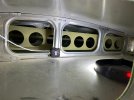
Overall, these instruments are easy to install and setup. Attached photo shows the AV-Mag installed.

I also have an AV20 as a backup in my Mooney.

Lee
 

Attachments

  • 20240303_185550190_iOS.jpg
    20240303_185550190_iOS.jpg
    1.6 MB · Views: 25
Sounds like a great improvement. What is your comparison between this and the Garmin dual GI275s?
 
I had these in my Cherokee. Compared to the Garmin G5, I think they are generally nicer in appearance, and don't stick out above the panel. I have two G5's in my Mooney now, and I am contemplating getting the recessed mount to 'clean up' the appearance.

I've not had the opportunity to review the new HSI module add-on for them.

I liked the configurability, 'clean' panel appearance, and overall experience with them.
 
IMO they are for different markets.

The GI-275 is for IFR aircraft who want full compatibility with the latest Garmin avionics and glass-panel-like capability, but without the time and expense of a new panel.

The AV-30 is for VFR and occasional IFR pilots who want a cost effective replacement for a steam gauge AI/DG.
I couldn't agree more.
 
IMO they are for different markets.

The GI-275 is for IFR aircraft who want full compatibility with the latest Garmin avionics and glass-panel-like capability, but without the time and expense of a new panel.

The AV-30 is for VFR and occasional IFR pilots who want a cost effective replacement for a steam gauge AI/DG.
Yes, it started out that way a few years ago for sure. When I installed mine in 2022 it saved me a few thousand bucks compared to the equivalent Garmin setup. Yet lately uAvionix has been increasing their capabilities for GPS and IFR operations.
 
Yes, it started out that way a few years ago for sure. When I installed mine in 2022 it saved me a few thousand bucks compared to the equivalent Garmin setup. Yet lately uAvionix has been increasing their capabilities for GPS and IFR operations.
True, but it will never approach the integration of the GI275.
 
Unless you have non-Garmin avionics.
Even with non-Garmin avionics, at least not in its current incarnation, unless it magically sprouts an Ethernet interface. There's certain things it just can't do with a 9.6kbps serial port.
 
Even with non-Garmin avionics, at least not in its current incarnation, unless it magically sprouts an Ethernet interface. There's certain things it just can't do with a 9.6kbps serial port.
I’m not up to speed on which avionics use Ethernet. The AV-30 does have WiFi capability and connects to an amazing array of devices from many different manufacturers. I’m using it with a Stratus ADSB. My Garmin Area 660* will not connect to the stratus, so I bought a GDL-39 for traffic. I understand you are talking about Eth vs serial not WiFi but I’m not aware of any avionics that are Eth only (at least not yet). What devices specifically need more bandwidth than an AV-30 provides? My opinion is you need a bigger device (G3, G500, Dynon HDX) if you want tons of stuff displayed on your AI (Synth Vision, Traffic, etc) which is why I have an Area 660 (which is still pretty small).

Without derailing this thread too much, my point was Garmin has an ecosystem which has advantages and disadvantages. I don’t know what the 275 will connect to. I am impressed with the AV-30s ability to play well with others and their manuals available online are very comprehensive and easy to understand. The ability to upgrade FW and the cost of the unit are impressive. I think the Garmin 275 is nice too.

* I bought the Aera 660 partly because although it is nice to have traffic on the AV-30 in some cases it’s nicer to have a larger screen for traffic and situational awareness. Then I had to buy a GDL-39 because the 660 has limited options for ADSB-in. I’m not complaining. I really like the 660. I have a bunch of Garmin gear that I also like. Part of the reason Garmin stuff is so rock solid is they don’t have to integrate with a bunch of other stuff that they cannot control (this is a positive and a negative).
 
Without derailing this thread too much, my point was Garmin has an ecosystem which has advantages and disadvantages.
To be clear, I'm not trying to poo-poo the AV30C. It has a target and nailed it. But that target is different from the GI275, which circle's back to @Ed Haywood 's point:
IMO they are for different markets.
Specifically, the GI275 achieves a level of integration that the AV30C will likely never attain.
I’m not up to speed on which avionics use Ethernet... What devices specifically need more bandwidth than an AV-30 provides?... I don’t know what the 275 will connect to.
With Ethernet, you can connect a single external device (e.g. USB, SD card, iPad with Garmin Pilot via WiFi, etc) and multicast all your different databases to all your different avionics. And in the other direction, you can pull all your log files (engine, GPS track, air data, etc) in one shot. There's more, but I'd rather not turn this into a marathon post.

EDIT: Can't believe I forgot to mention this, but a GFC500 won't work without a GI275 or G5.
 
Last edited:
EDIT: Can't believe I forgot to mention this, but a GFC500 won't work without a GI275 or G5.
Thats all well and good IF your plane is on the list for the GFC500, there are a lot that aren’t.
 
Thats all well and good IF your plane is on the list for the GFC500, there are a lot that aren’t.
Which is why the AV30C is a fantastic alternative. But again, different market IMO.
 
To the OP question: I installed my second AV-30 yesterday. Took me 8 hours.
 
The GI-275 is overkill for many planes. The AV-30 is under kill for others. Which one is "better" depends on which group you are in.
 
The fact that an AV-30 can be installed without having to go through a dealer can bring some good savings.
I've installed mine (with A&P supervision) in 8-10 hours, plus a few extra hours of reading manuals and building/testing most of the harness on the bench.
A good chunk of the install time was opening the GPS connector to add a serial data wire for nav info (Garmin dealer left no service loop, so I had to depopulate the entire stack to get my hands on the connector and open the backshell). I also spent a bit of time figuring out the best way to install the OAT probe without drilling holes in the skin (chose to install it in one of the fresh air vent ducts).
Took advantage of being under the panel and installed wiring provisions for a second one, so when that day comes that install will take an hour or two, max.
 
The fact that an AV-30 can be installed without having to go through a dealer can bring some good savings.

Absolutely agree. My two AV-30's cost me under 5K all in. Like you, I installed myself under supervision. A pair of GI-275 would run at least double that at an authorized shop, possibly triple.

Took advantage of being under the panel and installed wiring provisions for a second one, so when that day comes that install will take an hour or two, max.

Very smart. A good bit of my time this weekend was spent going back and doing things I should have prepped for when I installed the first one. Big time killer was rearranging my breaker panel to add a CB, and fishing wire from the breaker to the panel. That is a long trip in a Decathlon, because the breaker panel is adjacent to the wing root.

I also modified my first harness with a DB9 for future software updates. That required opening up the back shell on the DB15, which is tricky because of the teeny anchor screws with multiple grounding tabs on them. Easy on a bench, not so much in a cockpit.

Tricky part is splitting the AV-MAG and GPS cables to share with both AV-30's. GPS is easy because it is single conductor, but MAG is 3 conductor shielded cable. Splicing that is easy on a bench but a different story under a panel. Do you build the harness with two stubs for MAG and GPS to the second unit, or splice into those cables later? If you know you will eventually add a second unit, I would argue for getting a second DB15 and building the entire harness for both. Then installing the second unit is a 30 minute task.
 
Last edited:
Tricky part is splitting the AV-MAG and GPS cables to share with both AV-30's. GPS is easy because it is single conductor, but MAG is 3 conductor shielded cable. Splicing that is easy on a bench but a different story under a panel. Do you build the harness with two stubs for MAG and GPS to the second unit, or splice into those cables later? If you know you will eventually add a second unit, I would argue for getting a second DB15 and building the entire harness for both. Then installing the second unit is a 30 minute task.
No AV-MAG yet (soon), but with GPS I split it at install time and routed it to both 15-pin connectors. And after all the cussing it took to get that GPS wire installed, I routed a spare wire under the panel. Came in handy when I installed the fuel flow gauge, it uses GPS to figure out fuel reserve at destination.

I'll do the same with the AV-MAG, splice the harness and route to both main and spare connectors. I might do a bit of experimenting with the AV-MAG to see if a spot near the current wet compass will work. You'd think that if it's good enough for your primary mag heading system it should be ok for the AV-30 as well.
 
I'll do the same with the AV-MAG, splice the harness and route to both main and spare connectors.

The tricky part there is you are going to have to monkey with both DB15's in the cockpit. If you were careful to leave enough slack to pull them to an easily accessible spot in front of the panel, no big deal. If you didn't, you'll cuss a lot. Ask me how I know.

I might do a bit of experimenting with the AV-MAG to see if a spot near the current wet compass will work. You'd think that if it's good enough for your primary mag heading system it should be ok for the AV-30 as well.
The wet compass location is constrained by the requirement to be within view of the pilot. Could be the magnetometer is more sensitive, and thus needs more separation from other circuitry. I think it's worth the minimal effort to run the cable elsewhere.
 
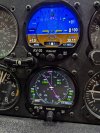
Finished my install tonight. Splicing the stupid magnetometer cable in place took several hours. But I'm really digging the result.

Top unit is locked AI. It gets OAT, AV-MAG, and GPS.

Bottom unit is locked DG. It gets AV-MAG, GPS, and AV-LINK.

GPS is from iFly EFB on an Android phone, via Bluetooth serial adapter.

PXL_20250609_034621142.jpg
 
Last edited:
Back
Top