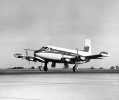
Twin Comanche Flight Training

NateCathrall

Filing Flight Plan
Joined
Jul 29, 2026
Messages
4
Display Name
Nate
Hello. I am considering a twin Comanche, specifically a PA-39 with counter rotating props, for a multi-engine flight trainer. I am a CFII and want to purchase a twin to get my MEI and multi-engine hours. I plan on partnering with a friend who owns a flight school and flying the plane for the school.

I realize a seminal or even a Beechcraft Duchess would be better options for a flight school but they are very hard to come by and expensive. The twin Comanche seems very reasonable in price and fuel consumption.

There are downsides I'm aware of like the stability and handling characteristics aren't as forgiving, gear AD that is expensive every thousand hours, insurance will be more expensive and not sure how many hours they will require Mei to have in make and model. The one major downside I'm not familiar with enough is it not having unfeathering accumulators. I will be shutting down one engine frequently and am concerned about restart in flight and strain on starter. Is anyone familiar with the restart process and should it be such a big concern or is it easy enough to pitch the nose forward, gain airspeed and windmill the prop to start?

Also if anyone knows any other cons I should be aware, or evens pros, I would appreciate the feedback. Thanks
 
I got my MEI in one. The instructor, and owner, said he had over 1000 hrs in THAT plane in his school.

Shut down and restarted the motor quite a bit, worked fine.

It was Lightning Aviation in Foley AL if you care to try and call them directly.
 
Insurance availability is very tough on Twin Comanches. Be sure you can get coverage before buying or making plans.

Great airplanes, though.
 
A buddy of mine owns and teaches in one. I can pass along his contact information if you’d like to get in touch.
 
We ran a PA30 in our flight school. It can be done. It wouldn't be my first choice -- maybe 5th or 6th? Additional cons I can think of are:

1. Right-hand brake pedals are very difficult to retrofit unless you swap to seneca pedals, and those don't fit very nicely. The PA30 pedals are short stubby things and unique in PA-land I believe.

2. Commercial insurance in the PA30 is a lot more than BE76/PA44.

3. Even with the mandated increase in Vmca, PA30s are a bit bitey if mishandled by a novice MEI. It will want good standardization

4. While I hear Comanche Gear is still soldiering on after the death of Matt Kurke, they're going to be a sole source of support and I am unclear what their "runway remaining" is. I would ask PA24/PA30 owners about it.

5. IIRC the emergency gear extension procedure needs a "reset" on the ground after performing it for real.

6. You'll be teaching fuel management across 4 or 6 tanks, on top of the crossfeed business -- it's a steeper curve for a new "complex plane" student than a duchess/seminole

7. The IO-320s are somewhat unique, not exotic, but nobody is going to have one ready on a shelf for you.

8. Finding a DPE willing to checkride in one was a real chore for us. We only had one guy willing, and we had to give him 5 hours in the thing and a complete checkout. This was back in the ME/LOA days though, it might be easier now.

9. The laminar flow wing is hard to land nicely. It's discouraging for students to keep thunking the thing onto tarmac.

10. The "pee on the ramp" fuel sump technique is not very Cali compatible. Probably only an issue here. :)

They're lovely XC machines and probably better in a club format than line ME trainer getting beat on. The fuel savings will be eaten quickly by insurance and downtime/loss of use waiting on somewhat unique parts.
 
Several of the retracts we had on our club line didn't have right-side brakes. It's not required by the FAA for instruction, and generally you figure that by the time someone is training in one of these, you can trust them with stopping the aircraft (of course, some yahoo taxied my Navion into a Commanche once because he was afraid of hitting the Lear on the other side).
 
Several of the retracts we had on our club line didn't have right-side brakes. It's not required by the FAA for instruction, and generally you figure that by the time someone is training in one of these, you can trust them with stopping the aircraft (of course, some yahoo taxied my Navion into a Commanche once because he was afraid of hitting the Lear on the other side).

Our DPE insisted, and it was a PITA and $$$, so thought worth a mention.

I figure most flight schools go through phases of having mostly 250 hour wonder-MEIs and... yeah they are better off having brakes :D
 
We ran a PA30 in our flight school. It can be done. It wouldn't be my first choice -- maybe 5th or 6th? Additional cons I can think of are:

1. Right-hand brake pedals are very difficult to retrofit unless you swap to seneca pedals, and those don't fit very nicely. The PA30 pedals are short stubby things and unique in PA-land I believe.

2. Commercial insurance in the PA30 is a lot more than BE76/PA44.

3. Even with the mandated increase in Vmca, PA30s are a bit bitey if mishandled by a novice MEI. It will want good standardization

4. While I hear Comanche Gear is still soldiering on after the death of Matt Kurke, they're going to be a sole source of support and I am unclear what their "runway remaining" is. I would ask PA24/PA30 owners about it.

5. IIRC the emergency gear extension procedure needs a "reset" on the ground after performing it for real.

6. You'll be teaching fuel management across 4 or 6 tanks, on top of the crossfeed business -- it's a steeper curve for a new "complex plane" student than a duchess/seminole

7. The IO-320s are somewhat unique, not exotic, but nobody is going to have one ready on a shelf for you.

8. Finding a DPE willing to checkride in one was a real chore for us. We only had one guy willing, and we had to give him 5 hours in the thing and a complete checkout. This was back in the ME/LOA days though, it might be easier now.

9. The laminar flow wing is hard to land nicely. It's discouraging for students to keep thunking the thing onto tarmac.

10. The "pee on the ramp" fuel sump technique is not very Cali compatible. Probably only an issue here. :)

They're lovely XC machines and probably better in a club format than line ME trainer getting beat on. The fuel savings will be eaten quickly by insurance and downtime/loss of use waiting on somewhat unique parts.
Thanks for putting the time into that list. These are all really good points to know. How about the engine restart, was it difficult to to get it going again?
 
Thanks for putting the time into that list. These are all really good points to know. How about the engine restart, was it difficult to to get it going again?
yeah bumping the starter works fine in these, no issues there.
 
Insurance availability is very tough on Twin Comanches. Be sure you can get coverage before buying or making plans.

Great airplanes, though.
Great advice. A dozen years ago, I found a PA-39 that I wanted to buy. I contacted five companies for insurance quotes. None would cover it because it would be operated from a grass runway, albeit 3000' long and 100' wide with no obstructions. The pleas that "It's a Piper, not a P-51" fell on deaf ears. No trouble, however, getting insurance for my Pitts.
 
want to purchase a twin to get my MEI and multi-engine hours.
IF your goal is to get your min multi hours, surely it would be much, much cheaper to rent a multi even though they are outrageously expensive.

AND you plan on owning the plane to make money? Owning a plane is interesting enough, owning it with a partner can lead to problems, owning it with a friend puts the friendship at risk, and having a flight school run it, etc.

Sounds like you're making goals based on buying the plane. Flip that around. What are you after? Are you wanting to get to 1500 and fly for Delta?
 
Last edited:
Hello. I am considering a twin Comanche, specifically a PA-39 with counter rotating props, for a multi-engine flight trainer. I am a CFII and want to purchase a twin to get my MEI and multi-engine hours. I plan on partnering with a friend who owns a flight school and flying the plane for the school.

I realize a seminal or even a Beechcraft Duchess would be better options for a flight school but they are very hard to come by and expensive. The twin Comanche seems very reasonable in price and fuel consumption.

There are downsides I'm aware of like the stability and handling characteristics aren't as forgiving, gear AD that is expensive every thousand hours, insurance will be more expensive and not sure how many hours they will require Mei to have in make and model. The one major downside I'm not familiar with enough is it not having unfeathering accumulators. I will be shutting down one engine frequently and am concerned about restart in flight and strain on starter. Is anyone familiar with the restart process and should it be such a big concern or is it easy enough to pitch the nose forward, gain airspeed and windmill the prop to start?

Also if anyone knows any other cons I should be aware, or evens pros, I would appreciate the feedback. Thanks

I've owned a Twin Comanche for 26 years now. It's not an ideal trainer, and would probably be one of my last choices for this application. However, I have seen it used as a trainer and given a few multi rides in the PA-30.

The lack of unfeathering accumulators isn't ideal, but it's not a critically limiting factor. To me the big ones are low-speed handling characteristics, landing gear, and typically equipped there's only one set of toe brakes.

The PA-30 excels at efficiency. It has pretty good range, useful load and TAS on a surprisingly low fuel burn. Makes it a nice traveling airplane, good for a (small) family. Very stable IFR platform. I've flown mine all over the country. It's been great for that. Its single engine performance really is surprisingly good too. I've demonstrated flight right at the SE service ceiling any number of times, and properly flown it'll fly you out from a low-altitude engine failure and back around to land safely. (Properly flown - emphasize)

But what makes the airplane fuel-efficient and reasonably quick make it a poor choice for a trainer. The laminar flow airfoil is unforgiving and even with a couple thousand hours of flying this airplane I'm edgy about Vmc demos, insisting that recovery occur even at the first hint of loss of directional control or buffet.

In a Seneca or Seminole, a Vmc demo gone wrong is benign. The airplane will just gently start to bank into the inoperative engine. Very gentle and predictable. In a Twin Comanche, it's something you don't even want to think about.

Basically, my advice would be to look elsewhere. The cons outweigh the pros for this application. I do understand that the more popular choice, the Seminole, is nigh impossible to procure for a reasonable price these days, so I don't have a recommendation for you other than the thumbs-down vote on the TwinCo.

All the best,
 
I had a PA23-150 for 20 years moved into the PA30, most owners love their Twinkie, goes faster, carries more, burns less fuel, climbs more rapidly and ultimately higher, is quieter, when compared to the Seneca, as to a twin trainer, look elsewhere.
 
So you want to buy a 54-65 year old aircraft for school flight training?

Using that logic I would’ve been trained in a Curtis Jenny instead of a year old C150.

Buy a Tecnam. Flight schools are flying them here.
 
I've owned a Twin Comanche for 26 years now. It's not an ideal trainer, and would probably be one of my last choices for this application. However, I have seen it used as a trainer and given a few multi rides in the PA-30.

The lack of unfeathering accumulators isn't ideal, but it's not a critically limiting factor. To me the big ones are low-speed handling characteristics, landing gear, and typically equipped there's only one set of toe brakes.

The PA-30 excels at efficiency. It has pretty good range, useful load and TAS on a surprisingly low fuel burn. Makes it a nice traveling airplane, good for a (small) family. Very stable IFR platform. I've flown mine all over the country. It's been great for that. Its single engine performance really is surprisingly good too. I've demonstrated flight right at the SE service ceiling any number of times, and properly flown it'll fly you out from a low-altitude engine failure and back around to land safely. (Properly flown - emphasize)

But what makes the airplane fuel-efficient and reasonably quick make it a poor choice for a trainer. The laminar flow airfoil is unforgiving and even with a couple thousand hours of flying this airplane I'm edgy about Vmc demos, insisting that recovery occur even at the first hint of loss of directional control or buffet.

In a Seneca or Seminole, a Vmc demo gone wrong is benign. The airplane will just gently start to bank into the inoperative engine. Very gentle and predictable. In a Twin Comanche, it's something you don't even want to think about.

Basically, my advice would be to look elsewhere. The cons outweigh the pros for this application. I do understand that the more popular choice, the Seminole, is nigh impossible to procure for a reasonable price these days, so I don't have a recommendation for you other than the thumbs-down vote on the TwinCo.

All the best,
Okay great point that I keep hearing across the board. Thank you.
 
There are some new MOSAIC twins about to hit the market, too...


I think that the market will be changing and making some adjustments in the next 2-3 years.
 
I own a '69 PA30C. Great airplane, super efficient, handles well. Maintenance and insurance are no joke; it's hard to work on, in some ways (lot of stuff crammed in a small space, plus Piper design philosophy is...unique...compared to say Beech). Some airframe-specific parts can also be challenging to find at times, with only a few suppliers (some of whom are VERY slow...).
 
Buy a Tecnam. Flight schools are flying them here.
The prices on them are utterly stupid for what they are, though. They were designed for training, but they've always been overpriced and it appears the used ones continue to follow that pattern.

OP: I'd listen to what @Ryan F. says. There's probably nobody with more combined experience with PA30 ownership and flight training. I do love the Twinkie, but if he says it's not a good bird for training, I'd listen to him on that.
 
Cool... Looks a little like a slightly smaller Baron. I wonder how much it'll cost.

That design was a choice.

I didn't know Jabiru was Russian. ;) Actually reminds me a lot of the Dornier DO.28.

I think that the market will be changing and making some adjustments in the next 2-3 years.
That would be nice.
 
Back
Top