I just bought a 1966 Cessna 150F with hail damage. The hail damage happened in 2011, and the plane was repainted just after. Also the rear windows were replaced. It's been sitting outside near some trees and no telling the last time it was washed. There was lots of black organic growth that my mechanic said would not come out of the paint. i had planned on washing it, rubbing compound, and waxing it to get some more speed out of it. But I just spent 2 and a half hours scrubbing on the plane, and was able to remove almost all the organic growth. Especially in the hail divets, and on the control surfaces. Also a lot of oxidation came off as well, and where I've washed so far is pretty shiny. Should I wax it? I realize pictures would be useful, and I will take some when I go back to keep scrubbing. But I guess I am curious about waxing a plane in general especially one that has been neglected.

You are using an out of date browser. It may not display this or other websites correctly.
You should upgrade or use an alternative browser.
You should upgrade or use an alternative browser.
To wax or not to wax
- Thread starter jeanathon
- Start date

Stewartb
Final Approach
- Joined
- Nov 21, 2014
- Messages
- 9,026
- Location
- Wasilla, AK
- Display Name
- stewartb
- Home Airfield
- Wolf Lake
Buy or borrow an orbital polisher and get some light cutting polishing compound. It’ll take off the haze. Follow with a good wash and finish it with a ceramic detailing spray. That’ll make future washing much easier.

Hang 4
En-Route
- Joined
- Aug 18, 2017
- Messages
- 3,425
- Display Name
- Hang 4
Yes, and be super careful around rivets. Also trailing edges. To be specific, a random orbit polisher. A rotary polisher can be a dangerous weapon unless you are very familiar with it's use.Buy or borrow an orbital polisher and get some light cutting polishing compound. It’ll take off the haze. Follow with a good wash and finish it with a ceramic detailing spray. That’ll make future washing much easier.
Perhaps before waxing it, there has been a number of products introduced over the past 10 years that can "rejuvenate" oxidized and damaged paint coatings. Maybe determine what type of paint it is then contact the OEM or a local paint supplier for some recommendations on which of these products will work with your paint. Unfortunately, once you wax it you'll lose this option.Should I wax it?


- Joined
- Oct 16, 2019
- Messages
- 8,866
- Location
- Atlanta / Marietta
- Display Name
- Vintage Snazzy (so my adult children say)
- Home Airfield
- KPUJ
Please skip the cordless drill option. You need a true random orbital; I'm sure you can find one that is battery powered (DeWalt, etc.) if you can't get access to an electrical outlet.^^^^^ I was going to get an attachment for my cordless drill. I have one somewhere... I wonder if they make a random orbital for a cordless.
Any polish brand names I should look hard at?
Depending on how bad the oxidation is, you might scrub if off with a "scotch bright" type pad on the random orbital sander along with the cutting compound.
Then you get to polish the paint, followed by a clear coat.
I was told it was the toxic Imron paint.Perhaps before waxing it, there has been a number of products introduced over the past 10 years that can "rejuvenate" oxidized and damaged paint coatings. Maybe determine what type of paint it is then contact the OEM or a local paint supplier for some recommendations on which of these products will work with your paint. Unfortunately, once you wax it you'll lose this option.

- Joined
- Jun 13, 2008
- Messages
- 9,173
- Location
- Marietta, GA
- Display Name
- Drake the Outlaw
- Home Airfield
- Cartersville, GA
Inert when cured. Very hard, adding difficulty to polishing. But still very doable.I was told it was the toxic Imron paint.
Albany Tom
Final Approach
- Joined
- Jul 23, 2021
- Messages
- 5,703
- Display Name
- Albany Tom
Congrats on the plane, and on getting the crud off. You said you scrubbed it...does it look shiny when wet, but when it's dry it's either dull or has scratches? Because dull and scratches are both different and suggest, to me anyway, some kind of polish. But if it's shiny enough dry and no scratches then just wax. And I'll pile on that the last thing you want to do is either a rotary buffer or any attachment for a drill. Either hand or random orbital or don't do it. I wouldn't use scotchbrite on a plane, either, but maybe just me. Foam pads only for a buffer in my risk averse view.
- Joined
- Oct 16, 2019
- Messages
- 8,866
- Location
- Atlanta / Marietta
- Display Name
- Vintage Snazzy (so my adult children say)
- Home Airfield
- KPUJ
And I'll pile on that the last thing you want to do is either a rotary buffer or any attachment for a drill.
I'm no expert, but I'll share what I do know. I grew up with cars that had no clear coat, and I've spent many hours getting old oxydized single stage paint (like we have on our planes) off of cars.
You can range from fine grit wet sanding for extreme cases, to compound, then to polish, then to waxing (top coat). Each has it's level of abrassiveness.
Let's assume you can skip the wet sanding and just get the bad oxydized paint off with compound. You can use a wool pad (generates less heat as it spins), do it by hand, or use a very light, fine "scotch pad" type pad. Go slow, be thorough, and it will pay off.
Then you repeat the whole process using a polish with a wool pad. Then clean off all of the compound, getting ready for the next step.
Then you can "wax". You could use a good car wax, but..... you should probably at this point pay someone to apply a ceramic coating. Lasts a lot longer than a coat of wax.
Hang 4
En-Route
- Joined
- Aug 18, 2017
- Messages
- 3,425
- Display Name
- Hang 4
Think using the generic term "scotchbrite" has a real high risk. Planes aren't cars and there are some very specific risks getting aggressive with polishing/sanding techniques that are used on cars.
-Biggest one is rivets. You can polish the head off a rivet pretty easily with some of the more aggressive techniques (wet sanding, rotary wool pad with coarse polish). At a minimum it's pretty easy to strip all the paint off a rivet.
-Next is corrugated surfaces and sharp edges (ailerons, flaps, stabilizer). Easy to strip the paint off of the edges of the corrugation and the trailing edges
-Aluminum vs steel. Aluminum skins are thin and will expand when they get hot, which aggressive polishing can do. That can affect the depth of the "cut" in the center of a panel vs the edges.
I followed some of the steps WDD outlines on my plane. Wetsand - three successively finer grits. Rotary polish with a wool pad and coarse compound. Random orbit polish with fine compound. Panel wipe with alcohol and finally ceramic coat.
This took about 5 days of 8 hour working time. If I did the same start to finish task on a car, it would have been done in a day and a half.
For the OP, I'd do a lot less. Get a random orbit and a foam pad. TEST an inconspicuous spot that is exposed to sunlight and see what the polish does. Oxidised paint can easily strip off, so test first. If that works ok, do the rest of the plane.
Take a look at this YT channel for someone that really knows what they are doing https://www.youtube.com/@AvianaAircraft
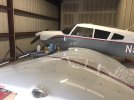
Here's what a weeks worth of work can look like
Attachments
bonefishpete
Cleared for Takeoff
- Joined
- Nov 10, 2024
- Messages
- 1,362
- Display Name
- Bonefishpete
I’d skip the random orbit. Just to easy to burn the tops of rivets if never using one.
Clean it best as can then let a aircraft detail guy finish.
Clean it best as can then let a aircraft detail guy finish.
As mentioned, its only "toxic" when spraying the solvent-based poly-urethanes. If you want to try the rejuvenators first, or whatever they are called now, perhaps contact a local paint shop that handles poly-urethanes for some input.I was told it was the toxic Imron paint.
Lots of good info. I am learning a lot. I didn't realize polishing was a separate step!
Today will be day 2 of scrubbing with a nylon brush. I worried about causing scratches, but leaving all the crap on it is not an option. For sure I'm removing some paint as the bucket water turns white. I'll take some pics, and report back on scratching.
As I type with sore shoulders I keep thinking Karate Kid, but it's probably more like Second Hand Lions.
Aircraft detail guy is going to cost as much as a hail damaged 150 that's been sitting under a tree for a decade. OP should absolutely do this one himself. This isn't winning best in show at Oshkosh next year.I’d skip the random orbit. Just to easy to burn the tops of rivets if never using one.
Clean it best as can then let a aircraft detail guy finish.
Same for the recommendation to do a ceramic coat. That's a lot of money for that plane.
For this plane, I'd recommend Collinite No. 845 Insulator Wax as a cheap and very effective option. It won't last nearly as long as a ceramic coat, but it's $20 for enough to do the plane twice instead of $1500 to do a ceramic coat.

Be careful, but the white is very likely the oxidation, not the paint.For sure I'm removing some paint as the bucket water turns white. I'll take some pics, and report back on scratching.
- Joined
- Oct 16, 2019
- Messages
- 8,866
- Location
- Atlanta / Marietta
- Display Name
- Vintage Snazzy (so my adult children say)
- Home Airfield
- KPUJ
Bucket water turning white is what you want - as pointed out, it’s the dead paint.
Yes to the oxidation since the wing that I finished is shinier. I may be opening a can, but isn't the oxidation, oxidized paint?Be careful, but the white is very likely the oxidation, not the paint.
- Joined
- Oct 16, 2019
- Messages
- 8,866
- Location
- Atlanta / Marietta
- Display Name
- Vintage Snazzy (so my adult children say)
- Home Airfield
- KPUJ
“Oxidation” = Oxidized dead paint, vs “paint” that is still good that you don’t want to remove.
DreadPirateWill
Pre-Flight
- Joined
- Dec 23, 2020
- Messages
- 58
- Display Name
- DreadPirateWill
I applaud the effort in paint restoration, definitely a labor of love. No secret here, elbow grease is the main ingredient. I did chuckle at the intent though, like giving steroids to a turtle to go racing(no offense intended as you're faster than me in a cub by a decent bit - it ain't fast but it sure is slow)....Cessna 150F ... to get some more speed out of it. ...
As I was scrubbing yesterday I thought. I know how to double the value of this plane as I looked over at the Avgas tank.I applaud the effort in paint restoration, definitely a labor of love. No secret here, elbow grease is the main ingredient. I did chuckle at the intent though, like giving steroids to a turtle to go racing(no offense intended as you're faster than me in a cub by a decent bit - it ain't fast but it sure is slow).
Sometimes I feel like I should call my broker after every flight with to change the hull value on my policy based on how much fuel the 172 has in it.As I was scrubbing yesterday I thought. I know how to double the value of this plane as I looked over at the Avgas tank.
Hang 4
En-Route
- Joined
- Aug 18, 2017
- Messages
- 3,425
- Display Name
- Hang 4
If paint is coming off from washing with a brush, be very careful with polishing. It's likely that this plane has been sitting outside for a long time and the sun (UV) has been breaking down the top layer of the paint. Test anything you plan doing in an inconspicuous area that gets direct sun. Start with the least abrasive first and see the result. You want to use the least abrasive process that will leave the paint looking good.For sure I'm removing some paint as the bucket water turns white. I'll take some pics, and report back on scratching.
Alternative B, if the paint is really soft, is just take it all off and have a polished bare aluminum plane (just kidding)
Be careful as you try different things - least to most abrasive in a test area before committing to the whole plane.
Lastly, if it's been sitting for really long time in the sun, be realistic about how much you can transform it. If it looks clean and there's some form of protection on the plane (wax, polymer coating, ceramic coating) that will help it stay cleaner and be easier to clean in the future.
bonefishpete
Cleared for Takeoff
- Joined
- Nov 10, 2024
- Messages
- 1,362
- Display Name
- Bonefishpete
Honestly it sounds like a new paint job would cost more than what you paid for it.
- Joined
- Oct 16, 2019
- Messages
- 8,866
- Location
- Atlanta / Marietta
- Display Name
- Vintage Snazzy (so my adult children say)
- Home Airfield
- KPUJ
Sounds smart. Just scrub and compound it then polish it. You might indeed have a few spots where you’ll hit primer or even metal; just prime and spray paint touch it up. All good.
It’s a nice used plane, not a perfect show plane.
It’s a nice used plane, not a perfect show plane.