The hammerhead is an excellent maneuver to feel and understand the various forces discussed here.
1. During the pull to vertical, slight left rudder will be needed to offset gyroscopic precession and being faster than neutral yaw speed. But you won't notice it without a sight gauge.
2. During the vertical up, increasing right rudder is needed to offset slipstream, and right aileron is needed to offset torque. You will very much notice uncorrected yaw at the top.
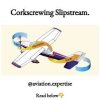
3. When airspeed approaches zero, you will hear a rumbling sound. This is the slipstream drumming on the left side of the fuselage. It sounds like a drum is because of the prop blade pulses. The sound is very distinct, and is your signal to pivot. That sound is proof that spiraling slipstream exists and that it becomes compact when airspeed is slow.
4. When you kick rudder left, you will have plenty of control authority to quickly yaw 180 degrees, even at zero airspeed. That is because the rudder catches more of the slipstream.
5. If you try to kick right, you will have much less authority, AND you will be fighting the slipstream. The result will be a tail slide or uncontrolled sideways fall to the right, and probably a spin if you keep ham-handing it.
6. After you kick left and start to yaw, you will have to add full right aileron to offset torque and the lift generated by your right wing as it moves forward.
7. As the aircraft yaws left, you will have to apply about half forward stick to offset gyroscopic precession, which wants to raise the nose. This force is felt very strongly.
8. When you finish the 180 kick, you will have to momentarily apply right rudder to stop the yaw. You can neutralize pitch and yaw, but will have to hold in a small amount of right aileron to offset torque until airflow over the wings is restored.



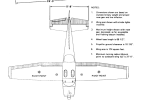
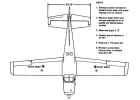
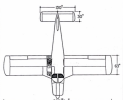

 Later I was in a club with a 7ECA Citabria, and while you can make it do some things that are theoretically defined as aerobatic, it's not nearly as fun. Starting a loop by going full power and pointing the nose at the ground and waiting feels more like work than just deciding "Hey, I want to do a loop" and pulling back on the stick. It definitely takes a better pilot to complete the maneuvers properly in the 7ECA than something like a Pitts or Extra, but it's not as fun.