Sooo... could we say you're a, wait for it, perfectionist?I am somewhat obsessive about it.


Sooo... could we say you're a, wait for it, perfectionist?I am somewhat obsessive about it.

I've heard others state they clean with mineral spirits. I use mineral spirits to hand clean grease/oil, but never felt comfortable just spraying it on an engine.Thanks. Yeah, I am somewhat obsessive about it. I wash it with mineral spirits at every oil change.

I've heard others state they clean with mineral spirits. I use mineral spirits to hand clean grease/oil, but never felt comfortable just spraying it on an engine.
How exactly do you do it?

The typical flaw with overtightened crush washers happens because they get reused.
I feel your pain. It is incredibly frustrating when you misdiagnose something then repeatedly fix the wrong thing while the problem rocks on. BTDT too many times.

Yeah, it seemed kind of shocking to me, too. Not something I've ever seen done in automotive or ag world. The shop that works on my plane buys the stuff in 275 gallon ibc totes. Pretty much the first step in any service they do is wash the engine. I think airplane mechanics don't like to get greasy.I've heard others state they clean with mineral spirits. I use mineral spirits to hand clean grease/oil, but never felt comfortable just spraying it on an engine.
How exactly do you do it?

Are these the same style that go on the oil drain plug - Cont IO-470 in this case?Ditto on having crush washers on hand. Finding them is the challenge!

Atomizing a flammable hydrocarbon presents a huge risk of fire. Make sure there are no ignition sources anywhere.Why are you uncomfortable with it?

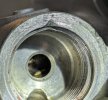
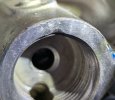
Ugh. Chasing small oil leaks is a PITA. Glad you found the offending component. Oil goes everywhere in the engine compartment, and sometimes beyond, when there is a small leak. I've chased down several of these: failed dipstick tube gasket, hardened pushrod seals, faulty mating surface and torque on the crush gasket for the oil sump screen drain plug, cracked or leaking valve cover drain tubes, etc.Further testing and inspection confirmed the leak is from the oil pressure regulator. The dipstick tube was fine all along.
The shop that works on my plane buys the stuff in 275 gallon ibc totes. Pretty much the first step in any service they do is wash the engine. I think airplane mechanics don't like to get greasy.
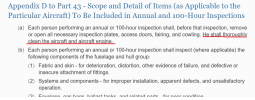
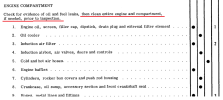
Yes. But it is also a legal requirement:Airplane mechanics don't like grime to get into places it shouldn't, like cylinders and oil sumps. They also don't like tools slipping, and they like to be able to visually detect leaks, cracks, loose hardware, deteriorating rubber, abraded wire insulation, etc.
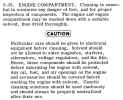
I was afraid it would get into places it shouldn't particularly electrical items. Like mags, starter, alternator, etc.With an engine cleaning gun. Just spray it on gunky areas to wash away.
I prefer it over citrus or phosphate based solvents because it is petroleum based and less corrosive. It also evaporates much faster than water, so you don't have to worry about little pools staying behind in crevices.
Why are you uncomfortable with it?
I was afraid it would get into places it shouldn't particularly electrical items. Like mags, starter, alternator, etc.
Do you just let it run off onto the nose gear and the ground?
There are some specialized drain pans out there designed to catch liquids especially where the local laws prevent any run off. I think AS has them. I usually made my own out of recycled material depending on aircraft. As to the protecting areas on the engine I usually bagged the vac pump and if needed covered other areas with plastic to remind me not to spray there. But never really had any issues.Do you just let it run off onto the nose gear and the ground?


Otherwise known as 25 ft-lb, a little less than for a spark plug.Dug into the Lycoming Service Table of Limits and Torque Values.
It is 300 In-lb .... NOT the standard torque for crush washers. That explains it.
No wonder that crush gasket was pancaked. It is supposed to be.
I missed that when I posted the crush gasket specs.Dug into the Lycoming Service Table of Limits and Torque Values.
It is 300 In-lb .... NOT the standard torque for crush washers. That explains it.
No wonder that crush gasket was pancaked. It is supposed to be.
I missed that when I posted the crush gasket specs.
The crazy thing here is that there is no oil pressure against that gasket. The regulator is nothing more than a spring that holds a ball against a seat around a hole that leads to the oil gallery, which IS under pressure. When the pressure reaches the setting, the ball lifts off and dumps the excess oil into that regulator cavity, which is drained to the crankcase; therefore, that cavity is not pressurized and leakage should be nonexistent, pretty much. I wonder if the drain hole is obstructed some. Is the oil pressure normal and consistent?
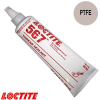
I have used teflon sealant (goop, NOT tape) on those gaskets if they want to seep oil. Just a bit. Any more than a bit just makes a mess and gets into where it should not be.