Static System Leak Test

Rcmutz

Pattern Altitude
Joined
Feb 28, 2015
Messages
1,734
Location
Columbus, OH
Display Name
rcmutz
Home Airfield
KMRT
Has anyone done a self leak test themselves to verify the static system before taking it in for certification? I’d like to make sure there are no leaks and/or find fix them myself prior to paying the shop to hunt down the culprit connections in the system. Can you tell me how much, what you used, where you pulled the pressure from.
 
Good question. I've wanted to do the same thing as it seems I never have a completely leak free system.

I've read on some forums that guys have taken a syringe, stopcock and a T fitting on the static line and carefully gradually aspirated to a reasonable altitude. At that altitude the leak should be under some spec feet per minute, maybe 100? Syringes and stopcocks should be available on Amazon. If choosing this technique I would get a 1 ml to 3 ml syringe so the chance of damaging instruments from too rapid aspiration is less.

Another option, and more likely to expose a leak source, would be to disconnect all instruments and introduce a low positive psi to the system. This allows for soap bubbles at any fittings to be evident. It also requires disconnecting all instruments though and possibly introducing leaks in the process.
 
W/0 being more specific:

Understand what you are going to do AC 43.13-1( c) shoud help.

1 do NOT peg the needle - either way

2. Common external leaks points are not Kollsman Knob Shaft

and Dial/ case.

There is a diff between being legal and being smart too.
 
Has anyone done a self leak test themselves to verify the static system before taking it in for certification? I’d like to make sure there are no leaks and/or find fix them myself prior to paying the shop to hunt down the culprit connections in the system. Can you tell me how much, what you used, where you pulled the pressure from.
In theory, you could just block the static ports and climb to altitude using the GPS and see if the altimeter changes over time.
 
TC’d with the help of an AnP.
Will you be getting a full IFR static and altimeter check? If so, do you know if the shop will remove the altimeter to comply with that portion or perform the test with the altimeter installed?
The reason I ask, unless your mechanic can borrow an actual pitot/static tester it can be difficult to get to the upper altitudes for the alt test with a DIY method.

In theory, you could just block the static ports and climb to altitude using the GPS and see if the altimeter changes over time.
So how would that method show any leaks during flight?
 
Will you be getting a full IFR static and altimeter check? If so, do you know if the shop will remove the altimeter to comply with that portion or perform the test with the altimeter installed?
The reason I ask, unless your mechanic can borrow an actual pitot/static tester it can be difficult to get to the upper altitudes for the alt test with a DIY method.


So how would that method show any leaks during flight?
If you climb from sea level with the static ports blocked your altimeter should read sea level the entire flight. If it changes, you have a leak.
 
It's not easy, though I get what you're trying to do. Last time I did a heavy DIY panel overhaul, I had the good fortune of having a buddy with a long-expired pitot/static test box that I was able to borrow just to do an initial leak test of the system. Allowed me to track down a couple leaks before I took it to the shop for the real test, where it did indeed pass.

But, you really want to be very careful. You're working with some super sensitive instruments and something as simple as a hose slipping off or a suction cup coming off the static port can result in too-rapid movements of some of the instruments and damage.
 
3ml syringe won't even register.
Maybe not, I have never tried it on a static system to know. Of course with a stopcock one could add as many 3 ml draws as needed. How many ml do you figure is required to raise altitude by 1000 feet?

Edited to add: I just asked Google. If you have 20 feet of static lines you would need just over 3.5 ml to raise altitude reading by 1000 feet.
 
Last edited:
I just asked Google.
Did google take into account the volume of the typical 3 inch altimeter, airspeed indicator and VSI?

Napkin math - 3 inch diameter cylinder by 4 inches long is about 28 cubic inches. Times three makes about 84 cubic inches. To increase altitude to 1000 ft you need to drop the pressure from 29.9 to 28.9, or by about 3.4%.

That's about 2.9 cubic inches of air, not including the volume in the static lines. Or, in metric, 47 cc/ml.
 
Last edited:
I will be getting the full 91.411/.413 check. I believe they leave the altimeter installed. I did have it overhauled 3 years ago, so hopefully it is still good.
 
You could borrow my pitot-static test rig if you are out near KOAK. I'm not sure the syringe test will be satisfying, but I guess it can't hurt much? my fear would be when that tickle test doesn't prove anything that you go to higher and higher suctions, and as mentioned, risk damaging the sensitive instruments by bouncing them off of pressure spikes.
 
They have to do a case leak check at 18k ft. Some shops find it easier to pull the altimeter out of the panel for this.
That’s the way they used to do it, but today it’s a in panel test.
 
I will be getting the full 91.411/.413 check. I believe they leave the altimeter installed. I did have it overhauled 3 years ago, so hopefully it is still good.
I would think things should be okay unless you had additional work done in the past 2 years affecting the static system.

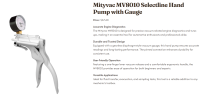
Two methods I've seen used if didnt have access to a pitot/static tester was to get a cheap hand vacuum pump, tape the static ports with non-porous tape, and connect it to a static system drain. If you plan to go to the full 411 altitudes you'll need disconnect the airspeed and plug that line to prevent damage.

Second method if your system is too large or cant keep up with a leak is to get an electric vacuum pump or venturi pump and a suitable reservoir container with in/out valves and connect to system. But I've typically had good luck with the hand pump on small static systems.

If you climb from sea level with the static ports blocked your altimeter should read sea level the entire flight. If it changes, you have a leak.
Might work if you disconnect the airspeed indicator, but doubtful it would be of any use above VFR altitude check levels especially if trying to determine if the leakage rate is within limits.

That’s the way they used to do it, but today it’s a in panel test.
Depends on the CRS and its approved procedures as a number still pull the altimeters or give the owner an option.
 
A Choke ( remember those) Pull-off Tester can be very controlled.
 
A Choke ( remember those) Pull-off Tester can be very controlled.
Thats typically what the hand vac pumps mentioned above are used for among other vehicle related work.

1789046879245.png
 
It's not easy, though I get what you're trying to do. Last time I did a heavy DIY panel overhaul, I had the good fortune of having a buddy with a long-expired pitot/static test box that I was able to borrow just to do an initial leak test of the system. Allowed me to track down a couple leaks before I took it to the shop for the real test, where it did indeed pass.

But, you really want to be very careful. You're working with some super sensitive instruments and something as simple as a hose slipping off or a suction cup coming off the static port can result in too-rapid movements of some of the instruments and damage.
Had static check mess up the gear horn sensor behind the ASI. Probably bounced the sensor. Had to re adjust it.
 
Back
Top