
Being discussed here https://www.pilotsofamerica.com/community/threads/sonex-is-closing-down.153811/

You are using an out of date browser. It may not display this or other websites correctly.
You should upgrade or use an alternative browser.
You should upgrade or use an alternative browser.
SONEX is closing down
- Thread starter Hector Parra
- Start date

- Joined
- Apr 18, 2013
- Messages
- 5,322
- Location
- The independent worm saloon
- Display Name
- Mantis Toboggan, MD
Similar threads merged.
Nauga,
feat. MC Nauga
Nauga,
feat. MC Nauga

MarkH
Line Up and Wait
The Onex and Highwing were both very tempting to me but the supported engine options were always a turnoff. Over the last year they finally endorsed a third party FWF kit for the Rotax on the onex that certainly increased my interest level but I was still concerned over how much own my own design work there may be. Plus the landing gear on the onex which has been a problem for years concerned me. It's too weak and not tall enough for even a VW engine.
The Highwing had my attention, it was everything I wanted in an airplane and they finally designed it to work around a Rotax and UL. The prototype with the UL seemed to have great performance but I was still waiting for the first one to be built with a Rotax as I don't care for the UL either. I really wish they would have designed it around an IO-233 or other small continental engines since they are a dime a dozen.
While the world anxiously awaited the Highwing kits they focused on the Subsonex, a boutique toy that would only have a year or two of sales success.
I was in the same boat, waiting to see a Highwing built and flying with a Rotax. It looked like it would be the all-metal Wittman Tailwind I was dreaming about. I came very close to a deposit a few times, with the only thing stopping me at one point being a lack of build space.
I like the idea of the original Sonex, but after flying one I realized I didn't fit. It made the old Yankee I used to own feel huge.
I hope something comes of their designs, I would hate for them to be lost.
Lindberg
Final Approach
Did the competitor?Didn't see that coming...
But, I do wonder if this is a bit of a cause and effect situation. Effect being that (potential) customers run away because of how you're treating them.
Case in point - I had an interest at some point in building one. Not thrilled with their engine options, so I asked if they had any guidance/recommendations for installing other powerplants. Got told this is it, if I don't like it sucks to be me.
Next question was if they could offer any guidance on picking attachment points for a BRS, and what kind of structural mods they'd recomment/advise on. I got told it's a strong airframe, doesn't need a BRS. Pointed out again that I'm more concerned with their engine choices leaving me without a way out over the terrain in my area. No joy.
Then I heard (but didn't personally confirm) that thry had a habit of banning people from their forums if they deviated from the build plans. Not cool.
I don't like it when they behave like certified aircraft manufacturers but hide under the E-AB sticker.
Oh, and their answer when asked about a demo flight was priceless: "go find someone who built one and fly with them". While one of their direct competitors invited me to the factory for a tour and a demo flight.
Needless to say, they never got a dime from me.

Cap'n Jack
Final Approach
I wonder if the "Osbourne Effect" had any effect in addition to the factors described earlier in the thread? Perhaps people were waiting on the high-wing Sonex and deferring purchases until they knew how the new plane worked out?

 thedayintech.wordpress.com
The Osborne Portable Computer Introduced 1983: The Osborne Effect
April 18, 1983: Osborne Executive and the Osborne Effect The Osborne Computer Corporation officially announced the Osborne Executive portable computer, the follow-up to its extremely successful Osb…
thedayintech.wordpress.com
Yes, in more than one way.Did the competitor?
They got money for a set of plans from me. Ended up not ordering the kit because my requirements changed.
Also talked a friend into buying a kit, he might get it in the air later this year.

- Joined
- Oct 28, 2014
- Messages
- 5,141
- Display Name
- Jack Fleetwood
Being honest, I have never run into a Sonex of any flavor in the wild outside of Airventure
There are a lot of them in Texas. I've seen more engine-out issues personally in Sonex's than any other plane! I've seen one have 3 engine failures! I go to a lot of fly-ins and I've seen three different ones come in dead-stick. I'm guessing that none of these were reported, which would obviously skew the statistics.Several years ago, he asked me to analyze the accident statistic of Sonexes. I did so, finding some issues (mostly related to the use of an auto engine conversion).
Ron Wanttaja
I've also seen one with a Corvair engine (the Kleenex) and one with a Jabiru. The Jabiru-powered one also had an engine failure!
Same for me. I looked at a OneX once and it was very tempting. A small plane with folding wings that could fit almost anywhere. I didn't care for the engine though. I'm okay with a home-built plane, but I'd prefer an engine from a factory!The Onex and Highwing were both very tempting to me but the supported engine options were always a turnoff.
Tarheelpilot
Final Approach
- Joined
- Dec 5, 2010
- Messages
- 8,190
- Location
- North Carolina once again.
- Display Name
- Tarheelpilot
- Home Airfield
- Not sure anymore
My gut feeling is the engine was the biggest hurdle. Know several guys that went with a vans or kit fox solely based on engine options. Three people over a decade but it represents 100% of my direct contacts that built airplanes. Anecdotal observation but I suspect it’s a common decision tree.

Brad Smith
En-Route
- Joined
- Nov 26, 2017
- Messages
- 3,575
- Display Name
- Brad Smith
Why is the engine issue obvious to so many but is lost on the manufacturer? Seems they should have addressed that issue decades ago. Reliability is foremost in the minds of anyone taking flight and is certainly a component in the company’s demise.

Daleandee
Final Approach
- Joined
- Mar 4, 2020
- Messages
- 8,354
- Display Name
- Dale Andee
I've also seen one with a Corvair engine (the Kleenex) and one with a Jabiru. The Jabiru-powered one also had an engine failure!
I hesitate to comment as I was one of the Cleanex builders that took a lot of heat for installing a "non-Sonex approved" engine on their airframe. Last I knew there were about three dozen Cleanex versions flying.
Early on I finished the build of a nose wheel Sonex with their VW conversion. I put nearly 200 hours on it but was constantly tinkering with the AeroVee engine and their Aerocarb. The engine was (and still is) impossible to keep cool although if the OAT is low and the plane is built very light it can be made to work but head work seems to be needed about every 75-100 hours for leaking valves. IMNSHO the VW conversion (rated at 80 hp *cough*) just isn't enough power for the airframe. After having some pretty concerning issues with their early version Aerocarb I refused to fly with it and was excoriated when I referred to it online, in my personal opinion, as unairworthy. The newer versions may be better but I'm once bitten twice shy with that hot mess.
When building my taildragger the Jabiru 3300 was a consideration as my friend and building partner had a 3300 taildragger Sonex and I loved the power. But in those days Jabiru was having a number of serious issues (they say the Gen 4 is much better) so I started to look elsewhere. I researched Corvair conversions and although there were several offerings, I followed William Wynne & Dan Weseman in their development of these engines as converted for flight. I cannot recommend any other company converting those engines and feel I have good reasons for not doing so as there are issues with those conversions that are troubling to me. The engine I have was built by Dan Weseman using all of William & Dan's ground & flight tested parts over many years. William has the correct approach & it is proven over 37 years.
As for the failure of Sonex in itself ... there are plenty of reasons I believe that can be brought forth. Before Mark bought the company John Monnett had a very hard line against anyone using any engine that they did not approve. The onslaught was pretty viral at times. Before his passing Jeremy was pretty forgiving of other engine installations (at least when we spoke at SnF) but still held to the company line from his father. I believe they should have adopted the Zenith philosophy of supporting the builder in whatever engine they chose and worked to make mounts available for those engines. Even early on the Rotax 912 was not allowed by Sonex as they deemed it "too complicated" but it seems market demand changed their mind in later years.
As for their closing ... I hate it as it means one less kit maker and it could mean some parts might be difficult to source (I have a full set of detailed plans for mine). I read where a go fund me was started but I think it foolish to throw money at them until there is a reckoning as to what went wrong and a really good plan is revealed as to how it can be addressed. It concerns me that a number of folks lost some big money in the closing (one reportedly lost 50K in deposit).
In retrospect, I can only deal with what I can control and as they say it is what it is. I don't want to throw stones but I wonder how this could happen and that nobody in the company saw it coming? Hard to fathom ...
- Joined
- Oct 28, 2014
- Messages
- 5,141
- Display Name
- Jack Fleetwood
My friend was climbing out in his Jabiru-powered Sonex when the engine seized. He was okay, made it back to the airport and the plane was not damaged. He was scheduled for major back surgery the next week, so another friend and I pulled the engine, crated it and sent it to Jabiru. When it was returned, we put it back on the plane, but before he could test fly it, Jabiru called and said they needed it back. They had used the wrong Loctite and would have to tear the engine apart again. Of course they paid for everything, but when he got the engine back and on the plane, he sold the plane, with a fair warning to the guy who bought it.When building my taildragger the Jabiru 3300 was a consideration as my friend and building partner had a 3300 taildragger Sonex and I loved the power. But in those days Jabiru was having a number of serious issues (they say the Gen 4 is much better) so I started to look elsewhere.

wanttaja
Final Approach
- Joined
- Jun 7, 2008
- Messages
- 5,667
- Location
- "War-Torn" Portland
- Display Name
- Ron Wanttaja
- Home Airfield
- Twin Oaks Airpark
Why did people opt for the Sonex rather than one of the RV models?Why is the engine issue obvious to so many but is lost on the manufacturer?
Cost. Not only was the kit less expensive, but the VW-based power plants were much less expensive than a Lycoming for an RVs or even a Rotaxe. Not everyone building an airplane has a generous budget, so the lower kit cost and much lower engine price was a major attraction.
I've done a lot of studies on engine reliability in homebuilts. There's no question the reliability of auto engine conversions is less than traditional engines, and it's less than the four-stroke Rotaxes can achieve as well. About 25% of the accidents involving VW-powered homebuilts are due to problems with the engine, vs. about 8% of those with traditional engines.
It's difficult to estimate the actual rate of failure, though. The 25%/8% figures give us a clue, but it actually doesn't tell us how likely a given engine type would fail, in an given year. It's easy enough for certified aircraft, but about 12% of homebuilt aircraft don't list a specific engine type in the FAA registry. That's over 3,000 aircraft.
Of course, I *have* tackled this issue.
I took the FAA registry to determine how many engines of a given type were installed in the homebuilt fleet. I took the list of homebuilts with unspecified engines, and compared this list to the NTSB accident database to try to estimate what percentage of that 3,000+ aircraft had Lycoming, Continental, VW, and other types of engines.
For instance, I estimated that about 4,800 of the homebuilt fleet had Continental engines. Over the previous 24 years, 39 accidents were attributed to mechanical failure of the engine (this does not include cases where the NTSB was unable to determine the loss of power, which would add another 34 cases). That averages to a 1.62 accidents per year.
So... 39 failures divided by 4,800, divided by 1.62. That comes out to 0.034% of Continental-powered homebuilts suffering an accident due to mechanical failure of the engine.
Note that this NOT "34 percent". This is point zero three four percent.
Pretty good odds, really.
Did I run it for other engines? Sure 'nuff. Rotax 912 was 0.039%, slightly higher.
VWs were about twice that... 0.076% of homebuilts with a VW engine suffered a reportable accident due to mechanical failure of the engine. Oh, and it was the best of the lot, as far as auto-engine conversions were concerned.
Twice the failure rate...twice that of a VERY LOW failure rate. I estimated there had been about 2500 VW-powered homebuilts in the US registry, either active or deregistered aircraft. That's still less than two accidents per year due to VW engine mechanical failure.
So, yes, they're less reliable. But the actual failure rate is pretty low.
But keep in mind, that my accident data includes ONLY accidents that met the NTSB reportability criteria. A failure with a successful deadstick doesn't get in the NTSB listing. Also, the VW has a rate of undermined engine failure about twice that as Continentals. Even so, that's not a lot of aircraft affected every year.
Ron Wanttaja
I have a fair amount of history with both VW and Corvair engines. I've only flown once behind a VW, so - most of my experience is in ground operation. I had four or five Corvairs back in the day. The best of the best are the turbo Spyder engines. They have a forged crankshaft, bigger journals, reduced compression, and all around just better materials and workmanship. I had a 180HP Corvair spyder and it was a capable engine.
Messing with tons of VWs over the years, the deal with them is continued power output. The cooling system was designed for highway speeds, but varying engine loads. Using the VW good casting heads, and hogging them out to 82mm bore just takes too much meat away for a 75% cont power used by most planes. It would be well suited to someone who ran around at 50-65% power all the time, and had a perfect set of baffles, and cooling deflectors on the bottom of the head and cyl. Another good way to cool the engine is with a giant oil cooling radiator. In the sand dunes, the guys still messing with the bored and stroked VWs are running huge oil coolers, usually a two or three row, with a fan. However, the oil cooling doesn't do much for the head and exhaust where the hot spots develop.
Noting that back to the Corvair, they designed the heads with the exhaust ports solo(not co-joined like water cooled) to keep from getting hot spots. The issue with the Corvair was the prop support issue. I've heard, but not seen that a 5th bearing journal has been developed to basically solve the thrust issue. Few Corvairs run a PSRU, but it would be a good place for one as the Corvair engine likes to rev.
If I were to get involved with any aftermarket car engine, it would likely be a Corvair with the 5th bearing, and a known good turbo Spyder engine case and forged crank.
Daleandee
Final Approach
- Joined
- Mar 4, 2020
- Messages
- 8,354
- Display Name
- Dale Andee
The issue with the Corvair was the prop support issue. I've heard, but not seen that a 5th bearing journal has been developed to basically solve the thrust issue. Few Corvairs run a PSRU, but it would be a good place for one as the Corvair engine likes to rev.
If I were to get involved with any aftermarket car engine, it would likely be a Corvair with the 5th bearing,
The prop support on Corvair engines was a concern that was addressed circa 2009 when Dan Weseman came out with his "5th BTA bearing" (Better Than Air) that takes the bending loads off the crank. I have a 1st generation 5th BTA on my 3.0 Corvair. The bearing is oil fed and has worked very well.
I don't see the need for a PSRU as cruise rpm is usually in the 2800-3000 RPM range. Some of the Zeniths turn a 66-68" prop (I think that might be the limit for length).
The amazing thing for me is that this engine cools extremely well. As you mentioned the exhaust ... the heads are cross flow (goes in the top and out the bottom) and the valves are canted. The original Corvair engine had concerns with oil leaks but modern gasket and sealing technology has eliminated those concerns. I never have to add oil between changes. I have a Marvel Schebler aircraft carb and dual ignition (albeit single plugs). It's been a smooth reliable engine for the last fourteen years.
Can you share your set-up for dual ignition into single plugs, please?I have a Marvel Schebler aircraft carb and dual ignition (albeit single plugs).
Brad Smith
En-Route
- Joined
- Nov 26, 2017
- Messages
- 3,575
- Display Name
- Brad Smith
What does the latest, most reliable, complete Corvair firewall fwd, ready to run Corvair engine cost? Ballpark figure?

- Joined
- Jun 13, 2008
- Messages
- 9,173
- Location
- Marietta, GA
- Display Name
- Drake the Outlaw
- Home Airfield
- Cartersville, GA
I was considering making an offer to my neighbor who has an abandoned Sonex project, complete with AeroVee engine. I was interested in the engine - I probably wouldn't want the airframe/kit.
Before I spoke with the neighbor, I reached out to another friend who's a serious gear head. Turns out he'd helped someone build up one of the AeroVee kits and was not impressed. The major components in the kit were inexpensive Brazilian repro parts, not the improved parts used in higher performance VW's and higher end VW aero engines.
Before I spoke with the neighbor, I reached out to another friend who's a serious gear head. Turns out he'd helped someone build up one of the AeroVee kits and was not impressed. The major components in the kit were inexpensive Brazilian repro parts, not the improved parts used in higher performance VW's and higher end VW aero engines.
Daleandee
Final Approach
- Joined
- Mar 4, 2020
- Messages
- 8,354
- Display Name
- Dale Andee
Can you share your set-up for dual ignition into single plugs, please?
Certainly!
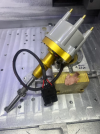
William Wynne converts the original distributor to have dual pickups, one is electronic and the other is points. Each system is wired to a separate ignition coil (Bosch blue coils highly recommended) and then connected to a MSD Automatic Coil Selector:

The center of the coil selector is wired to the standard coil input on the distributor. Either coil can be selected and some versions of the coil selector allow both ignitions to be on at the same time. Denso Iridium plugs are used. The large gap (.032) and hot spark from the coils help eliminate plug fouling and lead buildup.
Over the years the set up has been updated and William now has CNC machined distributors with dual electronic pickups and Weather Pack connectors:

William Wynne
I have been continuously building, testing and flying Corvair engines since 1989. Information, parts and components that we developed and tested are now flying on several hundred Corvair powered ai…
 flycorvair.net
Daleandee
Final Approach
- Joined
- Mar 4, 2020
- Messages
- 8,354
- Display Name
- Dale Andee
What does the latest, most reliable, complete Corvair firewall fwd, ready to run Corvair engine cost? Ballpark figure?
About 15K ...
Daleandee
Final Approach
- Joined
- Mar 4, 2020
- Messages
- 8,354
- Display Name
- Dale Andee
I was considering making an offer to my neighbor who has an abandoned Sonex project, complete with AeroVee engine. I was interested in the engine - I probably wouldn't want the airframe/kit.
Before I spoke with the neighbor, I reached out to another friend who's a serious gear head. Turns out he'd helped someone build up one of the AeroVee kits and was not impressed. The major components in the kit were inexpensive Brazilian repro parts, not the improved parts used in higher performance VW's and higher end VW aero engines.
I might be interested in the airframe but not the engine ...
Good parts can be sourced and the engine can be well built but that doesn't fix the problem of it wanting to run hot requiring frequent valve & head work. Smaller displacement VW's have been powering homebuilts for a long time and they can & do work well. It's just my personal belief that the Sonex is asking a bit too much from these small engines.

Last edited:
- Joined
- Jun 13, 2008
- Messages
- 9,173
- Location
- Marietta, GA
- Display Name
- Drake the Outlaw
- Home Airfield
- Cartersville, GA
Want me to ask about it next time I see him?I might be interested in the airframe but not the engine ...
Daleandee
Final Approach
- Joined
- Mar 4, 2020
- Messages
- 8,354
- Display Name
- Dale Andee
Want me to ask about it next time I see him?
Sure. Can't hurt ...
- Joined
- Jun 13, 2008
- Messages
- 9,173
- Location
- Marietta, GA
- Display Name
- Drake the Outlaw
- Home Airfield
- Cartersville, GA
And who came up with the horrible idea of turbocharging it? That's turning an already heat-marginal engine into an overstressed, overheated, disaster waiting to happen.Good parts can be sourced and the engine can be well built but that doesn't fix the problem of it wanting to run hot requiring frequent valve & head work. Smaller displacement VW's have been powering homebuilts for a long time and they can & do work well. It's just my personal belief that the Sonex is asking a bit too much from these small engines.
When the factory that designed and sold the engine has two factory aircraft crash on takeoff from engine failures and can’t say why and isn’t even willing to speculate as to what might have failed in the engine the statistics no longer matter because the trust is lost.Why did people opt for the Sonex rather than one of the RV models?
Cost. Not only was the kit less expensive, but the VW-based power plants were much less expensive than a Lycoming for an RVs or even a Rotaxe. Not everyone building an airplane has a generous budget, so the lower kit cost and much lower engine price was a major attraction.
I've done a lot of studies on engine reliability in homebuilts. There's no question the reliability of auto engine conversions is less than traditional engines, and it's less than the four-stroke Rotaxes can achieve as well. About 25% of the accidents involving VW-powered homebuilts are due to problems with the engine, vs. about 8% of those with traditional engines.
It's difficult to estimate the actual rate of failure, though. The 25%/8% figures give us a clue, but it actually doesn't tell us how likely a given engine type would fail, in an given year. It's easy enough for certified aircraft, but about 12% of homebuilt aircraft don't list a specific engine type in the FAA registry. That's over 3,000 aircraft.
Of course, I *have* tackled this issue.
I took the FAA registry to determine how many engines of a given type were installed in the homebuilt fleet. I took the list of homebuilts with unspecified engines, and compared this list to the NTSB accident database to try to estimate what percentage of that 3,000+ aircraft had Lycoming, Continental, VW, and other types of engines.
For instance, I estimated that about 4,800 of the homebuilt fleet had Continental engines. Over the previous 24 years, 39 accidents were attributed to mechanical failure of the engine (this does not include cases where the NTSB was unable to determine the loss of power, which would add another 34 cases). That averages to a 1.62 accidents per year.
So... 39 failures divided by 4,800, divided by 1.62. That comes out to 0.034% of Continental-powered homebuilts suffering an accident due to mechanical failure of the engine.
Note that this NOT "34 percent". This is point zero three four percent.
Pretty good odds, really.
Did I run it for other engines? Sure 'nuff. Rotax 912 was 0.039%, slightly higher.
VWs were about twice that... 0.076% of homebuilts with a VW engine suffered a reportable accident due to mechanical failure of the engine. Oh, and it was the best of the lot, as far as auto-engine conversions were concerned.
Twice the failure rate...twice that of a VERY LOW failure rate. I estimated there had been about 2500 VW-powered homebuilts in the US registry, either active or deregistered aircraft. That's still less than two accidents per year due to VW engine mechanical failure.
So, yes, they're less reliable. But the actual failure rate is pretty low.
But keep in mind, that my accident data includes ONLY accidents that met the NTSB reportability criteria. A failure with a successful deadstick doesn't get in the NTSB listing. Also, the VW has a rate of undermined engine failure about twice that as Continentals. Even so, that's not a lot of aircraft affected every year.
Ron Wanttaja

Ed Haywood
Final Approach
When the factory that designed and sold the engine has two factory aircraft crash on takeoff from engine failures and can’t say why and isn’t even willing to speculate as to what might have failed in the engine the statistics no longer matter because the trust is lost.
Ah c'mon, it's only your life.
wanttaja
Final Approach
- Joined
- Jun 7, 2008
- Messages
- 5,667
- Location
- "War-Torn" Portland
- Display Name
- Ron Wanttaja
- Home Airfield
- Twin Oaks Airpark
“Don’t take life serious. It ain’t nohow permanent.”Ah c'mon, it's only your life.
- Pogo
Ron Wanttaja
Clip4
Touchdown! Greaser!
I am sure you can buy the company if you thought this was such a loss.

So along those lines... chapter 7 means there will be a sale of the assets? It'll be interesting to see who ends up with the IP. Seems like there was enough buzz around the high wing that someone would want it? Maybe even the whole company?
If I had a large fortune I wanted to turn into a small one, I'd buy it and concentrate on finishing the HW and hanging rotaxes on everything. With mosaic, maybe even go into production. Of course then you're directly competing against the rv12 and all the European light sports.
If I had a large fortune I wanted to turn into a small one, I'd buy it and concentrate on finishing the HW and hanging rotaxes on everything. With mosaic, maybe even go into production. Of course then you're directly competing against the rv12 and all the European light sports.

DaleB
Final Approach
You'd need to compete on price; you're not going to win the pretty contest (though you'll place well ahead of Zenith).Of course then you're directly competing against the rv12 and all the European light sports.
Boy, I don't know. Personally I think the RV12 is pretty homely too. The Sonex is the best looking of the itty bitty planes IMO, sleek fiberglass Euro entries notwithstanding. The ones recently on the cover of Sport Aviation look really nice and perform nice as well. Actually Sling makes some good looking stuff too. It is a somewhat crowded market when you think about it.You'd need to compete on price; you're not going to win the pretty contest (though you'll place well ahead of Zenith).
I'll agree with you on the Zenith, though

While the 700/750 looks agricultural, the 600/650 is a decent looking aircraft.I'll agree with you on the Zenith, though
And with their pulled rivet construction they're relatively fast builds. That's their biggest advantage, especially with the match-drilled 750 kits.
- Joined
- Apr 18, 2013
- Messages
- 5,322
- Location
- The independent worm saloon
- Display Name
- Mantis Toboggan, MD
RANS never seems to get much attention but I think they've got some decent offerings. I have no idea of the state of the company, but I've heard decent stuff about them in the past....The Sonex is the best looking of the itty bitty planes IMO, sleek fiberglass Euro entries notwithstanding...
Nauga,
who wants a Skybolt
Ed Haywood
Final Approach
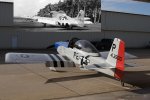
I have never seen a P-51 with fixed gear and a fat Hershey bar wing!
I knew the Internet would have this:
Daleandee
Final Approach
- Joined
- Mar 4, 2020
- Messages
- 8,354
- Display Name
- Dale Andee

Potential Investors Looking At Sonex - AvBrief.com
There is interest in taking over all or part of the business.
 avbrief.com
To be fair, I flew behind my aerovee powered sonex for around 150 hours without issue. The engine itself is solid. Of all the engine engine out accidents, few if any had failures due to the hardware making up the engine. Broken cranks, connecting rods, dropped valve seats, etc were all very rare.Ah c'mon, it's only your life.
My opinion (and it’s just my own personal opinion) is that the failures were due to the aerocarb they sold with the engine. The aero carb took simplicity in its design too far turning the carb into what was essentially a controlled leak into the intake. Mixture was controlled by opening or closing the fuel flow coming into to the carb with a screw and lever, no metering, nothing else. It does not work with a fuel pump, only gravity fed fuel. When you pulled some Gs in a banked turn the mixture would actually start to go too rich and then when you stopped pulling it would suddenly start going too lean. The bigger fault was that it had no fuel bowl or any way to guard against small interruptions in fuel flow. If you got even a small air bubble going through the fuel line it would cause the engine to hiccup when the air bungle got to the carb. The fact that the carb hung down under the engine with the input for the fuel line in close proximity to the exhaust just made those air bubbles worse. It go so bad in the early days that it started being referred to having the sonex burps. Most of the burps happened during takeoff during the summer as that’s when you are running the most fuel through the carb and when the engine is creating and unable to shed the most heat. Many of us early builders figured out what was happening by talking to each other on the old yahoo groups and were able to mitigate it with lots of insulation on the fuel line, wrapping the exhaust, and making sure the aerocarb was the lowest point in the fuel system. The factory stuck its head in the sand, refused to admit it was an issue, and never provided a fix or any official guidance. With many new builders and a lot of planes being bought second hand there were many owners who had no idea that the burps happen during the right conditions and I believe that’s what happened in many of the crashes right after takeoff. Again, only my opinion. After the second factory accident I stopped flying behind the aerocarb. I still have the rest of the motor but won’t get in anything powered by an aerocarb again.

ColinD
Line Up and Wait
To be fair, I flew behind my aerovee powered sonex for around 150 hours without issue. The engine itself is solid. Of all the engine engine out accidents, few if any had failures due to the hardware making up the engine. Broken cranks, connecting rods, dropped valve seats, etc were all very rare.
A scroll down this list of Sonex accidents and incidents reveals several VW-based engines with crankshaft failures. I'm not well versed in these VW conversions, maybe the Aerovee-branded conversion incorporates some additional crank journal reinforcement that others don't.
To your point about the crappy carburetor, there do seem to be a large number of unexplained losses of engine power manifesting in pops and rough operation.
N5560: "Forced landing on a road following an inflight loss of a propeller." (YouTube link)
N164JL: "Examinations revealed that the propeller hub had separated from the crankshaft." (Maybe not a material fracture, sounds like a tapered adapter loosened and detached.)
N478SX: "The propeller and hub separated in-flight as result of a crankshaft failure."
N244HB: "Postaccident examination of the engine indicated that the crankshaft had fractured due to a fatigue crack that had initiated at a fillet radius at the forward end of the No. 2 main bearing journal where the journal transitioned to the forward cheek."
N7035Z: "Photographs of the crankshaft revealed that it fractured just aft of the propeller mounting hub/flange. The fracture surfaces on the hub exhibited features consistent with fatigue crack propagation through the wall thickness of the crankshaft and the subsequent overstress fracture of the remaining portion of the crankshaft."
N255BZ: "The aircraft ... experienced an inflight separation of the propeller and subsequent forced landing"
From my history with dune buggies, the last good forged crank was offered by SCAT and the forging came from a place in Indiana that went belly up around 1998. I happen to have one of the last 82mm stroked Scat cranks pickled fom back then. Cranks were produced in Brazil, Taiwan, Vietnam and I think Mexico. Today, I think only the Brazil stroker cranks remain, but there could be some from China of course. The same problem faces oil pumps, no more Melling US made, cams, and critical head castings.
Head failures are not instantanious they just start to leak and burn valves. Most crank failures are catastrophic and Ive seen ground use breaks in several locations. Just poor metals/alloys and poor workmanship.
Head failures are not instantanious they just start to leak and burn valves. Most crank failures are catastrophic and Ive seen ground use breaks in several locations. Just poor metals/alloys and poor workmanship.
I’ll have to look into some of the later failures. There were 3 early failures that I know of on that list. One was not an aerovee. It was a Great Plains engine using the force 1 prop hub and crank. One was because the person tried to remove the prop hub from the crank and reinstall it with a press without supporting the crank properly and one was due to the prop hub not being seated all the way when installed. The factory did address crank/hub concerns pretty early on by offering an option to have the hub installed to the crank by the factory. Although there were not failures due to it at the time, the weak points in the crank such as the woodruff key and the groove right behind the crank nose were redesigned as part of the aerovee 2.1 motor. Keep in mind when looking at the list of sonex accidents that not every vw powered airplane was powered by an aerovee. There were people also putting in Great Plains engines as welll as remasters. Both of which used different cranks and prop hubs attachment methods. When I got rid of my aerocarb I also went through the whole engine and eliminated what I saw as the weak points. The force 1 prop hub with the case machined for the extra bearing is what I chose even though I had no issues with the aerovee 2.0 crank.A scroll down this list of Sonex accidents and incidents reveals several VW-based engines with crankshaft failures. I'm not well versed in these VW conversions, maybe the Aerovee-branded conversion incorporates some additional crank journal reinforcement that others don't.
To your point about the crappy carburetor, there do seem to be a large number of unexplained losses of engine power manifesting in pops and rough operation.
N5560: "Forced landing on a road following an inflight loss of a propeller." (YouTube link)
N164JL: "Examinations revealed that the propeller hub had separated from the crankshaft." (Maybe not a material fracture, sounds like a tapered adapter loosened and detached.)
N478SX: "The propeller and hub separated in-flight as result of a crankshaft failure."
N244HB: "Postaccident examination of the engine indicated that the crankshaft had fractured due to a fatigue crack that had initiated at a fillet radius at the forward end of the No. 2 main bearing journal where the journal transitioned to the forward cheek."
N7035Z: "Photographs of the crankshaft revealed that it fractured just aft of the propeller mounting hub/flange. The fracture surfaces on the hub exhibited features consistent with fatigue crack propagation through the wall thickness of the crankshaft and the subsequent overstress fracture of the remaining portion of the crankshaft."
N255BZ: "The aircraft ... experienced an inflight separation of the propeller and subsequent forced landing"
Stolen valor, or Walter Mitty award.
wanttaja
Final Approach
- Joined
- Jun 7, 2008
- Messages
- 5,667
- Location
- "War-Torn" Portland
- Display Name
- Ron Wanttaja
- Home Airfield
- Twin Oaks Airpark