
You are using an out of date browser. It may not display this or other websites correctly.
You should upgrade or use an alternative browser.
You should upgrade or use an alternative browser.
Rpm for best power
- Thread starter Nolan
- Start date

flyingcheesehead
Taxi to Parking
- Joined
- Feb 23, 2005
- Messages
- 28,184
- Location
- UQACY, WI
- Display Name
- iMooniac
- Home Airfield
- KUES/KMKE
Max RPM always gives you the max power. Regardless of atmospheric conditions.
For whatever conditions you're in, you're going to get a certain amount of air/oxygen into the cylinder, mix it with fuel, light it up and generate some power. The more times that happens per minute, the more power you'll be making.
For whatever conditions you're in, you're going to get a certain amount of air/oxygen into the cylinder, mix it with fuel, light it up and generate some power. The more times that happens per minute, the more power you'll be making.

StraightnLevel
Cleared for Takeoff
- Joined
- Dec 8, 2023
- Messages
- 1,161
- Location
- Houston & SE Wisconsin
- Display Name
- StraightnLevel
- Home Airfield
- T41, KETB
Not true.Max RPM always gives you the max power.
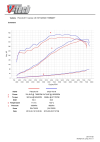
Every engine has a peak power RPM, as well as a peak torque RPM. Here's a sample dyno chart that shows the effect clearly:
flyingcheesehead
Taxi to Parking
- Joined
- Feb 23, 2005
- Messages
- 28,184
- Location
- UQACY, WI
- Display Name
- iMooniac
- Home Airfield
- KUES/KMKE
I'm not talking about car engines, which are quite different in that they can run WAY faster than airplane engines. Find me a power curve for a Lycoming or Continental that doesn't give peak power at max RPM.Not true.
Every engine has a peak power RPM, as well as a peak torque RPM. Here's a sample dyno chart that shows the effect clearly:
Hint: I'd be willing to bet you won't find it. If max RPM wasn't max power, we wouldn't use it at takeoff.
StraightnLevel
Cleared for Takeoff
- Joined
- Dec 8, 2023
- Messages
- 1,161
- Location
- Houston & SE Wisconsin
- Display Name
- StraightnLevel
- Home Airfield
- T41, KETB
The OP did not specify engine type.I'm not talking about car engines, which are quite different in that they can run WAY faster than airplane engines. Find me a power curve for a Lycoming or Continental that doesn't give peak power at max RPM.
Hint: I'd be willing to bet you won't find it. If max RPM wasn't max power, we wouldn't use it at takeoff.
There are experimentals with auto-based engines and/or diesels.

RussR
Final Approach
Oh come on, that's being quite disingenuous and you know it. In an aviation context, questions about piston engines are de facto about typical Continental or Lycoming engines unless otherwise specified.The OP did not specify engine type.
There are experimentals with auto-based engines and/or diesels.
Regardless, piston aircraft engines are rpm-limited anyway. The "redline" is not the true engine redline like on a car. It's the "prop redline" for tip speed considerations, or artificially lower for power-limiting/airframe considerations.
Put a 2700 rpm redline on your example 911 engine and from the chart, that's where max power is. Or put a geared prop on it and make the engine redline 3500 or 4000 or whatever, same thing.
Last edited:
Assuming a direct drive engine/prop combo, I think the answer will depend on propeller design/diameter. Props lose efficiency as the tips approach the speed of sound, resulting in less power. The speed of sound generally decreases with altitude. So you might make slightly more power at say, 2500 RPM at "high" altitude than you would at 2700 RPM on a big 90" seaplane prop. You would need to do the calculation on your prop tip speeds to work this out, as I recall anything much over M 0.90 meant you were mostly just converting any extra RPM straight to noise and not power. I'm sure it's possible to offset/mitigate this effect somewhate with certain propeller blade shapes. Here is a calculator to help: Prop Tip Speed Calculator by hoverhawk
It just so works out that for most normal sized 70-85" props a non-turbo engine probably lose the MP to spin the prop at redline before the sound barrier becomes an issue. For turbos that can actually spin big props near Mach 1 at "high" altitude, adding more blades and reducing blade diameter starts to make sense.
As for the engine power prodcution in isolation without the prop, here is a quote from EPI
However, for an engine which operates in a relatively narrow RPM band, such as an aircraft engine, it is generally a requirement that the engine produce maximum power at the maximum RPM. That requires the torque peak to be fairly close to the maximum RPM. For an aircraft engine, you typically design the torque curve to peak at the normal cruise setting and stay flat up to maximum RPM. That positioning of the torque curve would allow the engine to produce significantly more power if it could operate at a higher RPM, but the goal is to optimize the performance within the operating range.

Dan Thomas
Touchdown! Greaser!
- Joined
- Jun 16, 2008
- Messages
- 12,389
- Display Name
- Dan Thomas
Why don't pilots consult the POH for the airplane? It has the answers.

Constant Speed or Fixed Pitch? Turbo or NA?On an airplane with a constant speed setup, what rpm generates the max power? At sealevel obviously max rpm, but what about at 10k feet where MP barley makes 20? What would it be then?
Wherever the mixture setting provides peak power is your best power setting for whatever % you run at. Refer to your POH.
flyingcheesehead
Taxi to Parking
- Joined
- Feb 23, 2005
- Messages
- 28,184
- Location
- UQACY, WI
- Display Name
- iMooniac
- Home Airfield
- KUES/KMKE
The very first thing it says in the text you quoted is constant speed.Constant Speed or Fixed Pitch?
I don't think it matters in most cases, but since they gave the example of "at 10K where MP barely makes 20" it seems like the OP meant NA.Turbo or NA?
% wasn't the question though... It was RPM.Wherever the mixture setting provides peak power is your best power setting for whatever % you run at. Refer to your POH.
flyingcheesehead
Taxi to Parking
- Joined
- Feb 23, 2005
- Messages
- 28,184
- Location
- UQACY, WI
- Display Name
- iMooniac
- Home Airfield
- KUES/KMKE
@Nolan What was the motivation behind your question? Is there a scenario you're wondering about, or are you just curious about theory?
FWIW, the reason(s) you might want to decrease RPM from max are:
1) Noise. The closer to mach 1 the prop tips are, the noisier the prop will be. This is why many people decrease a bit when crossing the fence after takeoff. POed airport neighbors aren't good for any of us.
2) Efficiency. In cruise, all else being equal, it's more efficient to choose a lower RPM and higher MP to achieve the same % power. At higher RPM, more energy is lost to prop noise, friction, and if you're not at full throttle, pumping losses from sucking intake air past the partially closed throttle plates.
3) Lower wear and tear. To some extent, going around more times is going to wear out the engine faster. Reduce RPM by 10% and your engine might last 10% more hours or be cheaper to overhaul.
4) Limitations on the engine. Some engines are only certified for full power/RPM for a certain length of time for takeoff for example.

Pinecone
Final Approach
HP = Torque * RPM / 5252
Car engines rev well past the torque peak, so in most, HP falls off at RPM increases past the torque peak.
Aircraft engines are low RPM, so HP peak is at max RPM.
Car engines rev well past the torque peak, so in most, HP falls off at RPM increases past the torque peak.
Aircraft engines are low RPM, so HP peak is at max RPM.
Doesn’t matter much, they’re virtually synonymous. % power is equal to a given RPM in a fixed pitched and a given manifold / prop rpm setting is equal to a % power. How you achieve best power out of whatever setting you’re running at remains the same.% wasn't the question though... It was RPM.
flyingcheesehead
Taxi to Parking
- Joined
- Feb 23, 2005
- Messages
- 28,184
- Location
- UQACY, WI
- Display Name
- iMooniac
- Home Airfield
- KUES/KMKE
Not with constant speed. I can be at the same RPM through about 50% of the possible power settings.Doesn’t matter much, they’re virtually synonymous.
You forgot the mixture setting that you pointed out earlier.% power is equal to a given RPM in a fixed pitched

But with C/S, you can achieve the same % power at different MP/RPM settings. That's generally what these questions arise from, and why I made the following post.and a given manifold / prop rpm setting is equal to a % power. How you achieve best power out of whatever setting you’re running at remains the same.
FWIW, @Nolan, if you're new to constant speed props, do yourself a favor and start your learning here. This is one of the subjects where the FAA's materials are just complete junk, and that article by John Deakin is a fantastic explanation of what's really going on.

- Joined
- Oct 16, 2019
- Messages
- 8,864
- Location
- Atlanta / Marietta
- Display Name
- Vintage Snazzy (so my adult children say)
- Home Airfield
- KPUJ
Max RPM? Top of HP curve? Yes and Yes. Long stroke, low RPM engines we use have a max RPM curve top out close to max RPM/Redline. So everybody's correct. But let's continue to point out that someone isn't - carry on.......

I disagree, but I digress.Not with constant speed. I can be at the same RPM through about 50% of the possible power settings.
You forgot the mixture setting that you pointed out earlier.
But with C/S, you can achieve the same % power at different MP/RPM settings. That's generally what these questions arise from, and why I made the following post.
FWIW, @Nolan, if you're new to constant speed props, do yourself a favor and start your learning here. This is one of the subjects where the FAA's materials are just complete junk, and that article by John Deakin is a fantastic explanation of what's really going on.
- Joined
- Oct 16, 2019
- Messages
- 8,864
- Location
- Atlanta / Marietta
- Display Name
- Vintage Snazzy (so my adult children say)
- Home Airfield
- KPUJ
There will be only be one RPM setting that can be used for max possible power; RPM at top of power curve. Add as much MP as the engine can handle and you get max power.Not with constant speed. I can be at the same RPM through about 50% of the possible power settings.
You forgot the mixture setting that you pointed out earlier.
But with C/S, you can achieve the same % power at different MP/RPM settings. That's generally what these questions arise from, and why I made the following post.
FWIW, @Nolan, if you're new to constant speed props, do yourself a favor and start your learning here. This is one of the subjects where the FAA's materials are just complete junk, and that article by John Deakin is a fantastic explanation of what's really going on.

I was surprised I could not find a dyno chart for an O-200 used in the Formula 1 racers that I know they turn at very high RPM's.
Something is not right with this graph. Torque and horsepower should be equal at 5252..Not true.
Every engine has a peak power RPM, as well as a peak torque RPM. Here's a sample dyno chart that shows the effect clearly:
View attachment 140122
Good read. Thanks for the linkNot with constant speed. I can be at the same RPM through about 50% of the possible power settings.
You forgot the mixture setting that you pointed out earlier.
But with C/S, you can achieve the same % power at different MP/RPM settings. That's generally what these questions arise from, and why I made the following post.
FWIW, @Nolan, if you're new to constant speed props, do yourself a favor and start your learning here. This is one of the subjects where the FAA's materials are just complete junk, and that article by John Deakin is a fantastic explanation of what's really going on.

Dana
Final Approach
What's wrong with the chart is showing power in HP and torque in N-m on the same chart. Convert N-m to lb-ft and the numbers will be equal at 5252.Something is not right with this graph. Torque and horsepower should be equal at 5252..
Dana
Final Approach
In general, power increases with rpm up to the point where the engine's intake and/or exhaust system restricts how much air and fuel it can get. That's where the power curve peaks. However, an engine manufacturer may choose to limit the allowable power if the engine isn't mechanically strong enough to handle the stresses of running at a higher rpm, or because of cooling, or other reasons. In this case the engine's [legal] maximum HP is reached at the manufacturer's defined redline. Turn it faster and you may get more power, like the F1 racers turning an O-200 at near double the original redline. But if the engine lasts a season they're lucky.
Peak power is accomplished by having the best fuel/air ratio possible for the given air density at whatever power setting you’re using. The mixture is the only way of accomplishing that.You forgot the mixture setting that you pointed out earlier.
It works the same way with a fixed pitch. 75% power is a different power setting at 3,000msl than it is at 8,000msl. I can set MP/RPM settings to one combination down low and a different set up high and achieve the same % power. The problem is, the term “best power” isn’t achieved by a specific power setting, it’s achieved by the maximum power available at that power setting.But with C/S, you can achieve the same % power at different MP/RPM settings.
flyingcheesehead
Taxi to Parking
- Joined
- Feb 23, 2005
- Messages
- 28,184
- Location
- UQACY, WI
- Display Name
- iMooniac
- Home Airfield
- KUES/KMKE
Phew... Gotta piece all this together now that I'm coming back to it:

What I'm trying to say is that none of the three levers is your sole source of power control, they all have an effect but the OP's question was about RPM and I answered that.
Throttle: Wide open = most power. Manifold pressure is dependent on pressure altitude as well as throttle setting.
Prop: Max RPM = most power.
Mixture: Best Power mixture (usually ~100-125ºF ROP) = most power and it goes down in both directions from there.
And I'm going to say this again for those more pedantic than me, I make these statements solely in the context of traditional horizontally opposed certified aircraft engines a la Lycoming and Continental.
Wherever the mixture setting provides peak power is your best power setting for whatever % you run at. Refer to your POH.
% wasn't the question though... It was RPM.
Doesn’t matter much, they’re virtually synonymous. % power is equal to a given RPM in a fixed pitched and a given manifold / prop rpm setting is equal to a % power. How you achieve best power out of whatever setting you’re running at remains the same.
You forgot the mixture setting that you pointed out earlier.
So, mixture controls best power, % and RPM are synonymous, but now we're back to mixture. I'm still not sure what you're trying to say...Peak power is accomplished by having the best fuel/air ratio possible for the given air density at whatever power setting you’re using. The mixture is the only way of accomplishing that.
What I'm trying to say is that none of the three levers is your sole source of power control, they all have an effect but the OP's question was about RPM and I answered that.
Throttle: Wide open = most power. Manifold pressure is dependent on pressure altitude as well as throttle setting.
Prop: Max RPM = most power.
Mixture: Best Power mixture (usually ~100-125ºF ROP) = most power and it goes down in both directions from there.
And I'm going to say this again for those more pedantic than me, I make these statements solely in the context of traditional horizontally opposed certified aircraft engines a la Lycoming and Continental.
Pinecone
Final Approach
Only if you are running the proper mixture. Overly rich or overly lean will reduce power.There will be only be one RPM setting that can be used for max possible power; RPM at top of power curve. Add as much MP as the engine can handle and you get max power.
- Joined
- Oct 16, 2019
- Messages
- 8,864
- Location
- Atlanta / Marietta
- Display Name
- Vintage Snazzy (so my adult children say)
- Home Airfield
- KPUJ
OK - Three things, not two - RPM top of HP curve, max MP that doesn't destroy the engine, and proper mixture.Only if you are running the proper mixture. Overly rich or overly lean will reduce power.
(I'm thinking of the Monty Python Comfy Chair skit. There are "two things, xxxx, xxxx, xxxxx. THREE, there are three things, and they are......"
Aircraft engines with a CS prop do not benefit significantly from the design compromises (e.g. weight) that would produce a midrange RPM power peak. Max RPM is always available if needed - aircraft engines never have to pull away from idle speed while connected mechanically to a load. As a result aircraft engines are generally designed with nearly constant torque versus RPM in their operating range, or with a tuned exhaust the torque peak is set for redline RPM. Either situation results in max power at redline RPM. Redline RPM is meanwhile set by the propeller (generally) and/or by the mechanical and thermal limits of the engine.
Mixture to achieve max power at any RPM is slightly richer than stoichiometric, which aligns conveniently with rich mixture at full power helping limit CHT and reduce cooling drag.
Use max RPM and rich mixture for full power.
Mixture to achieve max power at any RPM is slightly richer than stoichiometric, which aligns conveniently with rich mixture at full power helping limit CHT and reduce cooling drag.
Use max RPM and rich mixture for full power.
Last edited:
Pinecone
Final Approach
Full rich is typically richer than peak power.Use max RPM and rich mixture for full power.