- Joined
- Jul 29, 2011
- Messages
- 1,466
- Display Name
- MountainDude
- Home Airfield
- KPDX

No surprises, pretty much the same cause as always in such scenarios.

I had an engine out in my Luscombe. I had a pilot in the right seat who only had time in a Cirrus. I tried to clear the trees, but when I realized I couldn't, I picked a big fluffy tree (kidding, I think it was made of stone!) and told my friend to hang on that I was going to stall it into the trees. He later told me he was surprised I was so so calm, he panicked. You're correct that you don't know how you'll react until you face it.No surprises, pretty much the same cause as always in such scenarios.
My feeling is that reacting to engine out in a critical time like this is similar to going into combat for the first time - no matter how much training , you never quite know how an individual will react until it happens… some folks pass with flying colors and some don’t.
No surprises, pretty much the same cause as always in such scenarios.
My feeling is that reacting to engine out in a critical time like this is similar to going into combat for the first time - no matter how much training , you never quite know how an individual will react until it happens… some folks pass with flying colors and some don’t.

The impossible turn. Sad to say, even those who advocate for it, do not seem to have much success with it.

I don’t get judgy about experienced people doing something wrong, rather, it makes that much more aware of how susceptible I am.
There were 15,000 hours of experience in that aircraft, including some at the absolute pinnacle of high performance flying. Very sobering.

Which is interesting. That is more than enough power to hold altitude.The engine was running with reduced power (2145 rpm).
The PIC had 9,000 hours.
It’s also sobering that despite the total experience, there is no apparent W&B calculation performed.
In most aircraft, that won't put you out of CG. But you run the math first to find out what will.To be fair, how many people actually do a fresh W&B with 2 pilots and 2/3 tanks in a 4 seat aircraft?
Judging by the take-off roll, if it was the throttle, it happened early in the roll.I did not catch the throttle position. That would truly be shocking if neither of them checked that.

I had a straight leg Cardinal, C177B. I used ballast. It was easy to get to far forward. Even with lighter passengers it was at the edge. I didn’t worry too much about flying over the desert. I had enough water back there to last for days.To be fair, how many people actually do a fresh W&B with 2 pilots and 2/3 tanks in a 4 seat aircraft? Of those, how many document it? How many will scratch a flight or add ballast if the CG is 1" forward?
I'm curious about other 177 owners' thoughts on the CG finding. Are they always out of balance with 2 pilots? Are they also out of balance with a solo pilot? Is ballast a common practice?
To me, this report feels like bureaucrats bureaucrating. They found a written rule that was broken, so of course that must be the proximal cause.
I did not catch the throttle position. That would truly be shocking if neither of them checked that.

The only reason for this to be a non-issue would be a case of leaning too much during taxi.What got my attention was the part about the engine dying during the taxi.

The "impossible" turn is predicated on a complete engine failure. Merely reduced power gives you more options as to manouvering. However, if you're going to do the 45 degree teardrop back, you dang well better know how to do it without stalling.The impossible turn. Sad to say, even those who advocate for it, do not seem to have much success with it.
Tim
What's a cessna 117?
Stealth Cessna - that's why you've never seen one.What's a cessna 117?

Idk. Aggressively ground leaning followed by giving a quick bit of throttle to get it to move wouldn't make me scrub the flight if I realized what I did.What got my attention was the part about the engine dying during the taxi. That would've scrubbed the mission for me, but at a minimum it should've put them on HIGH alert that something could be wrong.
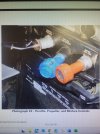
The impact probably disturbed linkages and such.One thing I noticed is those controls were pegged at the firewall.
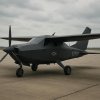
That's a high wing I'd actually fly.
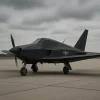
No need to lower your standards. Piper worked on a Cherokee version.That's a high wing I'd actually fly.
where do you get this from?So the PIC was a hothead prone to inappropriate and dangerous responses to trivial problems.

I think that's an AOPA slide and what a blooper!Minor nit, but I can't gripe about how poor journalism is and not call this out... What's a cessna 117?View attachment 145658

Just a typo that would be meaningless to 99.9% of the population.Minor nit, but I can't gripe about how poor journalism is and not call this out... What's a cessna 117?View attachment 145658


Needs faceted wheels.
Needs faceted wheels.
This just should not have been the result. With the engine generating that amount of power, no need for a 40-degree banked turn back to the field at that altitude. Forward CG didn’t help. I feel like had McSpadden been at the controls they’d both be here today.

I think they looked at the noise signature to determine that power was being made. You can clearly hear an exhaust note in the video, an engine at idle power or lower wouldn't have too much exhaust note.The aircraft could have been at idle power and still maintain that RPM in a steep enough dive.
The impact could've messed-up the linkages.Wonder why the throttle isn't firewalled?