Richard McSpadden and Russ Francis Crash | The Final Report

This just should not have been the result. With the engine generating that amount of power, no need for a 40-degree banked turn back to the field at that altitude. Forward CG didn’t help. I feel like had McSpadden been at the controls they’d both be here today.
I wonder how he resisted NOT taking over!
 
I had an engine out in my Luscombe. I had a pilot in the right seat who only had time in a Cirrus. I tried to clear the trees, but when I realized I couldn't, I picked a big fluffy tree (kidding, I think it was made of stone!) and told my friend to hang on that I was going to stall it into the trees. He later told me he was surprised I was so so calm, he panicked. You're correct that you don't know how you'll react until you face it.
Did you make it?
 
I'm very surprised that 2 adults up front and no one in back would put any 4 seat Cessna out of CG. Is that just a thing with Cardinals ? Just ran the W&B for our 182 and a 172 I used to fly and there's plenty of CG to spare.
 
Did you make it?
Nope
I'm very surprised that 2 adults up front and no one in back would put any 4 seat Cessna out of CG. Is that just a thing with Cardinals ? Just ran the W&B for our 182 and a 172 I used to fly and there's plenty of CG to spare.
Same on my 1959 Cessna 182. Not sure about later models.
 
I'm very surprised that 2 adults up front and no one in back would put any 4 seat Cessna out of CG. Is that just a thing with Cardinals ? Just ran the W&B for our 182 and a 172 I used to fly and there's plenty of CG to spare.

The Cardinal has quite a long cabin, with the wing mounted farther rearward than typical for visibility; these design features may cause such forward CG issues.
 
I agree with your general point, but I do not think the exact power made by the engine has been established yet. All the report says about power is that engine RPM was estimated at 2145 RPM 2 seconds before impact. However, the aircraft was in a dive. The CS prop will open up to try and maintain the set RPM, which was likely firewalled. The aircraft could have been at idle power and still maintain that RPM in a steep enough dive.
It was not diving. The CAS never exceeded 81 knots, and was 71 knots just before impact, where the noise analysis was performed.
 
There is a visual illusion when one departs from a Mesa (Lake Placid isn't as bad as the HMS sedona but it is on an elevated plain) and that is that you are higher thean you really are. it's really hard to resist.

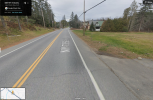
There was a road available 45 degree right turn ahead....might als have turned out badly- it's 2 lanes and has a curve.....very sad.

I was wondering about that road too when I saw the video. On Google Street View it looks like it’s full of wires and poles, but I still can’t help thinking they might’ve had a better shot if they’d just landed straight down the road instead of trying to turn back to the runway.


1759445962683.png
 
Cockpit video of a real life turn back in a Mooney 20C after engine failure.

 
Cockpit video of a real life turn back in a Mooney 20C after engine failure.

Seems the engine was producing some power, at least in the beginning of the failure. Looked to me like he had at least a few hundred feet (my estimate) of altitude before the engine acted up, and he made a quick turn to the right turn back towards the airport. Which considering the amount of flat survivable real estate on and around the airport (and flat farmland around there in general) his action wasn't a bad idea, even if he ultimately didn't make a runway.

IMO, by naming this video "The Impossible Turn" and showing this example of where turning around was very possible, may give some pilot false hope in a situation where there is no way in hel* they should be giving it a try.

I never warmed up to McSpadden's efforts to promote it as a potential option to investigate and practice, and was surprised AOPA supported then promoted the idea.
 
Last edited:
Seems the engine was producing some power, at least in the beginning of the failure. Looked to me like he had at least a few hundred feet (my estimate) of altitude before the engine acted up, and he made a quick turn to the right turn back towards the airport. Which considering the amount of flat survivable real estate on and around the airport (and flat farmland around there in general) his action wasn't a bad idea, even if he ultimately didn't make a runway.

IMO, by naming this video "The Impossible Turn" and showing this example of where turning around was very possible, may give some pilot false hope in a situation where there is no way in hel* they should be giving it a try.

I never warmed up to McSpadden's efforts to promote it as a potential option to investigate and practice, and was surprised AOPA supported then promoted the idea.
If you listen to his narration he says engine cylinder blew off at 500 AGL he made a right turn back toward the airport. He pulled the mixture to stop the prop and save the engine from further damage which didn't work his prop is windmilling causing more drag. He had no engine power at that point he pulled the mixture. The high bank turns could have resulted in an stall you can hear the stall horn go off a few times in those turns. There was no reason to turn back lots of open land around the runway. His mindset was save the plane not save his life. He got really lucky one of those turns didn't end up in an accelerated stall.
 
Cockpit video of a real life turn back in a Mooney 20C after engine failure.

When I bought my Skyhawk (nearly three decades back) I went up with an instructor, and we established the minimum height above terrain for a "sure thing" return to runway (which is greater than 180° most of the time.)
 
If you listen to his narration he says engine cylinder blew off at 500 AGL he made a right turn back toward the airport. He pulled the mixture to stop the prop and save the engine from further damage which didn't work his prop is windmilling causing more drag. He had no engine power at that point he pulled the mixture. The high bank turns could have resulted in an stall you can hear the stall horn go off a few times in those turns. There was no reason to turn back lots of open land around the runway. His mindset was save the plane not save his life. He got really lucky one of those turns didn't end up in an accelerated stall.

Got distracted during the narration and missed that info... which makes this event absolutely nothing even similar to what I would consider should ever be promoted as an "The Impossible Turn" success story.

This pilot had enough energy available to completely shut down the engine (increasing the descent rate), report his situation on the radio, then maneuver back around (increasing descent rate), over the center of the airport, and onto a runway. Nothing close to impossible, and IMO not a great way to theme this story to pilots.

Maybe AOPA "Pilot Stories" are now being produced by Artificial Intelligence?
 
He pulled the mixture to stop the prop and save the engine from further damage which didn't work his prop is windmilling causing more drag. He had no engine power at that point he pulled the mixture.
Labeling this decision as astonishing seems inadequate.
 
Labeling this decision as astonishing seems inadequate.
Got distracted during the narration and missed that info... which makes this event absolutely nothing even similar to what I would consider should ever be promoted as an "The Impossible Turn" success story.

This pilot had enough energy available to completely shut down the engine (increasing the descent rate), report his situation on the radio, then maneuver back around (increasing descent rate), over the center of the airport, and onto a runway. Nothing close to impossible, and IMO not a great way to theme this story to pilots.

Maybe AOPA "Pilot Stories" are now being produced by Artificial Intelligence?

Listening to it again he made the 180 turn then cut the mixtures so probably had some power in the turn. AI generated 9 years ago doubtful maybe no one here noticed video from 2016. The actual video posted on YouTube was from 2009.
 
Listening to it again he made the 180 turn then cut the mixtures so probably had some power in the turn. AI generated 9 years ago doubtful maybe no one here noticed video from 2016. The actual video posted on YouTube was from 2009.

So apparently this AOPA interest in saving pilots from low-altitude engine failures has been going on a lot longer than AI assisted video and textual presentations. Ironic (and sad) that their main flight safety employee advocate for investigating "the impossible turn" died doing exactly that.
 
Startle response. Training needs to identify what is there, and make sure it’s a good idea.

My startle response is apparently PUSH, rather than pull… I wish I could positively identify WHY or HOW, but honestly I can’t. I can tell you I’m glad for it.

I think very poignant repetitive training is probably a reliable way to get that there… and also it’s important to really break things down to VERY basics. You CAN NOT afford to stall, PERIOD. I cannot think OF ONE situation in an airplane where it’s better to stall than not. Bottom line, DO NOT STALL.

Somehow you need to be more afraid of stalling than crashing.

Unless you’re @Ed Haywood and playing upside down, pushing is the better option.

I don’t get judgy about experienced people doing something wrong, rather, it makes that much more aware of how susceptible I am.
"More afraid of stalling than crashing"----words to live by.
 
So apparently this AOPA interest in saving pilots from low-altitude engine failures has been going on a lot longer than AI assisted video and textual presentations. Ironic (and sad) that their main flight safety employee advocate for investigating "the impossible turn" died doing exactly that.
Well, he died in a plane piloted by someone doing that. I'd give a month's pay to hear a CVR of that flight. But none exists.
 
So apparently this AOPA interest in saving pilots from low-altitude engine failures has been going on a lot longer than AI assisted video and textual presentations. Ironic (and sad) that their main flight safety employee advocate for investigating "the impossible turn" died doing exactly that.
No... died at the hands of an owner doing that with him on board. A distinction without difference when you're dead, sure. But not to me, as someone still breathing and can ostensibly still control who'd be P.I.C.

My answer to that rhetorical question isn't a mystery given my post history; christ I even gave up a multi million dollar career because I'm so dogmatic about that prerogative. There's 99 ways I can mort while incurring the imprudence of hurling my wingless ape hind quarter through the skies at too fast speed...fighting another ape for control just ain't gonna be one of them.

Two pilots in this world I trust: One is me...the other one's not you. :biggrin:
 
Pilot duties were discussed before the flight. Owner would do takeoff, climb to photo location, McSpadden would fly the formation aspect of the flight. It was the owners airplane when the emergency occurred so McSpadden was just a passenger at that point if he held to the arrangement. He trusted the relatively high time pilot to use proper judgment.
The fatal problem began when the engine quit during taxi. Further investigation might have yielded the cause. The fact they went on with the flight was on both of them.
 
I would say we could look back further to where you formulate the notion you should honor a preflight PIC agreement to the death?

Something isn’t adding up here.
 
You tend to trust an aircraft owner with 9,000 hrs of flight time. Perhaps McSpadden didn’t know that Francis only had 10 hours experience in that plane. We’ll never know what corresponded in that cockpit, but the outcome was questionable ADM. Who knows, it may have ended up the same way had they continued straight ahead. It’s the partial power loss that makes it a difficult decision.
 
I would say we could look back further to where you formulate the notion you should honor a preflight PIC agreement to the death?
Geeze, I don't know how one would describe any other agreement. "You're PIC until, in my unchallengeable opinion, you're not." Fighting over the controls isn't going to help anybody. About all one can do is try to calm the pilot flying and help him/her make the best decisions.

Ron Wanttaja
 
I’ve grabbed the controls A THOUSAND TIMES to prevent a crash.

Takes about a milli second and NEVER resulted in a ****in contest.

If you’re highly experienced AND STALLING you’re in startle response mode. If someone intervened you prolly wouldn’t even notice.
 
Page 3 of NTSB final report-

Several days before the accident, the pilot asked a flight instructor if he would sit in the right seat of the accident airplane to accompany him on a practice flight to prepare for the photo flight. The flight instructor agreed, having already flown the airplane several times. The flight instructor read off the checklist for the pilot and they discussed what the pilot in command (PIC) would do in an emergency during the takeoff roll and departure. Upon takeoff from the same departure airport, when about 200 ft in the air, they heard a noise and then felt a draft.

The flight instructor turned around and saw that the baggage door was wide open. The flight was roughly 500 to 800 ft above the ground. The pilot "immediately made a very steep bank to the left to turn back to the runway's approach end" and landed.

Seems like the pilot made a steep turn at low altitude during a non-emergency flight. Somewhat telling.
 
I would say we could look back further to where you formulate the notion you should honor a preflight PIC agreement to the death?

Something isn’t adding up here.
Strange to assume McSpadden would have known what the outcome would be if he did not intervene, before changing a choice that had been already made.
 
The flight instructor turned around and saw that the baggage door was wide open. The flight was roughly 500 to 800 ft above the ground. The pilot "immediately made a very steep bank to the left to turn back to the runway's approach end" and landed.

Seems like the pilot made a steep turn at low altitude during a non-emergency flight. Somewhat telling.

Yes, very telling. When prestigious organizations and experienced pilots (i.e., AOPA & McSpadden) are on record labeling an apparent loss of power on take off, regardless of who is flying the plane, as rationale to consider applying "the impossible turn", the situation is clearly a matter of pilot opinion regarding the level of urgency (or not) of how to fly a return to the airport, and the PIC is the boss.

IMO, the only intervention by a non-flying pilot justified beyond a strong verbal "WTH are you doing?" would be at the point the non-flying pilot realized the airport was very likely beyond gliding distance at whatever available power remained (which could become zero power at any moment).

When known the plane was probably not going to make it, aggressive intervention onto the flight controls (if needed) to prevent a stall, and then flying it into the crash would be an instinctive and reasonable survival response by any non-flying pilot.

______________
I faced a similar situation shared in a post back in August that thankfully didn't require jumping onto the flight controls for survival, but I was primed and ready to do it per the above opinion if/when the engine suddenly quit, in a heartbeat:
"My home base has farm fields north and east adjacent to the airport, big and beautiful year round. One late afternoon hot day (calm winds) I was riding along in the right front seat of an older and lower horsepower Mooney (M20C), with another pilot seated in back. The three of us were headed out to an airport restaurant for dinner. Taking off on runway 31 (4100' long), I thought the runway roll felt a little slow, but everything else felt and sounded normal. Figured it was a hot day and we had 3 adults on board (one big guy), so I wasn't expecting normal performance.

Just after lift off, it wasn't climbing as much as I expected, but the owner pilot didn't seemed concerned as he quickly retracted the gear with the Johnson Bar. Only then did the three of us start talking (paraphrasing), "hey, this doesn't seem right, we're barely climbing. Let's go back and land".

During our conversation we passed over the end of the runway, over a busy road, at no more than 100' or 200' feet high, tops. But it was still climbing, barely, with no vibrations, and sounding completely normal.

As the owner began talking to the tower to announce a return I was sticking my left hand in his windshield with my thumb pointed right, and motioning to the right. Which would have kept the aircraft over nothing but farms on downwind, right base, and final, then landing onto runway 26. By keeping the downwind tight the engine could have quit and a right turn would be on the airport, somewhere. But, the owner wanted back quickly, and turned left to land on runway 8.

During the left turn there was nothing but houses and neighborhoods, and a return over the busy two lane highway with rush hour traffic backed up. Not exactly my choice, but thankfully the engine kept running.

Turned out one cam lobe was completely gone, and the engine went right out for a rebuild at around 1000 hours from the last rebuild."

 
I’ve grabbed the controls A THOUSAND TIMES to prevent a crash.

Takes about a milli second and NEVER resulted in a ****in contest.

If you’re highly experienced AND STALLING you’re in startle response mode. If someone intervened you prolly wouldn’t even notice.
Yeah, this. Almost every single tailwheel training flight until the student "gets it" at least one intervention is required.
 
I’ve grabbed the controls A THOUSAND TIMES to prevent a crash.
A lot of difference between a 10-hour student and a 9,000-hour pilot flying the aircraft he owns. He was DC-3 type rated, and actually had 3,000 hours more flying time than McSpadden. Most pilots have a pretty strong ego; few are going to tolerate a less-experienced pilot trying to take over control of THEIR aircraft.

Ron Wanttaja
 
Back
Top