Preheating off-base

Curious - If you need 30 minutes of pre heat with hot air such as with a propane heater, what is the equivalent time with a Tanis to get the engine started? 1 hour? 2 hours?
30 minutes with a propane heater will lead to a wide variety of temps across the engine. Just not an easy way to get all that metal hot consistently. Might be better than nothing, especially if the oriented so as to primarily heat the oil, which may or may not be possible for a given cowl.

Tanis/Reiff will bring an engine to comfy range in 3 hours ≥ 25 degrees; maybe 6 hours 5 ≤ T ≤ 25; overnight with T ≤ 5 degrees. Very roughly. For anything under 25 degrees or outdoors, must have cowl and ideally prop covers. Example: At 3 degrees for the overnight low, outside, no wind, with all covers and cowl flaps closed, my engine was at 110-120 F after overnight heating on the road at a Christmas family stop. That's for the ~450W Reiff band system - they make ones now with double the cylinder band draw (100 W vs. 50 W/cyl.).
 
My goal is that I just want the thing to start without flooding, catching fire, etc. My needs here ae simpler than others. Living in ATL area, cold starts below 30 degrees are a lot fewer than most folks. For example, I'll need to get the engine temp to 35-40 degrees if it's 25 degrees outside. So sounds like it still would take 1-2 hours to do that.

If you have a hangar the Tanis or Reiff sounds great. As a tie down guy I'd have to find a place to get 1000 watts for a few hours. Airport doesn't have a hangar or outlets to lend. It would be stretching a bit if the airport would let me have a Honda generator run for a couple of hours next to my plane while I sat in the FBO drinking their coffee. Maybe they would. That is of course dependent on whether or not a couple of hours would even suffice.

As a gadget junkie, if I could convince my self that a Tanis and a used Honda generator running for an hour would work in my situation, I'd probably put it on. You "hangar people" living on the other side of the tracks in the good part of town have it nice.

As I said living in the south I'm dealing with this issue maybe 3-4 times a year. Learning from you winter warriors in the northern hinterlands.
 
Last edited:
Yesterday, the guy on my field with the diesel setup preheated his Comanche for 30-45 minutes, but it wasn't particularly cold the night before, maybe 30. I put my hand on the scat tube and it wasn't screaming hot. I'll have to try it next time I fly. Too bad I don't have a firewall-mounted battery like one of those newfangled C150s.
 
Given that I just want the thing to start - for example get the engine temp to 35-40 degrees if it's 25 degrees outside. So sounds like it still would take 1-2 hours to do that. You'd have to find a place willing to let you pull 1000 watts for a few hours.

If you have a hangar the Tanis or Reiff sounds great. As a tie down guy it would be stretching a bit if the airport would let me have a Honda generator run for a couple of hours next to my plane while I sat in the FBO drinking their coffee. Maybe they would. That is of course dependent on whether or not a couple of hours would even suffice.
No, you have to buy the generator for home base and/or travel with it if going to be tied down. Typically a couple hours will not suffice if there's any breeze or you don't have the covers. And you are pulling ~400 W with the standard system FWIW.

You want the thing to be more than just a little warmed for longevity of the engine - long ago when had an aircraft outside in winter it basically never flew when temps were below about 30 F, and even that was not ideal. Sure a start or two colder will (probably) not cause any harm, but...

Winter can also be deceptive - it was 15 F last night, now the sun is out at 11 am, the snow is melting off the roof, and the temp is 42 F. Sadly your engine is still at about 15 F.
 
Typically a couple hours will not suffice if there's any breeze or you don't have the covers. And you are pulling ~400 W with the standard system FWIW.
Eh - Then I'll just have to wait until they make a higher wattage system that can heat it enough in a hour. I'll keep using propane in the meantime. Like I said, it's only a few times a year, so I'm not concerned about killing the engine. More concerned about killing the starter, flooding it, etc.
 
Eh - Then I'll just have to wait until they make a higher wattage system that can heat it enough in a hour. I'll keep using propane in the meantime. Like I said, it's only a few times a year, so I'm not concerned about killing the engine. More concerned about killing the starter, flooding it, etc.
They make a higher wattage already. The 400W is the oil pan only. Get the cylinder bands and things take less time.

As others have pointed out though, the goal is about saving wear and tear on the engine, not just minimum time. Plenty of people have managed to cook cowling or other components in the engine bay with too much heat. I've seen a couple car fires from homebrew approaches.

You can't make a batch of cookies in 2 minutes, rather than 12, just by turning the heat up.

But, yeah, you are in a place where it shouldn't make much difference.
 
What converter do you use and have you run into any issues with the converter damaging the electronics in the car?
I have a couple of 1000W models, one is this model:

1000W True Sine Wave Converter

Any true sine wave converter with enough excess capacity (I like at least 125% of my expected load) will work. There's very little chance of damaging electronics in the car unless you have a poor connection and constantly spiking the voltage on your regulator.
 
Completely off tangent for certified aircraft, but a possible idea in experimentals and possibly a kick off for ideas in new designer’s of the future… so I will say it anyway. When I was a kid my neighbor a few miles away had a late ‘50’s D9 bulldozer that had a “pony engine”. Basically a small gas engine that would start and heat up the engine coolant and oil in the main engine, then be engaged by a clutch to fire up the main Diesel engine. A lot of the heavy plow tractors at the time used the same concept. I think a small (say 50cc chainsaw sized engine that uses the main engines oil as a coolant and actively pumped it through the engine could heat the main engine up in a half hour while also topping off the battery.
 
I don't own an aircraft, but I have used the little Honda generators. If the plane tiedown is more than 50' from the FBO, they won't hear it running inside the FBO. Their inverter units aren't cheap but they're very quiet.
 
  • Like
Reactions: WDD
I just ordered the Jackery Explorer 2000 v2 while it was on sale. It's smaller and easier to carry than, say, the Predator 2500. I'll report back once I have a little experience with it.

My hope is that it'll give me two hours of preheat time with my complete Tanis heater setup. With the cowl plugs installed, that should make a nice difference on all but the coldest days.
 
Some data from today. My hangar was down to 30F at daybreak this morning. It was a decently warm, sunny (December) day, and the hangar's temperature rose to 50 by noon, and 55ish by 3:00, when it began to cool. At 3:30 I used the remote to turn on the 400W sump heater on the RV-6. No cowl blanket, no cowl plugs. An hour later, I showed up at the airport to fly.

The oil temperature in the RV-6 was 70F. The CHT's were 60ish. A hangar row over and in the same conditions, all the temps on the RV-10 were 50F. So an hour's worth of preheat on the RV-6 is worth about 20F of oil temperature and 10F to the far reaches (and easier to cool) portions of the engine - the cylinder heads. With cowl plugs and a blanket, I'm sure the temp rise due to the sump heater would have been more.

The point is for WDD and others is that an hour with a 400W sump heater will increase oil (and core engine) temps by about 20F. I think if I'd added a blow dryer or space heater to the mix (hot air is really effective on cylinder fins), those numbers would have improved substantially. I'd bet a 30 minute sump heater+ space heater preheat would be just fine in 20F conditions which is the worst we see in the Atlanta-Dallas corridor other than a day or three a year. I'm probably not flying on those days anyway.
 
Last edited:
I have a jackery 700 and a Tanis pan plus cylinder heater. It provides about 40 minutes before being completely drained. So, low 20s becomes 40+ degrees Fahrenheit. I’ve only used it a few times and wonder when the jackery won’t recover from being drained. I try to monitor but something always distracts me. The 700 was the deal of the day a couple years ago. I’d definitely recommend a bigger one

Anyway, ymmv
 
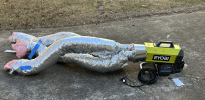
So last night it was in the teens - rare for the ATL area. Had an Angel flight this morning. Pre heated with my Home Depot battery powered Ryobi propane heater for 30 min, and dang if it didn't start right up. Pleasantly surprised.
 
So last night it was in the teens - rare for the ATL area. Had an Angel flight this morning. Pre heated with my Home Depot battery powered Ryobi propane heater for 30 min, and dang if it didn't start right up. Pleasantly surprised.
It's not so much about whether or not it starts, it's about how many hours you took off its life when you started it.
 
It's not so much about whether or not it starts, it's about how many hours you took off its life when you started it.
Probably a more relevant question is the amount of life hours lost between starting it with the pre heat vs waiting for it to warm to a balmy 35 degrees as the day warmed up later that afternoon.

Before turning the starter, I had a cylinder head temp of 120. What was the real cylinder head temp? Maybe not 120, but higher than 18 degrees when I started. I was primarily heating the bottom of the engine, oil temp probe isn't located in that area, so gauge wasn't reading an oil temp prior to start. I also had 20-50 weight oil, so it would flow better in cold temp. I can tell you the prop spun effortlessly with the starter, and I got oil pressure no slower than if it was summer.

So, vs a 35 degree start, perhaps I added a few engine life hours?

Bonus: I’m flying regularly, and doing about 150 hours this year. Given the hardest thing on the engine life is inactivity, I’ve got so many “bonus points” on engine life that a pre heated cold morning start once or twice a year probably isn’t even going to register/be on the radar.
 
Last edited:
Probably a more relevant question is the amount of life hours lost between starting it with the pre heat vs waiting for it to warm to a balmy 35 degrees as the day warmed up later that afternoon.

Before turning the starter, I had a cylinder head temp of 120. What was the real cylinder head temp? Maybe not 120, but higher than 18 degrees when I started. I was primarily heating the bottom of the engine, oil temp gauge isn’t there, so I can’t tell you what the oil temp was. I also had 20-50 weight oil, so it would flow better in cold temp. I can tell you the prop spun effortlessly with the starter, and I got oil pressure no slower than if it was summer.

So, vs a 35 degree start, perhaps I added a few engine life hours?

Bonus: I’m flying regularly, and doing about 150 hours this year. Given the hardest thing on the engine life is inactivity, I’ve got so many “bonus points” on engine life that a pre heated cold morning start once or twice a year probably isn’t even going to register/be on the radar.
Dang. How many BTU does that little Ryobi put out?

What did the oil temp gauge say? Or do you mean it's inop or something when you say it "isn't there"?
 
Dang. How many BTU does that little Ryobi put out?

What did the oil temp gauge say? Or do you mean it's inop or something when you say it "isn't there"?
1) I had to put that Ryobi on "low" setting BTW
2) My oil temp gauge is rather "slow" to register, even in summer. Plus, if the oil temp probe is located higher in the block, not in the lower oil pan, it wouldn't have any hot oil on it prior to start. I didn't write that part to clearly, I edited the post to help clarify. The cylinder head temp probe is on one of the cylinders, I figured that reading told me I was heating the cylinders at least to some degree, and higher than 18 degrees / ambient temp.
 
1) I had to put that Ryobi on "low" setting BTW
Wow.

Well, the Ryobi on low is 30,000 BTU. Do you have a 182, or am I misremembering?

2) My oil temp gauge is rather "slow" to register, even in summer. Plus, if the oil temp probe is located higher in the block, not in the lower oil pan, it wouldn't have any hot oil on it prior to start. I didn't write that part to clearly, I edited the post to help clarify. The cylinder head temp probe is on one of the cylinders, I figured that reading told me I was heating the cylinders at least to some degree, and higher than 18 degrees / ambient temp.
I was just curious if it registered anything. With external heat it's quite possible to get a small part of the engine much warmer than the rest.
 
Yes, it’s a 182. And yeah, you’re right - on low it’s 30k BTU. How the heck did you know that !

BTW - I had it running 30 min while I did the preflight, got everything set and plugged in, etc.

No, although oil pressure popped up, took a while for oil temp to do anything. It’s always done that. Planning on getting the upgrade to a GI 275 EIS scheduled after beginning of year.
 
Yes, it’s a 182. And yeah, you’re right - on low it’s 30k BTU. How the heck did you know that !
My buddy Google. ;)

BTW - I had it running 30 min while I did the preflight, got everything set and plugged in, etc.
Interesting. My buddy Google's "special" brother, Google AI, says that 30,000 BTU for 1/2 hour should warm up the engine by between 135º and 160º. However, that's also assuming a 65%-75% efficiency for the heat transfer, which I think is wildly optimistic.

No, although oil pressure popped up, took a while for oil temp to do anything. It’s always done that. Planning on getting the upgrade to a GI 275 EIS scheduled after beginning of year.
I'd be curious what the GI275 EIS logs if you turn it on and then apply the heat from the Ryobi in the cold. How fast do CHTs and oil temp rise, how evenly do they rise, etc.
 
  • Like
Reactions: WDD
Sort of. A developer is building private T hangars you can buy for $180,000. 20 year ground lease. And you pay property taxes, and HOA yearly fees, utilities fees, and the ground lease payment.

There are some airport hangars for $600 a month, but that has a long waiting list.
 
Yesterday, the guy on my field with the diesel setup preheated his Comanche for 30-45 minutes, but it wasn't particularly cold the night before, maybe 30. I put my hand on the scat tube and it wasn't screaming hot. I'll have to try it next time I fly. Too bad I don't have a firewall-mounted battery like one of those newfangled C150s.
I tried it out yesterday. Very nice, great success.
 
I just ordered the Jackery Explorer 2000 v2 while it was on sale. It's smaller and easier to carry than, say, the Predator 2500. I'll report back once I have a little experience with it.

My hope is that it'll give me two hours of preheat time with my complete Tanis heater setup. With the cowl plugs installed, that should make a nice difference on all but the coldest days.

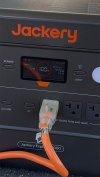
I just used my new Jackery Explorer 2000 v2 for the first time on Sunday. It was chilly in the morning; admittedly, by the time I got my lazy butt out to the airport it had warmed up a bit and pre-heating probably wasn't necessary anymore. But I plugged it in anyway and let it do its job for one hour and twenty minutes. This is with my Tanis heater, with an individual heating element for each cylinder plus two heating pads (one for the top, one for the bottom of the case).

Jackery.jpg

The Jackery indicated a draw of ~450 Watts, with more than four hours available from a full charge to empty. That is more time than I anticipate ever needing to preheat while away from my hangar. My use case is we got a second home in South Carolina, and I don't have a hangar here (yet) - so the Jackery will allow me to preheat on those occasional cold winter mornings.

Bonanza.jpg

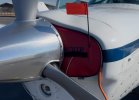
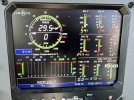
I had the cowl plugs installed during this time. When it was time to start, my CHTs had warmed up to the mid-to-high seventies. The oil temperature shows normal (i.e. not warmed up) on the engine monitor before start, because the oil in the case hasn't been circulated to the oil temperature sensor yet:

1767653893244.jpeg

This is what I was hoping for. The Jackery - while not lightweight at ~40 lbs - weighs less and is smaller than the gas generator I was looking at (and certainly smells better) and has more than enough power to preheat my engine. Even assuming some degradation of the battery over time and with use, this will get my engine comfortably warm. The one thing I will NOT do with it is transport it in the airplane, due to concerns over the fire risk of large-capacity batteries.

- Martin
 
Back
Top