Lindberg
Final Approach
No, I don't think that's it.Gotta love this thread. The reaction to stickers being everywhere is "get rid of the stickers" instead of "WTF are we still putting people in contact with harmful substances so constantly"

No, I don't think that's it.Gotta love this thread. The reaction to stickers being everywhere is "get rid of the stickers" instead of "WTF are we still putting people in contact with harmful substances so constantly"

We aren't. California is absurd in the amount of things they deem harmful and the level at which one must be exposed to it for it to be harmful. I'm recalling from memory, but one of the things they deemed harmful and required a Prop 65 required the person to ingest like 70 gallons a day before they would reach the level that it may cause cancer. But, sticker required, because California.Gotta love this thread. The reaction to stickers being everywhere is "get rid of the stickers" instead of "WTF are we still putting people in contact with harmful substances so constantly"
The nation that allows so many harmful things to be commonly used and then gets offended when people are informed of the harmful things.Who is we?
They don't. The universality of the stickers is greatly exaggerated on this thread. So system is perfect, and I'm sure there are some products that have stickers that provide no value. I'm even more sure that letting people know about harmful substances is a net positive.If warning stickers say everything is dangerous, what is a logical way to deal with that problem?
Gotta love this thread. The reaction to stickers being everywhere is "get rid of the stickers" instead of "WTF are we still putting people in contact with harmful substances so constantly"
Absolutely correct. We should stop putting people in contact with, and commonly using, harmful substances, like . . . . food.The nation that allows so many harmful things to be commonly used and then gets offended when people are informed of the harmful things.

The nation that allows so many harmful things to be commonly used and then gets offended when people are informed of the harmful things.
Gotta love this thread. The reaction to stickers being everywhere is "get rid of the stickers" instead of "WTF are we still putting people in contact with harmful substances so constantly"

Drinking water, pure water with no additives, will kill you if you drink enough that it upsets the electrolyte balance in your body. As mentioned, sunlight causes forms of cancer that can kill you. Oxygen toxicity is a real thing. And of course if you get too much Nitrogen and other gasses (instead of Oxygen) that will kill you too. Trying to avoid dairy? Don't drink too much Almond Milk . . . that can kill you.DHMO is required to sustain a human’s life, but has multiple ways to kill you if not treated with respect. Diverging from a goldilocks state is but one way; inhaling it is among numerous others.
The State of California does not require the substance to be labelled.

Gotta love this thread. The reaction to stickers being everywhere is "get rid of the stickers" instead of "WTF are we still putting people in contact with harmful substances so constantly"

You know anyone that's going to sit down and eat a pound of metal alloy?


No, the reaction to stickers being everywhere is they are ignored.Gotta love this thread. The reaction to stickers being everywhere is "get rid of the stickers" instead of "WTF are we still putting people in contact with harmful substances so constantly"
Calcium, potassium, sodium, magnesium, iron, zinc, copper, and manganese are all required for human life. And each has a toxic level . . .And every chemist, pharmacist, doctor and nurse would probably agree that poison is in the dosage.
And the non-California companies that have to label the crap lest they be fined/sued if it makes its way to California. So you gotta pay someone to make sure that none of the almost 900 chemicals are or aren't in your product and or at a level that requires it.Aside from the fact that the Prop 65 warnings don't really affect anyone but Californians (except maybe to trigger comments and add unnecessary labels),


Rather than obvious physical deformities, it affects personalities, attitudes, and the ability to reason.If all of that stuff really was so harmful for reproductive health, I’m surprised we don’t see more two headed, one armed babies with rat ears.

The real shortcoming of the legislation is that it's dumb. But to address your point, the labelers don't even know what the potential carcinogen is until someone makes up some stupid crap and sues them. See my link above.Aside from the fact that the Prop 65 warnings don't really affect anyone but Californians (except maybe to trigger comments and add unnecessary labels), it seems to me the REAL shortcoming of the legislation is that labelers aren't actually required to tell you what the potential carcinogen is.

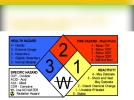
That provides more detail than the Prop 65 label. Try again.Should we also remove these labels?
View attachment 143641
Remember, the state of Ca isn't able to control the amount of time your child will suck on that screwdriver handle, or how many hours he will spend licking paint off the walls of your 1970s house.
Thus, they can only warn you that doing so increases the risk.
Some things might be obvious to people on PoA, but they're not to the average public. And the problem isn't just one item and the dose you might get it from it, it's the combination of that and the other 999 items in the average household.
If anything, the Prop 65 label should be a very simplified version of the MSDS label, explaining the potentially troublesome contents and the LD50.
And it has entirely different incentives and enforcement. The list of substances that require a Prop 65 label is on the state's website. The list itself is absurd.That provides more detail than the Prop 65 label. Try again.
Yeah, and if you go on the CA website for many of the items listed they don't even say what the acceptable levels are, or whether it's ingestion/contact/inhalation/etc. Just that _______ is bad.And it has entirely different incentives and enforcement. The list of substances that require a Prop 65 label is on the state's website. The list itself is absurd.
Far before a child learns to read an MSDS label they'll learn not to lick walls or suck on screwdriversisn't able to control the amount of time your child will suck on that screwdriver handle, or how many hours he will spend licking paint off the walls of your 1970s house.
 . To them the MSDS label will just be a colorful piece of paper that looks like Uno cards.
I have to deal with them, and I'm not even in CA. Customers calling and asking "this is supposed to be lead free why does it have a prop 65 sticker on it?"I am so glad this thread taught me to be ****ed off about labels that i never knew existed.


Far before a child learns to read an MSDS label they'll learn not to lick walls or suck on screwdrivers

 safetyfirstwork.com

Wait... how do we know the labels are safe?
It's labels all the way down.Does the label have a label?
All it takes is a circular label.It's labels all the way down.

Let's get some accountability in here, now. Little accountability, eh?

Well, there this guy:In my previous example, a person would have to eat over a pound of an alloy to reach the level determined by Prop 65. You know anyone that's going to sit down and eat a pound of metal alloy?

 www.snopes.com
Does the label have a label?

You’re right. The farmer isn’t sitting in a chair drinking beer. He’s in his truck running around keeping the operation on the rails but he’s still watching that ag pilot. Way to much on the line not to do a little QA when the opportunity is presented.fake! no farmer has that much time on his hands during daylight hours.
Explains a lot about this board.Rather than obvious physical deformities, it affects personalities, attitudes, and the ability to reason.

You’re right. The farmer isn’t sitting in a chair drinking beer. He’s in his truck running around keeping the operation on the rails but he’s still watching that ag pilot. Way to much on the line not to do a little QA when the opportunity is presented.
Kinda miss that job… sometimes.
