No flap landings.

Gary Ward

En-Route
Joined
Jan 16, 2020
Messages
3,639
Location
Lawrenceburg, Indiana
Display Name
Challenger1
Home Airfield
I67
Couple days ago my friend and I flew the pattern just for fun as the clouds were pretty low.
He's a very experienced standards check airmen.
He says lets do some no flap landings on our 2800' runway.
Together we do 7 landings with me almost hitting/landing on the numbers at the end of the day.
I was at idle abeam the numbers and trimmed for 70 and just about made the runway with just touch of power.
So last night I go out by myself and did 10 more no flap landings trimmed at 65 just like the POH says.
Shoot I can land just about the same distance as using flaps now. It was a calm day with 3 KT winds both days.
I got used to the new sight picture out the windscreen.
It was really fun and gave me even more confidence if I ever have to do it for real.
The 2800' runway made it more fun and was plenty long enough for it.I was flying my 172 which made it easier than other aircraft I was told. It glides great, so much fun!
 
Last edited:
Next level of practice: “November 12345, keep your speed up for jet traffic behind you”. Do 120 in the pattern and slow her up to 70 on short final and land no flaps. With an instructor of course.

I landed at PWK last year. The controllers were accommodating and worked me in between jet traffic coming and going and in line. Got cleared to land then uncleared on final “but continue” for departing traffic and cleared again. I had a not horrible no flaps landing but could stand to practice some (a lot?)
 
A couple years ago with my same friend my alternator went out at I69. We flew back across town low hopefully under the radar with all power off. Got to the home airport and I forgot the power was off and the flaps weren't working even though I was moving the flap lever. lol OMG the first attempt was crazy. It was all wrong in my mind. The sight picture was all wrong. I was really fast and went around twice. On the third attempt I got it on the runway but it was not pretty and with just enough runway to get it stopped. I was flying a different direction that time over taller trees.
I about pooped in my pants. After the fact I realized I could have turned on the master and the transponder would have still been off and had enough battery power to lower the flaps.
I think my buddy knew all this but just let me figure it out on my own?
So the other day When he said no flap landing I had flash backs to that day!

BTW the first attempt the other day with my friend on board was a go around.
Last night I actually did 10 no flap landings, the first was with flaps and the last one was with flaps and was able to really land short with flaps after 10 without.
 
Last edited:
Had an alternator failure at night and the battery failed in the pattern, so that was my first Mooney no flap landing. No big deal actually.

I did have enough brains to get the plane slowed and the gear down right after the alt failed. Even though it has the lawn mower starter cord emergency gear extender, I’d much rather get them down and locked the normal way before the juice runs out.
 
My DPE liked having applicants perform a no-flap landing, so my CFI trained me on making them in the Archer before my checkride. It is a totally different experience than a normal landing in a lot of ways. It would have been a rare failure for the plane I was flying, as flap activation was manual, but it really opened my eyes about how much difference even just one or two notches of flaps can have.
 
Had an alternator failure at night and the battery failed in the pattern, so that was my first Mooney no flap landing. No big deal actually.

I did have enough brains to get the plane slowed and the gear down right after the alt failed. Even though it has the lawn mower starter cord emergency gear extender, I’d much rather get them down and locked the normal way before the juice runs out.
Can't imagine doing it in a slippery Mooney. :eek2:
 
Years ago I was associated with a flight school which, although Part 61, required stage checks. One of the pre-solo stage check tasks was no-flap landings. Too many students failed that task. Apparently, they were using flaps as speed brakes and had no airspeed control without them. They decided that there would be no use of flaps by student pilots until after they soloed. Kind of an extreme response to prohibit them altogether and it was eventually dropped, but training no-flap landings early had some real benefits. Students learned to control airspeed and the marginally higher speed and float meant more time to learn the sight picture in the flare.
 
Short 3 minute video, thought it might help some others for consideration. I think it applies to all airplanes of this size and speed, not just the canard 182s.

 
I rem
Years ago I was associated with a flight school which, although Part 61, required stage checks. One of the pre-solo stage check tasks was no-flap landings. Too many students failed that task. Apparently, they were using flaps as speed brakes and had no airspeed control without them. They decided that there would be no use of flaps by student pilots until after they soloed. Kind of an extreme response to prohibit them altogether and it was eventually dropped, but training no-flap landings early had some real benefits. Students learned to control airspeed and the marginally higher speed and float meant more time to learn the sight picture in the flare.
I remember doing one or two no flap landings during PPL training and it was on a 6000' runway. I surely didn't do very well with them then.
 
I remember doing one or two no flap landings during PPL training and it was on a 6000' runway. I surely didn't do very well with them then.
That's a good reason to train them from the beginning. Other than airspeed control, the main issue 've seen with them in a Cessna is the higher pitch attitude on final.
 
That's a good reason to train them from the beginning. Other than airspeed control, the main issue 've seen with them in a Cessna is the higher pitch attitude on final.
Definitely a different sight picture in a 172. Turns out when I am trimmed for 65 with no power it is about the right pitch to land. If I ever loose an engine I going to trim it for 65 and look for a place to land instead of fixating on the air speed.
 
Last edited:
Definitely a different sight picture in a 172. Turns when I am trimmed for 65 with no power it is about the right pitch to land. If I ever loose an engine I going to trim it for 65 and look for a place to land instead of fixating on the air speed.
Tip: Do not fixate on airspeed for an engine out. First of all, since published best glide is based on max gross, chances are you're too fast. But more importantly, each of the 30+ makes and models of singles I've flown so far has had one thing in common. The airplane approximates its best glide speed with a level cruise pitch attitude.

So do what an airline pilot I checked out in a rental 172 more than 2 decades ago showed me when I pulled the power on him (I've tried it and taught it in everything ever since). Look out the window, pitch for level flight while heading to a landing spot, trim it off and let the airplane slow itself to best glide (takes about 6 seconds in a 172) while to are heading to a landing spot. Yes, you will want to confirm target range airspeed with a glance at the ASI, but don't let it be your primary focus.
 
Mooney flaps are not that big and are NOT like the flaps (boards) on Cessnas (2000 hrs in Fs and Js).
Just do it by the numbers.

The other day, "32755 fly 090, maintain 8,000. Intercept the localizer 4R and glideslope expect clearance at CADON. You're #6 for the field. 170 knots or more on the localizer, please.

Learn and be good with ALL the configurations!
 
Another thing that should be shown to students is a full-flap go-around. In a 150 on a high-DA day it could kill you. A 172 does better.

The need-to-know for this? Electric flap actuators can fail. Not so much the motor, but the microswitch travel limit switches or the panel control. The old control was a DPDT bat-handled switch with a plastic flap knob on it. Not much trouble there other than the center-off spring breaking. The actuator travel limit switches are a whole different animal, as are the position-selector flap control affairs on later legacy Cessnas. That lever actuates a pair of microswitches that can fail or even break. Had one do that on the R182.

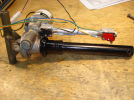
This is a Cessna 100-series flap actuator. It was really badly maintained by mechanics slathering the jackscrew with moly grease, which was the incorrect lube for this serial number of airplane. And they didn't spare the grease, either.

1748626101442.png

There are two microswitches there, one at each end of the aluminum support rod. The one on the right is the down-limit switch, the one on the left is the up-limit switch. If the mechanic gets oil or grease into those switches (which are not sealed), it eventually fouls the switch contact points and the switch no longer works. That switch on the left is wired so that when the jackscrew nut (the big black tube affair) is fully retracted, the switch opens the power to the motor's "up" rotation. As soon as the nut begins to move (flaps extending) those contacts close so that the motor will work when flaps-up is selected. But if the contacts decide that they're now fouled enough that they don't close, those flaps are stuck extended and if you have to go around, you can't retract the flaps. You're stuck with a whole bunch of drag. You had better know how to fly the airplane like that.

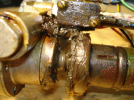
Does your actuator look like this one below? Same as the one above, before cleaning. Yes, it's the worst I ever saw, but even a bit of oil in the wrong spot can fail that switch. The manual tells you, for this series of actuator, to use a clean rag, put some #10 non-paraffinic oil on it, and wipe the oil onto the screw after it has been wiped clean. No spraying LPS, no gobbing grease on it. WIPE it on. It only needs a film of oil to lube it.

1748626664328.png
 
Probably because I have never flown anything faster than an arrow.:sigh:
...and have probably listened to the hype about how difficult it is to land a Mooney. A Mooney C's target Vref is 70 KIAS, not that much different from the Arrow. Even an Ovation which cruises comfortably at 180 KIAS has a max gross target Vref of 75 (although it's closer to 70 at most landing weights).
 
As @Dan Thomas mentioned, be ready for those e-flaps to not work, either on landing or retraction on go-around. I had flap micro switch issues on my 182p - popped the breaker at full extension and did not know it - was doing steep spirals. Wondered why we weren’t climbing well after retraction and full power. I’ve since marked the 20 and 40 degree flap positions on both side windows (stickers) so I can see what I’m dealing with if it happened again.
 
Mooney flaps are not that big and are NOT like the flaps (boards) on Cessnas (2000 hrs in Fs and Js).
Just do it by the numbers.

Bruce has it, Mooney flaps are small. I don’t have the book in front of me, IIRC, the difference in stall speed between no and full flaps is 6, maybe 7 knots. Not a huge difference.
 
Grumman flaps supposedly bring a 3-4 knot change in stall speed, so you end up treating no-flap landings the same. The reality is that they are air breaks for the aa5 series.
 
I don't think that's really necessary. Varying approach speeds and configurations is a valuable practice item for any time you're out flying. You can always go around if you don't like it.
My disclaimer, lawyer-shocked…
 
Next level of practice: “November 12345, keep your speed up for jet traffic behind you”. Do 120 in the pattern and slow her up to 70 on short final and land no flaps. With an instructor of course.

I landed at PWK last year. The controllers were accommodating and worked me in between jet traffic coming and going and in line. Got cleared to land then uncleared on final “but continue” for departing traffic and cleared again. I had a not horrible no flaps landing but could stand to practice some (a lot?)

Why bother slowing down on short final? Just hold 120 knots all the way to the flare, float halfway down the runway, and then touch down — assuming, of course, you've got plenty of runway to spare.
 
My DPE liked having applicants perform a no-flap landing, so my CFI trained me on making them in the Archer before my checkride. It is a totally different experience than a normal landing in a lot of ways. It would have been a rare failure for the plane I was flying, as flap activation was manual, but it really opened my eyes about how much difference even just one or two notches of flaps can have.
Johnson bar for the win.
 
Why bother slowing down on short final? Just hold 120 knots all the way to the flare, float halfway down the runway, and then touch down — assuming, of course, you've got plenty of runway to spare.
Floating is bad. Wheelbarrowing is better. ;)
 
Why bother slowing down on short final? Just hold 120 knots all the way to the flare, float halfway down the runway, and then touch down — assuming, of course, you've got plenty of runway to spare.

Hahaha, may as well queue up another inflight movie, you’re going to be floating for a while.
 
Tip: Do not fixate on airspeed for an engine out. First of all, since published best glide is based on max gross, chances are you're too fast. But more importantly, each of the 30+ makes and models of singles I've flown so far has had one thing in common. The airplane approximates its best glide speed with a level cruise pitch attitude.

So do what an airline pilot I checked out in a rental 172 more than 2 decades ago showed me when I pulled the power on him (I've tried it and taught it in everything ever since). Look out the window, pitch for level flight while heading to a landing spot, trim it off and let the airplane slow itself to best glide (takes about 6 seconds in a 172) while to are heading to a landing spot. Yes, you will want to confirm target range airspeed with a glance at the ASI, but don't let it be your primary focus.
I was thinking that, that I could trim it even slower when it is just me and under 1/2 tanks. Thanks for all that advice.
 
Why? During initial and recurrent on say a Gulfstream or Cessna 680 series it’s done.

Lots more energy to manage.
Reading through the ASRS on a G-4 that made a for-realz no-flap landing with an intermittent "Stab/Flap Fail" warning during cruise flight. They diverted and landed no-flaps. Sounds like they take that stuff pretty seriously. It's done, but I suspect it's not nothin!
 
Why bother slowing down on short final? Just hold 120 knots all the way to the flare, float halfway down the runway, and then touch down — assuming, of course, you've got plenty of runway to spare.

That would be an interesting experiment. My no flap stall speed is 40 kts. How would I calculate touchdown distance for giggles?
 
Another thing that should be shown to students is a full-flap go-around. In a 150 on a high-DA day it could kill you.
BTDT. Not a fun time. In hindsight, we probably should have just put it down in a field instead of trying to limp it back around the pattern. It was a hot day, and maneuvering around the 2- or 3-story factory about 3/4 mile off the end of the runway wasn’t exactly in the lesson plans.

Another fun one is when one of the flaps jams up and crinkles itself up into something that looks a lot like a beer can. I had that occur in one of my rental 172s, it looked a lot worse than it flew, student had no problem landing it.
 
Reading through the ASRS on a G-4 that made a for-realz no-flap landing with an intermittent "Stab/Flap Fail" warning during cruise flight. They diverted and landed no-flaps. Sounds like they take that stuff pretty seriously. It's done, but I suspect it's not nothin!

It's a non event and strictly procedural.
 
...and have probably listened to the hype about how difficult it is to land a Mooney. A Mooney C's target Vref is 70 KIAS, not that much different from the Arrow. Even an Ovation which cruises comfortably at 180 KIAS has a max gross target Vref of 75 (although it's closer to 70 at most landing weights).
I did commercial training in an M20J. A couple guys warned me before starting that Mooneys are difficult to land, keep your speed up, they’re a handful and need a long runway. They recommended 75 to 80 knots on final. So I start training, and the actual data says 69 knots if I recall correctly. Yep, fly it at the proper speed - that is, the speed the smart people who designed and tested the plane say to fly - and it doesn’t float, doesn’t need a mile of runway, make our exit every time problem.

Easy plane to fly and land. Just a bit cramped for me and hard to get in and out of with a bad knee. (Yes, I know that Al Mooney stood seven feet tall and slid the seat all the way forward.)
 
Back
Top