New Private Pilot - Retired and looking for next training recommendation

Arizonaflightlabs

Filing Flight Plan
Joined
Jul 20, 2026
Messages
4
Display Name
Arizona_Flight_Labs
I just finished training a private pilot student who is retired and has no desire to fly for money. She has asked for recommendations on what she should do next. The generic answer with progression is instrument rating, and there has been a recommendation for aerobatic training.

What are some other ideas you folks would have for her to continue advancing her skills while still having fun and enjoying flying?
 
I like low & slow stol performance instead of fast movers nowadays. You don’t say how retired (how old). My motto is: never fly faster than you can think.

It’s really difficult to gauge with so little information on the new pp. sail plane? Taildragger? Seaplane? Maybe just learning to use, & perhaps master, the planes she trained in. Getting some so solo flying & racking up 100 hrs of experience would be a good idea. Maybe flying around rescue animals, if she needs a “purpose.”
 
Last edited:
She has asked for recommendations on what she should do next.
Yes, Instrument. And assuming money is not a major consideration, the Seaplane, aerobatics, glider.

And it may not be about the money. But how do you think she'd be as a CFI(I)? There are a lot of good CFIs out there and then there are a LOT that are not very good at it but are just building hours to move on. So if you think she'd be a good instructor and in it for the student, have her consider that path even if she is paid.
 
Get her in a taildraggwr. It will reinforce all those stick and rudder flying skills just learned while getting the private pilots license. A glider rating woukd also do the sane.
 
Fly.

Fly to a glider port and try soaring.

Fly to an airport with aerobatic training.

Fly someplace that has taildragger training.

Fly someplace for lunch or supper.

Fly someplace to go camping.

Fly someplace touristy.

Fly someplace where she has to change her plans and not get home as planned.

Fly different airplanes.

Fly with friends.

Fly against enemies. ;)

But FLY.
 
After getting my PP-SEL I racked up over 1700 hours before getting the instrument rating. This included flights through Canada & Alaska and all over the NW and W USA. Along the way got my taildragger endorsement - which definitely improves takeoff & landing skills no matter what you fly. And got the complex & high performance endorsements.

If I could go back and do anything differently, I'd get the instrument rating a little sooner - around 500 hours or 4 years. I would not get the IFR much sooner than that because I'd want time and hours to hone flight planning, judgement and experience the benefits & limitations of GA in a variety of real world settings of weather, terrain and other variables. Then when you get the IFR you have a much better idea what it will make possible, what it won't, and consequently, how you'll use it.
 
I’d say logical next step is instrument. The other suggestions are great, but…. Instrument is what I would pick.
 
Following up on @Racerx's comment. Have her get her Inst. Rating and then go fly around the country. We've had some great X-US flights figuring out different places to stop for a day or two.
 
Just go fly somewhere new. Grab a friend and share the joy of flying as you explore new airports, towns, and scenery. Get out of your comfort zone of touch n goes at the local airport, and just go. These things make the world so much smaller
 
Instrument rating seems like the next thing to pursue but especially in AZ, with all the heat and thermals, consider a gyroplane rating. Gyros handle thermals very well and offer a whole different view of the world. There used to be a very active group at San Manuel but I’m not sure they’re there any more. Looks like Adventure Air AZ may be at Falcon Field

 
I'm in the "just fly" group. The reason we call it a "license to learn" (other than "certificate to comprehend" doesn't sound as cool) is that we know so very little when we pass the checkride and there is so very much we learn by the simple act of choosing destinations we are interested in and going there. Join a rescue group if you can' think of places yourself. It doesn't have to be an Angel Flight wing, some of which have high minimum requirements. Pilots and Paws doesn't and is very rewarding.

I have a friend who issued a challenge to his friends - you buy lunch; I'll come visit. He was all over the place that first year or two.
 
Last edited:
The PP can be a grind so first, fly some for fun.

Max out $100 hamburgers, day trips to museums, beaches, whatever.

Then get a tailwheel endorsement, ASES, gliders, unusual attitude training (or Aerobatics)

Then the instrument rating and you can make the plane useful as well as fun.
 
As of right now, this week I am going to go up with an instructor to review maneuvers that I have not practiced since my checkride and was supposed to go to a EAA flyout to Penn Valley (SEG) but that flyout is cancelled, so I am still deciding where to go next.

Possible destinations coming up:

Sussex Airport (FWN)

Ocean City, MD (OXB)

Hudson River SFRA

Also am wondering how many pilots practice air maneuvers on their own regularly after passing checkride? Do most pilots simply just fly around or fly cross country?
 
.. Also am wondering how many pilots practice air maneuvers on their own regularly after passing checkride? Do most pilots simply just fly around or fly cross country?
Flying around the home area is fun the first few times. But to earn real experience one needs to do x-country flights. That way at some point in the future you'll have 500 hours, rather than the same 50 hours repeated 10 times over.

As for maneuvers, yes of course they're fun to practice and honing the seat of the pants stick & rudder skills is useful especially when flying into airports that are new, remote, short, turf or dirt, in the mountains, or some combination of the above. Especially slow flight, slips, x-wind landings, and power-off 180s. Also, get a safety pilot and continue practicing foggles/under the hood. Even if you're not instrument rated, it could save your life someday. And night flying too.
 
Instrument. That will open up a lot more doors for her.

She can go fun places. Can do Angel Flights and Pilot Paws (whatever it is called). And there is always gliders, etc.

Does she like to teach? CFI? No one ever made money - much - as a CFI. :cool:
 
Why did the person decide ti learn to fly?
Thats a really good question. I may be totally misreading it, but the impression I got from the OP is that the Pilot considers flying to be a “learning experience” that will keep her mind active in retirement, possibly with no real desire to use an airplane for any other purpose.
 
Thats a really good question. I may be totally misreading it, but the impression I got from the OP is that the Pilot considers flying to be a “learning experience” that will keep her mind active in retirement, possibly with no real desire to use an airplane for any other purpose.
Yeah, that was my first take and then I humbled myself with my own journey that has evolved over time and with age.

I sit here now at a point in my early 50s. I flew “professionally” in the military on the E-3. I taught and led training in the schoolhouse. I’ve done a decade in the corporate world and realize something has to change.

What I want to do right now: fly my wife in our 182 to see our grandchild in Kansas. I also want to pay off the mortgage sooner than the five years from now we’re on track to co. Those goals are at odds; to see our granddaugter a few times a year when she’s a miltary baby means there may be commercial and international flying as pax.

I come back to a question I posed here ten-ish years ago. What itch am I scratching by flying. I thinl that would be a good question for the OPs student.

Separately, I recently found an answer I wrote to a question that was asked in school before I learned to fly. That paper has made me ask “Have I done and am I doing the flying my teenage self thought I would?”

It’s certainly been a philosophical evening, even without a bourbon accompaniment.

Note: edited for *most* typos, but not all.
 
I just finished training a private pilot student who is retired and has no desire to fly for money. She has asked for recommendations on what she should do next. The generic answer with progression is instrument rating, and there has been a recommendation for aerobatic training.

What are some other ideas you folks would have for her to continue advancing her skills while still having fun and enjoying flying?
Ask her why she wants to fly and what she wants to do. There are about a million different directions that you can go with this flying thing, and they're as individual as the pilots who pursue them.

I would *not* suggest doing Instrument next... If she's in Arizona and doesn't want to fly for money, there's likely no point. Unless she wants to do lots of long cross-country flight, maybe even on a schedule, Instrument isn't going to be of much use and it can be a real slog and lead to burnout. (Ask me how I know.)

Aerobatics would be an option, but maybe a bit much for a brand new Private Pilot. I'd start with Tailwheel - There's a lot of fun to be had and skill to be built there, and a lot of other things she'll likely be interested in will be best done in tailwheel aircraft. Once she's done with tailwheel, maybe then do aerobatics.

And while I do fly airplanes for money, some of the best fun *and* best learning I've ever done in an aircraft were learning how to fly safely in the mountains and land at backcountry airstrips with Mountain Canyon Flying in McCall, ID.

Another way to learn to use terrain and air currents to your advantage is to get a glider rating. Marfa, TX and Chilhowee, TN are popular places to go for that, though plenty of others exist closer to home - See the Soaring Society of America map.

Probably won't find much of this in AZ, but seaplanes are an awful lot of fun too, especially if you like boating and flying! While there are popular places to go in the CONUS for this, nothing beats going to Alaska for this one.

So, yeah:

1) Tailwheel
2) Backcountry/mountain
3) Glider
4) Acro
5) Seaplane

...and probably would suggest doing it in that order, for a new pilot.

 
Instrument flying isn't for everyone. I did my commercial after an instrument rating, which is the conventional path, but I must say I enjoyed training for my commercial rating much more. It was actually fun, and led to developing much greater confidence in my stick-and-rudder skill set. Either one would be great, but both require serious commitments to time and money. Just flying a lot with a new license is the best thing to start doing right away, especially cross-country flights.
 
Tailwheel. Just starting it will teach you how pay attention to your rudder.
 
Thank you so much EVERYONE!!!!! These are all amazing ideas and makes me even want to go out and try some of these ideas!!
 
Does she own a plane. If not then it’s probably the end of the line. Rentals are such a hassle if not enrolled in a flight school.

Flying club would work but it’s costly like ownership.

I’ve seen the same with scuba diving. Get your certification buy expensive equipment then it ends up sitting unused in the closet.

Honestly money matters and how much you are willing to spend.
 
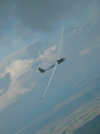
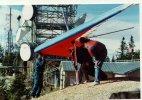
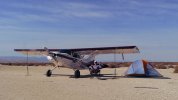
My aviation journey has been going on for 50 years and I'm still flying and learning, but not through formal training anymore. My evolution through the aviation scene evolved "organically". Before getting my PPL, I was flying hang gliders and loved working both thermals and ridge lift. That experience led me to flight training in "real" planes. After getting my PPL, I rented for a few years, then bought a Grumman AA-5A (150 Hp Traveler) with a partner. Those planes had a nasty spin that you couldn't recover from once it was fully developed, so I sought out a refresher course in spin recovery with emphasis on recovering from an incipient spin. That training was in a Decathlon, and the pilot/instructor asked if I wanted to try some aerobatics after the spin training was over. I said yes, and boy was that expensive! I got hooked on aerobatics, so I sold the Traveler and bought a share in a Pitts S2A. That required getting my tailwheel checkout (this was way before an actual endorsement was required). In addition to aerobatic competition, I flew some low-key airshows. I never got paid cash, but often would get offered gas for performing, or a hotel room for the night. That "compensation" required a commercial license, so I picked that up as part of my journey. After a few years of competing in IAC aerobatic contests I started flying a rental Mooney and got hooked on fast XC flying. That led me away from the Pitts and into another aspect of the aviation world. To really take advantage of fast XC flying, you really need an instrument rating, so I picked that up. Later I owned a share in a 182 with a Texas Skyways IO 520 engine upgrade. I used that plane to haul my kids and their gear to college and to take vacations with my wife. Then I thought I had tried every aspect of aviation that was financially available to me. As I was contemplating stepping away from flying altogether, I stumbled on the Backcountrypilot.org website and learned about airplane camping and off-airport landing. Wow, an aspect of aviation I was completely unaware of. Soon, I had a Maule and was headed into the mountains and onto dry lakebeds for serenity under the wing. I still have the Maule and I still enjoy backcountry flying but climate change and the ever expanding fire season in dry forests is curtailing that activity. Now, I'm considering a motorglider so I can take off under my own power and then shut down the engine to enjoy the kind of free flight I first experienced in a hang glider all those years ago. So, the OP should tell the newly minted pilot to follow her own stars and see where they take her. Exposing yourself to all that aviation has to offer can open doors you never dreamed were there. Just following someone else's advice will only lead you into the dreams of the advisor and the pilot will never experience their own blissful aviation epiphanies. It can be a marvelous journey, but only if your take the first steps yourself! HG_CREST-HR.jpeg
Parked.Maule.jpeg
 
Nothing trained me like flying long cross country flights to places I wanted to visit or had reason to visit - my first was Miami to Cape Cod in a 172. I have a bucket list of destinations and journeys and am picking them off one by one. Being retired means you can take your time on these trips - a great bonus. And weather will inevitably put you someplace you don't want to be and it will end up being magical.
 
As far as training, tail dragger conversion will likely increase her skills over what she has sloppily learned in primary training.
Getting the basic airmanship and some XC experience down will be very helpful in not wasting time/money as she starts instrument training.
 
Back
Top