
Because they are charging 10s to 100s of thousands of dollars for an “education”?why the university? why so late in the education process?
Of course, it would be nice if the parents would teach the children as they were growing up. (yes, I realize way too many parents don't have a clue)

You are using an out of date browser. It may not display this or other websites correctly.
You should upgrade or use an alternative browser.
You should upgrade or use an alternative browser.
[NA] Student Loan refinancing
- Thread starter Let'sgoflying!
- Start date

flyingcheesehead
Taxi to Parking
- Joined
- Feb 23, 2005
- Messages
- 28,184
- Location
- UQACY, WI
- Display Name
- iMooniac
- Home Airfield
- KUES/KMKE
Back to the original question: Yes. But, somewhere early on in my student loan experience, everyone was saying "Refinance now! Consolidate your student loans now! Interest rates will never be this low again!" and so they ditched the rather friendly terms of their federal student loans for fixed-rate private loans... And ended up at around 8% IIRC, while rates for those of us who ignored the hype continued going downwards. And, as others have noted, certain conditions can cause your payments to be slowed or stopped entirely under certain circumstances, which is a really nice safety valve to have. So, tread carefully.Is it possible to have another lender pay off your note, you make payments to new lender?
I have no idea how student loans were constructed, asking for a (an ex-) student friend.
I presume it’s the typical student loan that most students were getting 10 years ago.
-were the loans open ended; could be paid off anytime (or, paid off with penalty)?
-is it unlikely to find a more favorable rate (I’ve asked what the current loan rate is at).
Good luck to your friend.

2-Bit Speed
Pattern Altitude
- Joined
- Nov 9, 2021
- Messages
- 2,137
- Display Name
- 2-Bit Speed
Since this thread has turned to a general discussion of student loans, I'll state my own (unpopular) opinions. Student Loans are a tool, and this tools is misused by a large plurality of the student population. Many students have been told to simply get a degree, any degree, if they want to be successful. They go to school and pursue degrees with poor income prospects while signing up for loans whose totals well exceed the expected annual income of their chosen degree.
Taking out loans beyond half of a first year income in the chosen field is foolish. In other words, if a student has $100,000 in loans, they should be expecting to earn $200,000 in their first year, but many students fail to make this calculation. They will have a $100,000 loan while earning $50,000.
Telling these students to hope for 'forgiveness' only sets them up for pain an disappointment. Since they signed for those loans, since those loans are federal, all it takes is an unsympathetic president to start garnishing wages from those who have refused to pay.
Is the current state of college tuition, student loans, debt, and student finances good? No. Should we call the government bad and mean and nasty for requiring people repay what they borrowed? No. Should I be held responsible and be required to pay for loans someone I never knew, met, or will see? No.

SoonerAviator
Touchdown! Greaser!
- Joined
- Jul 21, 2014
- Messages
- 10,255
- Location
- Broken Arrow, OK
- Display Name
- SoonerAviator
- Home Airfield
- KRVS
Government shouldn't be backing student loans, either. One of the main reasons tuition has skyrocketed at every major college in the past 20 years is because there was no penalty to the universities on a defaulted loan. Colleges had a guaranteed revenue stream no matter how much they inflated prices per credit hour, added vague "activity/connectivity fees", and generally fleeced their students. Compound that with the corporate push to make every job require a college degree and it created a monster that practically forced everyone to go get a degree at crazy prices. Take the gov't out of the loan securing/funding and force the universities to be the creditor on those loans and I have no doubt college costs would come down and the number of degree programs would get cut by 30% overnight for degrees which have little/no practical use or job market.Since this thread has turned to a general discussion of student loans, I'll state my own (unpopular) opinions. Student Loans are a tool, and this tools is misused by a large plurality of the student population. Many students have been told to simply get a degree, any degree, if they want to be successful. They go to school and pursue degrees with poor income prospects while signing up for loans whose totals well exceed the expected annual income of their chosen degree.
Taking out loans beyond half of a first year income in the chosen field is foolish. In other words, if a student has $100,000 in loans, they should be expecting to earn $200,000 in their first year, but many students fail to make this calculation. They will have a $100,000 loan while earning $50,000.
Telling these students to hope for 'forgiveness' only sets them up for pain an disappointment. Since they signed for those loans, since those loans are federal, all it takes is an unsympathetic president to start garnishing wages from those who have refused to pay.
Is the current state of college tuition, student loans, debt, and student finances good? No. Should we call the government bad and mean and nasty for requiring people repay what they borrowed? No. Should I be held responsible and be required to pay for loans someone I never knew, met, or will see? No.

That’s odd. My oldest daughter managed to become a nurse and her sister a teacher without being REQUIRED to have a masters.Both of my daughters are in careers (one's a teacher, one's a nurse) that require a Masters degree within some number of years after starting work. The Masters in education had to be done in state and incurred significant debt, while the Masters in nursing could be done online at much lower cost. Both agree that the required advanced degree contributes nothing to their ability to do the job.

pfarber
Pattern Altitude
- Joined
- Jun 20, 2021
- Messages
- 1,653
- Display Name
- pfarber
Don’t go to 4 year overpriced schools. Community Collage the first two years, transfer to $BIG_NAME_SCHOOL and get away with half the cost or less. You can even move to that state and qualify for in-state tuition. Many states (like Tennessee) give Community Collage to in state residents for free. My last year of AnP school was free because I qualified as a resident.My dude. Your father borrowed money for food in the great depression and you're comparing your college experience to modern times? When you went to school you could pay for college with low skill/no skill summer + part time jobs. Today you need to work nearly a full time job, and that's assuming someone else is still paying your rent, food, medical, car, etc.
View attachment 141312
Yes Collage/Uni is more expensive, but you can cut that price by 50% or more with smart planning… which most people don’t do.

One may get licensed as an RN without a masters or even bachelors for that matter. It's a completely different story for advanced practice RN's though. I think all advance practice RN's graduating now (not grandfathered by initial licensure prior to the current requirements) are required to have a masters, and at least one type of advance practice RN requires a doctorate level degree for new graduates.That’s odd. My oldest daughter managed to become a nurse and her sister a teacher without being REQUIRED to have a masters.
In the profession noted above which requires the doctorate level degree, most new graduates have 100k minimum in student loans and 250k in loans isn't terribly uncommon.
Somebody was sick the day they taught math at $BIG_NAME_SCHOOL.Don’t go to 4 year overpriced schools. Community Collage the first two years, transfer to $BIG_NAME_SCHOOL and get away with half the cost or less. You can even move to that state and qualify for in-state tuition. Many states (like Tennessee) give Community Collage to in state residents for free. My last year of AnP school was free because I qualified as a resident.
Yes Collage/Uni is more expensive, but you can cut that price by 50% or more with smart planning… which most people don’t do.

If you go to big_name for half the time, then the most you can save is half. Which of course, is only what you can save if you don't have to pay for community college.
Further, you aren't comparing apples to apples. People could have used that strategy in the 60's also. And if they did, their costs would have been reduced by 20-50% also.
Anyway, yes, if you're majoring in something that would allow that strategy, you can save some money. But let's not pretend that college hasn't gotten tons more expensive over the years and people sitting on their porch proclaiming 'back in my day' are fooling themselves if they think the problem is the students.
Last edited:

- Joined
- Jun 7, 2008
- Messages
- 27,381
- Display Name
- Bob Noel
- Home Airfield
- KBED
If you go to big_name for half the time, then the most you can save is half. Which of course, is only what you can save if you don't have to pay for community college which is very, very rare.
I think you overlooked "Many states (like Tennessee) give Community Collage[sic] to in state residents for free."
Nope, didn't overlook it. Stated explicitly that it would take such an arrangement to reduce costs by at most 50%. Not all states have that. Almost all states have meaningful restrictions. https://scholarships360.org/college-admissions/are-community-colleges-free/I think you overlooked "Many states (like Tennessee) give Community Collage[sic] to in state residents for free."
I'll withdraw the "very, very rare" part and restate as I did above. And add that transferring to a big_school and keeping all your credits can be a challenge. So, again, 50% is max, not "50% or less". 50% doesn't compare apples to apple, because that same strategy could have been used 50 years ago, but didn't need to be since college was much more affordable.
Last edited:
SoonerAviator
Touchdown! Greaser!
- Joined
- Jul 21, 2014
- Messages
- 10,255
- Location
- Broken Arrow, OK
- Display Name
- SoonerAviator
- Home Airfield
- KRVS
*Woosh* Lol. Maybe take a closer look at the spelling.Nope, didn't overlook it. Stated explicitly that it would take such an arrangement to reduce costs by at most 50%. Not all states have that. Almost all states have meaningful restrictions. https://scholarships360.org/college-admissions/are-community-colleges-free/
I'll withdraw the "very, very rare" part and restate as I did above. And add that transferring to a big_school and keeping all your credits can be a challenge. So, again, 50% is max, not "50% or less". 50% doesn't compare apples to apple, because that same strategy could have been used 50 years ago, but didn't need to be since college was much more affordabel.
Not really, because details like room & board matter, as do mandatory fees at big name schools for parking, athletic facility access, etc.Somebody was sick the day they taught math at $BIG_NAME_SCHOOL.
If you go to big_name for half the time, then the most you can save is half. Which of course, is only what you can save if you don't have to pay for community college.
…..
One could take dual credit courses in high school, do the local JuCo or VoTech for a basic cert needed to get into an industry, then find an employer that offers tuition assistance and use that to complete a four year degree if they really wanted to save money while also earning money.
flyingcheesehead
Taxi to Parking
- Joined
- Feb 23, 2005
- Messages
- 28,184
- Location
- UQACY, WI
- Display Name
- iMooniac
- Home Airfield
- KUES/KMKE
A full load at my in-state public university cost $1,273.35 per semester in the 1993-94 school year, or $2,832.79 in today's dollars.Don’t go to 4 year overpriced schools. Community Collage the first two years, transfer to $BIG_NAME_SCHOOL and get away with half the cost or less. You can even move to that state and qualify for in-state tuition. Many states (like Tennessee) give Community Collage to in state residents for free. My last year of AnP school was free because I qualified as a resident.
Yes Collage/Uni is more expensive, but you can cut that price by 50% or more with smart planning… which most people don’t do.
Actual cost for a full load at in-state rates at the same university last year was $5,198.92, or an 83.5% increase over the inflation-adjusted amount. The local public community college is $3,253.75 per semester, 15% higher than the inflation-adjusted university tuition above and 63% of the cost of going to the university, so assuming you can just do 2 years of community college and 2 years at the university, you save only 18.7% compared to the 4-year university, and you're still paying 49% more than the inflation-adjusted 4 year university price.
Any way you slice it, the cost of higher education has FAR outpaced people's ability to keep up with the costs without incurring loans.
Spelling, too.Somebody was sick the day they taught math at $BIG_NAME_SCHOOL.
Room & board have vastly outpaced inflation as well, as universities have figured out that remodeling their dorms into more luxurious setups gets them more applicants thanks to the easy availability of "free money".Not really, because details like room & board matter, as do mandatory fees at big name schools for parking, athletic facility access, etc.
There's all kinds of things one could theoretically do. But, kids are in bed so I decided to figure out what I could theoretically do today if I desired the same university degree (electrical engineering). The absolute best case scenario involves high scores on AP Calculus, AP Physics C, and AP Chem in high school; 3 semesters at the local community college, and then 5 semesters at the university. However, that would severely limit the advanced elective courses (required for the major) one could take at the university because of the way prerequisites stack up.One could take dual credit courses in high school, do the local JuCo or VoTech for a basic cert needed to get into an industry, then find an employer that offers tuition assistance and use that to complete a four year degree if they really wanted to save money while also earning money.
Also, even if one finds an employer with tuition assistance, you're likely still working a lower wage job and making your degree take significantly longer to obtain, which also costs you a lot of money.
Here’s an n of one, but my niece’s story is very similar to my son’s, just a decade later. Graduated high school with 27 credit hours against core college subjects that the state public colleges and universities are required to accept. There’s 178 public institutions this law applies to and they range from small community colleges to tier 1 research universities. Took partial sports and academics scholarships and will graduate this time next year after 3 years in the system. Majoring aero engineering, interning at LockMart Fort Worth this summer.….There's all kinds of things one could theoretically do. …
You should be putting money in a 529 or UTMA to take advantage of compounding interest.…. But, kids are in bed so I decided to figure out what I could theoretically do today ….
….
Also, even if one finds an employer with tuition assistance, you're likely still working a lower wage job and making your degree take significantly longer to obtain, which also costs you a lot of money.
Depends. There’s the military (Navy Nuke program comes to mind for engineering), military academies, and what used to be called VoTech and is now called Career and Technical Education (CTE) programs with a lot of horsepower for a high school behind them.

Parents and kids today need to having different conversations about becoming career ready. Getting a degree should be about it’s return on investment, not four years of “experiencing” the college life.
Even our local BBQ chain has TA, scholarships, management development tracks, healthcare, and other benefits for part timers while paying $16/hr entry level.
https://www.billmillerbbq.com/careers/ Careers & Job Openings | Bill Miller Restaurant & Bakery
In short, most higher education institutions haven’t evolved to preparing young adults for careers, even though they’ve evolved their operating model to maximize profit. That’s the biggest shame in all this.

Half Fast
Touchdown! Greaser!
- Joined
- May 7, 2016
- Messages
- 21,187
- Location
- Central Florida
- Display Name
- Half Fast
- Home Airfield
- KGIF
In short, most higher education institutions haven’t evolved to preparing young adults for careers, even though they’ve evolved their operating model to maximize profit. That’s the biggest shame in all this.

I suspect that the increase in foreign students and the funds they bring has also enabled tuition increases.
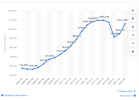
I suspect that the increase in foreign students and the funds they bring has also enabled tuition increases.
View attachment 142250
Eh, I suspect chasing foreign students is/was a deliberate business decision since the school can charge a significantly higher non-resident rate as well as capture fees associated supporting those students, such as interpretation services, visa assistance services, etc.
The MBA profs have probably been tasked with developing business plans to maximize income across a wide variety of sources while minimizing expenses.

midwestpa24
Final Approach
Higher education has really become a racket. Cost is up, quality is down, and they've done such a great job at indoctrination at the high school and social level, that everyone thinks they need an advanced degree.
A quick Google search shows only about 60% of college students ever receive a degree. I know my college touted 50% graduation rate as a good thing at the time. That means 50% of the students spend the money, and receive nothing for it. Of those that do graduate, how many receive degrees that actually lead to careers? Yes I received a 4 year degree that ultimately led to a career, but honestly there was nothing I learned in college that couldn't have been covered in OJT. All the degree did was qualify me to apply for the position, because someone decided a degree was a requirement.
Its no wonder the nicest public facilities in any state are universities. The highest paid public employees in any state are university employees.
SoonerAviator
Touchdown! Greaser!
- Joined
- Jul 21, 2014
- Messages
- 10,255
- Location
- Broken Arrow, OK
- Display Name
- SoonerAviator
- Home Airfield
- KRVS
Eh, not quite true. They received education for the money spent. Them not continuing to pursue that education doesn't mean they received nothing for it, just that they didn't fulfill their obligation to receive enough education to merit a degree. I'm sure there are similar results for trade schools as well.Higher education has really become a racket. Cost is up, quality is down, and they've done such a great job at indoctrination at the high school and social level, that everyone thinks they need an advanced degree.
A quick Google search shows only about 60% of college students ever receive a degree. I know my college touted 50% graduation rate as a good thing at the time. That means 50% of the students spend the money, and receive nothing for it. Of those that do graduate, how many receive degrees that actually lead to careers? Yes I received a 4 year degree that ultimately led to a career, but honestly there was nothing I learned in college that couldn't have been covered in OJT. All the degree did was qualify me to apply for the position, because someone decided a degree was a requirement.
Its no wonder the nicest public facilities in any state are universities. The highest paid public employees in any state are university employees.
midwestpa24
Final Approach
Eh, not quite true. They received education for the money spent. Them not continuing to pursue that education doesn't mean they received nothing for it, just that they didn't fulfill their obligation to receive enough education to merit a degree. I'm sure there are similar results for trade schools as well.
Without the piece of paper, what is the value in that education? Will a potential employer give consideration for a partial education? So you maybe learned something, but was it worth the cost and what is the return on investment? Even with the piece of paper, many degrees still don't have an ROI.
Without the piece of paper, what is the value in that education? … Even with the piece of paper, many degrees still don't have an ROI.
Depends. Could be enough for them to start and successfully run their own business. No piece of paper has an intrinsic ROI; it’s what someone does with the knowledge they’ve gained.
What’s not intelligent is going low to mid six-figures in debt over a couple pieces of paper on the justification you’ll make more simply because of those pieces of paper.
flyingcheesehead
Taxi to Parking
- Joined
- Feb 23, 2005
- Messages
- 28,184
- Location
- UQACY, WI
- Display Name
- iMooniac
- Home Airfield
- KUES/KMKE
I went looking just to see if this was verifiable in my state (which is, of course, in "any state").Its no wonder the nicest public facilities in any state are universities. The highest paid public employees in any state are university employees.
Sorting employers by salary, the Investment Board takes up three of the top four spots. #2 is the "UW System Colleges" but they only list three employees, all Vice Chancellors. UW System Administration is #6. "UW System Wide" (only 574 employees) is #18 and again is almost all administration, so it's inflated.
But, there are zero university employees in the top 100 paid state employees here... Same is true of your state.
Lots of places I've seen ask how many credits of college have been completed, and I'm sure that those who learned useful skills in those classes will put them on their resume, but one of the biggest values of having the degree is simply that it's such an easy way to split all of your applicants up and pare down the pile. If you get 200 apps for a job and only 50 have a degree, it's really easy to chuck the other 150.Without the piece of paper, what is the value in that education? Will a potential employer give consideration for a partial education?
midwestpa24
Final Approach
I went looking just to see if this was verifiable in my state (which is, of course, in "any state").
Sorting employers by salary, the Investment Board takes up three of the top four spots. #2 is the "UW System Colleges" but they only list three employees, all Vice Chancellors. UW System Administration is #6. "UW System Wide" (only 574 employees) is #18 and again is almost all administration, so it's inflated.
But, there are zero university employees in the top 100 paid state employees here... Same is true of your state.
Lots of places I've seen ask how many credits of college have been completed, and I'm sure that those who learned useful skills in those classes will put them on their resume, but one of the biggest values of having the degree is simply that it's such an easy way to split all of your applicants up and pare down the pile. If you get 200 apps for a job and only 50 have a degree, it's really easy to chuck the other 150.
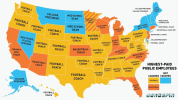
Hard to find exact current data, but usually the highest paid public employee in any state is a collegiate coach.
Unless the paper pays for the debt. Which in many cases it does. It's really not useful to make sweeping generalizations when it comes to education. Sometimes taking on the debt is absolutely stupid. Sometimes it is absolutely essential.What’s not intelligent is going low to mid six-figures in debt over a couple pieces of paper on the justification you’ll make more simply because of those pieces of paper.
SoonerAviator
Touchdown! Greaser!
- Joined
- Jul 21, 2014
- Messages
- 10,255
- Location
- Broken Arrow, OK
- Display Name
- SoonerAviator
- Home Airfield
- KRVS
The value in it? Knowledge gained I suppose. Whether a potential employer places any value on it is another question. Those students not following through on the full educational commitment is neither here nor there. They were provided something in exchange for the money they paid = contractual agreement upheld. Same goes for getting a degree which has dubious uses for gainful employment/low ROI. I'm not aware of many universities that guarantee every degree they offer will result in gainful employment/high ROI.Without the piece of paper, what is the value in that education? Will a potential employer give consideration for a partial education? So you maybe learned something, but was it worth the cost and what is the return on investment? Even with the piece of paper, many degrees still don't have an ROI.
2-Bit Speed
Pattern Altitude
- Joined
- Nov 9, 2021
- Messages
- 2,137
- Display Name
- 2-Bit Speed
The value in it? Knowledge gained I suppose. Whether a potential employer places any value on it is another question. Those students not following through on the full educational commitment is neither here nor there. They were provided something in exchange for the money they paid = contractual agreement upheld. Same goes for getting a degree which has dubious uses for gainful employment/low ROI. I'm not aware of many universities that guarantee every degree they offer will result in gainful employment/high ROI.
I'd be (more) okay with this if those programs weren't funded by taxpayers. And taxpayer-guaranteed loans.
SoonerAviator
Touchdown! Greaser!
- Joined
- Jul 21, 2014
- Messages
- 10,255
- Location
- Broken Arrow, OK
- Display Name
- SoonerAviator
- Home Airfield
- KRVS
Agreed. As I mentioned before, if the colleges were the ones who had to guarantee the loans, they wouldn't be so eager to offer pointless degrees as well as make decisions that increase tuition and exposure to loan defaults. They would be vetting students much more closely as well. Things change when you have skin in the game.I'd be (more) okay with this if those programs weren't funded by taxpayers. And taxpayer-guaranteed loans.
All depends on where you come down on the question of whether or not having an educated population is a benefit to the nation.I'd be (more) okay with this if those programs weren't funded by taxpayers. And taxpayer-guaranteed loans.
I think it does.
Last time I checked, the paper didn’t sign for the loan.Unless the paper pays for the debt. ….
I get your point, but don’t ignore that the average graduate gets out with ~$40K in student loans for a 4-year degree. Double or triple that already makes the debt load an outlier, requires substantially higher income to satisfy, and requires significant more discipline to pay it off, all the while earning interest that swallows the principal. The hole is dug deeper each time interest accrues.
Yep, for sure. And I'm aware that there are people who get there injudiciously, but the ones I personally know are making enough money on the backs of those pieces of paper for the economics to make sense. So it can work.I get your point, but don’t ignore that the average graduate gets out with ~$40K in student loans for a 4-year degree. Double or triple that already makes the debt load an outlier, requires substantially higher income to satisfy, and requires significant more discipline to pay it off, all the while earning interest that swallows the principal. The hole is dug deeper each time interest accrues.
Whether or not it's the best way, is an open question. For example, high education costs for doctors, especially specialists, filter down to high medical costs to patients and contribute to the overall cost of health care in the US. It also filters for the kind of personality willing to roll the dice and take on 200-300K in debt for a career that you can never leave because it would be financially ruinous to do so. There are other things to think about, but just those two scenarios could lead to very different opinions on the societal value to the 40 year experiment we've been running by reducing tax payer support for education to balance a state budget every time a crisis occurs.
midwestpa24
Final Approach
All depends on where you come down on the question of whether or not having an educated population is a benefit to the nation.
I think it does.
If there was a correlation between dollars spent and quality of education, I'd agree with you. Unfortunately money is not the cure.
All depends on where you come down on the question of whether or not having an educated population is a benefit to the nation.
I think it does.
In the context if colleges and university, does that statement assume one is uneducated if one does not matriculate?
I 100% don't believe that's true. Nor is the reverse true that anyone who has exited a university is someone who is educated. The latter is why many professions require testing and not just the piece of paper we've been talking about.In the context if colleges and university, does that statement assume one is uneducated if one does not matriculate?
But broad strokes? As a nation we do a pretty bad job of educating people outside of the formal education system. I would be very interested in hearing proposals that can change that.
I 100% don't believe that's true. Nor is the reverse true that anyone who has exited a university is someone who is educated. The latter is why many professions require testing and not just the piece of paper we've been talking about.
But broad strokes? As a nation we do a pretty bad job of educating people outside of the formal education system. I would be very interested in hearing proposals that can change that.
How do you capture, or even define) informal education data such as completion rates, skills transferred, or competencies mastered?
Does you discount apprenticeships and OJT training?
Put differently, what’s your definition of an ‘educated’ person and how doe they continue to remain educated once outside the formal education system?
Good questions.How do you capture, or even define) informal education data such as completion rates, skills transferred, or competencies mastered?
Nope. Those are great examples. As a nation, we haven't done a very good job with that kind of thing. In part because it's hard to convince a company to make a big financial investment in a person that will go work somewhere else in an increasingly dynamic economy. In the realm of formal education there are trade schools, but those aren't free either, so either students take on debt or governments subsidize them because certain skills are judged to be needed.Does you discount apprenticeships and OJT training?
But, perhaps more important, it only provides education for a particular job. Being educated is much bigger than that. Someone can be extremely proficient at welding, for example, but OJT training taught them nothing about biology, finance, history, geology, literature, etc, etc, etc. All of which benefit both the individual and the nation. None of which are addressed much outside of the formal education system.
Also good questions. Partially answered above and partially moving into SZ topics, so may as well just say that those are good questions and we haven't done a very good job, as a nation, at addressing.Put differently, what’s your definition of an ‘educated’ person and how doe they continue to remain educated once outside the formal education system?
flyingcheesehead
Taxi to Parking
- Joined
- Feb 23, 2005
- Messages
- 28,184
- Location
- UQACY, WI
- Display Name
- iMooniac
- Home Airfield
- KUES/KMKE
So the problem isn't higher education, the problem is sports.Hard to find exact current data, but usually the highest paid public employee in any state is a collegiate coach.
View attachment 142265
- Joined
- Jun 7, 2008
- Messages
- 27,381
- Display Name
- Bob Noel
- Home Airfield
- KBED
If we ignore the college sport $$$$$ whoring going on... I wonder about the college/university payroll vs the starting salaries of people graduating with a 4 year degree vs the graduates' earning potential. Right now I'm too lazy to do that number crunching (somewhat occupied trying to recover photos from a dead ipad and setting up an easy system for my sister to backup her ipad - don't ask).

EdFred
Taxi to Parking
- Joined
- Feb 25, 2005
- Messages
- 31,402
- Location
- Michigan
- Display Name
- The Ed
- Home Airfield
- 9D9 / 6Y9 / 88TN
Except sports gives opportunities to people who would otherwise not be able to go to college. And those evil football programs subsidize the entire athletic program and don't increase the cost of education to non-athlete students. 99+% of student athletes won't go pro, but they will put their degrees to work.So the problem isn't higher education, the problem is sports.

- Joined
- Jan 9, 2013
- Messages
- 2,595
- Display Name
- Jon
- Home Airfield
- KCMA
99+% of student athletes won't go pro, but they will put their degrees to work.
Out of the 99.5% that don't go pro, how many of them actually graduate?
EdFred
Taxi to Parking
- Joined
- Feb 25, 2005
- Messages
- 31,402
- Location
- Michigan
- Display Name
- The Ed
- Home Airfield
- 9D9 / 6Y9 / 88TN
91% at Division I - which is higher than the non-student athletes.Out of the 99.5% that don't go pro, how many of them actually graduate?

Student-athletes graduate at record highs - NCAA.org
Division I student-athletes are graduating at record rates, according to the latest Graduation Success Rate data announced Wednesday. The overall single-cohort rate increased by 1 point to 91%, which is the highest rate recorded.
 www.ncaa.org