
My unified theory of life is that I've already killed myself a thousand different ways, in a thousand other dimensions, but this happens to be the one that I managed to make it this far alive.You guys are instilling a lot of fear in this world, I need to check that all of my fingers are still here

You are using an out of date browser. It may not display this or other websites correctly.
You should upgrade or use an alternative browser.
You should upgrade or use an alternative browser.
My first time hand propping with a dead battery
- Thread starter mandm
- Start date

One thing to realize is you don't really need to "swing it". Engines with impulse coupling really just need you to move the propeller through the compression stroke. Hear the impulse coupling click as you pull it through? All you need to do is pull it thorough until you hear that click.I hand propped my Warrior a couple of times. Also a few tailwheel airplanes. The angle of the pull on a tailwheel airplane is far better as you momentum carries you away from the propeller. On the nosewheel airplane, since the plane of the propeller is mostly vertical and you are leaning into it, your momentum carries you more into the propeller, which is a bad thing. So it's definitely possible, but be careful. Also, I found the angle of the pull on the nosewheel, combined with the propeller being overall lower, to make it harder to get a good swing.
When I was regularly teaching in the Champs I would demonstrate this by prime, pull through 6 blades. Turn on the ignition and lightly pull the propeller through the compression stroke. It would start almost every time. It also demonstrate how careful you need to be around propellers in the right conditions just bumping it could cause it to start.
Some airplanes with impulse coupling on only one mag may require you to start on the left or right mag, since the the ignition switch won't be grounding out the non-impulsed mag during the start. Otherwise it may fire before top dead center and kick back. This requires knowing your how your ignition system works.
Brian
CFIIG/ASEL

skyking3286
Line Up and Wait
- Joined
- Sep 29, 2012
- Messages
- 559
- Display Name
- skyking3286
Gloves will help a wood prop from damage from a wedding ring and provide a constant surface.

Dan Thomas
Touchdown! Greaser!
- Joined
- Jun 16, 2008
- Messages
- 12,389
- Display Name
- Dan Thomas
Is he also going to check the charging voltage? And take a voltage drop reading across the master contactor when cranking the engine? If not, a low charging voltage will ruin the new battery (sulfating it) and the old master contactor will continue to create starting issues.My mechanic just went to my hangar and he said the battery is old and looks to be an older model so it’s time to replace it. Plus, it’s the standard model, we are going with the XC model which will be better.
And yes that’s why I’m addressing this issue now before doing flights over large bodies of water. Battery is ordered and will be installed next week.
There is no substitute for doing the job right.
Steamflyer
Line Up and Wait
- Joined
- Mar 23, 2022
- Messages
- 954
- Display Name
- Steamflyer
Hand prop antiques from time to time. Categorically refuse to hand prop any tricycle gear airplane. You need to be reaching up, not level, to step away from the aircraft.
All you’ll get is a surface charge from an alternator over a short return flight, so be sure to properly charge the battery on arrival. Also, waiting until a battery is nearly used up seems foolish - change them every three years or so. Then your hot starts with the big bore injected engines will be manageable.
All you’ll get is a surface charge from an alternator over a short return flight, so be sure to properly charge the battery on arrival. Also, waiting until a battery is nearly used up seems foolish - change them every three years or so. Then your hot starts with the big bore injected engines will be manageable.
Or you could follow the OEM capacity test schedule and procedures that certain aircraft must follow. The test schedule is based on a tiered capacity percentage value which provides a "real-time" health check of the battery vs a simple calendar limit. Know a number of aircraft that follow those test requirements, to include turbine helicopters, and normally get 6+ years out of the batteries provided it has a serviceable electrical system, and they follow the OEM recommendations.change them every three years or so.
Steamflyer
Line Up and Wait
- Joined
- Mar 23, 2022
- Messages
- 954
- Display Name
- Steamflyer
Very true. None-the-less, after forty years of big bore injected flying, have found prophylaxis replacement at 3-4 years seems most favorable for what I do. Think multiple legs in 104 degree weather.Or you could follow the OEM capacity test schedule and procedures that certain aircraft must follow. The test schedule is based on a tiered capacity percentage value which provides a "real-time" health check of the battery vs a simple calendar limit. Know a number of aircraft that follow those test requirements, to include turbine helicopters, and normally get 6+ years out of the batteries provided it has a serviceable electrical system, and they follow the OEM recommendations.

Do small shops have the cap check equipment? And if they do, how much are they going to charge for it? Takes a few hours to do a proper cap check. Cheaper to just replace a small, cheap (by aviation standards) battery.Or you could follow the OEM capacity test schedule and procedures that certain aircraft must follow.
That's why most people just replace them early or wait until they die.

strangebird
Pre-takeoff checklist
Keep some ropes with you to tie down the airplane and chocks, gloves do not wrap your knuckles over the leading edge of the prop unless you like to break them.
Did you confirm the ground you will be standing on as you take your life in your hands? You do not want to slip and fall.. as some one said get the lithium charger but still chock and tied down the airplane better yet get some one to give you a jump start, I have propped many airplanes mostly tail draggers, never again will I do it, it is dangerous
Did you confirm the ground you will be standing on as you take your life in your hands? You do not want to slip and fall.. as some one said get the lithium charger but still chock and tied down the airplane better yet get some one to give you a jump start, I have propped many airplanes mostly tail draggers, never again will I do it, it is dangerous
Late reply:
If that is a Lycoming 172 the impulse is on the LEFT mag.
Occasionally both mags have them. Rare to see any engine with one
on RIGHT only.
A concern is the P-leads can get swapped. The engine will run fine
indefinitely. However; there can be kick-back when starting.
If that is a Lycoming 172 the impulse is on the LEFT mag.
Occasionally both mags have them. Rare to see any engine with one
on RIGHT only.
A concern is the P-leads can get swapped. The engine will run fine
indefinitely. However; there can be kick-back when starting.
I can only speak to the Concorde RG series. But in the past, the local Concorde vendors would perform the capacity test for free unless a mx signature was needed with the test. No clue on what small shops charged as I cap-tested the batteries myself which I mostly did as part of other mx or at most charged 1hr labor. So don’t quite follow how it would be “cheaper” to replace a battery vs perform regular capacity tests especially if those tests are for informational purposes only.Do small shops have the cap check equipment? And if they do, how much are they going to charge for it? Takes a few hours to do a proper cap check. Cheaper to just replace a small, cheap (by aviation standards) battery.
If you're using a Concorde, they have guidance on how to develop a calendar-based replacement time using a set number of capacity tests. So if you want to drill down that time frame to a more specific limit or maybe increase it, perhaps look into it? Know several turbine operators that followed this guidance due to their aircraft moved around a lot and it was easier to set a hard calendar limit on batteries. They also developed an annual electrical system performance check and required 1st start of the day to use a start-pac or similar to keep battery wear/tear more consistent across their fleet.None-the-less, after forty years of big bore injected flying, have found prophylaxis replacement at 3-4 years seems most favorable for what I do.
Steamflyer
Line Up and Wait
- Joined
- Mar 23, 2022
- Messages
- 954
- Display Name
- Steamflyer
Most of the time when I fly turbine use a start cart. That’s the last place want to find out the battery is a tiny bit not up to snuff.
While there are tests and plans, for the average guy flying 50, maybe 75 hours a year, replacing a battery about every four years seems to keep ‘em cranking. Depends on the use case and how inconvenienced they would be afield with a dead battery. Change my car batteries about the same interval anyhow.
As for Concorde dealers testing, all the 25s and 35s we install come from Spruce. We can test capacity and health though ourselves.

rotormatic1
Pre-takeoff checklist
- Joined
- Jul 26, 2020
- Messages
- 161
- Display Name
- Rotormatic1
If you fly with a low or dead battery, your back up power will not be there.. from part 23:
h) In the event of a complete loss of the primary electrical power generating system, the battery must be capable of providing at least 30 minutes of electrical power to those loads that are essential to continued safe flight and landing. The 30 minute time period includes the time needed for the pilots to recognize the loss of generated power and take appropriate load shedding action.
h) In the event of a complete loss of the primary electrical power generating system, the battery must be capable of providing at least 30 minutes of electrical power to those loads that are essential to continued safe flight and landing. The 30 minute time period includes the time needed for the pilots to recognize the loss of generated power and take appropriate load shedding action.

3393RP
En-Route
- Joined
- Oct 8, 2012
- Messages
- 4,720
- Display Name
- 3393RP
There's every indication the aircraft's charging system isn't functioning properly. Discussing battery life in this instance veers away from the reason it had to be hand propped.
But the comments asserting it's an overall bad idea for tricycle gear airplanes to be started in that manner are accurate, especially when the person attempting the start is doing so without the benefit of any relevant instruction or experience and a second person in the cockpit.
But the comments asserting it's an overall bad idea for tricycle gear airplanes to be started in that manner are accurate, especially when the person attempting the start is doing so without the benefit of any relevant instruction or experience and a second person in the cockpit.

mandm
Avionics Upgrade
That’s for your avionics and radios, if you are day VFR in the flat lands, familiar with the area, or at least have foreflight, you’d be fine?If you fly with a low or dead battery, your back up power will not be there.. from part 23:
h) In the event of a complete loss of the primary electrical power generating system, the battery must be capable of providing at least 30 minutes of electrical power to those loads that are essential to continued safe flight and landing. The 30 minute time period includes the time needed for the pilots to recognize the loss of generated power and take appropriate load shedding action.
Albany Tom
Final Approach
- Joined
- Jul 23, 2021
- Messages
- 5,703
- Display Name
- Albany Tom
Day VFR anywhere you should be fine, IMO, from a safety perspective. Caveat being you have at least one normal, non-electronic, mag. You'd lose transponder/adsb, so C and B airspace you've got a rules problem if it's not an emergency, but I don't see a safety issue. Also assuming you have an airspeed indicator and altimeter that aren't powered.That’s for your avionics and radios, if you are day VFR in the flat lands, familiar with the area, or at least have foreflight, you’d be fine?
FWIW: The Part 23 requirement was a later amendment that affected aircraft TC'd after 1995 or so. And most of the ones it did affect the OEM elected to go with a separate standby battery vs rely on the main storage battery for the 30 min requirement. So considering most recreational SEL aircraft fall under CAR 3, the only requirement was "the battery required shall have sufficient capacity to supply the electrical power necessary for dependable operation of the connected electrical equipment."That’s for your avionics and radios, if you are day VFR in the flat lands, familiar with the area, or at least have foreflight, you’d be fine?
However, thats not to say understanding the electrical requirements for your specific aircraft when you lose an alternator or generator isn't important. Regardless, this is a good reason to illustrate why your electrical system to include your battery status should be more important to owners than just being able to start the engine. And simply keeping a battery tender plugged in vs fixing electrical drains or other issues can be the difference whether your battery will last 5 minutes or 30 minutes when in the clouds or at night after the ALT lite comes on. Yet its still the most neglected system on your average Part 91 recreational aircraft in my experience.
3393RP
En-Route
- Joined
- Oct 8, 2012
- Messages
- 4,720
- Display Name
- 3393RP
So you're just going to throw a new battery in it and fly across the Atlantic?
The cavalier dismissal of obvious charging system defects and questionable maintenance decisions (a "brand new" starter and alternator but no further investigation) along with an incredibly dangerous amateur hand propped start (including his wife at the controls without a clue what to do if it goes wrong and an unleashed dog running around) and normalization of deviance (it's OK to fly with a dead battery if it's day VFR) are displays of dangerous pilot attitudes.
I suppose it's bad form to criticize POA pilot members, but this is all a bit astounding.
Steamflyer
Line Up and Wait
- Joined
- Mar 23, 2022
- Messages
- 954
- Display Name
- Steamflyer
Missed the wife at the controls bit - ugh. That's a hard pass.So you're just going to throw a new battery in it and fly across the Atlantic?
The cavalier dismissal of obvious charging system defects and questionable maintenance decisions (a "brand new" starter and alternator but no further investigation) along with an incredibly dangerous amateur hand propped start (including his wife at the controls without a clue what to do if it goes wrong and an unleashed dog running around) and normalization of deviance (it's OK to fly with a dead battery if it's day VFR) are displays of dangerous pilot attitudes.
I suppose it's bad form to criticize POA pilot members, but this is all a bit astounding.
Agree that while owners can be cavalier about all sort of maintenance issues, the charging system is pretty high on the list of things that elicit the question "do we have to do this now?" After all, you jumped your car this morning and it made it fine to the airport.
Imagine you are flying IMC with your six year old battery and the alternator belt breaks. Suddenly 10 minutes later, things start shutting down, but you still have to finish a divert and shoot an approach. Much better with a three year old battery. Still urgent situation, but doesn't become an emergency. Standby alternator is even nicer, but, but not all airplanes can be fitted with one.
A plea - please y'all - don't hand prop tricycle gear planes at all ever, and only taildraggers after instruction and if they don't have an electrical system.
mandm
Avionics Upgrade
That isn’t rude at all…So you're just going to throw a new battery in it and fly across the Atlantic?
The cavalier dismissal of obvious charging system defects and questionable maintenance decisions (a "brand new" starter and alternator but no further investigation) along with an incredibly dangerous amateur hand propped start (including his wife at the controls without a clue what to do if it goes wrong and an unleashed dog running around) and normalization of deviance (it's OK to fly with a dead battery if it's day VFR) are displays of dangerous pilot attitudes.
I suppose it's bad form to criticize POA pilot members, but this is all a bit astounding.
I called my A&P and he advised to put in a new battery. I don’t know how these systems work or what to check, I’m not an A&P. To say these are dangerous attitudes is just being a dick.
andm has a basic understanding of the airplane, the hand brake was on, and I checked that it was clear before hand propping. Kibble was in the airplane and because the door was open and he was curious what I was doing, he came out, I paused and put him back in and closed the door. This is well within my personal risk level, even in retrospect.
If you got problems in your life, go elsewhere, they are not welcomed here.
mandm
Avionics Upgrade
How is calling my A&P and replacing the battery a problem? andm handled the start just fine, it’s the hand brake that really makes this a no brainer. I don’t think there was anything dangerous about hand propping the airplane. It’s a slight pull thru and the prop does the rest. Not sure what you’re imagining.Missed the wife at the controls bit - ugh. That's a hard pass.
Agree that while owners can be cavalier about all sort of maintenance issues, the charging system is pretty high on the list of things that elicit the question "do we have to do this now?" After all, you jumped your car this morning and it made it fine to the airport.
Imagine you are flying IMC with your six year old battery and the alternator belt breaks. Suddenly 10 minutes later, things start shutting down, but you still have to finish a divert and shoot an approach. Much better with a three year old battery. Still urgent situation, but doesn't become an emergency. Standby alternator is even nicer, but, but not all airplanes can be fitted with one.
A plea - please y'all - don't hand prop tricycle gear planes at all ever, and only taildraggers after instruction and if they don't have an electrical system.

- Joined
- Oct 28, 2014
- Messages
- 5,142
- Display Name
- Jack Fleetwood
My airport says we can't hand prop unless there's someone qualified at the controls. What makes you qualified? Ability to hold he brakes or pull the throttle back? Pilot's Certificate?
Overkill here, but I looked up what the FAA recommends... and it's a lot! I removed the parts not about hand propping... warming the engine, removing chocks, etc.
Hand Propping. Airplane Flying Handbook (FAA-H-8083-3A)
While touching a propeller, always assume that the ignition is on. The switches that control the magnetos operate on the principle of short-circuiting the current to turn the ignition off. If the switch is faulty, it can be in the “off” position and still permit current to flow in the magneto primary circuit. This condition could allow the engine to start when the switch is off.
Hand propping an aircraft is a hazardous procedure when done perfectly. Not mitigating the hazards associated with hand propping can lead to serious injury and a runaway airplane. A spinning propeller can be lethal should it strike someone. Persons not trained, not competent, or who do not understand how to mitigate the hazards associated with hand propping should never perform this procedure!
Hand propping requires a team of two properly trained people. Both individuals should be familiar with the airplane and handpropping techniques. The first person is responsible for directing the procedure including pulling the propeller blades through. The second person sits in the airplane to ensure that the brakes are set and to exercise controls as directed by the person pulling the propeller. When hand propping occurs, a person unfamiliar with the controls should never occupy the pilot’s seat.
When hand propping is necessary, the ground surface near the propeller should be stable and free of debris. Loose gravel, wet grass,grease, mud, oil, ice, or snow might cause the person pulling the propeller through to slip into the rotating blades as the engine starts. Unless a firm footing is available, relocate the airplane to mitigate this hazardous consequence.
Both participants should discuss the procedure and agree on voice commands and expected actions. To begin the procedure, the fuel system and engine controls (tank selector, primer, pump, throttle, and mixture) are set for normal start. The ignition/magneto switch should be checked to be sure that it is OFF. Then, the descending propeller blade should be rotated so that it assumes a position slightly above the horizontal. The person doing the hand propping should face the descending blade squarely and stands lightly less than one arm’s length from the blade. If a stance too far away were assumed, it would be necessary to lean forward in an unbalanced condition to reach the blade, which may cause the person to fall forward into the rotating blades when the engine starts. Allowing space for the person to be able to step away as the propeller is pulled down, and the engine starts, serves as safeguard in case the brakes fail.
The procedure and commands for hand propping are:
⦁ Person out front says, “FUEL ON, SWITCH OFF, THROTTLE CLOSED, BRAKES SET.”
⦁ Pilot seat occupant, after making sure the fuel is ON, mixture is RICH, magneto switch is OFF, throttle is CLOSED, and brakes are SET, says, “FUEL ON, SWITCH OFF, THROTTLE CLOSED, BRAKES SET.”
⦁ Person out front, after pulling the propeller through to prime the engine says, “BRAKES AND CONTACT.”
⦁ Pilot seat occupant checks the brakes SET and turns the magnetos switch ON, then says, “BRAKES AND CONTACT.” The words CONTACT (magnetos ON) and SWITCH OFF (magnetos OFF) are used because they are significantly different from each other. Under noisy conditions or high winds, the words CONTACT and SWITCH OFF are less likely to be misunderstood than SWITCH ON and SWITCH OFF.
The propeller is swung by forcing the blade downward rapidly, pushing with the palms of both hands. If the blade is gripped tightly with the fingers, the person’s body may be drawn into the propeller blades should the engine misfire, "kickback," or rotate momentarily in the opposite direction. As the blade is pushed down, the person should step backward, away from the propeller. If the engine does not start, the propeller should not be repositioned for another attempt until it is verified that the magneto switch is turned OFF.
I've hand propped a bunch of different planes, sometimes by myself. But the tail was always tied down and a chock under a wheel. I once signed off a mechanic to solo cross country. He left the master on. Came back and hand propped the 172, it got away from him and it went through the wing of a turbo arrow. Thank goodness for avemco non owner insurance. Got to give him credit though. He hung on to the strut and was dragged till the engine quit. Motor cycle crash like rug rash from the waist down.
it’s the hand brake that really makes this a no brainer.

mandm
Avionics Upgrade
I’m sure a number of people hand prop it solo, I’ve seen videos. I would never imagine to jump in the airplane to catch it. It needs to be secured. With the throttle at idle and the parking brake engaged, not sure where it’s going.I've hand propped a bunch of different planes, sometimes by myself. But the tail was always tied down and a chock under a wheel. I once signed off a mechanic to solo cross country. He left the master on. Came back and hand propped the 172, it got away from him and it went through the wing of a turbo arrow. Thank goodness for avemco non owner insurance. Got to give him credit though. He hung on to the strut and was dragged till the engine quit. Motor cycle crash like rug rash from the waist down.
True. But it doesn't mean everyone should do it. The videos you need to watch are the ones where it didn't end well. Short of flying a J3 with no starter where you become very proficient at hand propping or if someone is shooting at you, I have never recommended anybody to hand-prop an aircraft. Its just not worth it based on my experiences. Nor should the cautions about it posted here be taken lightly.I’m sure a number of people hand prop it solo, I’ve seen videos.
Sure. But you are the owner who is responsible for the aircraft airworthiness. So you should at least have a basic understanding of how those systems do work. And especially if you plan the type trips you have posted. While I won't second guess your mechanic, if he has decided to only replace the battery without at least performing a basic check of the charging system, then I think it would be pertinent on your part to inquire if the charging system is operating properly to maintain your new battery.I don’t know how these systems work or what to check, I’m not an A&P.
mandm
Avionics Upgrade
True. But it doesn't mean everyone should do it. The videos you need to watch are the ones where it didn't end well. Short of flying a J3 with no starter where you become very proficient at hand propping or if someone is shooting at you, I have never recommended anybody to hand-prop an aircraft. Its just not worth it based on my experiences. Nor should the cautions about it posted here be taken lightly.
Sure. But you are the owner who is responsible for the aircraft airworthiness. So you should at least have a basic understanding of how those systems do work. And especially if you plan the type trips you have posted. While I won't second guess your mechanic, if he has decided to only replace the battery without at least performing a basic check of the charging system, then I think it would be pertinent on your part to inquire if the charging system is operating properly to maintain your new battery.
And the charging system would be the alternator, which was replace a couple years ago. I have no question to the airworthiness of the airplane.
Looking at all data, post flight data is showing the battery voltage between 13.1-13.4 volts, even after the most recent flight. Is there a charging setting from the alternator? The alternator and starter are both brand new.
Except per your own post data, the alternator system does not appear to be working correctly even though it is a couple years old. Regardless, I think most of the recommendations posted here were on point, but if you believe all is good not much more to add.And the charging system would be the alternator, which was replace a couple years ago.
I've hand propped a bunch of different planes, sometimes by myself. But the tail was always tied down and a chock under a wheel. I once signed off a mechanic to solo cross country. He left the master on. Came back and hand propped the 172, it got away from him and it went through the wing of a turbo arrow. Thank goodness for avemco non owner insurance. Got to give him credit though. He hung on to the strut and was dragged till the engine quit. Motor cycle crash like rug rash from the waist down.
Also have hand propped a lot of airplanes, many times.
One memorable one was a night cross country flight to a deserted airport in a 172. Shut down for a short break, trying to start it would crank but wouldn't fire. After several tries decided to try hand propping. Airplane was tied down and had a pilot at the controls. One pull of the blade and it started, Runup passed (I was concerned it wouldn't, being the cause of it not starting) and we flew an hour home. Next morning mechanic advised part of the Impulse coupling on one of the mags had failed, otherwise mag was working fine. I don't know why wouldn't even try to fire when using the starter.
Hand propping has it hazards and need to be respected which is why the AFH says so much about it as mentioned above.
I have seen many hand propping incident reports, but I don't recall any where the at least one of the 2 main rules were followed. 1. Have a qualified person at the controls. and/or 2. have the airplane tied down (not a fan of just chocks or parking brakes).
I guess I do have to take that back I do know one person that injured his hand pretty badly trying to start a 2 stroke pusher ultralight. I don't recall the details of how/why it happened.
Not tied down and unqualified person at controls can equal this, I watched this guy hang onto the strut for about 300 yards before letting go as the airplane made a wide circle from the tie down spot almost to the runway and than back around the empty hanger just missing a nice 310.
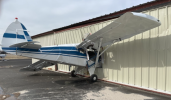
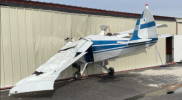
Brian
CFIIG/ASEL

Hang 4
En-Route
- Joined
- Aug 18, 2017
- Messages
- 3,425
- Display Name
- Hang 4
Actually the charging system is way more than just the alternator. Need to add Voltage regulator, all wiring between alternator and battery, all solenoids, all connections of those wires and grounds. As @Bell206 said, you had a battery failure for an unknown reason. I could well be the battery is shot, but there also could be more to it than that. While you don't need to be an AP, you do need to have a basic understanding of how the systems in your airplane work.And the charging system would be the alternator, which was replace a couple years ago. I have no question to the airworthiness of the airplane.
Dan Thomas
Touchdown! Greaser!
- Joined
- Jun 16, 2008
- Messages
- 12,389
- Display Name
- Dan Thomas
Plus alternator breakers. They get old too.Actually the charging system is way more than just the alternator. Need to add Voltage regulator, all wiring between alternator and battery, all solenoids, all connections of those wires and grounds

Dana
Final Approach
I've never relied on the hand brake for hand propping; chocks or tiedown. A hand brake to keep the plane from rolling after the chocks are removed once it's idling smoothly would be nice, though (my current plane has no hand brake).andm handled the start just fine, it’s the hand brake that really makes this a no brainer. I don’t think there was anything dangerous about hand propping the airplane.
Steamflyer
Line Up and Wait
- Joined
- Mar 23, 2022
- Messages
- 954
- Display Name
- Steamflyer
If something goes sideways with a hand prop and the engine speed is sufficient, the aircraft will move with the parking brake set. Plenty of stills and videos of hand propping gone wrong (know of one that flew 30 miles before hitting a tree sans pilot) to back up the idea that it’s not for the feint of heart.
Others have already pointed out that the charging system is a system, not an alternator and a battery.
Owners generally won’t change things prophylactically which is why we see wiring and other system bits that are 40-60 years old. Working? Perhaps. Optimally so? Unlikely.
Others have already pointed out that the charging system is a system, not an alternator and a battery.
Owners generally won’t change things prophylactically which is why we see wiring and other system bits that are 40-60 years old. Working? Perhaps. Optimally so? Unlikely.
3393RP
En-Route
- Joined
- Oct 8, 2012
- Messages
- 4,720
- Display Name
- 3393RP
I'm a dick? You're four for five on the list, and this reply is a big #1.That isn’t rude at all…
I called my A&P and he advised to put in a new battery. I don’t know how these systems work or what to check, I’m not an A&P. To say these are dangerous attitudes is just being a dick.
andm has a basic understanding of the airplane, the hand brake was on, and I checked that it was clear before hand propping. Kibble was in the airplane and because the door was open and he was curious what I was doing, he came out, I paused and put him back in and closed the door. This is well within my personal risk level, even in retrospect.
If you got problems in your life, go elsewhere, they are not welcomed here.

The 5 Hazardous Attitudes in Aviation and How to Spot Them - Pilot Institute
Gain knowledge about the five hazardous attitudes in aviation and ways to recognize and manage them for flight safety.
 pilotinstitute.com
3393RP
En-Route
- Joined
- Oct 8, 2012
- Messages
- 4,720
- Display Name
- 3393RP
And this too. Nothing dangerous about hand propping, yet you had zero experience doing it?How is calling my A&P and replacing the battery a problem? andm handled the start just fine, it’s the hand brake that really makes this a no brainer. I don’t think there was anything dangerous about hand propping the airplane. It’s a slight pull thru and the prop does the rest. Not sure what you’re imagining.
I feel like we're being trolled. This isn't "normal" "Mandm" behavior.
"It’s a slight pull thru and the prop does the rest." Sure, the prop for sure does the rest of the damage when you don't do it right.
"It’s a slight pull thru and the prop does the rest." Sure, the prop for sure does the rest of the damage when you don't do it right.

Gary Ward
En-Route
- Joined
- Jan 16, 2020
- Messages
- 3,639
- Location
- Lawrenceburg, Indiana
- Display Name
- Challenger1
- Home Airfield
- I67
I bet some have already seen the video, in case you haven't check this out. I learned something from it.

texasclouds
En-Route
- Joined
- Aug 23, 2018
- Messages
- 4,361
- Location
- Bryan, Texas
- Display Name
- Mark
- Home Airfield
- Coulter Airfield CFD
I’d be interested in a POA hand propping seminar for the POA Pilots’ wives. It would be nice to know she could crank my prop in times of need…
Albany Tom
Final Approach
- Joined
- Jul 23, 2021
- Messages
- 5,703
- Display Name
- Albany Tom
It's been my observation that there are two groups of people who are extremely careful around high voltage power lines - people that don't know anything about electricity, and lineman. People with a little bit to even a fair bit of knowledge about electricity typically underestimate the danger. This thread reminds me of that.
I'll continue to only hand prop aircraft that don't have a starter, and continue to only let pilots who are familiar with the process assist. This thread has helped confirm my position on both.
Re "need". If the airplane has a starter, there's no need to hand prop it. No more than anyone has a need to fly a single engine aircraft into bad weather. Maybe because of my work I hear the word "need" a lot, and it almost always is an inaccurate replacement for "want". I'm not picking on anyone with that, just stating that sometimes word choices can lead to a bad mindset.

Back when I was having charging system issues (long story, incompetent mechanic), there were a few times I was found carrying my battery over to find someone with a charger (nice thing about 14v systems).