That is exactly what I had in mind, except I was planning to engineer and fabricate a sliding hing - drop door down and slid it under the radio. But I could see a simple spring latch, the pull knob twist a cam to release and stow. I am redoing the interior - so I had a mind to put headset jack over the shoulder somewhere (helo style). PITA if one comes unpluged in flight, but absolutely out of the way.On my Luscombe, we put the Narco 11 com radio and transponder behind the left glove box door. That door is held in by spring clips and is removed and stowed during flight. The PTT is on the left stick and the headphone jacks are located down on the gear box centered between the seats.
Nav 1 is an index finger in direct contact with a sectional chart. Nav 2 (when required) is a WalMart sub $100 8 inch android tablet running Avare and strapped to a thigh on a small kneeboard. ADSB-in is by Stratux via wireless to the tablet. So, no wires except the headsets and it looks fairly authentic on the ground.
Good luck with the restoration;
View attachment 151663

You are using an out of date browser. It may not display this or other websites correctly.
You should upgrade or use an alternative browser.
You should upgrade or use an alternative browser.
Most Simple GPS Solution
- Thread starter N1230k
- Start date

Ed Haywood
Final Approach
I am hung up on the Tailbeacon-X at the moment. Again, VFR only so I do not care about LPV approaches, I don't need a moving map but minimal nav would be nice to have for longer trips in the future. Right now, my best (least expensive while leaving a route to upgrade if I change my mind) route will be an AV-20/Tailbeacon-X combo with a GNC-205 radio and call it done. (The GNC-205 finally won out because of bluetooth - I can pipe music in without any wires).
My question is this - if I were to get the AV-30 as opposed to the AV-20, can the Tailbeacon-X's GPS signal be used for VFR nav purposes. In other words, let's say I decide to fly to the Bahamas (not likely but the one scenario I can conceive where a simple chart and a watch will not meet my needs) could I toggle up the CDI page on the AV-30 and somehow tell the Tailbeacon-X to give me lateral guidance to Nassau? Basically, if the answer is "Yes" then the AV-30 would make more sense than the AV-20. But if the answer is "No" the AV-20 can be fit in a small hole, I leave everything else in place, add a VHF radio, and I am done. That leaves $$$ for gas, hotels, and $100 BBQ (5 GPH and no database subscriptions means even with inflation I can still get have a $100 lunch).
I believe the answer is no. The tailbeacon just provides a fix. It does not have the software to determine waypoints, courses, etc. However, if you have a portable nav device such as the Aera, you can output your nav data to the AV-30 via serial RS-232. If you have iFly you can also rig it up via Bluetooth.

l8evator
Pre-takeoff checklist
- Joined
- Sep 4, 2009
- Messages
- 177
- Display Name
- l8evator
- Home Airfield
- kfly
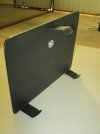
Here is the back of my glove box door: simple and no moving parts:That is exactly what I had in mind, except I was planning to engineer and fabricate a sliding hing - drop door down and slid it under the radio. But I could see a simple spring latch, the pull knob twist a cam to release and stow. I am redoing the interior - so I had a mind to put headset jack over the shoulder somewhere (helo style). PITA if one comes unpluged in flight, but absolutely out of the way.
l8evator
Pre-takeoff checklist
- Joined
- Sep 4, 2009
- Messages
- 177
- Display Name
- l8evator
- Home Airfield
- kfly
I believe the answer is no. The tailbeacon just provides a fix. It does not have the software to determine waypoints, courses, etc. However, if you have a portable nav device such as the Aera, you can output your nav data to the AV-30 via serial RS-232. If you have iFly you can also rig it up via Bluetooth.
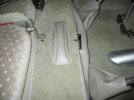
And here you can see the jacks and an intercom tucked into the upholstery on the gear box.That is exactly what I had in mind, except I was planning to engineer and fabricate a sliding hing - drop door down and slid it under the radio. But I could see a simple spring latch, the pull knob twist a cam to release and stow. I am redoing the interior - so I had a mind to put headset jack over the shoulder somewhere (helo style). PITA if one comes unpluged in flight, but absolutely out of the way.
Sorry, no. Neither the AV-20 or AV-30 are "navigators" they are just displays.My question is this - if I were to get the AV-30 as opposed to the AV-20, can the Tailbeacon-X's GPS signal be used for VFR nav purposes.
So you need some thing like the GNX 375 instead of the Tailbeacon. This would give you the ADS-B In/Out transponder and a navigator, which would then feed the AV-20 or -30.
I should really have thought this through better before starting this thread - but I didn't. Reading some things this weekend causes me to ask: Are small counties and airport authorities really trapping ADS-B data and sending out invoices for landing fees and junk? Has anyone actually experienced a problem with some local governmental entity using ADS-B to generate income via fees? Or, is all this just AI generated BS?
Plus, talking to a tailwheel pilot this weekend brought my attention to a simple - slap the head because I can't believe I did not think about this - truth: the TailBeacon/Tailbeacon-X was not designed for a Tailwheel airplane! One rough landing, one small rock on a grass strip, a divot in the grass . . . lots of hazards for electronics placed close the ground when moving. Ergo - that has to come off the list. Since I currently have no transponder at all - I could simply avoid Class B airspace and staying under 10K will not be a problem - but my most common mission runs me close to Little Rock Air Force Base and almost certainly I will need to get into Class C for an annual or repair sooner or later. Not sure how viable the NO Transponder/No ADS-B option will be long term. So, the GPS-175 with GNC-205 and any ADS-B transponder is starting to make a lot of sense; but the GTX-375 with GNC-205 (considering installation) may come out cheaper.
Ergo my newest question: for those that have used the GTX-375, or any ADS-B for that fact, do you find the need to turn off ADS-B? If so, is it a simple "setting in the software" or is it a "get an on/off" switch put in when the transponder is installed thing. And for those who are not ADS-B compliant, do you find it affects your flying options?
Sorry, it's true. Large airports, small airports, State airports, city airports, take your pick. I just posted that FL just passed a law to prohibit using ADS-B (or similar tech) to charge people for Landing Fees.I should really have thought this through better before starting this thread - but I didn't. Reading some things this weekend causes me to ask: Are small counties and airport authorities really trapping ADS-B data and sending out invoices for landing fees and junk? Has anyone actually experienced a problem with some local governmental entity using ADS-B to generate income via fees? Or, is all this just AI generated BS?
Does that mean Landing Fees will go away? Sorry, I doubt it. They'll just go back to having a staff person sit there and write them all down, use a camera system (like traffic, game or even your doorbell cam) to send you a bill if your wheels touch the ground. I'm guess some really small airports that did not have to install any infrastructure may stop charging. But the vast majority will probably continue to charge. Only difference is that it should stop the relatively few false billings for low approaches or bad data (wrong N#) from people's ADS-B Out being misconfigured.
Some GPS allow for an anonymous mode, but I don't think the Garmin devices do (someone else will have to speak up on how to do if they do). But I've been paying landing fees since WAY BACK into the last century. They are not new, but it is true that more airports are looking to the revenue stream as their budgets are getting tighter and tighter.
And to your last question, I don't know where you fly, but please DO NOT turn off your ADS-B. Just prevents you from that little extra help to make sure you see someone else and that they see you. And pending the airspace where you fly, you may not have the option.
MackMooney
Pre-takeoff checklist
- Joined
- Aug 7, 2023
- Messages
- 417
- Display Name
- McMooney
yes, there are entities that use adsb to track and charge planes but as far as i can tell, it's not very common down here in texas. Maybe Luv field, not sure how they knew, most likely signature but could've been adsb, only like 15$ though so not crazy. the powers that be including the faa are trending towards not allowing fees via adsb.
my opinon, the combo you mentioned is great, get the majority of goodies garmin offers, gps, approaches, lpv, connext, frequency transfer, adsb-in/out, traffic monitoring etc... Connext is awesome btw, except for entering your transponder code, you'll hardly need to look at the 375.
my opinon, the combo you mentioned is great, get the majority of goodies garmin offers, gps, approaches, lpv, connext, frequency transfer, adsb-in/out, traffic monitoring etc... Connext is awesome btw, except for entering your transponder code, you'll hardly need to look at the 375.

Some are. That's why you should use a Tail Beacon or similar UAT-type ADS-B out solution. It allows setting it to anonymous mode, where it doesn't broadcast your tail number.Are small counties and airport authorities really trapping ADS-B data and sending out invoices for landing fees and junk? Has anyone actually experienced a problem with some local governmental entity using ADS-B to generate income via fees?

Dana
Final Approach
Just like speed or red light cameras, there are companies that peddle these things to local governments or airport owners. "We'll handle everything at no cost to you; you'll collect the fines/landing fees and we'll just take a small percentage."
Fortunately, my home town after a public hearing decided to not install speed cameras in town.
Fortunately, my home town after a public hearing decided to not install speed cameras in town.
No.for those that have used the GTX-375, or any ADS-B for that fact, do you find the need to turn off ADS-B?
The transponder screen on the GNX-375 has an Standby/On/Alt button.If so, is it a simple "setting in the software" or is it a "get an on/off" switch put in when the transponder is installed thing.
UAT has anonymous mode. 1090ES does not.Some are. That's why you should use a Tail Beacon or similar UAT-type ADS-B out solution. It allows setting it to anonymous mode, where it doesn't broadcast your tail number.
It is a slippery slope - a couple decades ago all the aviation magazine were writing how fees were hindering flight in Europe. Now they are here. . .Just like speed or red light cameras, there are companies that peddle these things to local governments or airport owners. "We'll handle everything at no cost to you; you'll collect the fines/landing fees and we'll just take a small percentage."
So exactly how are they going to enforce this? I mean, if you live on field, and they’re charging you, I guess they could refuse to allow you to tie down or refuse to sell you fuel until you pay. But let’s say a transit pilot lands, takes on fuel, and departs. A bill for a landing fee arrives in the mail, and pilot files it carefully in the short round file cabinet. What’s the airport gonna do? It’s not like they can enforce it. They have no contract. They cannot stop you from registering your aircraft when it comes due, and at least in Texas, they cannot put a lien on your aircraft because they did not add any value or service to the aircraft (before someone argues with me on that one, they provided a service to the pilot. They did not add materials or provide a service to the aircraft.)
my opinon, the combo you mentioned is great, get the majority of goodies garmin offers, gps, approaches, lpv, connext, frequency transfer, adsb-in/out, traffic monitoring etc... Connext is awesome btw, except for entering your transponder code, you'll hardly need to look at the 375
To use it without ever looking at it except to enter a code would require me to put some kind of a multifunction display or HSI or something in front of the pilot. This is a VFR only airplane. It will never do an LPV approach, at least not as long as I own it. I have hunting property in a cabin. That is a 7 hour drive, that I could reach with the Luscombe, as long as my neighbor allows me to land in his pasture - in 2 1/2 hours, call at three because I have to preflight and taxi around. I keep an ATV there, and almost all of my family lives only 40 miles by air but takes 1.5 hours by car to because you have to go around an extremely large lake. Other than that, it’s for my personal pleasure.

flyingcheesehead
Taxi to Parking
- Joined
- Feb 23, 2005
- Messages
- 28,184
- Location
- UQACY, WI
- Display Name
- iMooniac
- Home Airfield
- KUES/KMKE
It's true, however, this is NOT a reason not to get ADS-B. The company that is facilitating all this, Vector, does not solely use ADS-B, they also use cameras on the field so even if you have ADS-B in anonymous mode, off, or completely unequipped you'll still be on the hook for the fee. There is no way around it.Are small counties and airport authorities really trapping ADS-B data and sending out invoices for landing fees and junk? Has anyone actually experienced a problem with some local governmental entity using ADS-B to generate income via fees? Or, is all this just AI generated BS?
It's better to just avoid the airports that have these fees. That way you'll still get the benefits of ADS-B and not have the operational limitations of not having it.
It's almost certainly going to be cheaper to get the GNX375 that has the transponder built in than it would be to get a 175 plus a standalone transponder, probably in terms of equipment but definitely once installation is included. GNX375 + GTR205 is still your best solution.So, the GPS-175 with GNC-205 and any ADS-B transponder is starting to make a lot of sense; but the GTX-375 with GNC-205 (considering installation) may come out cheaper.
No. The places that will get you for landing fees will still get you. If you want to be more "anonymous" in terms of tracking, it's probably better to use LADD and the Privacy ICAO Address program.Ergo my newest question: for those that have used the GTX-375, or any ADS-B for that fact, do you find the need to turn off ADS-B?
It requires you to be on UAT (978 MHz) ADS-B Out only. 1090ES does not support anonymous mode. Most modern equipment is dual band and doesn't support anonymous mode. Even on the UAT equipment I've seen some people have issues getting anonymous mode properly configured and working.If so, is it a simple "setting in the software" or is it a "get an on/off" switch put in when the transponder is installed thing. And for those who are not ADS-B compliant, do you find it affects your flying options?
I'm glad they did that, but Vector is just going to charge using the cameras anyway.I just posted that FL just passed a law to prohibit using ADS-B (or similar tech) to charge people for Landing Fees.

Very simple, they put a lean on your aircraft.So exactly how are they going to enforce this?
If you were not aware, if you are not happy with some mechanic charging you $1,000 for an oil change and you show up at the airport at night and take the plane. Someone can show up and put a lock on the prop, wheels and/or whatever and tell you there is a mechanics lean on your aircraft. Pay or they will sell the aircraft (cutting it down to simple terms). And it doesn't matter if it is $1,000 or $1, if you don't pay they can put a lean on the aircraft.
With the Landing Fees you're talking states, counties or some other municipality. You think you're going to win or ultimately pay?
What you described is called mechanics and materialman’s lien. M&M liens are a statutory scheme designed to protect a person who provides service or materials to assets. The statute’s purpose is to protect mechanics, tradesmen, craftsman, contractors, and material/parts purveyors. It protects commerce. M&M liens are allowed on cars, homes, equipment, and other assets (and an airplane certainly falls within that category) to be asserted by a person who provides the service, supplies, or parts. The person or party asserting the lien does so by filing an affidavit in the property records of the county where the asset is located (in this case, it would be with the aircraft registry records in Oklahoma City). The person asserting the lien must swear under oath that they provided either parts or materials or services that benefited the asset that they are placing the lien on, and they must itemize with some detail the value provided to the asset.Very simple, they put a lean on your aircraft.
If you were not aware, if you are not happy with some mechanic charging you $1,000 for an oil change and you show up at the airport at night and take the plane. Someone can show up and put a lock on the prop, wheels and/or whatever and tell you there is a mechanics lean on your aircraft. Pay or they will sell the aircraft (cutting it down to simple terms). And it doesn't matter if it is $1,000 or $1, if you don't pay they can put a lean on the aircraft.
With the Landing Fees you're talking states, counties or some other municipality. You think you're going to win or ultimately pay?
In the most simple of terms, an M&M lien cannot attach for landing fees- unless States amend the statutory scheme for M&M liens because a landing fee is not attached to the airplane. It is not a benefit or service given to the airplane. It is a charge “tax” on a privilege benefitting the individual pilot. That is why when you drive through a tollbooth and you do not pay your tolls they cannot put a lien on your car. If the toll authority is the State, they can refuse your registration renewal, but no lien. This is well established law.
Vector puts a prop lock on a plane - they will be sued, I would suggest a declaratory judgement claim - no contract and no lien - with a conversion claim added (quasi-theft) and depending on jurisdiction, a wrongful imprisonment argument is worth considering. The first two claims are eligible for fee, switching, meaning Vector will pay your attorney fees when you win.
Ed Haywood
Final Approach
What you described is called mechanics and materialman’s lien. M&M liens are a statutory scheme designed to protect a person who provides service or materials to assets. The statute’s purpose is to protect mechanics, tradesmen, craftsman, contractors, and material/parts purveyors. It protects commerce. M&M liens are allowed on cars, homes, equipment, and other assets (and an airplane certainly falls within that category) to be asserted by a person who provides the service, supplies, or parts. The person or party asserting the lien does so by filing an affidavit in the property records of the county where the asset is located (in this case, it would be with the aircraft registry records in Oklahoma City). The person asserting the lien must swear under oath that they provided either parts or materials or services that benefited the asset that they are placing the lien on, and they must itemize with some detail the value provided to the asset.
In the most simple of terms, an M&M lien cannot attach for landing fees- unless States amend the statutory scheme for M&M liens because a landing fee is not attached to the airplane. It is not a benefit or service given to the airplane. It is a charge “tax” on a privilege benefitting the individual pilot. That is why when you drive through a tollbooth and you do not pay your tolls they cannot put a lien on your car. If the toll authority is the State, they can refuse your registration renewal, but no lien. This is well established law.
Vector puts a prop lock on a plane - they will be sued, I would suggest a declaratory judgement claim - no contract and no lien - with a conversion claim added (quasi-theft) and depending on jurisdiction, a wrongful imprisonment argument is worth considering. The first two claims are eligible for fee, switching, meaning Vector will pay your attorney fees when you win.
I love it when someone fact-bombs the barracks lawyers.
The fact that Vector (or any company for that matter) acts as a private entity and has set up a business in which they collect an unregulated and unauthorized tax has gotten under my skin this morning, so I grabbed Vernon's Texas Statutes Annotated off the shelf - and a quick look at Section 1702.104 of the Texas Government Code appears to be on point. What Vector is doing is illegal in Texas unless that company has a license to conduct electronic surveillance in the State. I did not dig deeper, but if I recall the Occupations Code provides corporations and business entities cannot hold license in this state. Any licensure required by the Occupations Code must be issued to an "Individual" which is defined to exclude any business or fictional entities.
This is an easy statement for me to make, each of you do as believe to be in your best interest - but if every pilot mailed a bill by or through Vector were to refuse to pay - that B.S. will stop. Vector is a corporation seeking to create a business out of a nonexistent market. They convinced airport authorities they could do this, it is illegal and they cannot survive on an empty mailbox. Simply strangle them financially and they will go away.
This is an easy statement for me to make, each of you do as believe to be in your best interest - but if every pilot mailed a bill by or through Vector were to refuse to pay - that B.S. will stop. Vector is a corporation seeking to create a business out of a nonexistent market. They convinced airport authorities they could do this, it is illegal and they cannot survive on an empty mailbox. Simply strangle them financially and they will go away.

- Joined
- Oct 16, 2019
- Messages
- 8,855
- Location
- Atlanta / Marietta
- Display Name
- Vintage Snazzy (so my adult children say)
- Home Airfield
- KPUJ
Net Net - you're flying around busy airspace many times. Get a transponder and a radio.
Even if you always fly VFR, a moving map showing that Melvin flying up your blind side is very useful. Get the GNX 375 and a simple Com radio. AND.... with a transponder you can also get VFR flight following to also keep an eye out for you.
Even if you always fly VFR, a moving map showing that Melvin flying up your blind side is very useful. Get the GNX 375 and a simple Com radio. AND.... with a transponder you can also get VFR flight following to also keep an eye out for you.
Understood, I was just showing an example of how someone can really come after you.In the most simple of terms, an M&M lien cannot attach for landing fees-
And it would never be Vector that comes after you, they are only a Service Provider. The landing fee is owed to the airport that is probably NOT private. So that government institution (City, State, Fed.) is the one that's going to come after you. Maybe not right away, but you're going to go do something and the computer will spit out that you are delinquent on a fee owed. What would happen if you did not pay a speeding ticket, parking ticket, property taxes, income taxes, etc.? Are the Landing Fees peanuts in comparison to Property Taxes? Sure. Does a gov entity care? My guess is no, they just grind along doing their thing.
bonefishpete
Cleared for Takeoff
- Joined
- Nov 10, 2024
- Messages
- 1,360
- Display Name
- Bonefishpete
Couldn’t control towers put non payers on a no landing list?
My airport when really busy ask in bound pilots if they have parking reservations at the FBO.
No other parking for transients.
My airport when really busy ask in bound pilots if they have parking reservations at the FBO.
No other parking for transients.
Unlikely for landings. The FAA does not want to get involved in that.Couldn’t control towers put non payers on a no landing list?
I did have ground in Caymen Islands once tell me someone was coming out from the FBO and to hold position. This was way back in the day and the CC people didn't believe I could be in the Caymen Islands and stopped payment. After some discussions with them about fuel stops down the cost Key West and then the next charges in the Caymens, they realized it was possible. Told them to pay the FBO, then cancel my card. (I like people watching out for fraud, but then there is just dumb policies, which is what this was.)

Daleandee
Final Approach
- Joined
- Mar 4, 2020
- Messages
- 8,354
- Display Name
- Dale Andee
Plus, talking to a tailwheel pilot this weekend brought my attention to a simple - slap the head because I can't believe I did not think about this - truth: the TailBeacon/Tailbeacon-X was not designed for a Tailwheel airplane! One rough landing, one small rock on a grass strip, a divot in the grass . . . lots of hazards for electronics placed close the ground when moving.
FWIW ... The TailBeaconX don't have to be mounted in the tail. Some RV builders have mounted them in wingtips. A friend mounted his inside the tailcone of his fabric covered airplane. Yes the light stayed on but you couldn't see it behind the baggage compartment ...