
You are using an out of date browser. It may not display this or other websites correctly.
You should upgrade or use an alternative browser.
You should upgrade or use an alternative browser.
Mooney M20J crash in Union, SC. Four dead.
- Thread starter Chuck_D
- Start date
bonefishpete
Cleared for Takeoff
- Joined
- Nov 10, 2024
- Messages
- 1,362
- Display Name
- Bonefishpete
Mooneys are stout shouldn’t have killed them.

- Joined
- May 25, 2006
- Messages
- 22,003
- Location
- KTTA, North Carolina
- Display Name
- Who you kiddin?
- Home Airfield
- KTTA
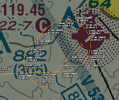
Oh No! If the ADS-B tracks are accurate, it looks they got to the diversion airport with lots of extra altitude and instead of losing it and coming straight in, flew a big pattern and lost too much of it. Perhaps they just didn't see the runway until they overflew it, but the airspeed numbers also indicate coming it pretty hot, which would also account for the big circle. It does look odd so it might mean something else.
bonefishpete
Cleared for Takeoff
- Joined
- Nov 10, 2024
- Messages
- 1,362
- Display Name
- Bonefishpete
Time in type model may tell.

- Joined
- Jun 7, 2008
- Messages
- 2,261
- Display Name
- Andrew, CFI-I
A reminder, you don't need to shoot for the touchdown zone with an engine out. Even a 3500' runway you can land midfield with plenty of room to stop.
This tendency is partly due to primacy in training. When practicing short-field or spot landings, we become conditioned to flare over the grass so we can place the wheels precisely on the runway numbers. As a result, aiming for a midfield touchdown is seldom discussed during training.


Ed Haywood
Final Approach
If you make a habit of flying bomber patterns with power, and never practice cutting power abeam the numbers, you won't have the skill set when the situation demands it.

MooneyDriver78
En-Route
- Joined
- Aug 13, 2013
- Messages
- 4,928
- Display Name
- Tom
- Home Airfield
- KSUA
A reminder, you don't need to shoot for the touchdown zone with an engine out. Even a 3500' runway you can land midfield with plenty of room to stop.
Not if your airspeed is 98 knots you won’t, as matter of fact you won’t land on 3500 runway at 98 knots even if you’re hit the landing zone.
On a J you can slow down or go down, but you can’t do both. He was close to the Js 201 mph limit.

3393RP
En-Route
- Joined
- Oct 8, 2012
- Messages
- 4,720
- Display Name
- 3393RP
I'm used to inane comments on POA about aircraft mishaps, yours goes to the top of the list for the most ridiculous in recent memory.Mooneys are stout shouldn’t have killed them.
bonefishpete
Cleared for Takeoff
- Joined
- Nov 10, 2024
- Messages
- 1,362
- Display Name
- Bonefishpete
I meant if the pilot doesn’t stall spin and lands with full control the chrome molly tube frame can protect the occupants.I'm used to inane comments on POA about aircraft mishaps, yours goes to the top of the list for the most ridiculous in recent memory.

dmspilot
Final Approach
- Joined
- Oct 20, 2006
- Messages
- 6,774
- Display Name
- DISPLAY NAME
If too high, you should circle the field, not circle an imaginary point miles away. I've had that chastise a few pilots for doing the latter on flight reviews. Best glide speed should be maintained, which is about 90 knots in the Mooney. Don't dive for the field. Sad that four people perished.
- Joined
- Jul 29, 2011
- Messages
- 1,466
- Display Name
- MountainDude
- Home Airfield
- KPDX
Really sad to see this. Bad for the families and GA in general.
A big reason why Mooney is gone and Cirrus is selling so well. All 4 people would have walked away from a Cirrus.
The BRS is expensive and heavy until it saves lives.
A big reason why Mooney is gone and Cirrus is selling so well. All 4 people would have walked away from a Cirrus.
The BRS is expensive and heavy until it saves lives.

- Joined
- Mar 2, 2005
- Messages
- 16,628
- Location
- Southeast Tennessee
- Display Name
- This page intentionally left blank
Mooneys are stout shouldn’t have killed them.
Stout like Titanic.

texasclouds
En-Route
- Joined
- Aug 23, 2018
- Messages
- 4,361
- Location
- Bryan, Texas
- Display Name
- Mark
- Home Airfield
- Coulter Airfield CFD
Stout like Titanic.
Stronk like bull
Ed Haywood
Final Approach
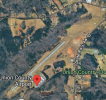
There were open fields off the other end of the runway. If the aircraft had touched down anywhere on the runway, it would have been survivable. Uggh.

RyanShort1
Final Approach
- Joined
- Feb 18, 2010
- Messages
- 6,480
- Location
- Dallas, Texas
- Display Name
- RyanShort1
- Home Airfield
- KRBD
Yeah, for sure. I think that the average GA pilot rarely practices emergency procedures except for perhaps for a flight review.If you make a habit of flying bomber patterns with power, and never practice cutting power abeam the numbers, you won't have the skill set when the situation demands it.
I'm going to disagree on that one. I'd bet good money that most of the people teaching the numbers, vs the thousand footers or the middle of the runway are better, more experienced instructors vs 141 rookies teaching the "safe" thousand footers.This tendency is partly due to primacy in training. When practicing short-field or spot landings, we become conditioned to flare over the grass so we can place the wheels precisely on the runway numbers. As a result, aiming for a midfield touchdown is seldom discussed during training.
Being able to use the numbers is pretty important for some fields and aiming halfway down is just as big of a problem if your real issue is your energy state, and I'd expect the more experienced instructors to be better at teaching that.
RyanShort1
Final Approach
- Joined
- Feb 18, 2010
- Messages
- 6,480
- Location
- Dallas, Texas
- Display Name
- RyanShort1
- Home Airfield
- KRBD
That's why you plan on landing ON the numbers, but with a tiny bit of extra energy, that can be bled off with a slip or an extra notch of flaps. Throwing in all the drag early is a good way to run out of energy, but not knowing how to dissipate it is also a problem. A hard stop at the end kills you just as dead.I would rather error on landing long and running off the runway than to land short of the runway.

Mooney M20K 231, N30EV: Fatal accident occurred August 13, 2022 in Hanna City, Peoria County, Illinois
This is preliminary information, subject to change, and may contain errors. Any errors in this report will be corrected when the final repor...
- Joined
- Jul 29, 2011
- Messages
- 1,466
- Display Name
- MountainDude
- Home Airfield
- KPDX
A super useful advice. Thank you.A reminder, you don't need to shoot for the touchdown zone with an engine out. Even a 3500' runway you can land midfield with plenty of room to stop.

- Joined
- Sep 25, 2019
- Messages
- 828
- Location
- Lancaster, Pennsylvania
- Display Name
- Rick A
- Home Airfield
- KLNS
That's why you plan on landing ON the numbers, but with a tiny bit of extra energy, that can be bled off with a slip or an extra notch of flaps. Throwing in all the drag early is a good way to run out of energy, but not knowing how to dissipate it is also a problem. A hard stop at the end kills you just as dead.
Good points. In a slick Mooney approaching the fence, dropping the gear and flaps while carrying a little extra energy is a good strategy. But not too fast.
If the runway is short and a slip is needed, make it a full slip at 20' or 25' above the runway and outside of ground effect, which also positions the low wing safely above the runway.
In this accident, it appears he dove at the runway, coming in way too fast to land on the runway. Like it was refered to earlier, a Mooney either slows down, or goes down... take your pick.

Rein Hart
Pre-takeoff checklist
- Joined
- Dec 25, 2018
- Messages
- 196
- Display Name
- TOGA
Agree. Tragic. It’s also why so many choose experimentals and include BRS during the build.Really sad to see this. Bad for the families and GA in general.
A big reason why Mooney is gone and Cirrus is selling so well. All 4 people would have walked away from a Cirrus.
The BRS is expensive and heavy until it saves lives.
Multiple reports online of this plane stopping to refuel in Union. I'm guessing these are erroneous reports.
I didn't learn this in training but the military forced landing technique of high key - low key approach might be helpful for any of us in similar situations.
I didn't learn this in training but the military forced landing technique of high key - low key approach might be helpful for any of us in similar situations.
MooneyDriver78
En-Route
- Joined
- Aug 13, 2013
- Messages
- 4,928
- Display Name
- Tom
- Home Airfield
- KSUA
Souls on board 3 adult males, 1 female. Not a light load for a Mooney . Short legs for gross weight constraints ? Engine out due to ?
Given the rapid descent, I would think fire. No reason to race to the ground if your engine is dead.

Kenny Phillips
Final Approach
- Joined
- Jul 29, 2018
- Messages
- 6,572
- Display Name
- Kenny Phillips
It was explicitly demonstrated by my instructor, by pulling the power at different points in the pattern, and I had a few goes at it. A little uncomfortable, leaving runway behind, but it was a nothingburger in the end.This tendency is partly due to primacy in training. When practicing short-field or spot landings, we become conditioned to flare over the grass so we can place the wheels precisely on the runway numbers. As a result, aiming for a midfield touchdown is seldom discussed during training.

- Joined
- Jun 11, 2015
- Messages
- 5,612
- Display Name
- Piperonca
- Home Airfield
- M52
Ran out of fuel…read Kathryn’s Report. Sad.Given the rapid descent, I would think fire. No reason to race to the ground if your engine is dead.
- Joined
- May 25, 2006
- Messages
- 22,003
- Location
- KTTA, North Carolina
- Display Name
- Who you kiddin?
- Home Airfield
- KTTA
I don’t recall ever being taught to flare over the grass, even when I was training at an 1800’ runway. I teach it now during recurrent training and only rarely come across a pilot who has done it before.This tendency is partly due to primacy in training. When practicing short-field or spot landings, we become conditioned to flare over the grass so we can place the wheels precisely on the runway numbers. As a result, aiming for a midfield touchdown is seldom discussed during training.
Perhaps obviously, I was not taught to touch down halfway down the runway there, but most engine out exercises were based on having room at both ends to account for stress related technique errors. Short fields were make believe and I only recall being instructed to land on the numbers once.
Last edited:
bonefishpete
Cleared for Takeoff
- Joined
- Nov 10, 2024
- Messages
- 1,362
- Display Name
- Bonefishpete
How do we know that? Reports are the aircraft caught fire on crashing no survivors.Ran out of fuel…read Kathryn’s Report. Sad.

bbchien
Touchdown! Greaser!
Slip slip slip or High key circle above the arrival end. Energy mismangement?
bonefishpete
Cleared for Takeoff
- Joined
- Nov 10, 2024
- Messages
- 1,362
- Display Name
- Bonefishpete
I know you all hate DG but his latest is engine out pick a wide open field or area and land.
Screw trying to make the runway. I agree. I've seen way to many crashes where the pilots
tried to "Save" the aircraft and perished.
Screw trying to make the runway. I agree. I've seen way to many crashes where the pilots
tried to "Save" the aircraft and perished.
- Joined
- Jun 11, 2015
- Messages
- 5,612
- Display Name
- Piperonca
- Home Airfield
- M52
Which reports?How do we know that? Reports are the aircraft caught fire on crashing no survivors.
Ed Haywood
Final Approach
the military forced landing technique of high key - low key approach might be helpful for any of us in similar situations.
Would have saved these lives. He made the field, then flew away from it. Don't do that.

eman1200
Touchdown! Greaser!
it's amazing you know that.....All 4 people would have walked away from a Cirrus.
- Joined
- May 25, 2006
- Messages
- 22,003
- Location
- KTTA, North Carolina
- Display Name
- Who you kiddin?
- Home Airfield
- KTTA
If the tracks are accurate, they had the runway made. Easily. That's what I find so disconcerting about this one.I know you all hate DG but his latest is engine out pick a wide open field or area and land.
Screw trying to make the runway. I agree. I've seen way to many crashes where the pilots
tried to "Save" the aircraft and perished.
- Joined
- May 25, 2006
- Messages
- 22,003
- Location
- KTTA, North Carolina
- Display Name
- Who you kiddin?
- Home Airfield
- KTTA
I agree with you. Again assuming the accuracy of the ADS-B tracks, even a Cirrus pilot with an airport within easy gliding distance of a runway might well opt for a "normal" engine out landing as opposed to a field and a chute.it's amazing you know that.
bonefishpete
Cleared for Takeoff
- Joined
- Nov 10, 2024
- Messages
- 1,362
- Display Name
- Bonefishpete
Spiral down over the runway should have worked. Still too early to tell stall/spin or flight into trees???
Lindberg
Final Approach
Not sure this is a defense of Gryder since this plane could have easily been put down on the runway.I know you all hate DG but his latest is engine out pick a wide open field or area and land.
Screw trying to make the runway. I agree. I've seen way to many crashes where the pilots
tried to "Save" the aircraft and perished.
bonefishpete
Cleared for Takeoff
- Joined
- Nov 10, 2024
- Messages
- 1,362
- Display Name
- Bonefishpete
He does say some common sense ideas once in awhile. Having many hours myself in a 201, the pilot should of handled it but a wide open field might of worked better.Not sure this is a defense of Gryder since this plane could have easily been put down on the runway.