Mooney down, 3 dead Nampa, Id. Impossible turn?

moparrob66

Pre-takeoff checklist
Joined
Mar 31, 2024
Messages
491
Display Name
Moparrob
Home Airfield
S75
So sad, not far from where I work.

Dangit cant paste the link. N5764H family of 3 on board, all perished. Looks like a LOTOT, tried to save the plane but lost everything. My CFIs all emphasized NO TURNS BELOW 1000'AGL but nobody wants to bend the plane in a parking lot or street. Obviously there are better ways to have your name in print. Saddening and maddening too. We all should know better, assuming all is as it seems.
 
Loss of thrust on takeoff. Could be engine failure or prop failure. Either way youre landing sooner than anticipated. Lets keep it under control so we can pick the least awful spot.
 
Yeah 200 feet agl your choices are very limited but when you stall/spin at that height you're all just terrified passengers. Only for a second I suppose.
 
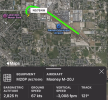
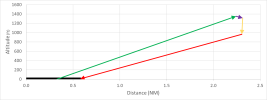
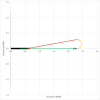
I can't access the flightradar24 trace for it any more, but it was interesting. He made it to about 300 feet before initiating the turn. He then continued to climb slowly throughout the turn and was almost 400feet at the last ads-b ping right over where he impacted the ground.

Ground speed seemed about 10kts slow(62-67) but close to published Vx speed of 66, wind on the ground was calm. Last ping showed a ground speed about 5kts faster than the rest of climb, but perhaps explained by a few knots of winds aloft.

One of my pilot engineering friends did some math based on that ADS-B track and determined that from his last ping he should have had enough attitude to glide to the runway. looking at the crash site he was only a couple hundred yards from a clearing leading to the airport.

Why didn't he trade some altitude for airspeed especially when he pretty much had the airport made?
Why was he flying Vx speed after clearing obstacles vs Vy? especially when High density altitude and fully loaded.
 
Maybe it was an on-course departure, then sputter? Otherwise maybe momentum climb and turn until stall/spin? Im not remotely familiar with Mooneys, but I'd suspect theyre slick enough to maintain some airspeed longer than a 172.
 
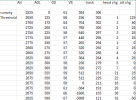
I found a video of the FlightRadar24 ads-b track, but I can't seem to post a link to it.I was able put together a list of the ADS-B pings from it...
plus a few calculations I added. Vertical Speed near the end seems mostly fictional, how can he be descending but not losing altitude?
Ground Speed are about 5kts slower than I had recalled.

1754608255735.png


1754606940341.png


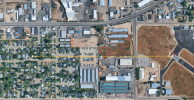
Mooney best glide 65-71kts =>11:1 glide ratio
300ft alt - ~100m alt
Dist from accident to open area 1 - 250m~2.5:1 glide ratio needed (with no tail wind)
Dist from accident to open area 2 - 350m~2.5:1 glide ratio needed
3 - dist from accident to airport perimeter - 550m~5.5:1 glide ration needed
4 - dist from accident to runway 720m~7.2: glide ration needed


1754607279193.png

trying to avoid speculating, just showing the data we seem to have.

I tell pilots I am training in a 172 at this airport, other runway lengths, density Altitude and airplane type and weight will significantly change what you can do.
Don't stall, maintain airspeed, listen for stall warning
Generally don't even think about turning back below 500ft.
Don't stall, maintain airspeed, listen for stall warning
If you decide to turn back be very sure you can do it. Don't stall, maintain airspeed, listen for stall warning.
You will be faulted for turning back and stall spinning.
You won't be faulted for crashing straight head without a stall/spin.
Don't stall, maintain airspeed., listen for stall warning
if you turn back, Don't stall, maintain airspeed, listen for stall warning, be prepared to roll level and crash into whatever is in front of you vs stalling the airplane trying make it to the airport/runway.
 
So sad, not far from where I work.

Dangit cant paste the link. N5764H family of 3 on board, all perished. Looks like a LOTOT, tried to save the plane but lost everything. My CFIs all emphasized NO TURNS BELOW 1000'AGL but nobody wants to bend the plane in a parking lot or street. Obviously there are better ways to have your name in print. Saddening and maddening too. We all should know better, assuming all is as it seems.
No turns below 1,000 feet is not valid advice, but no turns back to the departure runway <1,000 is valid advice.
 
Rule #1 of attempting the impossible turn is to practice it before, know exactly how the maneuver will be executed and the altitude required to complete it.

I was out a week ago, practicing it again. I can do a 360 in less than 500 ft. For the typical 270 degrees required by the impossible turn, 400 ft is more than enough (in my case).

But, that's in my plane. AOPA (I think) tried a few different planes a while back. I recall Bonanzas and Comanches couldn't safely complete the turn. That's why it's essential to practice the maneuver before you ever attempt it for real.
 
Very sad. The high was 91º in Boise that day and the crash was reported to have occurred approx 5:41 p.m. so the temp was probably around 90º which would probably put the DA somewhere around 5,000 ft. Lakeview Park is probably survivable, perhaps I-84 and with a little more altitude Centennial GC. Sure seems like the impossible turn...
 
METAR was

KMAN 272315Z AUTO 32008KT 9SM CLR 33/11 A2992 RMK A01
KMAN 272335Z AUTO 00000KT 9SM CLR 32/11 A2993 RMK A01

There were also some buildups popping up in that immediate area about 20 minutes after the accident (which occurred at 2341Z)

There's a lot of folks using groundspeed to figure out if the airplane had flying speed. Density altitude would have been about 5000 at MAN, so TAS would have been 4-5 knots higher than IAS for those speeds. There was a slight 5-6 kt headwind aloft forecast at 500' AGL, which would pretty much cancel out the difference with regard to groundspeed, but with no headwind component the IAS would have been pretty low. Additionally, were the published Vx speeds based on sea level/ISA? They're going to increase with altitude.
 
Rule #1 of attempting the impossible turn is to practice it before, know exactly how the maneuver will be executed and the altitude required to complete it.

I was out a week ago, practicing it again. I can do a 360 in less than 500 ft. For the typical 270 degrees required by the impossible turn, 400 ft is more than enough (in my case).

But, that's in my plane. AOPA (I think) tried a few different planes a while back. I recall Bonanzas and Comanches couldn't safely complete the turn. That's why it's essential to practice the maneuver before you ever attempt it for real.
Can you really practice this without pulling mixture? What I mean just today I practice a engine failure with just pulling throttle back to idle. The engine was still developing power even at idle. A true engine out would produce no power and glide angle I'm betting would be much steeper?
 
Can you really practice this without pulling mixture? What I mean just today I practice a engine failure with just pulling throttle back to idle. The engine was still developing power even at idle. A true engine out would produce no power and glide angle I'm betting would be much steeper?

I would argue there is no way to safely practice the impossible turn. Your point about the drag of dead engine is very valid, but also the surprise and hesitation that a pilot is surely going to have when confronted with engine failure on takeoff. I was trained when confronted with an engine failure on takeoff with less than 1,000 ft AGL to pick a spot 30º right or left and land. That's what I brief my passengers to expect and hopefully I don't find out, but if it ever happens to me that's what I'm going to do...
 
Can you really practice this without pulling mixture?
You practice a glide at idle and with the mixture pulled. That will give you the correction factor. You then apply it to the impossible turn. That's why I do a 360 and use that altitude loss as the minimum required.
 
Gadzooks, I-84 was right there along his track. You're "invincible" when you're that age. Until you're not.
Godspeed.
 
I would argue there is no way to safely practice the impossible turn. Your point about the drag of dead engine is very valid, but also the surprise and hesitation that a pilot is surely going to have when confronted with engine failure on takeoff
Like a lot of other failures, you should expect it and monitor during take-off.

Watch the speed and climb rate, adjust the pitch to maintain the speed.
If the engine quits, that approach will get you to the right pitch for best glide, all you have to do is initiate the turn.
Also, make a note of the crosswind direction (if any), fly runway heading (not track), and turn into the wind for the impossible turn. You'll face the runway a lot quicker and with less altitude loss.
 
Having successfully made the impossible turn from 500’ AGL with 3-4 seconds for the “what just happened?” I would not be comfortable doing it from that height in a real emergency. 700’ AGL is my bottom line.

But that goes to what @AV8R_87 said: you have to practice it to know how it works in YOUR airplane. In a Mooney or piper, I probably wouldn’t do it below 1000’. That isn’t because it can’t be done, but because I am not proficient enough in those airframes to be comfortable.

Remember, just because you did it that one time doesn’t make you proficient. It’s back to the old currency vs. proficiency discussion.

Nobody on here can tell you what to do in an emergency. You will have to make that decision at that time, but we ALL hope and pray that your training is sufficient to back your decision.

I think back to @Salty ’s accident and how thankful we all were for his decision making process and even though the airframe was totaled the pilot/passenger were not. Or even the McSpadden crash. One of the most well-versed pilots EVER on aviation safety and crash reviews was not immune to the forces of nature on an airplane turned glider.

This crash in Idaho is another solemn reminder to never stop honing our skills. I don’t know the specifics. Maybe the pilot had 60 hours in the last 30 days. Maybe he had 6. Maybe he had just enough for currency. But it reminds me, I need to go practice and get better to give my family/friends/self the best opportunity to survive an accident that I hope never comes.
 
Gadzooks, I-84 was right there along his track.
5000'+ DA. 3 people. The M20J is not exactly a stellar climber. The interstate appears to be the ONLY chance he had to land with little to no damage. Hope no children were involved, and that he wasn't wasting brain power yakking on the radio. RIP
 
One issue with the impossible turn: if you don't make the field, you give up the chance to pick the softest spot and fly as far into the crash as possible. Even if you don't stall/spin, you are likely to roll out of the turn just before impact, or hit while still in a bank. If you go straight ahead or at a slight angle, you have time to pick a touchdown point and maneuver to arrive with minimum energy. If you try the turn, you better make it.
 
I'm not against trying the turn, but ONLY if you've practiced it in your aircraft, you know what your hard ceiling is, below which you won't even try, and have already determined that it's the best option available, and that's a serious value judgement. It's really important to know where you are operating and what your options are before you have a helmet fire.

For example, when I flew a bit out of Lago Vista down near Austin, it was my opinion, that if my plane had the climb performance to try a turnback, that would be one place I would do it, but in fact I would not do it in a Mooney, or a Cardinal, or anything with a low climb vs distance ratio. I had a Luscombe client down there and we did actually practice and made the field on the practice attempt, but there are planes I've flown that I know for certain wouldn't make it.

Lago Vista.jpg
 
Rule #1 of attempting the impossible turn is to practice it before, know exactly how the maneuver will be executed and the altitude required to complete it.

I was out a week ago, practicing it again. I can do a 360 in less than 500 ft. For the typical 270 degrees required by the impossible turn, 400 ft is more than enough (in my case).

But, that's in my plane. AOPA (I think) tried a few different planes a while back. I recall Bonanzas and Comanches couldn't safely complete the turn. That's why it's essential to practice the maneuver before you ever attempt it for real.

The altitude needed for a successful turnback varies widely based on numerous factors - runway length, aircraft weight, density altitude, wind conditions, glide and climb performance, bank angle, and more. There are simply too many variables to generalize. Once I did a detailed analysis, and I estimated that a C-172 at max gross weight would need roughly 1400 feet AGL to return safely to a 3500-foot runway in calm conditions. But every scenario must be evaluated before takeoff, and in the event of an actual engine failure, we must follow the plan established on the ground and not attempt to improvise under pressure. That’s the challenge. It's far too easy to analyze all this and then do something completely stupid under pressure.

Below is one example of the turn-back scenario in a C-172.


1754620278620.png1754620300414.png
 
The altitude needed for a successful turnback varies widely based on numerous factors - runway length, aircraft weight, density altitude, wind conditions, glide and climb performance, bank angle, and more. There are simply too many variables to generalize. Once I did a detailed analysis, and I estimated that a C-172 at max gross weight would need roughly 1400 feet AGL to return safely to a 3500-foot runway in calm conditions. But every scenario must be evaluated before takeoff, and in the event of an actual engine failure, we must follow the plan established on the ground and not attempt to improvise under pressure. That’s the challenge. It's far too easy to analyze all this and then do something completely stupid under pressure.

Below is one example of the turn-back scenario in a C-172.


View attachment 143798View attachment 143799
There are a LOT of 172 variants. My old '58 and the K models I loved flying were better at it than I suspect a 172SP would do.
 
Everyone is talking about the impossible turn. But the ADS-B shows this wasn’t a classic power failure.
I think the lesson to learn/think about is what do you do with various partial power failures.
I had a valve fail on a Tomahawk once 8 miles from the airport at about 1500AGl. No mechanical damage, Valve just wasn’t working any more. I just flew back to the airport. I don’t recall how much rpm loss i had. But obviously lost more than 25% power

So what power setting do you commit to crashing straight ahead?
Still climbing slowly? What altitude before you turn? What if gets worse?
Maintaining altitude? What altitude do you turn?

Brian
 
Everyone is talking about the impossible turn. But the ADS-B shows this wasn’t a classic power failure.

Then what was it? I don't think you can discern what happened from the ADSB data. From the accident pictures it sure looks like a classic stall/spin to me.

So what power setting do you commit to crashing straight ahead?

Not understanding the question? If you're asking what aircraft performance necessitates a crash, if I can't maintain altitude I'm looking for a place to land.

Still climbing slowly? What altitude before you turn? What if gets worse?

It obviously depends on the circumstances, but 1,000 ft AGL as a general rule. Doesn't the AIM push upwind until 800 ft AGL? And that's under normal operations.

Maintaining altitude? What altitude do you turn?

Again, assess the situation, look for your place to land and if you can find a way back to the airport great. Regardless, I'm sticking to my training, especially if I only made it to 350 ft AGL...

EDIT: Nope, AIM still says make the crosswind within 300 ft of TPA if remaining in the pattern or initiate your 45º turn after reaching TPA...
 
Last edited:
I had a valve fail on a Tomahawk once 8 miles from the airport at about 1500AGl. No mechanical damage, Valve just wasn’t working any more. I just flew back to the airport. I don’t recall how much rpm loss i had. But obviously lost more than 25% power

That sounds like a scary story, glad you made it back OK. Was that out of KMAN? Was there any significant vibration associated with the dead cylinder?
 
1) It is NOT an impossible turn if you can remain level or climb (like this instance).

2) So, if you are at 200 feet but with enough power to hold altitude, you are going to land straight ahead and not try to return to the airport? REALLY? Yes, if your engine quits, you will, but in this case the engine was producing some power.

From the speeds, I wonder if he did not pull it off early and tried to fly on the backside of the power/drag curve. Can't climb without accelerating. Can't accelerate without lowering the nose and giving up some altitude.
 
...assess the situation, look for your place to land and if you can find a way back to the airport great.
Yes. Every situation is different. Wind, density altitude, weight, souls on board, configuration, terrain, etc.

Every plan to know your numbers to pick the altitude to commit to the impossible turn is at best an estimate, and doesn't factor in the "fluster" factor. I doubt anybody can shorten the 4 to 6 seconds (or more) to get the nose down and fully comprehend what WTH is happening, before putting the "save my butt plan" in place.... if there even is one. You can't hold altitude, and you're descending at a rate that is giving you visual cues, not instrument indications and calculations. Your brain better be 100% focused on survival. And that means ignoring that common practice of announcing the engine has fails and I'm coming back. ATC or pilots on the receiving end of a panicked radio are the least of your problems (or help).

My plan for engine loss on takeoff has evolved over the years into pure simplicity. Excuse the goofiness. I call it the Pizza Principle.

The aircraft is sitting in the center of a Pizza Pie, not yet cooked. The outer edge of the slices represent an arc and within the region and boundaries of what you positively know you can reach (with an extra 5 -10 knots carried for rough maneuvering if necessary) to make the threshold of the touchdown point in the most survivable spot you pick within region represented by the slice of pizza under then around the plane.

After lift off, if it quits real low, head straight ahead on the runway remaining, or whatever is off the end plus or minus a swerve or minor change of direction between hard objects to fly plane as deep into the crash as possible.

As a normal climb continues, the aircraft climbs and the pizza pie starts growing with altitude. The higher you climb, the more slices are cooked. You have to be continually glancing outside and determining which general direction to point the plane at if it quits "right now" over the cooked area of the pie, which represents what you know you can reach.

At some point you have a half a pie when the slices reach the wingtips. Don't even bother looking to the rear of the wings that you don't think you can make if it quits right then. This gives your brain more focus on surviving what's reachable.

At some point the pie becomes complete, and only then should you consider the impossible turn, which is now possible.

You need to know your plane and the difference between a good glide, and a brick, under different configurations. It's a visual process, and not numberic.

 
1) It is NOT an impossible turn if you can remain level or climb (like this instance).

How do you know that???

2) So, if you are at 200 feet but with enough power to hold altitude, you are going to land straight ahead and not try to return to the airport? REALLY? Yes, if your engine quits, you will, but in this case the engine was producing some power.

Yep, because it takes more power to turn and not lose altitude and because I may have a suitable place to put it down whereas the engine could quit while I'm trying to make it back to the airport and now I'm putting it into houses or warehouses...

From the speeds, I wonder if he did not pull it off early and tried to fly on the backside of the power/drag curve. Can't climb without accelerating. Can't accelerate without lowering the nose and giving up some altitude.

Who knows? It could have been your scenario above or engine failure, an open door, a screaming child, a hotdog downwind turn, a...

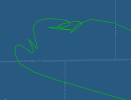
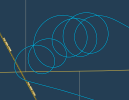
Just to add, I don't think ADSB data can be counted on to provide definitive proof of what happened.

From a recent flight of mine, ADSB shows:

1754627230526.png

This was the real track...

1754627256883.png
 
How do you know that???


Yep, because it takes more power to turn and not lose altitude and because I may have a suitable place to put it down whereas the engine could quit while I'm trying to make it back to the airport and now I'm putting it into houses or warehouses...


Who knows? It could have been your scenario above or engine failure, an open door, a screaming child, a hotdog downwind turn, a...

Just to add, I don't think ADSB data can be counted on to provide definitive proof of what happened.

From a recent flight of mine, ADSB shows:

View attachment 143801

This was the real track...

View attachment 143802
That looks like it’s either on the very edge of ADS-B reception or it’s just multilateration. For as much as people around here eschew it, there are better ways to verify accuracy.
 
That sounds like a scary story, glad you made it back OK. Was that out of KMAN? Was there any significant vibration associated with the dead cylinder?
I didn’t know what was happening at the time. The engine suddenly went rough and a loss of RPM I as about 1/3 the way to KBOI from KMAN. Just told Boise I was returning to KMAN. Mechanic said a nut came off of the Valve, don’t know exactly what that means.
 
Looks like a stall spin to me. Mooneys have a chrome moly tube frame that I always felt gave you a stronger cage around you.
 
I've had a valve stick leaving zero compression on a cylinder in my lancair. It shook the plane so bad the rocker cover beat a hole in the lower cowling. Max rpm I could make dropped to 2200. I was perfectly able to maintain altitude and better than 140 kts however. So apart from pucker factor, it was a non issue.
 
Back
Top