You are not reading what I am saying and resorting to insults. I'll exit this thread here.
You are very quick to be offended for someone that states some grossly wrong facts here. I actually took the time to go try out your brilliant idea, so we can dismantle it with proper, fresh facts.
Here's what you are saying, in a thread about a plane that might've attempted an "impossible" turn, where we are discussing handling a low altitude engine out emergency:
The main point is that it’s nearly impossible to stall with the trim fully up, even with the engine off. So, when the engine quits, the best action is to set the trim to full up and let the airplane fly itself.
I trimmed the plane fully aft, with power at idle. This is a picture of the airspeed indicator:
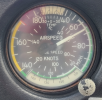
You are right at the edge of the green arc, stall horn yelling at you. But you're trying to tell me that it's "nearly impossible to stall", when the plane is trimmed literally at the published stall speed in the clean configuration, with minimum effort required to pitch it up into a proper stall. Oh, and that's the LEVEL stall speed. Now attempt a sensible turn from that configuration, while not allowing the sink rate to develop to something that will cut your glide time in half.
Pushing the nose down (or up) when power fails sets you on a path of muscling your way through, which could lead to a stall.
If I fly at best climb speed and the engine quits, without some positive pitch intervention the airplane will continue climbing and bleeding speed, getting rather close to the edge of the green arc before the nose finally drops enough for the speed to pick up. Meanwhile, you're in a low speed situation, where a stall might develop a lot quicker, where the drag is higher, further reducing the glide time and distance available, and a plane that's not actively managed in pitch will enter a phugoid that will take a few cycles to dampen. Most likely it won't have time to dampen in the altitude available for the scenarios we've been discussing so far.
Or you could actively position the nose, quickly but not in a manhandling way, to the best glide speed. Not wasting time and energy allowing the plane to slow down to pretty much stall speed before it speeds up again. Nobody (but you) is talking about developing negative Gs in the process.
Here's a good quote from an older thread on trim and best glide set-up:
The article also states that the full trim back setting will likely put you a few knots below the best glide speed. Looking at performance polars, when available, you will find the altitude loss per mile penalty for being a few knots slow is almost twice the penalty for being the same number of knots fast. Plus being slow just puts you that much closer to a stall.
This is the article in question:
https://www.aopa.org/news-and-media...ight-training-magazine/the-minimum-trim-glide
It has some bad statements that have probably propagated a lot in the almost 20 years since its publication.
My actual numbers matched
@brcase's statement quite well. About 800 fpm sink rate at best glide (85), and probably closer to 1000 fpm at full aft trim (70, clean stall speed). You'll get almost 50% more glide distance by flying at the published best glide speed vs doing that aberration of a "trim full aft because you can't stall" maneuver.
And that's the problem with your statements.
You start by mixing up 172 and 182 data. Then you state that you don't see the point of doing proper performance climbs (some slight paraphrasing here), instead climbing at some anemic rate that absolutely puts the airplane in a bad spot.
Then you come up with this brilliant idea about the first thing to do in an engine failure being trimming the plane full aft. Wasting 3-5 seconds in the process, out of the 35 or so that you might have available if the engine fails at low altitude. While also placing the aircraft literally at the edge of the envelope, where it won't take much for that stall to develop. And drastically reducing the glide distance available.
You have CFI-I in your profile. Some fresh pilot might come here and read the stuff you posted, and then try to use it in a real emergency. Chances are he will badly hurt or kill himself in the process. I won't allow that to happen.
And that's why I called you out on those statements. You might be offended by how I worded it, but (as you saw from my initial reply to you, when I challenged your runway and altitude required numbers) I tried to have a polite conversation. You persisted in making dangerous statements. The only way that I can see someone make such statements is if he's never flown those maneuvers for real. You fly it once and it's readily apparent that it's a bad idea.



