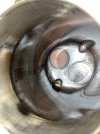
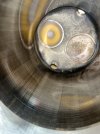
Millennium cylinder wall "washboarding"

Per Superior's cylinder brochure, I believe all their cylinders are choked. See attached, note 7.

Now for quail and snipe, I use an improved cylinder choke, a modified choke for doves, and full choke for squirrels. What works best for airplanes?
 

Attachments

Oh no.

PRIOR TO START-UP:


• Engine should be filled, according to the operator’s manual, with 100% mineral oil (specific grade
depending on ambient temperature).
Have you guys been asleep for the past couple of decades? XC20-50 is perfectly fine for engine break-in. Some engine shops recommend it.
 
Have you guys been asleep for the past couple of decades? XC20-50 is perfectly fine for engine break-in. Some engine shops recommend it.
Do you read and follow the Superior cylinder manufacturer recommendations? Are they recommending ashless dispersant multi grade oil?
 
Do you read and follow the Superior cylinder manufacturer recommendations? Are they recommending ashless dispersant multi grade oil?
When I broke my IO-400 in? Yes. My 0-320 before that, and my IO-390 most recently. All good. I also use XC in my 0-520 and haven’t changed oil for breaking in repaired cylinders. XC for break-in isn’t news. XC is mineral oil.
 
Mineral Oil is just regular oil without detergents?
FWIW it’s not the detergent that’s the issue. The important part of break in oil besides being mineral is that it not have anti scuffing additives. Philips XC doesn’t have those.

Phillips Victory on the other hand has the LW-16702 anti-wear additive and should not be used for break in.
 
Last edited:
FWIW it’s not the detergent that’s the issue. The important part of break in oil besides being mineral is that it not have anti scuffing additives. Philips XC doesn’t have those.

Phillips Victory on the other hand has the LW-16702 anti-wear additive and should not be used for break in.

:yeahthat:

Just noting that airplane engine oils should never contain detergents.


Ash-type detergents clean up dirty engines and are very good at neutralizing acids due to their high base numbers. That is all well and good, but the negative part is that ash type detergents can build up metallic-containing deposits in the combustion chamber.​
​
These deposits can start to glow under high load, like at takeoff and climb out. This can lead to a condition called deposit induced runaway surface ignition (DIRSI), which can mess up an engine in very short order.​

Ashless dispersants are non-metallic and they don't leave deposits. They merely keep contaminants suspended in the oil so that the oil filter can remove them.
 
  • Like
Reactions: WDD
FWIW it’s not the detergent that’s the issue. The important part of break in oil besides being mineral is that it not have anti scuffing additives. Philips XC doesn’t have those.

Ashless Dispersant is also an issue, which Phillips XC does have.
 
Why is it an issue?

Because Lycoming says so.


The basic rule which applies to most normally aspirated Lycoming piston engines is simple: use straight mineral oil of the proper viscosity for the first fifty hours or until oil consumption stabilizes. Then switch to ashless dispersant (AD) oil.​
 
Last edited:
Ah - found this regarding AD oils for break-in.


The first risk with using Ashless Dispersant oils used during break-in is that the higher film-strength will prevent the piston ring from rupturing the oil film and therefore the necessary abrasion on the cylinder wall will not occur.​
​
Secondly, the frictional process creates unusually high surface temperatures on the cylinder wall and this can cause the additives in the Ashless Dispersant oils to form a glaze in the honing groves on the surface of the cylinder wall.​

Now, whether that's true for Phillips XC, I haven't a clue. But I wouldn't use an Aeroshell AD oil.
 
My engine and 2 or 3 other lycoming engines use Aeroshell 15W50 AD oil for break in and you stay with AD oil for the life of the engine.
My 0-320 H2AD I was instructed by lycoming to use nothing but aeroshell 15W50 for break in, which went well and to use it for the life of the engine. It stopped using oil at 6 hours and now has 850 hrs on it and running great.
These engines are the exception to the rule though.
 
Last edited:
I have rebuilt and assembled new engines with new parts for a hobby and for work.
The secret I learned long ago as far as ring break in is to use very little lube on the cyl walls and rings.
I know you will say I am crazy...I only use WD 40 on the rings and ring grooves in the piston, one drop of motor oil on each piston skirt. Then spray down the freshly honed and CLEANED cyl walls with only WD-40.
These are engines I am going to start with in days or a week or so.

If you coat those rings up with motor oil, then first start up you are burning oil off your new rings and piston ring grooves and then they are coked up from the start!

I did it this way from lawn mower engines, car engines, gas truck engines, 10000 RPM 2500 hp screw blown hemis and my 0-320 lycoming.

I rebuilt a hemi racing engine about every 2-3 weeks during the racing season. We had 3 engines we rotated in and out. Those engines used tool steel rings and we broke them in with WD 40.
Our hemi rings ran for 5-7 minutes breaking in. Then we pounded the hell out of those engines after 10 minutes run time. Rings were seated.
 
Last edited:
You'll find the main issue to following the OEMs recommended break in to include which oil mostly has to do with the warranty claims. While everyone has their favorite method or mix, unless you really screw up the break-in process or use some exotic oil, its usually a non-event when done properly. However, as in this case, the fact he used 20w50 simply gave Superior an easy out on any claim if they so chose. Unfortunately, have seen and assisted a number of people who screwed up the process side, lost the warranty claim only due to the use of the wrong oil which I why I only recommend to follow the OEM or shop recommendations.
 
Ashless dispersents don’t improve film strength. All they do is keep crud from settling to the sump. Multi-viscosity assures good cold engine oil circulation. ECI recommended XC oil for break-in for many years before Continental bought them. Superior took no exception to it. RAM was on board with it, too. All I know is that it works just fine. I break engines in with it and at about 50 hours I begin to add Camguard at oil changes, always with XC.
 
New cylinders are installed. I'll get everything buttoned up tomorrow and begin break in if the weather allows. I bought a case of Phillips Type M 20W50.

IMG_5308.jpegIMG_5307.jpeg
 
Superior rings - part numbers SL78862 and SL78864 contained in set number SL2351-SC.
 
Wait, are you saying you put WD 40 in the crankcase for break in?
No.
I only use it on the cylinder walls, rings and ring grooves on the piston. Then a drop of motor oil on each piston skirt.

I have rebuilt and built from new parts many engines this way. All were successful builds.
You don't want burnt oil from the start on your new rings.
Remember when they said to use STP on your rings way back in the day? imo that's the worst thing you could use to break in new rings.

I rebuilt one of these about every 2 weeks many times.
f4197b20-07f1-48dc-8a85-92c96653d3df.jpg

Street 440.
fd748d80-6c7c-47e9-8920-df5765a00094.jpg

During the racing season is almost non stop engine rebuilds.
cd1ba272-1596-40ab-bdfb-2c99a290f255.jpg

One time I forgot to put WD40 on the rings and this happened. It torched the block, head and every thing on the back of the dragster like parachute, safety blankets on the blower, engine, transmission and wiring and more.
It happened because the fuel lever got shut off from G forces and 60# of boost will do that, super lean!

We taped the fuel shut off lever open before each pass down the dragstrip after this lesson.
1919cf0c-2ddd-4150-b1ec-b253f2aa8a2e.jpg

340
6d88ef86-11ef-4bb8-a936-9b3b5bdc8502.jpg
 
Last edited:
No.
I only use it on the cylinder walls, rings and ring grooves on the piston. Then a drop of motor oil on each piston skirt.
Have done many aircraft cylinder changes/builds and am generous with the aircraft (mineral at this point) oil on all of the above. So may be more than one way to skin a cat, or auto engines are just different or more tolerant. They end up pretty lubed just from the ring gapping bit. I don't even know if WD40 this year is the same stuff as five years ago as twenty years ago.
 
So far, yes. They sent me a replacement pair of cylinders and haven't demanded I pay for them yet. The worn cylinders were picked up by UPS yesterday and are on their way back to Texas with an RMA form.

I flew the airplane for two hours on Monday. Maybe more today if I can sneak away from the farm.
Excellent. Went though something similar recently. Now at 30 hours (third change) with still clean oil! Was getting black in four hours at the end.
 
Have done many aircraft cylinder changes/builds and am generous with the aircraft (mineral at this point) oil on all of the above. So may be more than one way to skin a cat, or auto engines are just different or more tolerant. They end up pretty lubed just from the ring gapping bit. I don't even know if WD40 this year is the same stuff as five years ago as twenty years ago.
I used WD40 only on the rings on this 0-320 when I put it back together. It ran great. The oil usage went from 1qt 4 hours to 8-9 hrs. per quart. I reassembled it with cleaned original rings, pistons and cylinders. I ran the oil for 98 hrs and then sent a oil sample out. Blackstone said the oil sample was very clean.
7cb5b6b9-31d0-483b-a9ec-be57c366e890.jpg

08df6b41-c3a9-45da-bf31-e4ab6ae56493.jpg
 
Last edited:
Nice report. Suspect regardless of oil used, the rings broke in spite of not because of that oil.

FWIW Continental big bore overhaul manual indicates that pins, pistons, and rings should be lubricated with 50W oil. Know yours is a Lycoming which in my experience seems a little more robust, at the cost of slightly higher oil consumption (1 in 8-10 hours vs. 1 in 12-18 hours). Maybe that's a good thing.

Lycoming wants preservative oil on rings and cylinders; recommend away from regular oil. For the rest they like 15%/85% STP/50W oil. Continual OH manual is current; Lycoming one is dated, so not necessarily still accurate - YMMV.
 
Last edited:
New cylinders are installed. I'll get everything buttoned up tomorrow and begin break in if the weather allows. I bought a case of Phillips Type M 20W50.

View attachment 146551View attachment 146552
As I suspected. The washboard extends below the travel of the rings. It was bad machining when built. Possibly a dull bit chattering, as it was cutting the bore. It's just more visible with the cross hatch polished where the rings travel.
 
As I suspected. The washboard extends below the travel of the rings. It was bad machining when built. Possibly a dull bit chattering, as it was cutting the bore. It's just more visible with the cross hatch polished where the rings travel.
Do you have pics after removal of bore? Interesting.
 
As I suspected. The washboard extends below the travel of the rings. It was bad machining when built. Possibly a dull bit chattering, as it was cutting the bore. It's just more visible with the cross hatch polished where the rings travel.
That sounds plausible. A bit disconcerting they didn’t catch that on a simple visual inspection before shipping them out.

Just dropped my Warrior off last week for new Millennium cylinders, so a little apprehensive now…
 
As I suspected. The washboard extends below the travel of the rings. It was bad machining when built. Possibly a dull bit chattering, as it was cutting the bore. It's just more visible with the cross hatch polished where the rings travel.
Someone at Quality Control deserves to be fired.
 
As I suspected. The washboard extends below the travel of the rings. It was bad machining when built. Possibly a dull bit chattering, as it was cutting the bore. It's just more visible with the cross hatch polished where the rings travel.
Ah - it was chattering, but not from your piston. Yikes - @Domenick spot on; how did that get shipped in first place?
 
Because boss says we gotta ship X widgets a month.
 
No, mineral oil is oil made from dead dinosaurs and pumped out of the ground, rather than being synthetically manufactured.
Not quite. Synthetic oil is made from crude oil pumped from the ground and then greatly modified. The base material is pumped and refined, and synthetic compounds might be added, or greatly modified base stock (which is the stuff made from dead algae).
 
Last edited:
As I suspected. The washboard extends below the travel of the rings. It was bad machining when built. Possibly a dull bit chattering, as it was cutting the bore. It's just more visible with the cross hatch polished where the rings travel.

I think the washboard appearance in the foreground of the first photo is a result of light reflecting off the upper part of the cylinder wall. I no longer have the cylinders in my possession to confirm, but I would have noticed a pattern like that while checking the ring gaps prior to installation.
 
As I suspected. The washboard extends below the travel of the rings. It was bad machining when built. Possibly a dull bit chattering, as it was cutting the bore. It's just more visible with the cross hatch polished where the rings travel.
Washboarding develops over time, not bad machining. A chattering "bit" (not how they are made per se) would not have the frequency pattern observed. And since these are Superior sets, they would have had to have the rings gapped, whereupon washboarding, if present at manufacturing, would have been glaringly obvious.

It is far more likely that i) engine not run hard enough during break in, especially in the low compression cool-running O-235; ii) long power off descents early in its life caused ring chatter; or, iii) there was an issue with the rings themselves (dimensional or material).
 
Back
Top