
- Joined
- Jan 9, 2013
- Messages
- 2,595
- Display Name
- Jon
- Home Airfield
- KCMA
Are these things either they are working or they are not, or, is there a degradation (intermittent failure) over time?

yesAre these things either they are working or they are not, or, is there a degradation (intermittent failure) over time?
This. Usually it will degrade then fail, but there are several ways to check this.is there a degradation (intermittent failure) over time?

IIRC, there's a diode that's supposed to prevent the arcing that deteriorates the switch contacts, and there is a similar arrangement on the contactor; if either of those fails, then the demise of their corresponding device will be accelerated.Also, your battery master switch can fail as well. Dirty/burnt contacts on the switch could cause enough of a voltage drop to prevent reliable closing of the battery relay.

I have never seen a diode across the master switch. Not in any Cessna, anyway. But there is a diode across many master contactor ("relay") coils to prevent voltage spikes entering the entire system on shutdown and maybe ruining electronics. That diode will also protect the switch.IIRC, there's a diode that's supposed to prevent the arcing that deteriorates the switch contacts, and there is a similar arrangement on the contactor; if either of those fails, then the demise of their corresponding device will be accelerated.

You are right, I misremembered. There is just the one:I have never seen a diode across the master switch.

That's what I did years ago before I had trouble out of them. After 40 years it made sen$e to me. 7 years ago they were much cheaper than they are now.It's such a cheap part, just throw a new one in if it is old and questionable. Call it preemptive maintenance.
I also rebuilt the switch and installed the diode before I ran into trouble.I have never seen a diode across the master switch. Not in any Cessna, anyway. But there is a diode across many master contactor ("relay") coils to prevent voltage spikes entering the entire system on shutdown and maybe ruining electronics. That diode will also protect the switch.
Old master and starter contactors are responsible for a lot of new batteries and starters. The old parts cannon at work, trying to solve a problem. The contactors' copper contacts oxidize so that even low-time contactors are shot because they're so old. All of the starter current is moving through both of those contactors, and it comes to as much as 250 amps or so. If you understand Ohm's Law, you see that a very small resistance in a circuit carrying large amperages will cause a large voltage drop across that resistance, and starting becomes sluggish. This is why trying to measure the resistance of the contacts is difficult, with resistances as small as .05 ohms, so voltage drop measurements are taken instead across those contacts while cranking.


Yes, but that diode is across the starter contactor coil, not the master, and is there because of the AD against ACS ignition switches. Arcing caused by the coil's voltage spike burns those thin contact cups in the switch, and can cause magneto issues since their contacts are also in that same switch and burned contact debris can interfere with the mag contacts.I also rebuilt the switch and installed the diode before I ran into trouble.
I started doing that when we bought low-time 172s for the flight school. Some of those airplanes were 30 years old, and after I had had trouble with one of the cranking I found that the contactors were presenting resistance. At the time, the contactors were maybe $25 each. Not now, but still a lot cheaper than having your mechanic replace the battery, and then the starter a couple of times before he figures out that something else is causing the hassles.It's such a cheap part, just throw a new one in if it is old and questionable. Call it preemptive maintenance.

Some of the photos posted here reveal wiring behind the panel and under the cowl that have not been inspected or disturbed since someone with $2.95 AutoZone crimpers mashed wires into some cheap terminal connectors and called it good.A mechanic, during an annual, should be crawling under the panel and looking at everything, including those terminals. Incandescent landing lights use a lot of current, so lots of potential for heating.
But how many owners have a clue as to what they're looking at? Many---maybe most---don't know what the stuff under the panel does.More owners need to look at these things. They're in the air flying those planes, not the mechanics.
All of that wiring not being marked and not having an updated wiring diagram doesn't help.They were shocked at the amount of stuff under there. None of it made much sense to them.
All of the OEM wiring IS marked, and wiring diagrams are in the service manual. But as you say, the owner usually won't have that manual.All of that wiring not being marked and not having an updated wiring diagram doesn't help.
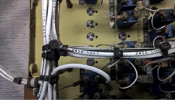
You'd think an owner would want a copy of the service manual, but sadly that does not seem to be the case for most. A good avionics shop will also mark the wires (those are usually the only ones that change).All of the OEM wiring IS marked, and wiring diagrams are in the service manual. But as you say, the owner usually won't have that manual.
View attachment 145621
Sometimes the wire bundles have to be untied and separated to find the markings. It can be a lot of work.
I am a first time aircraft owner for 7 years now.You'd think an owner would want a copy of the service manual, but sadly that does not seem to be the case for most. A good avionics shop will also mark the wires (those are usually the only ones that change).

When I bought my RV-8 (I was the third owner), every single inspection plate and fairing screw was hogged out. Some of them I best advice I have gotten was from an A&P who said to never use a power driver to tighten screws.There are some pilots with screwdrivers, known by mechanics as the most dangerous things around an airplane. They overtighten everything, ruining the hardware and sometimes damaging the surfaces. And that's just ordinary screws. Imagine them fooling with wires and wire bundles or vacuum hoses and getting them displaced so that the flight controls foul in them.

If you are so inclined, the 172N POH, Parts, and MX manuals are also available as PDFs.I am a first time aircraft owner for 7 years now.
I made sure I got the service manual for my plane when I bought it from my friend. At first he wanted to keep it but I insisted that it was part of the deal.
...
Luckily I can still safely service my 172 using the service manual if you can read and comprehend.
The pages are worn and dirty, just like I like them.
I find it a little odd and a bit unsettling that many pilots don't make efforts to learn what's going on under the cowl and panel. It's not particularly difficult to gain an understanding of a single engine aircraft's operation principles, and knowledge of those systems could prove critical when something is making preparations to roll over and die.But how many owners have a clue as to what they're looking at? Many---maybe most---don't know what the stuff under the panel does.
There are some pilots with screwdrivers, known by mechanics as the most dangerous things around an airplane. They overtighten everything, ruining the hardware and sometimes damaging the surfaces. And that's just ordinary screws. Imagine them fooling with wires and wire bundles or vacuum hoses and getting them displaced so that the flight controls foul in them.
I used to get some of my students to lay on the cockpit floor (when I had the seats out) and look up under a 172's panel. They were shocked at the amount of stuff under there. None of it made much sense to them.

Another POV. My contactor started acting up, and it turned out to be a bad battery. New battery, all the problems went away.Are these things either they are working or they are not, or, is there a degradation (intermittent failure) over time?
I found its been a growing trend among Part 91 owners the past 20 years which I especially noted with my last owner assist clients. I think the main driver has been a loss of mechanical ability, need, and understanding simply due to things in general dont break anymore so the same mindset is applied to their legacy aircraft. However, when compared to any other form of transportation its become the norm as well. For example, people wait for their car to tell when to change oil or dont look under the hood until the engine service light is on.I find it a little odd and a bit unsettling that many pilots don't make efforts to learn what's going on under the cowl and panel.
Another POV. My contactor started acting up, and it turned out to be a bad battery. New battery, all the problems went away.
Bonus: I have the service manual for my plane (182 P) that wife and I bought last year. Agree 100% that it pays to dig into it. For example, only last year did I find out there was even a thing called a solenoid contactor / master relay. Couldn't figure out what the diode was doing there, and and today I found out. Learn something new every day.
I think every pilot should be comfortable with removing a cowling and performing a basic inspection of the engine and accessories, and do so regularly. An occasional look under the panel for abraded wiring and other obvious issues doesn't require an A&P level of knowledge.
Just arrived yesterday. Serendipity, karma, or what?Another POV. My contactor started acting up, and it turned out to be a bad battery. New battery, all the problems went away.
Bonus: I have the service manual for my plane (182 P) that wife and I bought last year. Agree 100% that it pays to dig into it. For example, only last year did I find out there was even a thing called a solenoid contactor / master relay. Couldn't figure out what the diode was doing there, and and today I found out. Learn something new every day.
As for my electrical problem, in a way this is a blessing in disguise as it is forcing to learn about the system...

Meh, every opinion in moderation.When I bought my RV-8 (I was the third owner), every single inspection plate and fairing screw was hogged out. Some of them I best advice I have gotten was from an A&P who said to never use a power driver to tighten screws.
Meh, every opinion in moderation.
I start screws by hand to avoid cross threading. I use a JIS #2 Phillips bit in a power driver with the clutch set very low to drive them. I tighten them to spec with a JIS #2 Phillips screwdriver. I have a few bags of every needed screw size, and replace any fastener that starts to look less than “like new” which is an exception to my mantra of owning a Go Plane vice a Show Plane.
And still good advice. The main issues I ran across were a number of owners only a had a cordless drill (vs driver), used worn screwdriver bits, and the use of excessive speed which would gall nutplate threads. Easy money for me to fix in most cases. Regardless, outside of certain helicopters and cabin class airplanes with large removable panels, never found the need to use a power driver over a good speed handle even for removals on small Cessna or Piper singles.Some of them I best advice I have gotten was from an A&P who said to never use a power driver to tighten screws.
100% the right mindset.
When you are happy with your electrical system, start learning the other systems. Fuel, oil, ignition, pitot/static, flight controls, engine controls, etc. Do all annuals as owner assist, and ask your A&P to let you do as much as possible under supervision.
You will be a much more confident pilot, and your aircraft will be safer.

I'm in the same boat. Had you asked me in 2018 if I'd have my head under the panel, I would have said no way, there be dragons.I am a first time aircraft owner for 7 years now...

I am sure I have stripped a few nutplates along the way, but you gotta start somewhere. To be fair, I've also seen hamfisted stuff done by techs that should have known better. There are shops who went the extra mile and caught things that saved my bacon, and there are shops who overlooked things or actively dorked things up. Nobody's perfect; only the trend line matters.But how many owners have a clue as to what they're looking at? Many---maybe most---don't know what the stuff under the panel does.
There are some pilots with screwdrivers, known by mechanics as the most dangerous things around an airplane. They overtighten everything, ruining the hardware and sometimes damaging the surfaces. And that's just ordinary screws. Imagine them fooling with wires and wire bundles or vacuum hoses and getting them displaced so that the flight controls foul in them.


