I have a question about overhauling a lycoming engine. Why does it cost so freaking much... my lawn mower engine is the same size almost and cost $60,000 less. Help me understand why these engines cost as much as a small house. Price gouging? Corporate greed?

You are using an out of date browser. It may not display this or other websites correctly.
You should upgrade or use an alternative browser.
You should upgrade or use an alternative browser.
Lycoming cost
- Thread starter dp342b
- Start date
Let’s look at it this way.
The Cessna 172 is the most produced aircraft of all time with approximately
44,000 built over a 70 year period. There were at last six different engines
used in the various models. So we pretty much have hand made engines.
One attempt to utilize higher production rates resulted in the Lycoming
O-320 H2AD having difficult birthing issues. There is virtually no
interchangeable of engine parts. The same is true of accessories. It really goes so far that Lycoming general uses coarse threads and Continental uses fine. Each model requires Service Data and parts inventory as well as essential approvals.
Many years ago many aircraft used the A-65 Continental. Today nearly every
aircraft has a different engine model.

Daleandee
Final Approach
- Joined
- Mar 4, 2020
- Messages
- 8,354
- Display Name
- Dale Andee
I have a question about overhauling a lycoming engine. Why does it cost so freaking much... my lawn mower engine is the same size almost and cost $60,000 less.
Because your lawn mower don't fly ...


- Joined
- Jun 13, 2008
- Messages
- 9,173
- Location
- Marietta, GA
- Display Name
- Drake the Outlaw
- Home Airfield
- Cartersville, GA
Small production runs, specialty producers, paperwork, liability.I have a question about overhauling a lycoming engine. Why does it cost so freaking much... my lawn mower engine is the same size almost and cost $60,000 less. Help me understand why these engines cost as much as a small house. Price gouging? Corporate greed?
Build 50,000 O-320 D2J's a year and they cost $10K ea.

Everyone accuses aircraft engines of being lawnmower engines, but that just tells me they've never been inside one. They are simple, but the engineering required to get them to the level of reliability and light weight is not. I overhauled my own engine, and looking at the parts reminded me of seeing Saturn V parts...as in how did guys with slide rules and manual machine tools build this stuff in the 60's?
this post from my overhaul thread is one of my favorite illustrations:
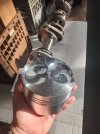
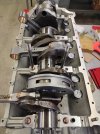
....those rods survive 2000 hours of slinging a 5 lb piston back & forth 90 times per second. There is not a wasted gram on them. The rod bolt heads have to be angled because there is so little clearance in the crankcase. Here's a view down my dipstick tube.... look how tight it is in there;
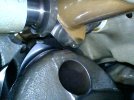
The simple answer to your question though, is labor costs. About half the cost of the overhaul is labor. These things, as said above, are hand built, and it takes time. The parts are expensive because they also require large amounts of hand finishing and inspecting. Cost of human labor is exponentially higher than it was in the 60's. Same reason a new Archer is $350,000.
I do think lycoming is gouging a bit, but the demand way outstrips their ability to produce, and in that environment you'd be a fool not to raise your prices to what the market will bear. You could argue they they should then increase capacity, but if you were in their shoes, looking at the current uncertainty around avgas.... would you? Or would you raise prices, stack cash while you can, and wait to see what happens?
this post from my overhaul thread is one of my favorite illustrations:

Spent an hour looking for this corkstuffer. It was in the bag with its 8130 in the "I'll deal with the paperwork later" stack.
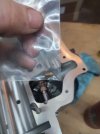
Especially considering the piston, pin, and rings add up to about 5lbs
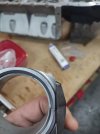
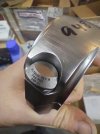
I thought the end cap looked way thin but that it was an optical illusion from the pic. Although that crank is swinging a big weight around, at least it’s low RPM, so that makes sense. Cool stuff, thanks for sharing your time with us.
Especially considering the piston, pin, and rings add up to about 5lbs
In the "big" shop...Also, who do we contact to get a tour of Jim’s GarageHangarFarm?

....those rods survive 2000 hours of slinging a 5 lb piston back & forth 90 times per second. There is not a wasted gram on them. The rod bolt heads have to be angled because there is so little clearance in the crankcase. Here's a view down my dipstick tube.... look how tight it is in there;
The simple answer to your question though, is labor costs. About half the cost of the overhaul is labor. These things, as said above, are hand built, and it takes time. The parts are expensive because they also require large amounts of hand finishing and inspecting. Cost of human labor is exponentially higher than it was in the 60's. Same reason a new Archer is $350,000.
I do think lycoming is gouging a bit, but the demand way outstrips their ability to produce, and in that environment you'd be a fool not to raise your prices to what the market will bear. You could argue they they should then increase capacity, but if you were in their shoes, looking at the current uncertainty around avgas.... would you? Or would you raise prices, stack cash while you can, and wait to see what happens?
Market and supply issues. However, if you track the cost increases over the past 25 years you'll find there is no one cause. For example, the loss of half the available engine shops in the 90s and the overall limited or declining market in general are a couple reasons for the cost increases. Even location can influence your overhaul labor costs which can greatly affect your bottomline.Help me understand why these engines cost as much as a small house. Price gouging? Corporate greed?
But its been in the past 5-7 years that you saw the largest increases mainly due to supply chain issues in my experience especially when you see engine core costs quadruple in value. Regardless, there's zero comparison to your lawnmower, or vehicle, whatever other engine you want as at the manufacturing level where all this starts is very unique to aviation.
Exactly. My biggest "lawn mower" is my 15' bat wing behind my 4440. It's a 6.6L making ~160hp. My airplane is a 8.8L making 300hp, which coincidently is about the same HP and displacement as my big farm tractors (the tractors do make more torque though).How big is your lawn mower??
My actual lawnmower is 0.7L and makes 25hp. I've overhauled it too, and I can tell you it's a helluva lot less impressive inside than my Lycoming.

- Joined
- Aug 9, 2022
- Messages
- 1,171
- Location
- Surrounded by Civil War ghosts
- Display Name
- Probably AI
- Home Airfield
- KHWY
The cost of having Ly-Con overhaul my Lycoming O-360 was certainly a tough pill to swallow. My view, however, is that they are diminishing breed of artisans who are spending a considerable amount of time and attention to renewing an antique engine on which I'm trusting my life. That isn't cheap.
bonefishpete
Cleared for Takeoff
- Joined
- Nov 10, 2024
- Messages
- 1,360
- Display Name
- Bonefishpete
I remember a time when we were told we’d all be flying behind a fuel injected diesel engine.
ateamer
En-Route
- Joined
- Dec 19, 2007
- Messages
- 2,981
- Location
- Port St. Lucie, FL
- Display Name
- ateamer
- Home Airfield
- FD88
You mower is running 360 cubes?I have a question about overhauling a lycoming engine. Why does it cost so freaking much... my lawn mower engine is the same size almost and cost $60,000 less. Help me understand why these engines cost as much as a small house. Price gouging? Corporate greed?


- Joined
- Dec 5, 2010
- Messages
- 6,581
- Display Name
- GeorgeC
Where can I get a small house for $60k?I have a question about overhauling a lycoming engine. Why does it cost so freaking much... my lawn mower engine is the same size almost and cost $60,000 less. Help me understand why these engines cost as much as a small house. Price gouging? Corporate greed?

Half Fast
Touchdown! Greaser!
- Joined
- May 7, 2016
- Messages
- 21,187
- Location
- Central Florida
- Display Name
- Half Fast
- Home Airfield
- KGIF
I have a question about overhauling a lycoming engine. Why does it cost so freaking much... my lawn mower engine is the same size almost and cost $60,000 less. Help me understand why these engines cost as much as a small house. Price gouging? Corporate greed?
What's the airspeed of your lawnmower in cruise?
You're comparing apples and kumquats. Your mower engine doesn't require all the certs, PMAs, maintenance docs and records, part traceability, etc., etc., as an aircraft engine. It's built in much greater quantities. It doesn't require a federally-issued licensed mechanic for maintenance and overhaul. It doesn't have to haul people through the sky safely. It doesn't have to do in-air restarts. It doesn't have redundant ignitions. Attorneys don't sue Briggs & Stratton for millions because a lawnmower fell out of the sky and crashed into a schoolyard. And on and on and on and on.....
Detroit?Where can I get a small house for $60k?
Half Fast
Touchdown! Greaser!
- Joined
- May 7, 2016
- Messages
- 21,187
- Location
- Central Florida
- Display Name
- Half Fast
- Home Airfield
- KGIF
Where can I get a small house for $60k?
Probably not from Lycoming.....
Half Fast
Touchdown! Greaser!
- Joined
- May 7, 2016
- Messages
- 21,187
- Location
- Central Florida
- Display Name
- Half Fast
- Home Airfield
- KGIF
Detroit?
Tehran?
Daleandee
Final Approach
- Joined
- Mar 4, 2020
- Messages
- 8,354
- Display Name
- Dale Andee
Tehran?
Might be difficult to get insurance ...
Half Fast
Touchdown! Greaser!
- Joined
- May 7, 2016
- Messages
- 21,187
- Location
- Central Florida
- Display Name
- Half Fast
- Home Airfield
- KGIF
Might be difficult to get insurance ...
Maybe. Of course, many policies have exemptions for acts of war...
Daleandee
Final Approach
- Joined
- Mar 4, 2020
- Messages
- 8,354
- Display Name
- Dale Andee
Maybe. Of course, many policies have exemptions for acts of war...
Does that cover the ones currently in progress?


Half Fast
Touchdown! Greaser!
- Joined
- May 7, 2016
- Messages
- 21,187
- Location
- Central Florida
- Display Name
- Half Fast
- Home Airfield
- KGIF
Does that cover the ones currently in progress?
Well, either way, I imagine that getting a mortgage could be challenging....
A single lawnmower engine can explode and nearly nobody cares. Might take several hundred engine explosions of the same engine model before anybody starts to notice.
Lawnmower engines are made in mass where margins are much lower per-unit.
Lawnmowers engines do not have a target TBO and chances are good the thing's deck or other parts will rust-out before the engine needs replacement. When this happens, owners put the thing out for trash collection.
Lawnmower engines can blow blue smoke from owner abuse / neglect and only the tree-huggers care.
It is super rare for a lawnmower to need new parts 50+ years after manufacture. In fairness though, manufacturers of plane engines also publish TBO in date form (a decade or so), but few people pay attention to this date.
Lawnmower manufacturers do not get pulled into litigation when the lawnmower's engine dies and it falls out of the sky. Lawnmower manufacturers also do not get pulled into litigation when the owner runs over the neighbor's plants, or when the owner neglects maintenance and it crashes into the neighbor's house.
Mtns2Skies
Final Approach
- Joined
- Jul 12, 2008
- Messages
- 5,748
- Display Name
- Mtns2Skies
Idk, the supply is going down...Tehran?

RyanShort1
Final Approach
- Joined
- Feb 18, 2010
- Messages
- 6,480
- Location
- Dallas, Texas
- Display Name
- RyanShort1
- Home Airfield
- KRBD
Liability is a big part of it, too.

Half Fast
Touchdown! Greaser!
- Joined
- May 7, 2016
- Messages
- 21,187
- Location
- Central Florida
- Display Name
- Half Fast
- Home Airfield
- KGIF
How much would the overhaul be if the engine was going into an air boat?
I hope you're not suggesting that he surreptitiously take his engine to an airboat shop for OH and then reinstall it in his airplane. I would be shocked, shocked I tell you, to learn that any pilot has ever considered such a thing.

Ed Haywood
Final Approach
How much would the overhaul be if the engine was going into an air boat?

The same for an E/AB. But you'll find more airboats use V8s and V6s now as the airplane parts market dried up years ago. Airboats were also partly behind AC 21-62 and the FAA SUP program due several unprincipled airboat shops finding a better return on selling their wares back to aircraft owners.How much would the overhaul be if the engine was going into an air boat?
Half Fast
Touchdown! Greaser!
- Joined
- May 7, 2016
- Messages
- 21,187
- Location
- Central Florida
- Display Name
- Half Fast
- Home Airfield
- KGIF
But you'll find more airboats use V8s and V6s now as the airplane parts market dried up years ago.
Maybe a regional thing? All the ones I see here in central Florida, and there are plenty (including the three my neighbors has), have aircraft engines. I seem to see more Continentals than Lycomings.
- Joined
- Jun 13, 2008
- Messages
- 9,173
- Location
- Marietta, GA
- Display Name
- Drake the Outlaw
- Home Airfield
- Cartersville, GA
Far, far less because those guys will use cases, cranks, rods, and the like that have been red tagged as unusable for aviation purposes. You could probably put together a running engine for $10-15K which includes new bearings and seals, but everything else would be "cleaned up" by your local old school auto machine shop. And labor? Labor to build an engine is probably 50 hours including taking it to the machine shop, so not a crazy expense. Of course, that engine wouldn't have much of a warranty and you'd never want to fly behind it...How much would the overhaul be if the engine was going into an air boat?
Only in certain parts of FL. It was basically ground zero of the industry at one time, but it was also the place which caused most of the problems for others. All the owners/operators I assisted along the northern Gulf switched to car motors years ago with a few still aircraft based. But the dozen I saw last hunting season were all V8s.Maybe a regional thing?

pfarber
Pattern Altitude
- Joined
- Jun 20, 2021
- Messages
- 1,653
- Display Name
- pfarber
lol wut?I overhauled my own engine, and looking at the parts reminded me of seeing Saturn V parts
Most parts are sand cast, low quality and laughable tolerances which is why they require extensive machining.. Even the cranks and cam are cast, not forged. New limits on airplane engines are hilariously large (for reasons, but not to save money). The only reasons they cost so much are already listed: low volume, paperwork, liability. You can get a forged and or billet CNC milled crank for less than $4k. There is no reason a lycosaur crank should cost $15k+ other than paperwork.
Was the Saturn V you mentioned made of LEGO's? Or propaganda from the DPRK?
Also many parts, even on a new, $60k motor are not new. If someone trades in a motor with a case/crank/parts that meets new specs, it can and will be legally used in a zero time engine... even if the parts are on their second or third re-use.

Doc Holliday
En-Route
Lycoming cranks and cams are forged.Most parts are sand cast, low quality and laughable tolerances which is why they require extensive machining.. Even the cranks and cam are cast, not forged.
Have you EVER actually worked on one of these engines outside of VoTech training?
Last edited:
lol wut?
Most parts are sand cast, low quality and laughable tolerances which is why they require extensive machining.. Even the cranks and cam are cast, not forged. New limits on airplane engines are hilariously large (for reasons, but not to save money). The only reasons they cost so much are already listed: low volume, paperwork, liability. You can get a forged and or billet CNC milled crank for less than $4k. There is no reason a lycosaur crank should cost $15k+ other than paperwork.
Was the Saturn V you mentioned made of LEGO's? Or propaganda from the DPRK?
Also many parts, even on a new, $60k motor are not new. If someone trades in a motor with a case/crank/parts that meets new specs, it can and will be legally used in a zero time engine... even if the parts are on their second or third re-use.
"lawnmower parts"

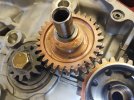
One of these days you might get it right. But there are two types of factory zero-time engines: a NEW engine where everything is new, and a REBUILT engine where used parts are permitted provided, they meet NEW specifications. Your lack of aviation mechanical knowledge continues to amaze me.Also many parts, even on a new, $60k motor are not new. If someone trades in a motor with a case/crank/parts that meets new specs, it can and will be legally used in a zero time engine
- Joined
- Jun 13, 2008
- Messages
- 9,173
- Location
- Marietta, GA
- Display Name
- Drake the Outlaw
- Home Airfield
- Cartersville, GA
Lycoming differentiates between a "new" engine and a "zero time" reman. Buy a new engine, get all new parts. Buy a "Zero time" overhaul and maybe get all new, maybe get a bunch of used/in-spec. There is a difference.Also many parts, even on a new, $60k motor are not new. If someone trades in a motor with a case/crank/parts that meets new specs, it can and will be legally used in a zero time engine... even if the parts are on their second or third re-use.
pfarber
Pattern Altitude
- Joined
- Jun 20, 2021
- Messages
- 1,653
- Display Name
- pfarber
Have you actually sat in a A350 cockpit yet?Lycoming cranks and cams are forged.
Have you actually EVER worked on one of these engines outside of VoTech training?
VAR cranks are start as a casting. I think you need to read up on how forged parts are made. They start as a casting... or do you think they use metal in its molten form? Minor nit to pick but the statement is still true: they are cast. I can use some MS Paint drawings if that would help visualize the process.
I've been knee deep in quite a few motors. Even if I showed a logbook.photos.workorders you still wouldn't believe me so why bother? Not sure why some people think they are the gatekeepers.
Also ROTAX cranks are cast FWIW.

Dan Thomas
Touchdown! Greaser!
- Joined
- Jun 16, 2008
- Messages
- 12,389
- Display Name
- Dan Thomas
Lycoming has THREE engine classifications.
A new engine is just that. All new parts that all meet new specifications and tolerances.
A "rebuilt" engine is a used engine rebuilt to new engine specs and tolerances.
An "overhauled" engine is a used engine overhauled to within service limits.
Lycoming does all three, but they also say this:
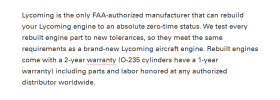
Your independent engine shop cannot legally call their engines "rebuilt" because of that. They're just overhaulers.
Here's an excerpt from the Lyc overhaul manual:
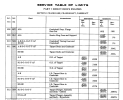
For instance, for the A-B engines, the tappet body outside diameter, when new, is between .6232" and .6240". A tappet being reused cannot be smaller than .6229" (the service limit). The rebuilt engine's tappets will be within the new specs (and most likely Lycoming will just use new tappets) and an overhauled engine can have the tappets worn as small as .6229".
So, a used .6229" OD tappet is as much as .0011" smaller than the largest new tappet. Sounds bad? Consider that a human hair is about .003" in diameter, nearly three times that .0011" difference. We are talking very small tolerances here. It's .0003" smaller than the smallest new tappet, a tolerance ten times smaller than that human hair.
I bought a lot of Lycoming overhauled engines. Most of them had recycled cases, some had recycled cranks and rods. Everything else was new. Everything they use gets NDI, Non-Destructive Inspection, of various types including eddy current, magnaflux, dye-penetrant and so on. Even new parts get the NDI< since one has to catch voids (bubbles in castings) and cold shuts (where the aluminum flowing into the mold gets bit too cool and when the leading edges meet at the far end of the mold, they fail to fuse together completely. The casting looks good but is weak. Eddy current catches that, since that poor joint won't carry the eddy current properly across the unfused area and an anomaly in the generated magnetic field triggers the eddy current failure detector.
Once in a while we received a zero-time rebuilt engine rather than the overhauled we asked for. They were probably short of serviceable cores for overhaul. I even got a brand-new engine once, for overhauled price. No useable cores at all, probably.
A new engine is just that. All new parts that all meet new specifications and tolerances.
A "rebuilt" engine is a used engine rebuilt to new engine specs and tolerances.
An "overhauled" engine is a used engine overhauled to within service limits.
Lycoming does all three, but they also say this:
Your independent engine shop cannot legally call their engines "rebuilt" because of that. They're just overhaulers.
Here's an excerpt from the Lyc overhaul manual:
For instance, for the A-B engines, the tappet body outside diameter, when new, is between .6232" and .6240". A tappet being reused cannot be smaller than .6229" (the service limit). The rebuilt engine's tappets will be within the new specs (and most likely Lycoming will just use new tappets) and an overhauled engine can have the tappets worn as small as .6229".
So, a used .6229" OD tappet is as much as .0011" smaller than the largest new tappet. Sounds bad? Consider that a human hair is about .003" in diameter, nearly three times that .0011" difference. We are talking very small tolerances here. It's .0003" smaller than the smallest new tappet, a tolerance ten times smaller than that human hair.
I bought a lot of Lycoming overhauled engines. Most of them had recycled cases, some had recycled cranks and rods. Everything else was new. Everything they use gets NDI, Non-Destructive Inspection, of various types including eddy current, magnaflux, dye-penetrant and so on. Even new parts get the NDI< since one has to catch voids (bubbles in castings) and cold shuts (where the aluminum flowing into the mold gets bit too cool and when the leading edges meet at the far end of the mold, they fail to fuse together completely. The casting looks good but is weak. Eddy current catches that, since that poor joint won't carry the eddy current properly across the unfused area and an anomaly in the generated magnetic field triggers the eddy current failure detector.
Once in a while we received a zero-time rebuilt engine rather than the overhauled we asked for. They were probably short of serviceable cores for overhaul. I even got a brand-new engine once, for overhauled price. No useable cores at all, probably.
Last edited: