Light Plane Down, 2 Dead at KEIK, 10/19/2025

Crashnburn

Pattern Altitude
Joined
Aug 8, 2018
Messages
1,971
Location
Erie, CO
Display Name
Crashnburn
Home Airfield
KLMO
Details are really sketchy. None of the reports I've seen have identified the A/C type, nor the now deceased occupants. There were strong westerly crosswinds, and the plane crashed well east of the runway. The two occupants were not Colorado residents.

They might have survived if they had known about the crosswind runway, which is not part of the national airspace system

Update:
Here's a link to the crash report.

They got the runways wrong; They are 16/34.
 
Last edited:
Do to the low wing loading, I understand that LSAs can be very unforgiving in gusts.
 
They might have survived if they had known about the crosswind runway, which is not part of the national airspace system
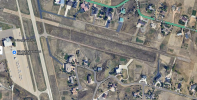
It’s in very rough shape, partially marked with big yellow X’s and at least a remnant section of it is marked with x’s on the chart supplement and approach chart inset as well.

Any port in a storm and all, but that goes a little farther than “not part of the NAS.”
 
Do to the low wing loading, I understand that LSAs can be very unforgiving in gusts.
10 knots crosswind, while making for interesting landings, should not be a terrible problem for an LSA….. but ultimately no crosswinds are the same.

Btw that thing can go pretty fast … max cruise speed around 220 mph.
 
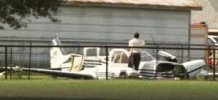
Looking at the plane, I am surprised it was not a survivable accident.
 
It’s in very rough shape, partially marked with big yellow X’s and at least a remnant section of it is marked with x’s on the chart supplement and approach chart inset as well.

Any port in a storm and all, but that goes a little farther than “not part of the NAS.”
Yeah, maybe the condition is better than how this photo makes it look, but unless I were desperate I don't think I'd consider this a usable landing strip. The more you zoom in on Google Maps, the worse it looks. But part of that runway and its similarly-derelict-looking taxiway are the connectors to the homes/hangars in that part of the airpark, so ‍<shrug>.
1761137309724.png
 
Yeah, maybe the condition is better than how this photo makes it look, but unless I were desperate I don't think I'd consider this a usable landing strip. The more you zoom in on Google Maps, the worse it looks. But part of that runway and its similarly-derelict-looking taxiway are the connectors to the homes/hangars in that part of the airpark, so ‍<shrug>.
View attachment 146441
Right, I just wanted to make clear to the budding pilot(s) in here that instead of landing on a dubious, marked-closed, “secret” runway, a better option for pilots and planes to handle an unmanageable crosswind is to divert to a more suitable airport.
 
It’s in very rough shape, partially marked with big yellow X’s and at least a remnant section of it is marked with x’s on the chart supplement and approach chart inset as well.

Any port in a storm and all, but that goes a little farther than “not part of the NAS.”
I'm based at KEIK. The crossing runway is essentially gone, I suppose you could try to land on it in an emergency but it would be a very rough ride, with unkempt grass covering most of whatever is left of the crumbling surface.

My understanding based on talking to someone who was there around the time the accident occurred is that it was a stall-spin after a go-around. I think there are security cameras that captured the accident.

I was getting ready to land at KEIK about 20-30 minutes after the accident. I diverted to KLMO after seeing all the emergency vehicles (field wasn't NOTAM closed until a short while later) but winds were 11G32 when I got the weather, so the winds picked up pretty dramatically out of the west so it wouldn't surprise me at all if they encountered a stronger gust than what the METARs from the time are reporting.
 
"The aircraft was reportedly part of Odyssey Pilot Hours fleet.
https://odysseypilothours.com/"

"Sixth touch and go attempt"

7G15 quartering should be within the comfort zone of most reasonably competent pilots. But put new pilots trying to rack up max hours in a hot and squirrelly airplane, and maybe not.

Still, runway excursion or go around should not be a fatal event. Was there a stall spin or impact with structure involved?
 
Do to the low wing loading, I understand that LSAs can be very unforgiving in gusts.
That's generally true, which accounts for the high landing accident numbers for modern LSAs. But it just means a higher required skill level than something heavier. I personally will not sign off on an LSA checkout until we have dealt with crosswinds. They don't have to be crazy, but they have to be strong enough to make it a learning challenge for the pilot.

If it was an Odyssey airplane, since they are based in the Denver area, crosswinds should not be a surprise.
 
Oddly enough, I'm not finding Light Sports trending more towards wind-related accidents.

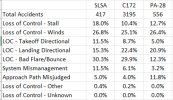
This compares some common accident aspects between Special Light Sports, Cessna 172s, and PA-28s (through the PA-28-181)

[Edit: These are the percentage of pilot miscontrol accidents, not the percentage of total accidents. For the most part, about 2/3ds of all accidents are pilot miscontrol.]

1761146862139.png
They cover different time periods, so don't go by the number of accidents. Also, more than one event can occur for each accident.

Loss of Control due to winds is about the same across the board. Loss of control during landings are actually less. More takeoff LOC, more stalls.

Higher in stalls, higher in system mismanagement (mostly improper use of brakes or failure to latch the canopy).

But as had been mentioned, the accident aircraft was not an LSA...at least, not at the time of the accident. Cruise speed was too high. They actually call it the "World's fastest UL aircrafts" (sic).

Ron Wanttaja
 
Last edited:
They did a lot more than 6 TnGs. ADSB looks like they were pretty solid patterns in a crosswind. Unfortunate whatever happened.
 
Oddly enough, I'm not finding Light Sports trending more towards wind-related accidents.

This compares some common accident aspects between Special Light Sports, Cessna 172s, and PA-28s (through the PA-28-181)
View attachment 146448
They cover different time periods, so don't go by the number of accidents. Also, more than one event can occur for each accident.

Loss of Control due to winds is about the same across the board. Loss of control during landings are actually less. More takeoff LOC, more stalls.

Higher in stalls, higher in system mismanagement (mostly improper use of brakes or failure to latch the canopy).

But as had been mentioned, the accident aircraft was not an LSA...at least, not at the time of the accident. Cruise speed was too high. They actually call it the "World's fastest UL aircrafts" (sic).

Ron Wanttaja
Interesting. I only have 56h in an LSA, and I would have expected winds to be a bigger problem for them.
Frankly, I'm surprised to see stalls so much higher on an SLSA given the unusually low speeds most of them stall at.

As always, thanks for the data!
 
Oddly enough, I'm not finding Light Sports trending more towards wind-related accidents.

This compares some common accident aspects between Special Light Sports, Cessna 172s, and PA-28s (through the PA-28-181)
View attachment 146448
They cover different time periods, so don't go by the number of accidents. Also, more than one event can occur for each accident.

Loss of Control due to winds is about the same across the board. Loss of control during landings are actually less. More takeoff LOC, more stalls.

Higher in stalls, higher in system mismanagement (mostly improper use of brakes or failure to latch the canopy).

But as had been mentioned, the accident aircraft was not an LSA...at least, not at the time of the accident. Cruise speed was too high. They actually call it the "World's fastest UL aircrafts" (sic).

Ron Wanttaja
Unless, of course, they tend to fly in less challenging winds.
 
Are there a lot of these odyssey type hour building options? Seems like it could build apathy quickly and crew rest issues for the unprepared.
 
Curious - Do you have any comparitive wind LOC related data with any models of common tailwheel aircraft?
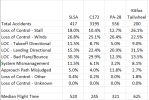
Not of production aircraft. I ran my homebuilt accident database to extract the tailwheel Kitfox accidents....

[Edit: These are the percentage of pilot miscontrol accidents, not the percentage of total accidents. For the most part, about 2/3ds of all accidents are pilot miscontrol.]
1761156868993.png
Higher percentage of landing directional Loss of Control accidents, as I think one would expect.

I've also added the median flight time to the mix. Interesting that the SLSA time is double that of the 172, and quite a bit higher than the PA-28s. This might be reflecting instructors being onboard at the time of the accidents.

Ron Wanttaja
 
Last edited:
Throwing some kerosene on the fire, here, let me point out that the "heavy" trainer (more resistant to winds) is a modern aberration. Until the Cessna 150 came along, most trainers qualified under the previous light sport criteria.

Ron Wanttaja
 
Not of production aircraft. I ran my homebuilt accident database to extract the tailwheel Kitfox accidents....

Higher percentage of landing directional Loss of Control accidents, as I think one would expect.

I've also added the median flight time to the mix. Interesting that the SLSA time is double that of the 172, and quite a bit higher than the PA-28s. This might be reflecting instructors being onboard at the time of the accidents.


The Kitfox is close enough for a comparsion that includes a tail-dragger. I expected more LOC landing incidents than the stats show, especially following a bounce. Interesting stuff... thanks!
 
Not of production aircraft. I ran my homebuilt accident database to extract the tailwheel Kitfox accidents....
View attachment 146458
I should point out that the percentages are the percentage of total Pilot Miscontrol accidents...not the percentages of the total accidents. Pilot Miscontrol runs about 2/3rd of the accidents, in most of these cases.

Ron Wanttaja
 
Lower power?
I do kinda have to wonder. 75% of the SLSA accident aircraft have Rotax engines, mostly 912s. My past studies have shown they are about as reliable as O-200s. While I have zero personal experience with 912s, I'm now based at an airport that uses RV-12s as trainers. I've heard some odd clashing noises from these engines. Are there conditions where ramming the throttle forward doesn't produce power as quickly as traditional engines?

Ron Wanttaja
 
Checked it out and the program requires 5 hours a day flight time minimum for rental.
My opinion is that 1500 ATP rule was ill advised.
Yeah, this seems to be a "race to 1500" while completely missing the point that you're supposed to get a wide variety of experience along the way. I suppose their model gets a lot of simulated instrument in the logbook, since that's how that's how they're getting two people to log PIC simultaneously. Perhaps that's valuable, although doubtless fatiguing for those under the hood. Perhaps if it's a lot of long cross-country flights to various locations?
 
I do kinda have to wonder. 75% of the SLSA accident aircraft have Rotax engines, mostly 912s. My past studies have shown they are about as reliable as O-200s. While I have zero personal experience with 912s, I'm now based at an airport that uses RV-12s as trainers. I've heard some odd clashing noises from these engines. Are there conditions where ramming the throttle forward doesn't produce power as quickly as traditional engines?

Ron Wanttaja
“Ramming” the throttle is ill-advised with any engine. Smooth application of power is the way to go. The Rotax 912, both carbureted and injected, do just fine with go-arounds. If anything, they have power to spare.

Not sure about the “loud clashing” noises, although 5500-5800 RPM definitely sounds different than what you will hear from any Lycoming or Continental.
 
I do kinda have to wonder. 75% of the SLSA accident aircraft have Rotax engines, mostly 912s. My past studies have shown they are about as reliable as O-200s. While I have zero personal experience with 912s, I'm now based at an airport that uses RV-12s as trainers. I've heard some odd clashing noises from these engines. Are there conditions where ramming the throttle forward doesn't produce power as quickly as traditional engines?

Ron Wanttaja
I would expect Rotax installations for LSA planes to be around 90% or higher for the whole fleet …
I have 600+ hours behind various Rotax engines and I do not ram the throttle, not because of any immediate issues ( I can ram the throttle just fine and get the full power instantly ) but because I am paying for all annuals on my engine and I want to keep my costs to minimum over time as much as possible :)
Also I am not familiar with any clashing noises … I am so used to gentle and quiet Rotax engines, when I hear legacy engines start, they sound to me like a loosely packed collection of parts about to violently explode but I guess I am biased …
 
I do kinda have to wonder. 75% of the SLSA accident aircraft have Rotax engines, mostly 912s. My past studies have shown they are about as reliable as O-200s. While I have zero personal experience with 912s, I'm now based at an airport that uses RV-12s as trainers. I've heard some odd clashing noises from these engines. Are there conditions where ramming the throttle forward doesn't produce power as quickly as traditional engines?

Ron Wanttaja
I believe some (all? most?) Cubs with Continental engines didn't have an accelerator pump. So pushing the throttle forward too quickly will cause an engine to stumble, possibly stall. Since that's what I learned in, I never jam a throttle in quickly, it's just a smooth forward motion.
 
I would expect Rotax installations for LSA planes to be around 90% or higher for the whole fleet …

Also I am not familiar with any clashing noises … I am so used to gentle and quiet Rotax engines, when I hear legacy engines start, they sound to me like a loosely packed collection of parts about to violently explode but I guess I am biased …
Yeah, like I said, I've never flown in a 912-powered aircraft. My comment about clashing came from one observation at my new home field...An RV-12 had just turned off the runway after landing and was heading down the taxiway. Heard a strange clashing noise, sounding for all the world like a bunch of gears rattling back and forth. Lasted a second or two. Haven't heard it since, on any the RV-12 trainers at my field. Wonder if the student hit the starter button with the engine already turning.

Ron Wanttaja
 
I would expect Rotax installations for LSA planes to be around 90% or higher for the whole fleet …
I ran the numbers for the January 2025 FAA registry of SLSA airplanes.

Rotax/Bombardier have about 74%. Continental has 14%, Jabiru 4%, Titan 2%, Lycoming 0.7%, and the rest are distributed to a variety of types.

Ron Wanttaja
 
I ran the numbers for the January 2025 FAA registry of SLSA airplanes.

Rotax/Bombardier have about 74%. Continental has 14%, Jabirypeu 4%, Titan 2%, Lycoming 0.7%, and the rest are distributed to a variety of types.

Ron Wanttaja
How do those numbers track with installations? Not that I expect you to have that data, but it begs the question, are these numbers just indicative of their prevalence? Or is there an over-index of a type?
 
How do those numbers track with installations? Not that I expect you to have that data, but it begs the question, are these numbers just indicative of their prevalence? Or is there an over-index of a type?
This was all airplanes still certified as Special Light Sport. They should still have the same type of engine as originally installed; if not, they'd probably have to transfer to Experimental Light Sport. It's possible the registry may not reflect such a change.

For the EAB world, what is listed in the registry may not be the same as the aircraft is currently carrying. This applies to Standard category aircraft, too, to a smaller extent. An engine-change STC is not reflected in the registry.

Ron Wanttaja
 
Yeah, maybe the condition is better than how this photo makes it look, but unless I were desperate I don't think I'd consider this a usable landing strip. The more you zoom in on Google Maps, the worse it looks. But part of that runway and its similarly-derelict-looking taxiway are the connectors to the homes/hangars in that part of the airpark, so ‍<shrug>.
View attachment 146441
I know of two pilots who have used this runway because of crosswinds.
 
Yeah, like I said, I've never flown in a 912-powered aircraft. My comment about clashing came from one observation at my new home field...An RV-12 had just turned off the runway after landing and was heading down the taxiway. Heard a strange clashing noise, sounding for all the world like a bunch of gears rattling back and forth. Lasted a second or two. Haven't heard it since, on any the RV-12 trainers at my field. Wonder if the student hit the starter button with the engine already turning.

Ron Wanttaja

I have a few hundred hours instructing in a Rotax 912 LSA and never heard any clashing.
 
Not sure if mentioned elsewhere, but I ran across an article about the pilots. Young males, ages 22 and 21. One was a CFI, but only had a few hundred hours. The other was from Tampa.
 
Yeah, this seems to be a "race to 1500" while completely missing the point that you're supposed to get a wide variety of experience along the way. I suppose their model gets a lot of simulated instrument in the logbook, since that's how that's how they're getting two people to log PIC simultaneously. Perhaps that's valuable, although doubtless fatiguing for those under the hood. Perhaps if it's a lot of long cross-country flights to various locations?

I’ve never liked the term “time-building.” “Experience-building” would be more appropriate - but simply flying around aimlessly just to log hours and hit some arbitrary milestone strikes me as rather pointless and wasteful exercise.
 
I flew a 100 hp version of the VL3, 16 months ago at OSH. It unloads pretty quickly. The heavier 140 hp version (same airframe) cannot be better in that characteristic.

Very unfortunate. Both low time guys got bit.
 
but simply flying around aimlessly just to log hours and hit some arbitrary milestone strikes me as rather pointless and wasteful exercise.
It shows up that way when they get to the type/ATP training & checkride as well.
 
Back
Top