Lead dust plume

Gemini:

2. Disposal & Environmental Containment
When stockpiles degrade or crystallize in storage, physical transport or chemical neutralization is often ruled out because agitating the containers risks an accidental explosion. Mitigation for in-place controlled detonation includes:
  • Engineered Blast Containment. Conducting detonations inside reinforced, earth-covered concrete magazines surrounded by multi-story, sand-filled barriers (such as Hesco bastions) to absorb blast energy and trap shrapnel.
  • Dust Suppression. Thoroughly saturating surrounding soil with water and running continuous water misters before and during disposal to weigh down lead particulates and limit airborne migration.
  • Meteorological Timing & Exclusion Zones. Scheduling operations during favorable wind conditions to control plume dispersion, enforcing wide personnel exclusion zones, and deploying perimeter air and soil monitors as outlined in the U.S. Army Environmental Assessment and Mitigated FONSI
 
It would be useful to have some kind of way to objectively determine how concerned to be. Is this(as I suspect) basically nothing in the grand scheme of things or is laying waste to all living things like the current social media brigade seems to think.

Excellent question. I can’t help with the preemptive concern level, I don’t know enough about what’s taking place and potential distribution and concentrations.

I can however provide some guidance as to acceptable limits in soil based on EPA. Residential lead remediation limits in soil went from 400 ppm down to 200 in the last couple years. It may need to be lower, but at least that gives something quantitative to compare to if you do sampling.

 
It would be useful to have some kind of way to objectively determine how concerned to be. Is this(as I suspect) basically nothing in the grand scheme of things or is laying waste to all living things like the current social media brigade seems to think.
Unless you live nearby, I wouldn't even think about it.
 
At the risk of crossing the streams: This is a great example of the kind of thing AI and robotics will be able to do more effectively in the future. Pick a day when the weather is optimal in case there is an explosion. Then send robots in to neutralize the chemicals. Most of the time, it will be fine. No explosion. Once in a while it blows up and things aren't any worse than they are with the current plan.
 
Last edited:
The lead in water is almost always caused by leaching from older pipe soldering materials at the house. Which, is becoming less of a problem as that old piping is replaced. "Treatment" consists of adjusting the pH upward to make the water less corrosive. It's fairly rare to find lead present in the source water.
Pb metal is soluble in nearly all natural water (pH 6–8),...
A pH above 8 in drinking water isn't common.
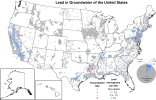
However, the graphic below supports your assertion that lead comes from the plumbing and distribution, for the most part.

It isn't a great idea to spread very fine lead powder over Iowa.

1795198389638.png
 
Unless you live nearby, I wouldn't even think about it.
Not next door but I’m close enough to be in some of the updated exposure maps I’m seeing assuming the wind blows in a southerly direction.

*edit we are getting a heads up they may close my kids school Monday because of it.
 
Last edited:

A pH above 8 in drinking water isn't common.
However, the graphic below supports your assertion that lead comes from the plumbing and distribution, for the most part.

It isn't a great idea to spread very fine lead powder over Iowa.

View attachment 156810
True, but it isn't pH alone that determines corrosivity, it's the entire ionic balance. A minor shift upward can reduce the rate of corrosion to an insignificant amount. Sometimes orthophosphates are used to form a protective coating on the interior piping as well.
 
Years ago I worked in a facility that, during WW II, simply dumped PCB contaminated oil down the storm drains. It was a byproduct of building Pratt & Whitney Double Wasp engines. Those drains empty into a local creek/river and that water ultimately ends up in the Gulf of America.

After the war, that practice stopped, but PCBs still contaminated the storm drains.

When I worked there the EPA was always doing some sort of remediation. My recollection was there should be “no detectable levels”. After every hard rain a monitor somewhere would pick up a molecule or three of PCB and another bunch of money would be spent on clean up. Eventually there would be “no detectable level”, until a new generation of sensors were installed.
 
True, but it isn't pH alone that determines corrosivity, it's the entire ionic balance. A minor shift upward can reduce the rate of corrosion to an insignificant amount. Sometimes orthophosphates are used to form a protective coating on the interior piping as well.
I think you are trying to describe "buffering" with that first sentence. "Ionic balance" is more of a biological thing to me such as regulating the amounts and types of ions for proper blood chemistry. Like I mentioned in my earlier post (and citation), going to pH 8 doesn't make a heck of a lot of difference in lead solubility. As for "orthophosphates", just plain phosphate is good enough in this context, yes, that passivates the lead. I think you are going from the Flint MI crisis, where they changed the water source. The bigger problem is that they stopped adding phosphate to the water when they changed water sources. Drinking water is generally kept at a pH above 7 to minimize all sorts of corrosion, beyond lead.

Beyond this, do you think it is a good idea to get a bunch of atomized lead in the air?
 
do you think it is a good idea to get a bunch of atomized lead in the air?
I don't believe anyone would answer "yes", but what is your alternative? I don't think they are doing this for funsies.
 
From what I've read, temperature fluctuations in the storage facility caused the solution in the barrels to expand and contract, degrading the seals in the barrels. Once the seals were damaged the ethanol evaporated and allowed the lead azide to crystallize. That's their story anyway.
Though the facility was operated by a contractor, the Army was to inspect every 6 months. The logs of the the biannual inspections for the past 2 decades haven't been made public. The Army is investigating. I'm sure they'll be most forthcoming with answers.
Be interesting to know what the temp swings were, and if anybody noted " Huh. This ain't right."
 
When I worked there the EPA was always doing some sort of remediation. My recollection was there should be “no detectable levels”. After every hard rain a monitor somewhere would pick up a molecule or three of PCB and another bunch of money would be spent on clean up. Eventually there would be “no detectable level”, until a new generation of sensors were installed.
My industry is in exactly that space regarding PFA's and the like. What was once undetectable is now a problem and nobody knew until way after the problem became unmanagable.
 
Living in Iowa, although not in the forecasted "plume" area, it kind of sounds like this got blown out of proportion.

Supposedly, this has been discussed publicly at least since March. There were public hearings, there were EPA determinations and permits, people in the immediate hazard area were well informed. Where this suddenly became an issue last week was when a map was published showing the potential plume impact with minimal risk. That went viral, got the whole country stirred up, when those already identified at risk were already taken care of. They have taken numerous precautions in accordance with all EPA requirements to try to keep the contamination as contained as possible, but there is risk of it spreading because well, its gonna be an explosion. These chemicals could have already exploded on their own and still could without any planning or precautions, but now those in the area are at higher risk because the politicians and judges have gotten involved, as well as millions of citizens that have nothing to do with it.
 
I'm curious why lead doesn't have a safe threshold. We know it's out there in the environment, we all get exposed to it. Is it because exposure is cumulative? Is there some unique property here? Or is it simply because we knew it was bad so nobody ever tried to establish a safe level?
Politics.
 
I think you are trying to describe "buffering" with that first sentence. "Ionic balance" is more of a biological thing to me such as regulating the amounts and types of ions for proper blood chemistry. Like I mentioned in my earlier post (and citation), going to pH 8 doesn't make a heck of a lot of difference in lead solubility. As for "orthophosphates", just plain phosphate is good enough in this context, yes, that passivates the lead. I think you are going from the Flint MI crisis, where they changed the water source. The bigger problem is that they stopped adding phosphate to the water when they changed water sources. Drinking water is generally kept at a pH above 7 to minimize all sorts of corrosion, beyond lead.

Beyond this, do you think it is a good idea to get a bunch of atomized lead in the air?
Of course not. I think it's a horrible idea.
 
Sometimes it takes an outsider’s view, one who has not been conditioned or fatigued to say “WTF are you doing?!” Sometimes that outside viewpoint is uninformed or misguided. Sometimes not.
 
Aerosolizing it is a known bad idea.
So, don’t blow it up on purpose.

Letting it sit in the ground could mean it will blow up unexpectedly, with the same aerosolizing issue, not to mention possible fatalities.

Why not cover it with an enormous layer of soil so if it blows later all the contamination is confined to a few acres?
I’m pretty sure we can find soil, equipment to cover it.
What are the dimensions of the holding area?
 
I'm curious why lead doesn't have a safe threshold. We know it's out there in the environment, we all get exposed to it. Is it because exposure is cumulative? Is there some unique property here? Or is it simply because we knew it was bad so nobody ever tried to establish a safe level?

one tidbit: lead exposure isn't quite cumulative. By that I mean, blood lead levels decrease over time when the person reduces their exposure to lead. And it happens surprisingly quickly. One can go from 23.0 µg/dL in March, to 14 µg/dL in May, to 5 µg/dL in September simply by reducing exposure to certain sources of airborne lead (the current recommendation for children is below 3.5 µg/dL).
 
Why not cover it with an enormous layer of soil so if it blows later all the contamination is confined to a few acres?
I’m pretty sure we can find soil, equipment to cover it.
What are the dimensions of the holding area?

What would be the risk to people doing all the work to put that much dirt and explosion containment gear in place?
 
one tidbit: lead exposure isn't quite cumulative. By that I mean, blood lead levels decrease over time when the person reduces their exposure to lead. And it happens surprisingly quickly. One can go from 23.0 µg/dL in March, to 14 µg/dL in May, to 5 µg/dL in September simply by reducing exposure to certain sources of airborne lead (the current recommendation for children is below 3.5 µg/dL).
That's because the lead moves from the blood to other tissues, such as bones and teeth. Blood levels indicate recent exposure.
 
That's because the lead moves from the blood to other tissues, such as bones and teeth. Blood levels indicate recent exposure.

it is my understanding that lead does not accumulate in the body and stay in the body forever, never to leave it. Yes, prolonged lead exposure will result in some lead in the bones (mostly teeth). The kidney and liver "process" lead in the blood.
 
it is my understanding that lead does not accumulate in the body and stay in the body forever, never to leave it. Yes, prolonged lead exposure will result in some lead in the bones (mostly teeth). The kidney and liver "process" lead in the blood.
That is only part of the story. Wherever you got your original information undoubtedly also had the information below.
  • Children absorb a higher percentage of ingested lead than adults.
  • Once in the bloodstream, lead is primarily distributed among three compartments – blood, mineralizing tissue, and soft tissues. The bones and teeth of adults contain more than 95% of total lead in the body.
  • In times of stress (particularly pregnancy and lactation), the body can mobilize lead stores, thereby increasing the level of lead in the blood.
  • The half-life of lead in adult human blood has been estimated as 28 days.
  • The body accumulates lead over a lifetime and normally releases it very slowly.
  • Both past and current elevated exposures to lead increase patient risks for adverse health effects from lead.
 
Back
Top