Instrument Currency

Bill Crawford

Filing Flight Plan
Joined
Sep 22, 2020
Messages
9
Display Name
BlueFly
Ok. I haven’t found a written FAR that answers this yet. I was a CFII many years ago, but this question never came up. Now it’s germane to my situation. The “6 approaches in 6 months” requirement for IFR currency does not specifically state what constitutes a “completed” instrument approach for logging currency requirements. I shot an approach to near minimums back about a month ago. So, of course I counted that. For the next one I was also on an IFR flight plan. I started an instrument approach in IMC. Descending from the initial approach altitude, I broke out from a ceiling that was about 2,000’ AGL, but still 5 miles from the airport. The ASOS was reporting VFR conditions. The airport was VFR, but I had to get below the broken deck of clouds to make it in. I used an IFR approach clearance to do it. I cancelled IFR when I had the airport in sight. I’m assuming that I can’t count that as one of my approaches towards currency. I did not have a safety pilot with me. My take is that to count an approach towards IFR currency (without a safety pilot), the airport you’re making the approach to has to actually be below VFR ceiling and visibility requirements.
Any takers?
Have seen this yet?

Also, are you aware that the sim rules were changed for 61.57 a few years ago?
 
The conditions over the airport do not matter, it is what you are flying through. If it is broken or better and you are in those conditions until at least the final approach fix count it. Unlike some I use the "would a prudent pilot be on instruments" theory. Just because you can see the ground here and there momentarily and possibly you could make it down with some crazy maneuvering without killing yourself does not equal VFR.
 
I was a CFII many years ago, but this question never came up.
I’m pretty surprised, this is one of the more common scenarios.
My take is that to count an approach towards IFR currency (without a safety pilot), the airport you’re making the approach to has to actually be below VFR ceiling and visibility requirements.
Any takers?
The airport itself does not need to be below VFR minimums. If you begin an approach and remain in IMC conditions the moment you cross the FAF but then break out immediately after, you can log the approach and count it toward your currency requirements. The qualifying factor is that you are in fact in IMC when crossing the FAF.

A safety pilot is only required if this cannot be accomplished in actual conditions.
 
An important distinction in that INFO letter is that if the approach is conducted in actual weather, then you just need to be in IMC at some past the FAF to count. Meaning if you break out just past the FAF, you're good.

But if you're doing it in simulated weather, I.e. hood and a safety pilot, you need to continue wearing the hood down to minimums, you can't just flip it up just past the FAF.
Good point.
 
But if you're doing it in simulated weather, I.e. hood and a safety pilot, you need to continue wearing the hood down to minimums,
Unless there is a safety reason not to, typically traffic considerations.
 
Don't forget a Hold. So on some approach either real or under the hood, ask ATC to let you make one turn in the Hold if it is not required as part of the approach.

As others have said, if you're in IMC (regardless if light or hard IMC) up to the FAF, then it counts. I didn't review the InFO posted above, but somewhere I think it says that if it is an approach under the hood (VMC), you are *supposed* to go to minimums. But since they let you count an approach that you only have to get to the FAF, if there's traffic at a non-towered field and you got down close.... Don't tell anyone if you had to break off because they had the right of way.

Also, just to toss this out there since it seems to come up a lot.... Actually IFR traffic on an IFR Clearance or those just practicing an Approach under the hood DO NOT HAVE PRIORITY. If there are aircraft in the pattern turning Base or on Final, you MUST break off the approach. If they are still in the DW and you won't affect them or they are nice enough to say they'll extend their DW, fine. But if they want to turn Base, you're the one who has to break off and joint the Pattern. (Always amazes me that even some CFIIs think they have priority... But I heard it was added in some of the refresher courses by the FAA.)
 
Don't tell anyone if you had to break off because they had the right of way.
There's no reason to avoid telling anyone. You didn't break any rules by breaking off the approach early for traffic.

(Always amazes me that even some CFIIs think they have priority... But I heard it was added in some of the refresher courses by the FAA.)
Neither is surprising.
 
Note 6
"During simulated instrument flight in an aircraft, it may be necessary to deviate from the final approach segment for safety reasons (e.g., in order to avoid traffic or other hazards). In these cases, the pilot may still log the IAP, provided the aircraft has passed the final approach fix (FAF)."
 
Hmmm...does a procedure turn count as a hold?

Not unless it's depicted as a holding pattern.

I think the truly pedantic answer here is simply "no", because a Hold In Lieu of Procedure Turn is not a Procedure Turn, it's "in lieu of" one.

However, common usage, including that by ATC, often refers to any kind of course reversal method as a "procedure turn". So in that sense, "yes if it's depicted as a HILPT" is the right answer.

But now a question - we all know that a depicted Procedure Turn barb does not require that ground track. See AIM 5-4-9 which spells out several alternate options, two of which are the racetrack pattern and the teardrop procedure turn. Both of these sure seem a lot to me like a HILPT, or at least the entry into it. So even if a PT is depicted, we can fly it the same as a HILPT. If we do, I see no reason it wouldn't count for currency. Okay, I guess that wasn't a question.
 
I think the truly pedantic answer here is simply "no", because a Hold In Lieu of Procedure Turn is not a Procedure Turn, it's "in lieu of" one.
There was recently a post in one of the Facebook IFR groups. This wasn't the exact approach, but it was this scenario.

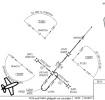
You are approaching IRWOX as depicted at 2500'. ATC clears you for the approach but does not "say cleared straight in." Do you have to do the HILPT?"

Applying your "truly pedantic answer," the poster insisted the answer was "yes."

1788109117747.png
 
There was recently a post in one of the Facebook IFR groups. This wasn't the exact approach, but it was this scenario.

You are approaching IRWOX as depicted at 2500'. ATC clears you for the approach but does not "say cleared straight in." Do you have to do the HILPT?"

Applying your "truly pedantic answer," the poster insisted the answer was "yes."

View attachment 154664

Well that's obviously silly, and isn't even pedantically correct, because regardless of the name PT or not, AIM 5-4-5d4 specifically addresses not flying the course reversal when on a NoPT segment.
 
Well that's obviously silly, and isn't even pedantically correct, because regardless of the name PT or not, AIM 5-4-5d4 specifically addresses not flying the course reversal when on a NoPT segment.
It gets much sillier. The link was to the specific page with the quote. Perhaps obviously, I had to agree with his last comment.

1788117034381.png
 
As long as you crossed the FAF while in actual IMC, you’re good to log it. The airport itself doesn't need to be below VFR mins. Check out InFO 15012—it clears up this exact scenario nicely
 
Hmmm...does a procedure turn count as a hold?
Not a PT as in a Barb off to the side. But if it is a Hold in Lieu of a PT, then yes.

And making the entry counts as a Hold. Cross the fix, make the entry turn to put you back on the Final Inbound, cross the fix again and keep on going. You do not have to then make another loop once you've entered the Hold.
I have heard people claim it doesn’t count because of the lack of an extra turn. So…

You get an unpublished hold at a random waypoint from ATC. You figure out what the hold is, do an appropriate entry, time the outbound, turn inbound, and get cleared to continue. I guess to them, that doesn’t count as “holding procedures” either.
 
I have heard people claim it doesn’t count because of the lack of an extra turn. So…
They can "claim" all they want. But I'd like to see an actual document from the FAA that says you have to make multiple circuits in the Hold to count.

Now I sure wouldn't fault someone for making an extra turn or two in the Hold for practice. But if we are talking about what the FAA says in the Regs, we should NEVER add our own words or interpretations. If someone wants to add their "recommendation" on top of that, fine, as long as it is clear it is their opinion. In this case 61.57(c)(1)(ii) says: Holding procedures and tasks. I don't see them saying a circuit after entering the Hold or two turns around the Hold or anything else but "Holding procedures and tasks."

Then there's the AIM in 5−3−8 Holding with (j)(3) on "Entry Procedures." Sure, the AIM is not Regulatory, but it is created by the FAA to define various operations laid out in the FARs. And here it is describing "procedures" that are part of the Hold and required by 61.57 for currency.

Again, if there is something from the FAA that differs like an Legal Interpretation, etc., I'd love to see it to make sure I am complying correctly. Otherwise, I'll stick with NOT adding to what the Regs say.
 
I have heard people claim it doesn’t count because of the lack of an extra turn.
In my world, the Feds tell us that for a Part 91 operator the entry counts as a hold on a checkride, but for a 135 operator it doesn’t. I can’t remember the language difference offhand.
 
Last edited:
In my world, the Feds tell us that for a Part 91 operator the entry counts as a hold on a checkride, but for a 135 operator it doesn’t. I can’t remember the language difference offhand.
I just had my annual 135 recurrent checkrides (135.293 and 135.297) on Friday, and I only did a hold entry, not an additional lap around the pattern. That's pretty much what I remember from every previous one as well.

These are all in the simulator at one of the big Part 142 simulator training companies.
 
In my world, the Feds tell us that for a Part 91 operator the entry counts as a hold on a checkride, but for a 135 operator it doesn’t. I can’t remember the language difference offhand.
The "Feds" tell you or it is a Company requirement? My guess the latter since the FAA nowhere, to my knowledge, goes into detail on what is required.

Having said that, I guess if there was an FAA guy there, they can tell you what *they* think it means and you wouldn't have much choice. (Other than to go above their head and get a clarification.)
Your guess is wrong, and your knowledge isn’t as thorough as you like to believe. It’s written FAA guidance. Since I don’t memorize thousands of pages of it, I didn’t have the verbiage at hand, but looking it up, it’s pretty clear. “At least the initial entry and one complete turn in the holding pattern should be completed before another clearance is issued.”

 
Your guess is wrong, and your knowledge isn’t as thorough as you like to believe. It’s written FAA guidance. Since I don’t memorize thousands of pages of it, I didn’t have the verbiage at hand, but looking it up, it’s pretty clear. “At least the initial entry and one complete turn in the holding pattern should be completed before another clearance is issued.”
I do not believe my NON Guess is wrong about the topic at hand. :D

And what relevance does "...“At least the initial entry and one complete turn in the holding pattern should be completed before another clearance is issued...” have to do with doing a Hold for Currency. You've switched over to a totally different topic on "Clearances" which is not part of this discussion. Possibly there's some other discussion going on about Clearances? :cheerswine:
 
This is all very good and helpful discussions but I gotta ask:

Has this ever had any no-kidding (adverse) impact on someone and, if so, how? What I mean is, say there’s an “event” that prompts the FAA to dig into the background of a pilot (maybe like they busted mins so bad on a procedure that ATC felt compelled to give them a phone number - I don’t know). How would currency come up in the review? How would the FAA know if an approach was only logged when meeting the requirements? (Maybe by the threat of perjury?). And more importantly, has “inaccurately” logging an approach ever actually resulted in more than a disagreement with a CFII during a discussion?

Not at all trying to be argumentative or downplay the importance of meeting the requirements - just asking a curiosity question.
 
What if IMC on a vfr visual? Askin for a friend…

Past the FAF of course…
 
And what relevance does "...“At least the initial entry and one complete turn in the holding pattern should be completed before another clearance is issued...” have to do with doing a Hold for Currency?

A checkride is what makes a 135 pilot instrument current.
 
Your guess is wrong, and your knowledge isn’t as thorough as you like to believe. It’s written FAA guidance. Since I don’t memorize thousands of pages of it, I didn’t have the verbiage at hand, but looking it up, it’s pretty clear. “At least the initial entry and one complete turn in the holding pattern should be completed before another clearance is issued.”


“Should” implies that it is recommended. “Shall” or “must” would mean it’s required.
 
Last edited:
“Should” implies that it is recommended. “Shall” or “must” we mean it’s required.
No, “should” means “should”. Whether that means “recommended” or “required” depends on which side of the investigation you’re on.
Be obliged to; have an obligation to; ought to; indicates that the subject of the sentence has some obligation to execute the sentence predicate.

Bottom line, though, is that it IS written FAA guidance for checkrides, contrary to @M20K ’s assertion.
 
Last edited:
No, “should” means “should”. Whether that means “recommended” or “required” depends on which side of the investigation you’re on.


Bottom line, though, is that it IS written FAA guidance for checkrides, contrary to @M20K ’s assertion.
Quoting the dictionary definition isn't necessarily adequate for government documents, which sometimes have their own definitions of words. In government speak, of which I've had the pleasure to be immersed in my whole adult life, "should" simply means "should". Not mandatory.

I'm trying to find it in the Fed's Plain Language guide, but I did find it in the ATC handbook, 7110.65BB:

Chapter 1. General​

Section 2. Terms of Reference​

1-2-1. WORD MEANINGS​

As used in this order:

  1. “Must” means a procedure is mandatory.
  2. “Must not” means a procedure is prohibited.
  3. “Should” means a procedure is recommended.
  4. “May” or “need not” means a procedure is optional.
  5. “Will” means futurity, not a requirement for the application of a procedure.

Okay, here it is in the Federal Government's Plain Language guide:

Instead of using “shall,” use:
  • “must” for an obligation
  • “must not” for a prohibition
  • “may” for a discretionary action
  • “should” for a recommendation
 
Last edited:
Back
Top