
Scott Philiben
Pre-Flight
- Joined
- May 19, 2016
- Messages
- 67
- Display Name
- fuellevel
as long as they are accurate when empty....."what difference does it make?"....
Obviously - that accurate at empty is not what Piper Intended - see post above

as long as they are accurate when empty....."what difference does it make?"....

How's that work for you if there's a leak/loose cap/etc? That 13gph you plan for can end up being 7gpm.

but....the only time the fuel gauge "needs" to be accurate is at empty.Obviously - that accurate at empty is not what Piper Intended - see post above
I think they can - but most of us don't care if they do. My top price would about $79.99.You keep saying it isn't a high percentage and compared to the other pilot error crashes it isn't. However, my question still stands. Why can't someone come up with a fuel gauge that works all the time, every time?
I'm good with that. . .
This is what $79.99 gets you

Good.. Because FADEC runs engine parameters, not fuel gauges....involve fuel starvation, and the only accuracy requirement of a fuel gauge is when it is empty, why can't someone develop a better fuel gauge to tell pilots exactly how much fuel they have left?
I'm not talking about your FADEC stuff, I'm talking about the average Joe flying his Cessna 172 or Cherokee 140 around.

You want me to tell you how much I'll pay for a product that doesn't exist? It doesn't work that way either.
Aside from the fact that the fuel level is slightly lower in the pattern than it was one minute before, what would cause it to us port in the pattern when it didn't previously?He said it was a miracle it didn't U port in the pattern. I agree.

Uncoordinated flight.Aside from the fact that the fuel level is slightly lower in the pattern than it was one minute before, what would cause it to us port in the pattern when it didn't previously?
I would suggest not flying uncoordinated in the pattern so regularly that it becomes the assumption.Uncoordinated flight.


What about a sensor that weighs the fuel? Does that exist in any design? It could be coupled with a sensor that measures G's. They did put a rover on Mars, this should be do-able.
What about a sensor that weighs the fuel? Does that exist in any design? It could be coupled with a sensor that measures G's. They did put a rover on Mars, this should be do-able.


OF the now 2100 aircraft outfitted with digital fuel quantity, that is most new delivered aircraft, i.e. Reliable and accurate fuel level indication - Zero have suffered fuel starvation
Spacecraft have to deal with balls of fuel floating in space - so ullage takes on a 3 dimensional form
It is my business - so ullage is a next to everyday utilized term

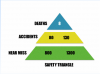
What models of aircraft have the digital fuel quality gauge, and what models of the same aircraft do not?OF the now 2100 aircraft outfitted with digital fuel quantity, that is most new delivered aircraft, i.e. Reliable and accurate fuel level indication - Zero have suffered fuel starvation
On the same aircraft with unreliable fuel quantity indication and fuel totalizers the number is 6 starvation events in the same time frame.
I've noted that on my own analyses, about twice the rate of other aircraft. I've heard this is due to the complexity of the 210 fuel system; may not be related to gauge accuracy except there not being "total fuel remaining on all tanks" sort of indication.But some aircraft - Cessna 210 suffer an amazing number of starvations.
I've noted that on my own analyses, about twice the rate of other aircraft. I've heard this is due to the complexity of the 210 fuel system; may not be related to gauge accuracy except there not being "total fuel remaining on all tanks" sort of indication.
Help me understand your terminology. When I use "Fuel Exhaustion," I mean the aircraft is completely out of fuel. When I use "Fuel Starvation," the aircraft has fuel, but it was not made available to the aircraft (due to mechanical or human error). Are you using the same definitions?
Ron Wanttaja
Actually no - that is not true "tens of thousands of aircraft" - where is your proof other than making a bold statement
This becomes circular reasoning - "if only nuts, bad pilots run out of fuel in aircraft"
then it isn't an equipment issue and there would be no difference in two very similar aircraft
Unless your supposition is that only good pilots purchase a particular brand of aircraft
As been pointed out on this forum - Different aircraft suffer different rates of fuel starvation
Actually, IIRC, the fatality rate for fuel exhaustion accidents is kinda low. All they have to do is land, the same thing they do after every flight. It's just no longer at the pilot's discretion.....If tens of thousands of airplane ran out of fuel, we'd have a lot fewer airplanes in the fleet than we do. Fuel exhaustion accidents tend to destroy the airplane and sometimes the occupants. As Wanttaja says, fuel exhaustion is a tiny factor compared to loss of control of the airplane when it comes to causes of accidents..
Maybe Wanttaja could tell us what percentage of various models are still in service. It would be interesting to know how many Cessna 172s, of all those built, are still flying.
I guarantee Dan that you have GPS in your aircraft, because it is better than LORAN and better than dead reckoning. Pilots of all abilities navigate better with GPS - we all agree that to be true.
By your responses, you appear to want to cling to antiquated, corroded and non functional required fuel quantity instrumentation because it is a pilot badge of honor to do so
And for the life of me - I have no idea why
