How much will MOSAIC reduce the cost of training?


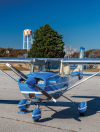
So this plane is half the cost and half the fuel burn of a C172. People have been budgeting $15K for a private pilot's license, and about $8-10K for IR. How much will this RV-12 reduce these costs? The news make it super exciting, but I am not sure.
I was on the Van's website last night and I was wondering the same thing.

It would be terrific if it helped some places reduce the hourly rental cost. I imagine one big variable is how much of the savings (if total cost of ownership actually does result in savings) that flight schools want to pass on to students.

Curious to hear what people's thoughts are.
 
If you are talking the pilot certification side of MOSAIC, somewhat. A pilot can certainly limit themselves to sport activities but, even something as simple as being able to fly through Class C will require an additional endorsement. So pretty much what we have now, although with a wider selection of aircraft.

If you are talking the aircraft certification side of MOSAIC, I’d say not much. The LSA certification side is more about being a proving ground for new things than creating cheap aircraft.
 
giphy.gif

Waiting for pfarber…


Sent from my iPhone using Tapatalk
 
It wont.

I run Pilot Rise Flight School. We've been running with fully refurbished C172s (upgraded glass and modern radios) for the past 8 years now. The only way we've found to lower training costs was to HEAVILY invest in lightening the load of C150s. Such as EarthX batteries, remove VOR equipment, remove vacuum pump, repaint with lighter paint, etc. However, this only goes so far.

We've heavily researched many MOSAIC / LSA aircraft. Such as the RV-12, Sling 2, Alpha Trainer, etc. The cost to operate those still exceed the costs of C172s, but I don't think it will for long.

There are several major downsides to MOSAIC right now:
1. Time in Service vs Rotax Engine Time
For certified aircraft, the 100 hour inspection is required every 100 hours of TIME IN SERVICE. Time in service means from when the aircraft takes off to landing. They try and follow the tach for this, which typically runs 30% slower than the Hobbs on Cessnas. So if the average 100h costs $2,500 for just the inspection, is not $25/hr, it is $19/hr (2500 / 130 hours).​
MOSAIC aircraft that use Rotax use engine run time for the meter, so if the same inspection is cheaper at $1,900 per inspection, then you end up paying the same exact amount as the certified aircraft.​
§1.1: Time in service, with respect to maintenance time records, means the time from the moment an aircraft leaves the surface of the earth until it touches it at the next point of landing.

2. TBO is a hard limit
For a C172 using an O-360, the TBO is 2,000 in most cases. Some cycles may need an overhaul at 1,700 hours, others at 3,200 hours. If you budget for an overhaul around TBO and it can safely be exceeded, then the $25 you were putting aside per hour has become profit (or really just used to pay for other broken stuff, haha)​
However, on MOSAIC aircraft, even if using an O-200, if the manufacture says the TBO is 2,000 hours, it is mandatory according to 14 CFR § 91.327(b)(1).​
​
3. Weaker Construction
Most MOSAIC aircraft right now are not designed to take a beating from a new student. Every mechanic I talk to says they see it all the time.​
​
The final kicker is supply and demand. As they become more viable, no one aircraft will be the perfect unicorn. If the aircraft is great and will work for flight training well, then it will be priced into the purchase price or used prices. So in the end, it'll end up being the same as anything else. The only real upside here is the new amount of supply. This does push the used market down further. From every airplane I did intense calculations on, you'll have to rent basically any MOSAIC or C172 aircraft for $165 - $185 / hr to even compare with a conservative investment.

 
View attachment 153761
45 hours x $105 = $4725, 25 hours x $75 = $1875, $260 tax,
that's $6,860... lotsa un-counted items... but $15K????
Last I checked, the national training average for the initial private pilot certificate was about 75hrs. One probably could get it done in 40-45hrs minimum time if at a country airport with no tower and not a lot of traffic. I'm not sure how you are figuring $105/hr for a C150. Rate for a C150 around here are closer to $140/hr. Fuel just topped $7/gal.
 
I do wonder how good an RV 12 is vs a 172 for training. The RV 12 is a great plane, but lighter and perhaps a bit harder to control for a student.
 
I do wonder how good an RV 12 is vs a 172 for training. The RV 12 is a great plane, but lighter and perhaps a bit harder to control for a student.
… which, some would argue, makes it a good thing for training since it makes for a more proficient pilot. Having flown modern pre-MOSAIC LSAs since they first appeared and given some training in them, I think they are great trainers.

I sometimes get jokes because I learned how to fly in a “Traumahawk” when so many started in a 150/152. I just reply that I’m thankful to have learned in an airplane that you have to actually fly.

Easier/harder is a comparison that does not equate to better/worse.
 
MOSAIC will not reduce the cost of training. The CFI charges the same. Hangar / tie down - the same spot, the same pice. Database subscriptions - unchanged. Insurance - no significant change. Office rent and other overhead cost and the profit margin of the flight school - unchanged.

Some flight schools have already used Tecnam and others LSA in the past. Literally all of them returned to the usual suspects like C172, PA28. 2 or 3 gal/h less for a Rotax-powered device will not tip the scale. It cannot cut the cost in half. There must be a (financial) reason that all the pilot mills continue to order either new C172 or PA28.

It will take the student the same time to get a proficient pilot, no matter what the minimum hours per the regs are. Truth of the matter is that the majority of initial students do not ever make it to the finish line. The quotes of flight schools are usually based on the minimum hours , while the average is roughly the double amount. The high percentage of drop-outs is in part the result of this very common marketing approach resulting in insufficient funds from the very beginning.

MOSAIC will not make (already existing) aircraft models cheaper. It will only lower the bar for new contestants to enter the market.
 
There must be a (financial) reason that all the pilot mills continue to order either new C172 or PA28.
Its my understanding they continue to order 172s/PA28s due to added airworthiness limitations found on new TC'd and pre-MOSAIC LSA aircraft. Plus repairability issues with the LSAs as well that are not prevalent on the 172 or PA28s.
 
Surprises me the amount of C172’s for sale with 8K to 15K hours. In my time a 3K to 4K hour airframe was ready to put out to pasture. Shows the ruggedness of the cessna airframe. Could you run an RV airframe that many hours same reliability?
 
Its my understanding they continue to order 172s/PA28s due to added airworthiness limitations found on new TC'd and pre-MOSAIC LSA aircraft. Plus repairability issues with the LSAs as well that are not prevalent on the 172 or PA28s.

For business operators at scale, predictability is important. After 70 years, there are no surprises left with the 172 and PA28.

The biggest fleet operators are not targeting recreational pilots. They get their revenue from college tuition, VA benefits, and foreign airline contracts. Again, predictability wins the day over pinching pennies.
 
It wont.

I run Pilot Rise Flight School. We've been running with fully refurbished C172s (upgraded glass and modern radios) for the past 8 years now. The only way we've found to lower training costs was to HEAVILY invest in lightening the load of C150s. Such as EarthX batteries, remove VOR equipment, remove vacuum pump, repaint with lighter paint, etc. However, this only goes so far.

We've heavily researched many MOSAIC / LSA aircraft. Such as the RV-12, Sling 2, Alpha Trainer, etc. The cost to operate those still exceed the costs of C172s, but I don't think it will for long.

There are several major downsides to MOSAIC right now:
1. Time in Service vs Rotax Engine Time
For certified aircraft, the 100 hour inspection is required every 100 hours of TIME IN SERVICE. Time in service means from when the aircraft takes off to landing. They try and follow the tach for this, which typically runs 30% slower than the Hobbs on Cessnas. So if the average 100h costs $2,500 for just the inspection, is not $25/hr, it is $19/hr (2500 / 130 hours).​
MOSAIC aircraft that use Rotax use engine run time for the meter, so if the same inspection is cheaper at $1,900 per inspection, then you end up paying the same exact amount as the certified aircraft.​


2. TBO is a hard limit
For a C172 using an O-360, the TBO is 2,000 in most cases. Some cycles may need an overhaul at 1,700 hours, others at 3,200 hours. If you budget for an overhaul around TBO and it can safely be exceeded, then the $25 you were putting aside per hour has become profit (or really just used to pay for other broken stuff, haha)​
However, on MOSAIC aircraft, even if using an O-200, if the manufacture says the TBO is 2,000 hours, it is mandatory according to 14 CFR § 91.327(b)(1).​
​
3. Weaker Construction
Most MOSAIC aircraft right now are not designed to take a beating from a new student. Every mechanic I talk to says they see it all the time.​
​
The final kicker is supply and demand. As they become more viable, no one aircraft will be the perfect unicorn. If the aircraft is great and will work for flight training well, then it will be priced into the purchase price or used prices. So in the end, it'll end up being the same as anything else. The only real upside here is the new amount of supply. This does push the used market down further. From every airplane I did intense calculations on, you'll have to rent basically any MOSAIC or C172 aircraft for $165 - $185 / hr to even compare with a conservative investment.
I'm going to say that this is probably the most accurate assessment I've seen, but I do think that as the new MOSAIC crop comes out, you might find that the structures get a little better with the relaxation of the weight limits. Maybe someone will come out with one that will be better able to take that beating. The Cessna 172 fleet for the most part is pretty robust, but I'm looking at a newer MOSAIC aircraft to replace the aircraft we are using for aerial photography and I really think we may be able to come up with something that does save us money.
 
Surprises me the amount of C172’s for sale with 8K to 15K hours. In my time a 3K to 4K hour airframe was ready to put out to pasture. Shows the ruggedness of the cessna airframe. Could you run an RV airframe that many hours same reliability?
I've seen planes with 20K hours... an old Piper Arrow comes to mind. I think a Cardinal I know of has 14K+.
 
… which, some would argue, makes it a good thing for training since it makes for a more proficient pilot. Having flown modern pre-MOSAIC LSAs since they first appeared and given some training in them, I think they are great trainers.

I sometimes get jokes because I learned how to fly in a “Traumahawk” when so many started in a 150/152. I just reply that I’m thankful to have learned in an airplane that you have to actually fly.

Easier/harder is a comparison that does not equate to better/worse.
I learned in a Tomahawk as well. I am convinced that the haters never flew one. Oh, I know - “Look at the tail during a stall and see how much it wiggles.” Counter: Show me a single Tomahawk that lost its tail.
 
I learned in a Tomahawk as well. I am convinced that the haters never flew one. Oh, I know - “Look at the tail during a stall and see how much it wiggles.” Counter: Show me a single Tomahawk that lost its tail.
You might enjoy this

 
3. Weaker Construction
Most MOSAIC aircraft right now are not designed to take a beating from a new student. Every mechanic I talk to says they see it all the time.​

You’re obviously referring to pre-MOSAIC LSAs built to the original 2004 LSA rules. I haven’t heard of any post-MOSAIC LSAs in-service at a flight school (or anywhere else, for that matter), since the aircraft certification portion of MOSAIC has only been in effect a couple of months.

With regard to pre-MOSAIC LSAs, yes, that’s mostly true. There are a few that have demonstrated acceptable durability in a flight school environment; the Vashon Ranger comes to mind. Models derived from European ultralight/microlight designs tend to be far less robust, and not well suited for flight schools.
 
Last edited:

How much will MOSAIC reduce the cost of training?​


As for impact on flight training, the initial impact MOSAIC will have will be with aircraft availability. Since students pursuing a Sport Pilot certificate can now fly a Skyhawk or Cherokee, it a student will no longer have to hunt down a LSA, which may be a long commute (or entirely absent) from a given area

Reduced operating costs won’t be realized for a while, as flight schools aren’t going to suddenly dump their entire existing fleet and replace them with post-MOSAIC LSAs. If a flight school decides that post-MOSAIC LSAs fit their needs, they will likely replace their existing fleet gradually on a one-for-one basis.
 
The only way we've found to lower training costs was to HEAVILY invest in lightening the load of C150s. Such as EarthX batteries, remove VOR equipment, remove vacuum pump, repaint with lighter paint, etc. However, this only goes so far.
We came to the exact same conclusion although we hadn’t got as far as EarthX batteries but SureFly magneto’s were next before we sold up.

Like you it took a HUGE investment over many years.

We were also troubled by failure of the centre main bearing and with cracking of its saddle. And every time the crank which lets face it is about 1/3rd lighter than an O-240 crank was scrap.

The centre main bearing of the O-200 is the same diameter as that of the A65 and when combined with a metal prop it gets a beating. We contacted MT Propellers as they do a prop for the O-235 on the C152 but they had no interest in producing one for the C150. Which is a but ironic as the Sensenich prop on the C152 is the same prop as used on the C150.

We eventually solved this problem by buying new O-200’s but that now runs you for 50K and that’s if you have a serviceable core. Even then every single cylinder would stick an exhaust value at anything from 75 to 250 hours. However once repaired they would go all the way to TBO.

There are 4 different designs of O-200 centre main bearing and its a well known problem. Not only did the new engines bring the latest design they also brought a known crankcase and ancillaries.

Overall I don’t think the O-200 is a very good engine. I'm also not sure for how much longer you will be able to get new engines from continental and even if you can the price and deliver times aren't conductive with trying to run an aviation business. The old boys in the hanger say its great yet they barely fly 50 hours a year. When you are trying to put 800 plus hours its a different story.

How do you get on with your O-300? I assume you would upgrade to O-360 when you can no longer get the O-300's overhauled.
 
We also ran an LSA and we made more money with that one aircraft than the rest of the fleet put together.

The Rotax 912 was removed at 5500 hours and replaced with new. It never missed a beat. Never had any cylinder work, original generator and starter too. We serviced the ancillaries as per the manual in fact when at 5500 hours the gearbox wouldn’t overhaul again, we felt we couldn’t justify the price of a new gearbox on such a high time engine.

It was a complete contrast to the O-200. It’s reliability, purchase and running costs were a fraction of the O-200. It’s an amazing engine.

Like you I felt the airframe wasn’t as robust and had two nose wheel collapses. Post prop strike the cranks ran true it just needed the gearbox overhauled and a new prop. We also had airframe damage where people had pushed down on the horizontal stab and bent it. We spent 8K on two new horizontal stabilisers. We also had numerous walk way damage that needed repairing. Flap damage to.

The puppy mill were I am currently working, who have managed to convince rich parents to pay 3 times what I used to charge, are in the process of replacing their C172’s with P-Mentors.

They have defiantly have a beefed up airframe compared to my old LSA but its still no where as robust as their C172’s. Neither is it as good in a cross wind or turbulent air. Overall I really like them and you are talking about 14 litres an hour of fuel which includes mogas with ethanol. I don’t think the wobbly prop is a good idea but with a weight of 1600lbs a fix pitch won’t cut it.

Sadly I don’t think the airframes will last. Not because they are a bad airframe just that so many instructors treat them like the C172 and just smash them in. I’m sure it the airframe will take the blame and not those who are flying them.
 
Back
Top