How many maps are enough?

pfarber

Pattern Altitude
Joined
Jun 20, 2021
Messages
1,653
Display Name
pfarber
Watching a youtube builder blog and dude's doing a test flight for a new mod.

Nice RV blah blah but I couldn't understand why there were 5 maps all running at the same time. I get that for IFR you need one, and possibly a backup, but:

1. primary GPS
2. 'nutter GPS
3. A screen in front of pilot
4. A screen in front of pax
5. iPad

Is having a jillion screens the new 'i r an av8tor' flex?

Also GPSs have a battery for backup, that's fine. An EFI has a battery for backup and the entire world loses their mind.
 
I used to maintain my own curated collection of trade a plane listings, which I labeled "Gratuitous Glass". It was pretty much trying to screenshot all the spam cans that had 1047482 screens in the cockpit: G3X + A 430 + a new GTN750xi + a backup GTN650 + 2 iPads + ... 2 backup G5s + ...

I don't know how anyone wants that. A G3X or G1000 would be awesome. Why does a little single engine piston need 6 screens? Idk. Just seems like glass-overload.

Then again I just fly boring VFR, so my opinion is probably skewed by that.
 
Last edited:
VFR nav charts. Enroute Low-Altitude charts. Area charts. Approach charts. Weather maps. Airport charts.

Six maps, six screens. Did I miss anything? My IFR ticket lapsed in 2000. Instructor rating lapsed in 2006. Just not enough time to instruct plus maintain the airplanes. I used to work eight or ten hours a day in the shop and classroom, and then go flying at night with night or IFR students. Get home at 2 AM and go to work at 8. That's burnout country, and I very nearly did it.

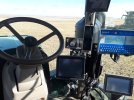
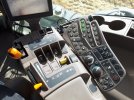
In the first year or two of retirement I drove a John Deere 9560RT tractor, pulling a big grain cart to offload the combine as it harvested the grain. Travelled alongside the combine, real close to that quarter-million-dollar header on the combine. Both of us using GPS auto-steer. There were at least five computer screens in that tractor, for engine parameters, grain cart load weight, some cameras, stuff for the seeder/fertilizer equipment, and so on. All of it was handy, depending on what you were doing. And this was just a tractor, not an airplane.

1783113070902.jpeg
1783113112996.jpeg
1783113459678.jpeg

Garmin G1000 we had in the 172SP had two screens, and we could display everything on them, though not at the same time. One does not need the approach chart while enroute, nor the airport chart while on approach.
 
Last edited:
5, eh? Hm...

1. Approach plate
2. En Route Low
3. VFR/traffic
4. Terrain
5. uh... backup?
 
Then again I just fly boring VFR, so my opinion is probably skewed by that.

-TW
Nah, VFR is where it's at; IFR is tedious and unnecessarily expensive. Yes it can also kill ya with relative ease, but folks overstate the complexity for a variety of reasons that I'll digress from for the sake of brevity.

I'm forever grateful I pursued my flying training the way I did. I remember remarking to myself upon USAF UPT graduation, if that had been my initial exposure to flying, it would have cured me from wanting to become a pilot. The older I get, the more I realize I just fly for a living (IFR is thus, a sunk cost) cuz I can't afford a [proverbial]Gamebird recreationally. I should have married better... *checks siiiiiiiiiiiiiiiiiiiiiiiiiiiiiiiiiiiiiiiiiix*

Back to the OP. As to why they need six screens? To quote my dear frenemies online, the dastardly PvPers: "....it's a skill issue"
:biggrin:
 
When I flew VFR in aircraft with no GPS, I still kept my tablet out of view on the glare shield and only picked it up to look at it periodically to make sure I wasn't off-course or lost. The plethora of screens some people fly with is bewildering.
 
here's one way to evaluate the number needed.

If you have, say, six screens installed, how many can be inop before you ground the airplane?
 
When I flew VFR in aircraft with no GPS, I still kept my tablet out of view on the glare shield and only picked it up to look at it periodically to make sure I wasn't off-course or lost. The plethora of screens some people fly with is bewildering.

I am with you on this, but would go even one step further. The amount of money people spend on upgrading a panel is astounding to me, especially given that they don't make the airplane fly even 1 knot faster. If I had the choice, I would keep the old panels and spend that money on options that would improve aircraft performance, like a turbo charger, or engine monitor.
 
For a vfr plane that stuff isn't necessary. On as plane that is used in imc with some regularity, one might ask why not install the tools to make the job easier and safer. In fact it might be foolish not to.
If one is going into battle, the goal shouldn't be to have a fair fight.
 
Is JPI or other standalone engine monitor a screen? GPS NavCom? So I have 2 operating full time.

I also use an iPad 90% of the time for traffic, weather, and looking up stuff (charts, frequencies, etc).

When I was flying IFR, I had a backup iPad that I used for approach plates. And I also used it as a 2nd Avidyne IFD. Or if VFR, passengers used it to follow along.

Lastly, I use my phone for last minute planning, briefing, filing, and preflight checklist.

That’s 5 screens…wow.
 
2 gps is redunfancy. Not a bad thing when flying ifr. I have dual hdx screens, but the one in front of pax is usually just engine monitor.

I keep the iPad running to make flight logging easier
 
The amount of money people spend on upgrading a panel is astounding to me, especially given that they don't make the airplane fly even 1 knot faster.
The new stuff makes the plane a couple pounds lighter (e.g. vacuum system removal, ADF->GPS upgrade, etc). That's good for 1 knot or two.
 
I read the title as "how many naps are enough", and I would say I'd love to be able to take 2 naps per day, but sometimes I get zero.

VFR, learning, I'd always carry a sectional in the aircraft but never used it because the wind would want to take it out the window. But here we have trees and hills and rivers and stuff, so daytime VFR you shouldn't get lost.

IFR, I'm learning with a 430 and a little android that sometimes has moving maps. So I'd say that's 1.5-2 screens. And even when the maps don't move, I can bring up the plates and diagrams. I'm finally at the point where I don't carry paper maps, but I do write down the numbers I need on paper anyway.
 
The new stuff makes the plane a couple pounds lighter (e.g. vacuum system removal, ADF->GPS upgrade, etc). That's good for 1 knot or two.
Not if it's the Garmin G1000 stuff. That ADDS plenty of weight. I've had it out of the airplane. I know. The old steam stuff and radios were lighter.
 
No you don’t. Not one screen required. NEED a bearing needle or course deviation and a paper chart.
Exactly. When I got my IFR ticket, the airplanes had NO screens at all.
 
Not if it's the Garmin G1000 stuff. That ADDS plenty of weight. I've had it out of the airplane. I know. The old steam stuff and radios were lighter.
True (I've read the manuals). But the message I replied to was talking about panel upgrades, which you can't do with a G1000 starting from steam gauges.
 
I am not, and probably will never need an, IFR rating. But If you have multiple screens don't you also now need to remember multiple button combo's Say you have a new GPS175, but a 430 as a backup... are they even close to the same button wise?

Don't modern GPS like the 375 also have ADSB-IN/OUT and weather?

I used to fly with paper maps and a AFD BOOK. Worked fine.


Its an LSA so I belive it will never be IFR certified:
" Currently, the RV-12iS is used for IFR training, it can fly in the IFR system and file flight plans, just not fly in actual instrument conditions. "

So why so many screens? Two AV-30s and a GPS. DONE. iPad if you want to play overheating Russian roulette I would most likely dump the GPS as moving maps and tablets have been a thing for decades. Wanna cut $10-15k off your build? I just told you how.
 
Nice RV blah blah but I couldn't understand why there were 5 maps all running at the same time. I get that for IFR you need one, and possibly a backup, but:

1. primary GPS
2. 'nutter GPS
I'm not a nutter, so I only need one GPS. ;)

3. A screen in front of pilot
4. A screen in front of pax
5. iPad

Is having a jillion screens the new 'i r an av8tor' flex?
So, after flying for over 20 years with many configurations of zero to five maps, here's what I think is the optimum for normal IFR cross country flying: Two, plus possibly a third, if their capabilities are right.

One of them is the "overview map" that shows you, your destination, and everything in between and has weather on it. Preferably both radar and ceiling/vis. Gives you an idea what you might be running into a couple hours from now, gives you a chance to divert earlier (which takes less time).

The other is the "What's going to kill me in the next five minutes" map. That displays traffic and terrain at a short range, maybe 10-25 miles depending on the speed of the bird.

The other thing that is REALLY nice is a georeferenced approach plate on your panel right next to the PFD. For example, G3000, G3X Touch, or G500 TXi with the screen split into PFD+MFD and showing the plate on the MFD side.

The new stuff makes the plane a couple pounds lighter (e.g. vacuum system removal, ADF->GPS upgrade, etc). That's good for 1 knot or two.
My plane has lost 30 pounds so far thanks to avionics upgrades. I think I can do another 10-15. It's insane how big and heavy some of the old stuff is.

Also, I figured out that my HID and LED light upgrades have lightened the electrical load enough to put a couple horsepower back into the prop instead of the alternator and give me most of a knot back. :D

Not if it's the Garmin G1000 stuff. That ADDS plenty of weight. I've had it out of the airplane. I know. The old steam stuff and radios were lighter.
Depends on the airplane. Yeah, it probably makes a 172 heavier. A King Air, OTOH, gets hundreds of pounds lighter. Somewhere in between, something probably breaks even.

I am not, and probably will never need an, IFR rating. But If you have multiple screens don't you also now need to remember multiple button combo's Say you have a new GPS175, but a 430 as a backup... are they even close to the same button wise?
No, they're not. And you do have to remember buttonology. But if you had a 430 as your primary and you upgrade to a GTN650 but keep the 430 as your #2, you'll probably be OK.

FWIW, the buttonology is very similar on Garmin stuff that's in roughly the same generation. The GNS 430/530 series and G1000 work very similarly. Likewise, the G5000/3000, G500/600 NXi, GTN 650/750, and the GPS 175 and its variants (GNX375, GNC255) all work very similarly as well, so it's not like you're learning something totally new if you have different stuff that's all from Garmin.

Don't modern GPS like the 375 also have ADSB-IN/OUT and weather?
The 375 does because it has an ADS-B In/Out transponder built into it. For other GPS units it depends what they're hooked up to.

So why so many screens? Two AV-30s and a GPS. DONE.
That's three screens right there. :dunno:
 
Its an LSA so I belive it will never be IFR certified:
" Currently, the RV-12iS is used for IFR training, it can fly in the IFR system and file flight plans, just not fly in actual instrument conditions. "
MOSAIC removes the IMC limitation for LSA. The RV12iS built under MOSAIC rules will be able to fly in actual IMC.
 
MOSAIC removes the IMC limitation for LSA. The RV12iS built under MOSAIC rules will be able to fly in actual IMC.
Yep. In addition to Vans, I've also heard other manufacturers mention that. I would be surprised it it weren't a topic of discussion at the vendor locations at AirVenture this year.
 
So why so many screens? Two AV-30s and a GPS. DONE. iPad if you want to play overheating Russian roulette I would most likely dump the GPS as moving maps and tablets have been a thing for decades. Wanna cut $10-15k off your build? I just told you how.
Never saw a G1000 aircraft? That's only partly tongue-in-cheek.

Dual screens has been a fairly common setup in the new LSA market since the beginning. Dual Dynon. Dual Advanced. In the case of the 12is, dual Garmin G3X touch. Although it's showing a PFD map on the right, the right screen is more commonly used as a PFD, although (unlike a G1000) these systems are robust enough to allows for multiple configurations. The pilot happens to have it on its map screen in the video, but the "screen" in the middle is a GTN650xi GPS/NAV/COM . The G3Xs have their own GPS capability but but those are VFR only. Below the GTN is the controller for a GFC500 autopilot.

iPad? Well, probably not really necessary. Even IFR, between those two screens, there's the ability to display most any combination of map, chart, engine information, flight plan. On a VFR flight in this airplane, my iPad would be tucked away, although in reach. IFR, even with a G1000, I prefer the iPad's IAP/SID/STAR display to the arguably more limited on-screen displays.
 
I'm not a nutter, so I only need one GPS. ;)


So, after flying for over 20 years with many configurations of zero to five maps, here's what I think is the optimum for normal IFR cross country flying: Two, plus possibly a third, if their capabilities are right.

One of them is the "overview map" that shows you, your destination, and everything in between and has weather on it. Preferably both radar and ceiling/vis. Gives you an idea what you might be running into a couple hours from now, gives you a chance to divert earlier (which takes less time).

The other is the "What's going to kill me in the next five minutes" map. That displays traffic and terrain at a short range, maybe 10-25 miles depending on the speed of the bird.

The other thing that is REALLY nice is a georeferenced approach plate on your panel right next to the PFD. For example, G3000, G3X Touch, or G500 TXi with the screen split into PFD+MFD and showing the plate on the MFD side.


My plane has lost 30 pounds so far thanks to avionics upgrades. I think I can do another 10-15. It's insane how big and heavy some of the old stuff is.

Also, I figured out that my HID and LED light upgrades have lightened the electrical load enough to put a couple horsepower back into the prop instead of the alternator and give me most of a knot back. :D


Depends on the airplane. Yeah, it probably makes a 172 heavier. A King Air, OTOH, gets hundreds of pounds lighter. Somewhere in between, something probably breaks even.


No, they're not. And you do have to remember buttonology. But if you had a 430 as your primary and you upgrade to a GTN650 but keep the 430 as your #2, you'll probably be OK.

FWIW, the buttonology is very similar on Garmin stuff that's in roughly the same generation. The GNS 430/530 series and G1000 work very similarly. Likewise, the G5000/3000, G500/600 NXi, GTN 650/750, and the GPS 175 and its variants (GNX375, GNC255) all work very similarly as well, so it's not like you're learning something totally new if you have different stuff that's all from Garmin.


The 375 does because it has an ADS-B In/Out transponder built into it. For other GPS units it depends what they're hooked up to.


That's three screens right there. :dunno:
I don't consider an AV-30 as a 'screen' as its really not. One AV-30 for primary fligth controls, one for DG/ADSB traffic/map. Each AV-30 is a redundant system.

I'm talking about the 8-12in screens that have all sorts of clutter like a moving map as the background behind an EFIS for VFR.

I am not pro or anti anything. Just wondering why the decision was made, and should I incorporate it. Being cost sensitive my first thought is no, its not worth it for VFR day/night and 'possibly worth it' for IFR.

Removing the vacuum system (and weight) of a 6 pack to me is just common sense. Slapping on a LasVegas strip style light show for VFR is comical.

I'm sure the GPS375 could fill the bill if I was anywhere near IFR training as it does all the things people say they need discrete screens for.
 
Last edited:
Yep. In addition to Vans, I've also heard other manufacturers mention that. I would be surprised it it weren't a topic of discussion at the vendor locations at AirVenture this year.
How can an E/AB fly actual IFR vs an S-LSA not? I understand there can be an operational limitation assigned, but how common is that? I believe LSA certificated airmen cannot, but other than 91.205 covering required equipment why is an S-LSA not actually allowed actual IFR?

Just curious.
 
How can an E/AB fly actual IFR vs an S-LSA not? I understand there can be an operational limitation assigned, but how common is that? I believe LSA certificated airmen cannot, but other than 91.205 covering required equipment why is an S-LSA not actually allowed actual IFR?

Just curious.
I think it's just that IFR was just not contemplated as part of the original set of approved ASTM consensus standards. So the standards limited them to VFR flight. And they were manufactured in a way that prevented it (i.e , lack of things like static protection for flying in clouds). A bit of a guess, but I think that's the because the original special certification of S-LSA was so tied to sport pilot rules. So, from a manufacturer standpoint, why push for an IFR consensus standard for what would be a very limited market. E/AB is a broader category, but individual builders, so there was reason for individual waivers (although generally approved).

The big deal with MOSAIC from an aircraft standpoint is that LSA aircraft certification was completely decoupled from sport pilot. When I've done MOSAIC presentations, I took extra pains to say that if someone asked a question about sport pilot privileges and use the term "LSA" in the question, the question was automatically wrong because LSA certification rules allow for LSAs that sport pilots are not authorized to fly.

The post-MOSAIC LSA , with the removal of most Gen 1 LSA limitations, from weight to speed to HP, is really more of a proving ground for new tech, lying between E/AB and Part 23 aircraft. As the FAA puts it:

“under this rule, manufacturers of light-sport category aircraft may design and manufacture a broader array of aircraft, including rotorcraft and powered-lift. In addition, the rule allows for light-sport category aircraft with increased seating, without weight limits, higher speeds, new types of propulsion systems, new propeller types, retractable landing gear, and aircraft with simplified flight controls.”​
​
Specifically with respect to IFR

"This rule did not propose any limitations on equipment or operations that would prohibit light-sport category aircraft from conducting IFR flight or even flight in IMC. "​
 
Last edited:
Watching a youtube builder blog and dude's doing a test flight for a new mod.

Nice RV blah blah but I couldn't understand why there were 5 maps all running at the same time. I get that for IFR you need one, and possibly a backup, but:

1. primary GPS
2. 'nutter GPS
3. A screen in front of pilot
4. A screen in front of pax
5. iPad

Is having a jillion screens the new 'i r an av8tor' flex?

Also GPSs have a battery for backup, that's fine. An EFI has a battery for backup and the entire world loses their mind.
Back in the day, we had paper maps. Plus two Omnis, Loran, an ADF, and a very, very expensive portable monochrome GPS.
I had no issue with many running at once.
I hate to be lost.
 
Removing the vacuum system (and weight) of a 6 pack to me is just common sense.
Have you ever picked up a vacuum pump? It weighs, according to the equipment list for a 172, 1.9 pounds. An attitude indicator weighs 2.3 pounds, the heading indicator 2.8 pounds. The vacuum relief valve is 0.3 pounds. The hoses are almost negligible. So you take it all out and save 7.3 pounds plus the hose weight.

The PFD for the G1000 weighs a good five pounds. The PFD and MFD together are around 10 pounds. The necessary backup battery is ten pounds or so. All of the other components that drive the system are hidden away behind the panel and under the baggage shelf where most people never see them, and they're not light, either.

Up until recently, the FAA insisted on backup instruments: an airspeed indicator, heading indicator and attitude indicator. The vacuum system had to be retained for two of those. I think an electronic instrument has been substituted for those but it will be on its own battery, too. More weight.

There are newer systems that are no doubt lighter, but people so easily fool themselves into thinking that the airplane can readily lose much weight.
 
Back in the day, we had paper maps. Plus two Omnis, Loran, an ADF, and a very, very expensive portable monochrome GPS.
I had no issue with many running at once.
I hate to be lost.
Newbie. :D

I started with dual nav/coms, ADF and paper.

In the USAF that went to single com, single nav and paper.

I flew in Loran over 10 years after Private and GPS almost 10 more years.

Now, my Mooney has 4 screens installed (10" G3X, GTN-750Xi, GTN-650Xi and 7" G3X on right side). 10" G3X is PFD and engine instruments. 750 is map and weather. 650 is traffic. 7" G3X is for person in right seat. I also have an iPad as backup.
 
Have you ever picked up a vacuum pump? It weighs, according to the equipment list for a 172, 1.9 pounds. An attitude indicator weighs 2.3 pounds, the heading indicator 2.8 pounds. The vacuum relief valve is 0.3 pounds. The hoses are almost negligible. So you take it all out and save 7.3 pounds plus the hose weight.

The PFD for the G1000 weighs a good five pounds. The PFD and MFD together are around 10 pounds. The necessary backup battery is ten pounds or so. All of the other components that drive the system are hidden away behind the panel and under the baggage shelf where most people never see them, and they're not light, either.
For reference:
10" G3x is 4.6lbs.
7" G3x is 2.6lbs.
G5 backup is 13oz.

The necessary backup battery and backup ADAHRS is the G5.
 
Go my Instrument rating on steam gauges, needles, and sectionals in a T-41 Mescalero at Peterson AFB aero club way back when. 20+ year break from flying and recently took did a multi-stage IPC to get the rust off. This time, it's in my own plane with GI 275s, a GNX 375, GNC 500, and an iPad Mini mounted to the left of my panel. Night and day difference in SA and ease of flying. Glad that I learned on the old stuff, but I'd be a fool to fly without the new stuff.
 
I've never owned a plane with any installed navigation equipment.

In the 1980s, I flew all over the northeast with nothing but a paper chart. In the 1990s, I supplemented the chat with a handheld hiker's GPS.

Nowadays, my sole navigation equipment is Avare on my phone. If I'm going far, I'll add a tablet on a kneeboard for redundancy.
 
I started with dual nav/coms, ADF and paper.
You and me both. I had read about DME but didn’t see one until after my instrument rating.

It’s nothing to brag about. I love all the new tech, with the biggest downside being pilots who don’t learn how to use it properly. That covers a lot.
 
Have you ever picked up a vacuum pump? It weighs, according to the equipment list for a 172, 1.9 pounds. An attitude indicator weighs 2.3 pounds, the heading indicator 2.8 pounds. The vacuum relief valve is 0.3 pounds. The hoses are almost negligible. So you take it all out and save 7.3 pounds plus the hose weight.

The PFD for the G1000 weighs a good five pounds. The PFD and MFD together are around 10 pounds. The necessary backup battery is ten pounds or so. All of the other components that drive the system are hidden away behind the panel and under the baggage shelf where most people never see them, and they're not light, either.

Up until recently, the FAA insisted on backup instruments: an airspeed indicator, heading indicator and attitude indicator. The vacuum system had to be retained for two of those. I think an electronic instrument has been substituted for those but it will be on its own battery, too. More weight.

There are newer systems that are no doubt lighter, but people so easily fool themselves into thinking that the airplane can readily lose much weight.
A Dynon kit would be half the weight G1000 install, most likely less.

I'm not going to hunt do numbers but an E/AB kitted with a LiOn battery and Dynon setup is easily gonna drop 20-40lbs (mostly battery)

So I agree that you won't increase usable weight significantly, but you are going to reduce weight by a non-marginal amount and also get rid of failure prone parts like vacuum pumps and hoses. Also I can live without the high pitch of attitude indicators.

Just some quick googles of vacuum system weights (in lbs):
attitude: 2.75
DG: 2.7
Turn: 1.5
Vacuum pump: 1.94

Total 8.89

Add in a vacuum gauge, hoses, clamps, mounts, misc and you're at 10lbs.

Gemini concurs:

Compared to a traditional mechanical 6-pack (which typically weighs between 9.0 to 12.0 lbs once you factor in the heavy vacuum pump, vacuum lines, filter, and the weight of the individual instruments), this minimal HDX setup will actually net you a weight savings of around 2 to 5 lbs, while completely eliminating the reliability headache of a vacuum system.

WHen you add in a Lithium battery is makes an even larger impact:


Real-World Impact​

To put that into practical GA terms, saving 15 to 25 pounds by doing nothing more than swapping a battery

So your range is 17-30lbs of weight reduction and a vastly superior system.
 
Last edited:
FWIW, ripping out our KI256 and vacuum system (including an electric standby vacuum pump) and replacing with a GI 275 ADAHRS+AP and backup battery saved us about 5 pounds.

There are definitely scenarios where it won't save you anything, and there are definitely scenarios where it'll save you a lot.
 
Back
Top