Serious question. Is the hold you’re inquiring about required to be on the plate’s plan view?No. I just said it’s not charted.

You are using an out of date browser. It may not display this or other websites correctly.
You should upgrade or use an alternative browser.
You should upgrade or use an alternative browser.
Hold How
- Thread starter luvflyin
- Start date

luvflyin
Touchdown! Greaser!
- Joined
- May 8, 2015
- Messages
- 17,444
- Location
- Santa Barbara, CA
- Display Name
- Luvflyin
- Home Airfield
- KVUO
No. It’s required not to be. See post #16Serious question. Is the hold you’re inquiring about required to be on the plate’s plan view?

You mean plan view. Profile view is the one showing the glideslope.The profile view missed seems clear to me. 245°, intercept R145, hold OCN.
Clip4
Touchdown! Greaser!
There are 3 sections to an approach chart divided by a horizontal lines. There is missed approach instructions in the briefing and profile view provides a summary.You mean plan view. Profile view is the one showing the glideslope.
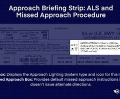
The textual missed approach instructions are located at the top of the Instrument Approach Procedure (IAP) chart in the Pilot Briefing section. Additionally, a quick-reference visual summary of these instructions—using text and standard icons—is depicted in the profile view.
Profile View: The side/vertical-view area includes a concise text summary, and often quick-reference icons, to remind you of the immediate climb and turn actions. [1, 2]
Last edited:

Kritchlow
Final Approach
- Joined
- Dec 2, 2014
- Messages
- 7,956
- Display Name
- Kritchlow
Shoot… always thought it was one minute legs.Are you talking about the hold on the missed approach procedure? It is charted, there just isn’t a racetrack drawn; in which case it’s just a standard hold with 1mile legs.
That said, Im sure you’re right. It’s been quite some time since I’ve had an opportunity to review that.

- Joined
- May 25, 2006
- Messages
- 21,997
- Location
- KTTA, North Carolina
- Display Name
- Who you kiddin?
- Home Airfield
- KTTA
Have we beaten this to death enough? My summary FWIW
1. The regulatory source document defines the hold as west of OCN on a 90° inbound course.
2. The regulatory source document says not to chart the hold.
3. The FAA approach plate provides the missed approach course to OCN and instructs the pilot to hold there. But, in accordance with the source document’s instructions, the FAA does not chart the hold itself.
4. In the absence of specific instructions about a hold, the AIM recommends a direct entry on the course to the hold, here, hold SE on the OCN R145. Assuming you were flying exclusively with VOR/LOC avionics, that’s what you would do if you did not get holding instructions. But…
4. Other sources do chart the regulatory hold. Garmin Pilot SmartCharts have been mentioned. For another example, if you check your GPS database, you will see
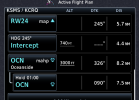
1. The regulatory source document defines the hold as west of OCN on a 90° inbound course.
2. The regulatory source document says not to chart the hold.
3. The FAA approach plate provides the missed approach course to OCN and instructs the pilot to hold there. But, in accordance with the source document’s instructions, the FAA does not chart the hold itself.
4. In the absence of specific instructions about a hold, the AIM recommends a direct entry on the course to the hold, here, hold SE on the OCN R145. Assuming you were flying exclusively with VOR/LOC avionics, that’s what you would do if you did not get holding instructions. But…
4. Other sources do chart the regulatory hold. Garmin Pilot SmartCharts have been mentioned. For another example, if you check your GPS database, you will see

- Joined
- Aug 9, 2022
- Messages
- 1,171
- Location
- Surrounded by Civil War ghosts
- Display Name
- Probably AI
- Home Airfield
- KHWY
Pretty sure it's usually timed legs on a VOR hold and distance legs on a GPS hold. I may be wrong. In this instance, I'd do one-minute legs, and that seems to be borne out the avionics image posted by @midlifeflyer which seems to reflect a 1 minute hold.Shoot… always thought it was one minute legs.
That said, Im sure you’re right. It’s been quite some time since I’ve had an opportunity to review that.
The biggest question for me is how pilots are supposed to figure out the correct hold while briefing the approach from the plate. This seems like a situation in which you could have two different holding patterns for a procedure, depending on your information source and avionics. I don't think it's a safety issue, but it just is a little annoying from a systems perspective.Have we beaten this to death enough?
So what was the purpose of the original question then?No. It’s required not to be. See post #16
luvflyin
Touchdown! Greaser!
- Joined
- May 8, 2015
- Messages
- 17,444
- Location
- Santa Barbara, CA
- Display Name
- Luvflyin
- Home Airfield
- KVUO
To see what people would do.So what was the purpose of the original question then?
luvflyin
Touchdown! Greaser!
- Joined
- May 8, 2015
- Messages
- 17,444
- Location
- Santa Barbara, CA
- Display Name
- Luvflyin
- Home Airfield
- KVUO
Good summary. A question remains. Why? Why did ATC not want it charted? Why did they not want pilots to see it? I wonder if they were aware it was going to be in the data bases and get charted on some vendors charts such as Garmin Smart Charts. And show on GPS Navigators.Have we beaten this to death enough? My summary FWIW
1. The regulatory source document defines the hold as west of OCN on a 90° inbound course.
2. The regulatory source document says not to chart the hold.
3. The FAA approach plate provides the missed approach course to OCN and instructs the pilot to hold there. But, in accordance with the source document’s instructions, the FAA does not chart the hold itself.
4. In the absence of specific instructions about a hold, the AIM recommends a direct entry on the course to the hold, here, hold SE on the OCN R145. Assuming you were flying exclusively with VOR/LOC avionics, that’s what you would do if you did not get holding instructions. But…
4. Other sources do chart the regulatory hold. Garmin Pilot SmartCharts have been mentioned. For another example, if you check your GPS database, you will see
View attachment 153003
Clip4
Touchdown! Greaser!
If I am flying a typical SEL airplane with RNAV, I am not timing. Use an approximate distance based on GS/60. GS 120/60=2 nm.Pretty sure it's usually timed legs on a VOR hold and distance legs on a GPS hold. I may be wrong. In this instance, I'd do one-minute legs, and that seems to be borne out the avionics image posted by @midlifeflyer which seems to reflect a 1 minute hold.
The biggest question for me is how pilots are supposed to figure out the correct hold while briefing the approach from the plate. This seems like a situation in which you could have two different holding patterns for a procedure, depending on your information source and avionics. I don't think it's a safety issue, but it just is a little annoying from a systems perspective.
- Joined
- May 25, 2006
- Messages
- 21,997
- Location
- KTTA, North Carolina
- Display Name
- Who you kiddin?
- Home Airfield
- KTTA
I guess if you are in the situation where you are doing this without GPS support, ask.The biggest question for me is how pilots are supposed to figure out the correct hold while briefing the approach from the plate. This seems like a situation in which you could have two different holding patterns for a procedure, depending on your information source and avionics. I don't think it's a safety issue, but it just is a little annoying from a systems perspective.
I expect in this area, the answer is likely to be that there will be an ATC-direct missed approach, but it's really just about noticing that there is no charted hold and asking, ""SOCAL, what should I do if I have to go missed?
Timed or distance hold? Well, the default for a ground based navaid approach is timing. And I don't see anything on the chart about DME which would be required for a distance hold.
- Joined
- Aug 9, 2022
- Messages
- 1,171
- Location
- Surrounded by Civil War ghosts
- Display Name
- Probably AI
- Home Airfield
- KHWY
Well, I appreciate the discussion here and elsewhere. I got my instrument rating a couple of decades ago, but circumstances changed such that I never used it in anger. Now I'm nearing the end of a crawl-walk-run IPC to get current and reasonably proficient again. This is great stuff. Thanks all!

Roger Wilco
Line Up and Wait
I share your concern, and find it difficult to understand why it was an intentionally omitted. Your OP stipulated "you can’t get ahold of ATC to ask," and I initially interpreted that as a lost comm scenario, but it seems that you meant to describe a more common situation in which you just couldn't get a word in due to frequency congestion. In either case, you have to figure it out on your own, and I agree with those who would hold S of OCN on R-145.Good summary. A question remains. Why? Why did ATC not want it charted? Why did they not want pilots to see it? I wonder if they were aware it was going to be in the data bases and get charted on some vendors charts such as Garmin Smart Charts. And show on GPS Navigators.
Things get more interesting if we actually encounter a real lost comm situation and can't restore communications. 91.185 does not provide specific guidance in the case of a missed approach, so it's up to us to figure it out. I once went NORDO for about 5 minutes on a busy missed approach (due to I is an idiot). During an extensive self-debrief after that flight I realized that none of my training had discussed this situation, and I was not prepared for it when it happened. Takeaway: consider the circumstances and options and come up with a plan before commencing the approach.
MauleSkinner
Touchdown! Greaser!
It’s not charted on the Jepp chart, either.Anyone have the Jepp for this procedure? I wouldn’t be surprised to see the hold charted there.
- Joined
- May 25, 2006
- Messages
- 21,997
- Location
- KTTA, North Carolina
- Display Name
- Who you kiddin?
- Home Airfield
- KTTA
Yeah. I saw that. Asked a Jepp user yesterday.It’s not charted on the Jepp chart, either.

Sure but that isn’t the correct way. You would hold over OCN using standard holding criteria (1-minute inbound legs below 14,000 feet).If I am flying a typical SEL airplane with RNAV, I am not timing. Use an approximate distance based on GS/60. GS 120/60=2 nm.
Clip4
Touchdown! Greaser!
Maybe, but it sure makes adjusting leg length a lot easier than timing alone. Next you be claiming you shouldn’t use a timer for a course reversal for published RNAV HILPT because the pattern shows distance.Sure but that isn’t the correct way. You would hold over OCN using standard holding criteria (1-minute inbound legs below 14,000 feet).
Last edited:
Well, I am not claiming anything. It’s a ground based NAVAID and no holding instructions are given. By default, you revert to the holding procedures as outlined in AIM 5-3-8, unless ATC specifies otherwise.Maybe, but it sure makes adjusting leg length a lot easier than timing alone. Next you be claiming you shouldn’t use a timer for a course reversal for published RNAV HILPT because the pattern shows distance.
- Joined
- May 25, 2006
- Messages
- 21,997
- Location
- KTTA, North Carolina
- Display Name
- Who you kiddin?
- Home Airfield
- KTTA
...which will be difficult if it's lost com.Well, I am not claiming anything. It’s a ground based NAVAID and no holding instructions are given. By default, you revert to the holding procedures as outlined in AIM 5-3-8, unless ATC specifies otherwise.

‘Zactly………which means you hold as described in AIM 5-3-8....which will be difficult if it's lost com.

- Joined
- May 25, 2006
- Messages
- 21,997
- Location
- KTTA, North Carolina
- Display Name
- Who you kiddin?
- Home Airfield
- KTTA
...or have an in-flight source that depicts the actual hold. The "do not chart" still seems a bit weird.‘Zactly………which means you hold as described in AIM 5-3-8.
It is, but, if you understand general holding rules, it is pretty easy to figure out what to do in this case....or have an in-flight source that depicts the actual hold. The "do not chart" still seems a bit weird.