Formation Flight

Ed Haywood

Final Approach
Joined
Jul 12, 2020
Messages
7,624
Location
Tampa FL
Display Name
Ed
Home Airfield
FD77
Talk about addicting! I love it. Right up there with diving into the box at a contest in terms of adrenaline and focus.

The hard part is getting decent instruction as a civilian if you did not get trained in the military. If you're lucky, you can find a structured program like the T-6 or Chinese Fighter guys have.

Fortunately, I have had 3 military guys on our airfield willing to teach me. The first was a retired F14/F18 pilot with a Pitts. Unfortunately he passed away from a medical issue. The second was a former B1 pilot and current USAF reserve instructor. He also passed away from a medical issue. Both gone way too soon. RIP Randy and Jason.

I was feeling sorry for myself when I ran across yet a third guy. Former F18 pilot and current reserve T-45 instructor in MS. Teaches formation flight IN the military. Totally planning on milking this connection. He knows Decathlons too, so he understands the issues with formation flight in mixed types, especially high/low wing.

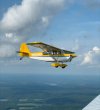
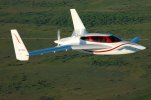
Picture below is from trip back from Oshkosh.

markup_1000004505 (1).jpg
 
Yeah done it a bunch over the years Army and post Army buds. While it fulfills a military tactical role, in the civ world it’s just plain fun, team building, etc. My only gripe is a lack of standardization in both military / civilian and ATC side. FAST helps and they’ve done better in ATC in recent years in updating procedures though.

IMG_0149.jpeg
IMG_0148.jpeg
IMG_6013.jpeg
IMG_0986.jpeg
 
Last edited:
My first aerobatic instructor told me to never fly formation with a pilot not trained in the military (before FAAST).

I do not fly formation with anyone not trained to military or FAAST standards. Too much to go wrong.
 
From 1998 through 2023, there were 53 homebuilt aircraft involved in midairs. Nineteen of the aircraft were engaged in formation flying when the collision occurred. Thirteen of the nineteen were RVs.....

Ron Wanttaja
Honestly, I consider 19/53 to be pretty low all things considered.
 
1-See my DM

2-If you have connections at Spruce Creek, there’s a good community of people there who can help. It’s where I got my FAST Wing and then Lead cards a while back.

3-flyfast.org and FFI.aero are good resources, especially for pubs

4-Generally, people should be very careful not to just read a book and then go fly formation with an untrained buddy.
 
It's all fun until it isnt. I had two friends perish while doing a formation flight, the pilot in the other plane made it back safely. Both pilots were experienced in formation and had attended numerous clinics and training. It only take a half second on not being perfect for it to all go wrong. Think carefully about the risk you are taking and if its worth it. Also remember that your safety is not just on you during the flight. Not only do you need to be perfect but so does everyone else in the formation.
 
Curious - given all the risk, what advantages does the military gain by regularly flying formation?
 
Curious - given all the risk, what advantages does the military gain by regularly flying formation?
It's less risky to fly in formation than not when there are dozens or dozens of dozens of planes involved in an exercise. Getting lots of planes into the air, to a target, and back on the ground again efficiently would be much more risky without formation flying.

Not to mention flying in formation is the mission. You have to train for the mission.

You're kind of saying "flying military missions is dangerous, so what do we gain by doing it".
 
Last edited:
Curious - given all the risk, what advantages does the military gain by regularly flying formation?
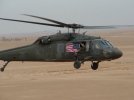
Well the book answer for helicopters, “Formation flight allows effective employment and control of two or more aircraft to accomplish a mission. The strengths of formations include control, predictability, flexibility, mutual support, and threat detection.”

The common sense answer, it allows the ground commander to maximize the greatest effect against the enemy. Example, you’re doing a cordon and search of a town (Mogadishu). You want all of your elements to arrive at once. Flying formation allows for that. It does increase vulnerability though because it’s easier to detect a flight visually, thermally or electronically (radar). But, it can also create confusion in that if flying in close formation, the enemy might show less aircraft on radar than actual.

In my experience, the powers that be accept the increased risk with possible midairs in order to have maximum power projection. The problems that occur are usually on landing but with proper planning, the risk can be minimized.
 
Curious - given all the risk, what advantages does the military gain by regularly flying formation?

Employment tactics, mutual support, in-flight supervision, instruction, evaluation, and aerial refueling skills to begin with.
 
Just don’t use CTAF to yap amongst yourselves. Heard some RVs “tribute flight” the other day over CTAF. I don’t care they made up their own callsign…with no number. :dunno: Just don’t be hogging the freq with internal nonsense about the overhead you’re about to do. They have internal freqs (122.75) for such things.
 
Well the book answer for helicopters, “Formation flight allows effective employment and control of two or more aircraft to accomplish a mission. The strengths of formations include control, predictability, flexibility, mutual support, and threat detection.”

The common sense answer, it allows the ground commander to maximize the greatest effect against the enemy. Example, you’re doing a cordon and search of a town (Mogadishu). You want all of your elements to arrive at once. Flying formation allows for that. It does increase vulnerability though because it’s easier to detect a flight visually, thermally or electronically (radar). But, it can also create confusion in that if flying in close formation, the enemy might show less aircraft on radar than actual.

In my experience, the powers that be accept the increased risk with possible midairs in order to have maximum power projection. The problems that occur are usually on landing but with proper planning, the risk can be minimized.

In the case of RW carrying troops, also makes it possible to fit multiple ships into a small LZ, so the ground force can quickly overwhelm anyone on or near the LZ. During extraction, getting out in one lift prevents enemy forces from reacting to and attacking follow-on lifts.
 
In the case of RW carrying troops, also makes it possible to fit multiple ships into a small LZ, so the ground force can quickly overwhelm anyone on or near the LZ. During extraction, getting out in one lift prevents enemy forces from reacting to and attacking follow-on lifts.
There was a scene in “We Were Soldiers” where they dropped a lift right in the perfect spot to repel the NVA assault. Not sure if that was true to actual events but shows how massing the correct amount of forces can be effective.

Best reasons for two ship in helicopters is just simple mutual support. MEDEVAC used to go it alone in the early days of OIF / OEF. Someone finally decided it makes more sense to send a non-MEDEVAC 60 to fly with them. Obviously MEDEVAC aircraft are unarmed but the bad guys seem to think a Red Cross on the nose is a target. “Med chase” can provide overhead cover and also pick up crew / wounded if MEDEVAC gets shot up.
IMO flying anywhere in combat alone is nuts. Only exception would be a night insert of small recon element, and even then I would want QRF on strip alert.
 
From 1998 through 2023, there were 53 homebuilt aircraft involved in midairs. Nineteen of the aircraft were engaged in formation flying when the collision occurred. Thirteen of the nineteen were RVs.....
The RV pilot stereotype would make that unsurprising, but... if you correct that for the percentage of actively flying homebuilts that are RVs... well, I guess it's better but still reinforces the stereotype.
 
I learned that I have an intensely visceral fight or flight reaction doing parade formation with a pilot I don't know or trust. I would have clawed myself out of the plane via the storm window if I could have.

The training was worth it to learn that about myself. Now I can, in learned and trained fashion, demand other planes stay the hell away from me :D

The others at the event seemed to be having a lot of fun, so no yums yucked here -- this is my issue and I'm glad to have learned it.
 
Employment tactics, mutual support, in-flight supervision, instruction, evaluation, and aerial refueling skills to begin with.
You forgot the most important three.

1) Looks cool
2) Great fun
3) Chicks dig it.

:D :D
 
IMO flying anywhere in combat alone is nuts. Only exception would be a night insert of small recon element, and even then I would want QRF on strip alert.
This. We never went anywhere alone. We once launched during the day (:eek2:) on a CASEVAC mission, and while the lead bird landed to pick up the casualty, we flew an orbit overhead so we could cover with the minigun and M240 if it came to that. Even in the scenario you presented, we'd leave one aircraft to orbit at a predetermined point most likely less than a minute away, in case things went sideways. Being alone is scary.
 
This. We never went anywhere alone. … Being alone is scary.
To be fair, the basic fighting unit for most aviation platforms is a 2-ship for lots of the reasons already covered. Some platforms execute as single ships because they were designed to.

It takes a different mindset and TTPs to be successful in covert and overt ops as a single ship. It’s neither right nor wrong, just different. Not much different than the A-10 B-course, where your first sortie is solo since there’s no two-seaters.
 
And remember, I only want to hear three things from my wingman…

“2”
“lead, you’re on fire”
“I’ll take the girthy one”
You forgot "Bingo"
 
Solo but not single ship. Instructor flies wing/chase. We joked they were there to call the fire trucks to the crash site. :D

Concur. It’s just a different mindset than having an IP in the backseat.
 
It is also a very honest airplane to fly.
 
Curious - given all the risk, what advantages does the military gain by regularly flying formation?
Mid-airs definitely happen in formations, but it's not quite as risky as you may think once all players are thoroughly trained. I was an instructor in USAF pilot training a few years ago and have flown formation in three different military aircraft since then. It definitely seems like a risky burden when beginning training, but after gaining proficiency, it becomes second nature and occupies much less thought for the pilot and feels just as flexible as flying single ship if you're in a maneuverable airplane. The key is that everyone operates from the same principles and formation contract. The stick and rudder skills come pretty quickly. Leading a formation takes more time and experience to do well. In a less maneuverable airplane, like a mobility platform (I currently fly C-130s), formation flying can feel more burdensome but is still beneficial for two main reasons already stated, mutual support and increased capability. The mutual support comes from covering another members' blind spots when scanning for threats, dividing up mission duties, etc. Increased capabilities are mass on DZ. If we're doing a mass insertion of an army battalion for example, a few airplanes may have all the troops, another few may have their equipment, supplies, etc. They definitely want all that on the DZ at the same time and not piecemeal. In a combat platform, a 4-ship of F-XXs now has 4x as much ammunition and 4 radars can now be scanning different parts of the sky, being able to cover far more airspace. A modern fighter in tactical formation is 30ish miles apart, line abreast, data linked and out of visual contact--hardly what we would think of as a formation, but you can imagine how much more airspace that team is covering than a single airplane. An F-22 pilot friend of mine once told me the scariest part of a mission is when they rejoin their wingman to fingertip/route position on recovery after not seeing him all day since they rarely spend their flying time that close. Most military formation is not flown in the classic "airshow" spacing.

Get formal training, then only fly with others who are formally trained and qualified.

Plan and brief, then fly what you've planned and briefed.
Both of these. Formal training, even in the military, is different among airframes, services, etc. The core capabilities are there, but until you establish a formation contract (plan) and ensure all trained players are briefed, you may not be any safer than before.
 
When I think of formation, I remember a time when we were number 25 in a 26-ship formation to drop Marines on an island off the coast of South Carolina. The lead navigator made a miscalculation, and we watched hundreds of Marines parachute into the ocean just offshore, wearing full combat gear. They probably still hate the Air Force.

That kind of air drop depends on timing. Once the lead airplane made the mistake, all the others had to drop on schedule to avoid making things worse.
 
Or, you can find a professional program that teaches aerobatics. Or a university program that teaches the same. May not include formation flying but it's a start.
 
Talk about addicting! I love it. Right up there with diving into the box at a contest in terms of adrenaline and focus.

The hard part is getting decent instruction as a civilian if you did not get trained in the military. If you're lucky, you can find a structured program like the T-6 or Chinese Fighter guys have.

Fortunately, I have had 3 military guys on our airfield willing to teach me. The first was a retired F14/F18 pilot with a Pitts. Unfortunately he passed away from a medical issue. The second was a former B1 pilot and current USAF reserve instructor. He also passed away from a medical issue. Both gone way too soon. RIP Randy and Jason.

I was feeling sorry for myself when I ran across yet a third guy. Former F18 pilot and current reserve T-45 instructor in MS. Teaches formation flight IN the military. Totally planning on milking this connection. He knows Decathlons too, so he understands the issues with formation flight in mixed types, especially high/low wing.

Picture below is from trip back from Oshkosh.

View attachment 140738
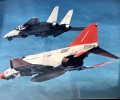
I used to fly with the Cherokees to Oshkosh gang. They had a few F-4, F-18 and F-16 veteran drivers who were a hoot to tutor under.

Plus had a good view from the office in the back seat 'flipping switches'

1750894419080.jpeg
 
It takes a different mindset and TTPs to be successful in covert and overt ops as a single ship.

I was just re-reading some accounts of MACV-SOG recon teams on the HCM Trail; probably the most high risk special ops the US has ever conducted.

Standard infil practice was two aircraft, one loaded and one empty. Each helo would take turns doing multiple false insertions on the way in and out. NVA observer teams on hills triangulated the flights, so that gave them more LZ's to check.

It is strange that so little is publicly known of those operations.

I’ve read thru a few books on the subject lately and will be reading more. The CCA and CAS support, along with the missions themselves, was just incredible in so many ways.

ETA: I don’t think many understand this year is the 50th year since Saigon fell and everything that went with that.
 
Last edited:
It is strange that so little is publicly known of those operations.
For one the escapades of the Studies and Observation Groups didn't really become public knowledge until the 80s. Add in the small numbers of those who participated in field ops, they really didnt have much to say. Outside a few books written most preferred a quieter life after the fact. I think if there hadn't been such a deep infiltration of the SOG ops by the North, there would have been a "larger" celebration of their achievements. Regardless, they were definitely the badest of the bad in my book.
 
I don’t think many understand this year is the 50th year since Saigon fell and everything that went with that.
Here is something I wrote back then:

~~~~~~~~~~~~~~

April 1, 1975


To everyone who wants to know how I feel, now that Vietnam is going down the tubes:

The news reports don’t even mention Phu Cat, where I first set foot in the Republic of Vietnam. It wasn’t much, and neither was the country. Hot sun and green mountains. Just a place where some of us spent a small part of our lives. Where some spent the rest of their lives.

You need a passport now to land at Da Nang or Hue/Phu Bai. I won a few beers from Bruce on my landings there, and nearly bought the farm one day when a mountain got in the way of my base turn. We called that “tactical VFR.” It meant, “**** on the weather, complete the mission!” I personally hauled the last U.S. Marines out of Da Nang almost three years ago. And I wouldn’t take them back to that place for anything in the world. The food was lousy.

At Pleiku one day a brand new loadmaster may have saved our lives. I remember people running faster than I ever thought they could move. I remember pieces of a building flying through the air. I remember telling the copilot to forget the checklist because we were ready to takeoff now and I remember the crew laughing as we banked left and looked down at Hueys going out to look for the bad guys. It was our first experience with incoming, and we survived. It was one of the times we realized there was a war going on, and that we were a part of it. I hauled a lot of trash into Pleiku. I don’t remember taking anything out. Just bodies.

Qhi Nhon fell yesterday, and that’s a shame. They had the best hamburgers in all of Vietnam. I asked George Washington Carver Foxworth to give us an airborne radar approach into Qhi Nhon one day, but we could have flown all the way to Laos before he gave us a turn. George wasn’t the greatest navigator, but he always got us home. Qhi Nhon was a short strip with tricky crosswinds, and my copilot Frog always had a hard time there. One day with a tired airplane that didn’t want to get off the ground, he almost took the fence along. I took a load of draft dodgers and deserters out of Qhi Nhon. A Zip officer told me they were three-time losers. Handcuffed and barefoot, many on crutches, they would be executed when they got to Nha Trang.

I always drank root beer at Nha Trang. There was good maintenance there, and you were never in a hurry to leave. A Korean boy asked me to check his grammar in an English composition for his teacher back home. We’d always land and takeoff toward the east, flying over beautiful beaches and a majestic Buddhist temple on a hill.

We called it “Cam Ranh by the Sea” in those days, and the sea claimed more than a few American lives with a wicked undertow. We used to fly up the valley from Phan Rang, ignoring the safety of going “feet wet” over water, just to gander at a sunken submarine… a landmark, left over from a different war. We always bought ice cream at Cam Ranh Bay, in a passenger terminal where our flight suits made us feel like we were wearing four stripes on a United Airlines uniform at O’Hare Field. I bought my “Southeast Asia War Games” memorial cigarette lighter there, before they closed it down. Late in 1972, I landed at Cam Ranh Bay to help a crippled C-130. It was an uncontrolled airfield then, with runways as smooth and long as Minneapolis. Deserted. I wonder what it is like now.

I guess I only landed six times at Kontum, but my heart beat faster there than any time in my life. It was the only place I’ve been where I thought I was going to die. We called it “Kansas City,” as if it were worth saving, and we airdropped supplies in the daytime and risked our necks landing at night. We knew it wasn’t worth the price, but we did it anyway, to prove it could be done, to give them every break, to say that, “If you lose this place, it’s not because of us.” They gave it up without a fight last week. I left a friend in Kontum. Forever. Nothing we do now can make that any different.

 
Last edited:
ETA: I don’t think many understand this year is the 50th year since Saigon fell and everything that went with that.

I vividly remember watching it on TV with my Dad when I was 10. He was there 1967/68 as an advisor to an ARVN infantry battalion. He saw heavy fighting during Tet.

For one the escapades of the Studies and Observation Groups didn't really become public knowledge until the 80s.

Within my professional community, SOG operations were well known. I worked with a few of them and got to talk to them. The one thing they all said was that they did not expect to live. The SOG casualty rate was over 100%, meaning there were more combat wounds and deaths than there were men assigned.

I had a civilian working for me in 2007 who was retired SF and had been in SOG. He had ten purple hearts. He had been shot in the face twice.
 
Back
Top