Escambia County, Florida PA28 lands highway

Peter Ha

Pre-takeoff checklist
Joined
Nov 18, 2019
Messages
231
Display Name
Leadpan
Home Airfield
KAJO
ESCAMBIA COUNTY, Fla. (WALA) - A small airplane has made an emergency landing Monday morning on eastbound Interstate 10 in Florida’s Escambia County, authorities said.

No injuries were reported after a small plane made an emergency landing on I-10 in Escambia County, Fla.(Escambia County Sheriff's Office)
According to the Escambia County Sheriff’s Office, the pilot and a flight student reported mechanical issues that forced the emergency landing.

No injuries were reported.

The ECSO said eastbound traffic will be moving slowly until the aircraft is removed. ESCAMBIA COUNTY, Fla. (WALA) - A small airplane has made an emergency landing Monday morning on eastbound Interstate 10 in Florida’s Escambia County, authorities said.
No injuries were reported after a small plane made an emergency landing on I-10 in Escambia...
According to the Escambia County Sheriff’s Office, the pilot and a flight student reported mechanical issues that forced the emergency landing.
No injuries were reported.
The ECSO said eastbound traffic will be moving slowly until the aircraft is removed.


What’s the consensus on putting it down on a highway over a burning smell?
 
What’s the consensus on putting it down on a highway over a burning smell?

From what I've heard elsewhere in the grapevine, this was more than just a smell. Total loss of oil pressure and engine seized. Word is this was not the instructor's first in-flight engine failure, and she handled it calm and cool as a cucumber. This was the student's first flight, some impression!
 
I think I would of went over the sign. Looked like they had some extra speed. They went under and it worked. Bold move
 
I'm quite familiar with that area, having flown out of KPNS, 82J, and the NAS. There aren't really any decent areas to set down other the highway. Lots of residential/commercial buildings, and the few non-built areas are heavily forested. The nearest airport is KPNS, with the threshold of Rwy 17 about 2 miles Southeast of the location that she put down. I think that she did a good job.
 
I think I would of went over the sign. Looked like they had some extra speed. They went under and it worked. Bold move
source.gif

You have a split second to decide, do you have the energy to clear it without stalling, or try to duck under then bleed the energy before touching down. They walked away and other than the failed engine, the airplane is undamaged.
 
I'm quite familiar with that area, having flown out of KPNS, 82J, and the NAS. There aren't really any decent areas to set down other the highway. Lots of residential/commercial buildings, and the few non-built areas are heavily forested. The nearest airport is KPNS, with the threshold of Rwy 17 about 2 miles Southeast of the location that she put down. I think that she did a good job.
View attachment 154035

You have a split second to decide, do you have the energy to clear it without stalling, or try to duck under then bleed the energy before touching down. They walked away and other than the failed engine, the airplane is undamaged.
... and maybe they wanted to keep speed up to merge with traffic? :)
 
I used to drive that part of I-10 daily for my commute between Milton and NAS Pensacola. As if the aforementioned neighborhoods and trees, the next option is swamp or the Bay. Methinks I'd have taken the highway option as well. On that stretch, the cars are going almost as fast as an airplane anyway.
 
What’s the consensus on putting it down on a highway over a burning smell?

From what I've heard elsewhere in the grapevine, this was more than just a smell. Total loss of oil pressure and engine seized. Word is this was not the instructor's first in-flight engine failure, and she handled it calm and cool as a cucumber. This was the student's first flight, some impression!

Look at the truck dash cam, that prop ain't turning, dead stick landing. Stellar job!
 
You have a split second to decide, do you have the energy to clear it without stalling, or try to duck under then bleed the energy before touching down. They walked away and other than the failed engine, the airplane is undamaged.
^^^^This^^^^

I faced a similar scenario Sunday except the road had no traffic of immediate concern and the pair of wires crossing the road was not apparent until maybe two seconds of notice. I chose to risk a bounce and collapsed gear/vert stab strike vs a pull up and stall. Oddly enough, my passenger said the landing was the smoothest of the trip. Go figure.
 
So is it cheaper to helo it to the closest airport for repairs, or remove the wings and flatbed it /reassemble at the destination?

I don't think I'd have ever gone back for lesson #2 if that's how my discovery flight went...
 
So is it cheaper to helo it to the closest airport for repairs, or remove the wings and flatbed it /reassemble at the destination?

I don't think I'd have ever gone back for lesson #2 if that's how my discovery flight went...

Flatbed by a wide margin. A helo with any decent lifting capability is going to cost $1000s per hour to operate. Depending on the distance and obstacles, I've even seen the aircraft put on a flatbed at a 45 degree angle to reduce width, and escorted as a "Wide Load" back to the airport.
 
She sounded really composed on the radio. Super impressive save.
 
  • Like
Reactions: MFE
I think I would have went over the sign. Looked like they had some extra speed. They went under and it worked. Bold move
Generally, yes, but specifically in this case, the signage provided visual cue so as to avoid the wires which are hard to see
 
Generally, I think this was a case of violating the superior pilots use their superior judgement so as not to need their superior skills; she demonstrated skills but should have set down in a field earlier so as not to need them. I don’t blame her in this, got an engine issue, let’s head back quick… this is where we can learn from this. Be more like a glider pilot. Direct don’t cut it. Pick a path such that better off site landing options remain in your glide range until you can get to a position to glide to the airport. In this case a more southerly or westerly than direct would have helped. Don’t give up options until you have secured new ones. If you can’t secure a new option, better to execute the current option. Make it your choice not fate’s. In this she threaded a needle, but fate did so too just before hers. Were that truck just a little further ahead, or just a little more traffic, she wouldn’t have been able to cut under and therefore would be in the face of the wires.


I used to drive that part of I-10 daily for my commute between Milton and NAS Pensacola. As if the aforementioned neighborhoods and trees, the next option is swamp or the Bay. Methinks I'd have taken the highway option as well. On that stretch, the cars are going almost as fast as an airplane anyway.
You’re assessing from the point of engine failure rather than earlier with indications of engine problems.

 
Not sure how comments get approved, disapproved, or marked for review; seems like those with links are floating in purgatory. Anyway, here is one on the subject of highway landing minus the links:

Generally, I think this was a case of violating the superior pilots use their superior judgement so as not to need their superior skills; she demonstrated skills but should have set down in a field earlier so as not to need them. I don’t blame her in this, got an engine issue, let’s head back quick… this is where we can learn from this. Be more like a glider pilot. Direct don’t cut it. Pick a path such that better off site landing options remain in your glide range until you can get to a position to glide to the airport. In this case a more southerly or westerly than direct would have helped. Don’t give up options until you have secured new ones. If you can’t secure a new option, better to execute the current option. Make it your choice not fate’s. In this she threaded a needle, but fate did so too just before hers. Were that truck just a little further ahead, or just a little more traffic, she wouldn’t have been able to cut under and therefore would be in the face of the wires. Search for “Contrarian Aviator” and you can find two pieces with more details. Look also for the UK Flyer with discussion to partial power loss scenarios.
 
You’re assessing from the point of engine failure rather than earlier with indications of engine problems.
If you're referring to the last line of my post...it was sarcasm. I-10 in that area is commonly referred to as "Ten-adega." Drivers doing 80+ are common.
 
Imagine your engine coughs. The nearest airport is five miles west but the path is over a mountain lake then a ridge. Twelve to the east is another airport with farm fields the whole way there. Lake might look nice if you have floats, but in this imagining we don’t. The first field looks great if you’re a helicopter. Today we’re fixed wing. We’ve been considering and teaching suspect engine and partial power loss situations wrong folks.

Thoughts to the specific incident referenced in the links and similar potential situations:

1. You’re not racing the clock, you’re racing your energy budget. You might still be able to add to this while you should also keep in mind how it gets bled away.

2. While the FAA teaches “head to the nearest airport, be prepared for a forced landing,” and likely ‘be prepared for a forced landing’ drives ‘head to the nearest airport,’ these are actually competing interests. Being suspicious to engine longevity is good though the priority is to be prepared for forced landing. It is really nearest airport along a path that facilitates preparation in case of engine loss. This leads to

3. Don’t cede an option till you’ve secured a new option. If you can’t get a new option, it’s time to use the option.
 
Imagine your engine coughs. The nearest airport is five miles west but the path is over a mountain lake then a ridge. Twelve to the east is another airport with farm fields the whole way there.
Yeah and what kind of farm fields are these? A field is not just a field. And do you even know the difference in fields. We talking rocky fields, sand, loam? Can you go in gear up or you got those fixed gear that are gonna catch on any rock or dig in to a loam soil. What crops are currently on those fields? Have you ever landed on a field before? Sure you have some similar considerations with highways, signs, powerlines, traffic, ever landed on a highway, etc but the surface is known.
 
Yeah and what kind of farm fields are these? A field is not just a field. And do you even know the difference in fields. We talking rocky fields, sand, loam? Can you go in gear up or you got those fixed gear that are gonna catch on any rock or dig in to a loam soil. What crops are currently on those fields? Have you ever landed on a field before? Sure you have some similar considerations with highways, signs, powerlines, traffic, ever landed on a highway, etc but the surface is known.
Like water I’m going in gear down. Seems few people die in flip overs at slow speeds. If that’s your worry.
 
Like water I’m going in gear down. Seems few people die in flip overs at slow speeds. If that’s your worry.
Not worried flip over but nosing into soil you might stop in 10 feet versus sliding 200 to 500 feet with more surface area, think of the G force. It depends on crop and soil type whether gear up of down. But then if you dont know what you don't know ...
 
Not worried flip over but nosing into soil you might stop in 10 feet versus sliding 200 to 500 feet with more surface area, think of the G force. It depends on crop and soil type whether gear up of down. But then if you dont know what you don't know ...
That depends if you have trees you could hit or ditches.
 
Imagine your engine coughs. The nearest airport is five miles west but the path is over a mountain lake then a ridge. Twelve to the east is another airport with farm fields the whole way there. Lake might look nice if you have floats, but in this imagining we don’t. The first field looks great if you’re a helicopter. Today we’re fixed wing. We’ve been considering and teaching suspect engine and partial power loss situations wrong folks.

Thoughts to the specific incident referenced in the links and similar potential situations:

1. You’re not racing the clock, you’re racing your energy budget. You might still be able to add to this while you should also keep in mind how it gets bled away.

2. While the FAA teaches “head to the nearest airport, be prepared for a forced landing,” and likely ‘be prepared for a forced landing’ drives ‘head to the nearest airport,’ these are actually competing interests. Being suspicious to engine longevity is good though the priority is to be prepared for forced landing. It is really nearest airport along a path that facilitates preparation in case of engine loss. This leads to

3. Don’t cede an option till you’ve secured a new option. If you can’t get a new option, it’s time to use the option.
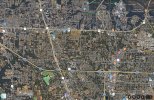
I'm not sure I'm understanding you. Are you suggesting the CFI made a poor decision in putting it down on I-10? If so, please show me on the below map where she had a better option. The flight path goes from the NW corner of this map and she put down just east of the intersection where you see Texas Roadhouse. KPNS, the origin airfield is just out of the map on the SE corner. They had descended to 2000' and maintained for about 9 minutes presumably to land. Not a lot of time to maintain flight with a failed engine.

Screenshot_16-8-2026_17515_earth.google.com.jpeg
 
Last edited:
Like water I’m going in gear down. Seems few people die in flip overs at slow speeds. If that’s your worry.
Neither water nor field should you gear down. Keep it up, up your survival odds, and also let the prop strike trash the engine making it insurance’s problem. You land without damage, you own the precursor engine damage that caused you to go in.
 
I'm not sure I'm understanding you. Are you suggesting the CFI made a poor decision in putting it down on I-10? If so, please show me on the below map where she had a better option. The flight path goes from the NW corner of this map and she put down just east of the intersection where you see Texas Roadhouse. KPNS, the origin airfield is just out of the map on the SE corner. They had descended to 2000' and maintained for about 9 minutes presumably to land. Not a lot of time to maintain flight with a failed engine.

Yes, you’re looking from the point of failure not the point of known engine issues.

Read the articles, see fields and a path with more option sustained along it:


I'm not sure I'm understanding you. Are you suggesting the CFI made a poor decision in putting it down on I-10? If so, please show me on the below map where she had a better option. The flight path goes from the NW corner of this map and she put down just east of the intersection where you see Texas Roadhouse. KPNS, the origin airfield is just out of the map on the SE corner. They had descended to 2000' and maintained for about 9 minutes presumably to land. Not a lot of time to maintain flight with a failed engine.

View attachment 154386
The Internet has a surplus of pilots better than the one in the incident being discussed.
 
Neither water nor field should you gear down. Keep it up, up your survival odds,....

Got any data to support that? I'd hate to think that my fixed-gear plane would be unsurvivable if I had to ditch or set down in a field.
 
Got any data to support that? I'd hate to think that my fixed-gear plane would be unsurvivable if I had to ditch or set down in a field.
With fixed gear, still go for the field. Or water if need be though consider both egress and also hypothermia. Into the wind, flaps, minimum ground speed. With the field, consideration for rows, however, as they could be cause for that gear to flip you over. Those who can retract, belly it up, much more contact area so as to more rapidly slow down with less flip and tumble risk. But still, the field is less risky than I-10 in terms of your personal survival. Sure, more likely to incur damage, but not that much more likely while severity is significantly less.
 
Back
Top