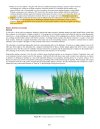
Escambia County, Florida PA28 lands highway

With fixed gear, still go for the field. Or water if need be though consider both egress and also hypothermia. Into the wind, flaps, minimum ground speed. With the field, consideration for rows, however, as they could be cause for that gear to flip you over. Those who can retract, belly it up, much more contact area so as to more rapidly slow down with less flip and tumble risk. But still, the field is less risky than I-10 in terms of your personal survival. Sure, more likely to incur damage, but not that much more likely while severity is significantly less.

Thanks, but not what I asked.

I'm still looking for your data to support wheels up versus down. Are you merely stating an opinion, or are there some actual numbers behind it?
 
Thanks, but not what I asked.

I'm still looking for your data to support wheels up versus down. Are you merely stating an opinion, or are there some actual numbers behind it?
It isn’t opinion, it is physics. You don’t need data to see it. With gear, you have an elevated cg relative to the gear. Now if the gear happens to sink in or catch something, you now have a pivot point to take you over. With gear up, the cg is down while you have no single point to catch and induce a flip. No, there aren’t numbers readily tracked regarding this, but taking a simple look should convince you less risk to go over and less risk for personal injury. Note the flip over was common enough that the military services both stipulated gear up and also created the Dilbert Dunker. Plenty of amphibs have shown landing gear down on the water flips you over (which soft surfaces replicate). Only way to really get a flip gear up is to nose it in. Gear up gives you another advantage — significantly more braking. Your stop distance gets reduced drastically. Again, physics.
 
It isn’t opinion, it is physics. You don’t need data to see it. With gear, you have an elevated cg relative to the gear. Now if the gear happens to sink in or catch something, you now have a pivot point to take you over. With gear up, the cg is down while you have no single point to catch and induce a flip. No, there aren’t numbers readily tracked regarding this, but taking a simple look should convince you less risk to go over and less risk for personal injury. Note the flip over was common enough that the military services both stipulated gear up and also created the Dilbert Dunker. Plenty of amphibs have shown landing gear down on the water flips you over (which soft surfaces replicate). Only way to really get a flip gear up is to nose it in. Gear up gives you another advantage — significantly more braking. Your stop distance gets reduced drastically. Again, physics.

How does belly up reduce pitching moment AND reduce stop distance? What are your qualifications on this subject?
 
Not worried flip over but nosing into soil you might stop in 10 feet versus sliding 200 to 500 feet with more surface area, think of the G force. It depends on crop and soil type whether gear up of down. But then if you dont know what you don't know ...
You'd be surprised in how survivable stopping from 60 kts in ten feet can be (and hopefully much slower, in most of the machines we fly that tend to quit). As in perfectly survivable for most, at around 16g for just a very short time.
 
Imagine your engine coughs. The nearest airport is five miles west but the path is over a mountain lake then a ridge. Twelve to the east is another airport with farm fields the whole way there. Lake might look nice if you have floats, but in this imagining we don’t. The first field looks great if you’re a helicopter. Today we’re fixed wing. We’ve been considering and teaching suspect engine and partial power loss situations wrong folks.

Thoughts to the specific incident referenced in the links and similar potential situations:

1. You’re not racing the clock, you’re racing your energy budget. You might still be able to add to this while you should also keep in mind how it gets bled away.

2. While the FAA teaches “head to the nearest airport, be prepared for a forced landing,” and likely ‘be prepared for a forced landing’ drives ‘head to the nearest airport,’ these are actually competing interests. Being suspicious to engine longevity is good though the priority is to be prepared for forced landing. It is really nearest airport along a path that facilitates preparation in case of engine loss. This leads to

3. Don’t cede an option till you’ve secured a new option. If you can’t get a new option, it’s time to use the option.

Excellent points. Treat every rough engine like it's going to quit one millisecond later. Every second the misbehaving engine remains running is a gift, without any expectation it's going to last.

The route you choose to fly towards a potential runway should include as many survivable landing areas as possible and could / should be serpentine, not straight.
 
Look to this Cessna with a still functioning engine setting it into a field. Let’s speculate a moment, a pin to the exhaust valve came loose. What sort of cascade potentials could such create? Could there be something loose on the cam shaft that could knock other stuff? How about a loose exhaust valve allowing much more unburnt fuel air mixture into the exhaust system thus getting combustion where you don’t want it? Sounds like more than the mere loss of one cylinder’s power, which is more than the fraction of number of cylinders as both you need to compare to power excess not merely total power as you would with a single engine twin, and also as you have internal engine power drains to overcome including that cylinder’s and associated valve’s frictions as well as any compression that cylinder may still be producing. Maybe a third or more power loss outright with potential for cascade. Hmmm….

Great contrast to that other story but no attention to it as no sensationalism.


https://aviation-safety.net/wikibase/575934 (https://aviation-safety.net/wikibase/575934)

https://www.westcentralsbest.com/to...cle_f00c553b-2f5a-4a5b-b769-fa84aee315e5.html (https://www.westcentralsbest.com/to...cle_f00c553b-2f5a-4a5b-b769-fa84aee315e5.html)
 
Doug Ritter has the numbers showing that fixed-gear planes very rarely flip when ditching. He disproved that belief 20+ years ago.

Fixed gear planes also typically have slower approach speeds; gear extended retractable gear planes carry more into it.
 
How does belly up reduce pitching moment AND reduce stop distance? What are your qualifications on this subject?

Why care about my qualifications? Draw it out and prove it to yourself.
 

Attachments

  • IMG_1358.jpeg
    IMG_1358.jpeg
    936.4 KB · Views: 9
  • IMG_1359.jpeg
    IMG_1359.jpeg
    974.7 KB · Views: 9
This is why field over highway and either take it to the field with symptoms or keep fields in glide range while trying to make it back so long as such can be done. This is why a PNS CFI is a lottery winner and not a hero. This is why a Louisiana CFI should be seen as such.

 
Maybe up your maintenance and inspections so all this is not necessary.
 
You’re assessing from the point of engine failure rather than earlier with indications of engine problems.

No, it was about continuing while you had better options at first indication thus getting forced into a box and luckily landing off field in a terrible off field situation of an interstate. Contrast with the other instructor in Louisiana. https://www.westcentralsbest.com/to...cle_f00c553b-2f5a-4a5b-b769-fa84aee315e5.html
And how did you arrive at the conclusion the pilot had adequate time after the loss of oil pressure and propeller stoppage to find the mythical farm field you keep mentioning?
This is why field over highway and either take it to the field with symptoms or keep fields in glide range while trying to make it back so long as such can be done. This is why a PNS CFI is a lottery winner and not a hero. This is why a Louisiana CFI should be seen as such.
Your repeated assertions a random field is always a superior choice over a six lane highway for an off airport emergency landing ignores the fact that all such landings carry an inherent and substantial risk. The pilot in question would have had to give away 2,000' of altitude to choose a field whose details could not have been discerned from that vantage point, and at that moment she had no knowledge of how long the engine would continue to run.

Your post event critique assumes landing in a field would have assured a successful outcome. That borders on the ridiculous. Trees, fences, utility wiring, and other obstacles all present the possibility that a fuel tank breach and fire would have resulted in the worst possible outcome.

The pilot wasn't a "lottery winner." She had less than a minute to choose where to land after the engine locked up, and realized she had to fly under the sign structure or risk hitting the high voltage power lines crossing the freeway. Her radio communications revealed she remained calm and proactive during the event. That's what a pilot in command does.
 
And how did you arrive at the conclusion the pilot had adequate time after the loss of oil pressure and propeller stoppage to find the mythical farm field you keep mentioning?

Your repeated assertions a random field is always a superior choice over a six lane highway for an off airport emergency landing ignores the fact that all such landings carry an inherent and substantial risk. The pilot in question would have had to give away 2,000' of altitude to choose a field whose details could not have been discerned from that vantage point, and at that moment she had no knowledge of how long the engine would continue to run.

Your post event critique assumes landing in a field would have assured a successful outcome. That borders on the ridiculous. Trees, fences, utility wiring, and other obstacles all present the possibility that a fuel tank breach and fire would have resulted in the worst possible outcome.

The pilot wasn't a "lottery winner." She had less than a minute to choose where to land after the engine locked up, and realized she had to fly under the sign structure or risk hitting the high voltage power lines crossing the freeway. Her radio communications revealed she remained calm and proactive during the event. That's what a pilot in command does.

Go back and listen to the tape again. While you do, match the flight aware track with the audio. We only hear from when checking in with tower yet it is readily apparent they knew at that point they knew something was wrong. Now check for fields at that point in time and times previously, such as when they turned to head back rapidly. Multiple minutes with a suspect engine passing up options and getting pinned into a box.
 
Field versus highway is too raw of a choice. There are way too many variables for each type of off-field landing to make a definitive "what I'll do" recommendation either way, such as (but not limited to);

Busy highway Versus highway with light traffic.

Rough fields (including golf courses with golfers, or parks etc) that potentially have rocks, structures, small hills, uneven terrain, trees, fences, wires Versus smooth large, flat plowed farmer's fields.

I frequently fly a direct route over three sections of small mountains with small towns and abundant farmland in the valleys located in between. There is an interstate highway that winds around up and down modest sized notches over each section of forested mountains, of which by chance is within gliding distance during the majority of the route. At a lowish altitude there are times if the engine acted up or quit no way would I be able to reach a smooth farm in the valley, so I'd likely choose to land into the wind on the highway onto a wide gap between vehicles. I'm confident with the ability to do it.

In the event of landing anywhere and a collision with people appeared evident, I would sacrifice the plane maybe killing myself by swerving out of the way instead of potentially killing or seriously injuring any innocent person on the ground... that's just me.

Urbanized areas are an easy call. Don't intentionally choose to head directly into a city or other widespread highly populated regions hoping the misbehaving single engine will keep running before the altitude is gone. Point the plane someplace else with some room to maneuver and continually search for the best survivable location (without people on the ground) if/when the engine quits. Hope is not a strategy, period.

Instead, focus on where to plant it every second of the journey to the best non-populated off-field landing location you can definitely reach. With luck, maybe it is a runway out in a less populated area surrounded by farms.

Different stokes for different folks, but placing myself into a location that seriously endangers others to save myself is not part of my life's plan.
 
Back
Top