engine without logs still a viable core?

DKirkpatrick

Pre-takeoff checklist
Joined
May 18, 2011
Messages
375
Display Name
DKirkpatrick
Home Airfield
KORK
Hello. Looking at an airplane with an engine without logs. Is the engine still valuable as a core? And can it be overhauled and a new logbook established by the engine shop? Coaching appreciated!
 
If you are trading in your core, you'll have to ask the person you are trying to trade it in for.

As for overhauling your own, it certainly can be done.

Anyhow, in either case, it can be done without the logs. The compliance with the TC has to be verified, but that's less of an issue if the engine is apart for the overhaul. Obviously, things that need replacing (cylinders, etc...) don't much care about their prior history.
 
thanks for reply Ron. sounds like an overhaul is in in order. Engine could probably be topped, but it'd still have no logs, except maybe for the one new entry for cylinders.
 
Is the engine still valuable as a core?
It will depend on who you are dealing worth. For example, Lycoming wouldn't accept it without a known total time. Is the data tag still installed?
And can it be overhauled and a new logbook established by the engine shop?
Maybe. An owner can guesstimate the engine total time based on research then have it notarized. However, whether someone would want to overhaul it with that total time would be specific to that person. Definitely doable though. But if you are referring to a new logbook as having zero time then no. Only a rebuilt engine will qualify for zero time and I think your core wouldn't qualify for that.
 
no, it's an old Cont o-300... I just don't want to throw good money after bad... and I don't know what to do with this engine as to whether to have it overhauled, or buy another core that has logbooks. It has a data tag
 
Disassemble and have the parts inspected/machined/yellow tagged. In my mind that would be the path for an overhaul with or without logs.
 
It will depend on who you are dealing worth. For example, Lycoming wouldn't accept it without a known total time. Is the data tag still installed?

Maybe. An owner can guesstimate the engine total time based on research then have it notarized. However, whether someone would want to overhaul it with that total time would be specific to that person. Definitely doable though. But if you are referring to a new logbook as having zero time then no. Only a rebuilt engine will qualify for zero time and I think your core wouldn't qualify for that.
^^^^This.

I've done it twice with an overhaul. See what you can document to make a reasonable estimation for the shop. I was able to find oil analysis records and they were very helpful
 
it has an oil analysis doc with it. maybe that'll help. Otherwise I've gotta go engine shopping.
 
Otherwise I've gotta go engine shopping.
Whats wrong with the engine now besides missing logbooks? There is a route to give you a legit total time and if the engine is repairable then you have a route to have it overhauled. Since this would be your aircraft I not quite following why you would need another engine. Granted its not the perfect scenario but there are possibilities. Whats the input from your mechanic?
 
Surely there is paper work with the airplane which will provide enough information to deduce the total time on the engine, and be reasonably accurate within a few hours. Especially if it's the engine that came on the airplane, and the tach has not been replaced.
Dollars to donuts, the CD from the FAA can shed some light.
 
Also, any idea where it was maintained? If so, the shop will have work orders.
 
It will depend on who you are dealing worth. For example, Lycoming wouldn't accept it without a known total time. Is the data tag still installed?

Maybe. An owner can guesstimate the engine total time based on research then have it notarized. However, whether someone would want to overhaul it with that total time would be specific to that person. Definitely doable though. But if you are referring to a new logbook as having zero time then no. Only a rebuilt engine will qualify for zero time and I think your core wouldn't qualify for that.
What does notarizing have to do with this?

The notary only attests they saw you generate a signature and they verified your ID. They know nothing about the factual content.
 
Total time on an engine is really only attached to the data tag. You can put together a brand new crankcase, new crankshaft, new camshaft kit and the old data tag, does the total time really mean anything on these little engines? Which parts are life limited by hours or calendar per a regulatory requirement? This really starts making sense if your plan is to immediately overhaul it, which is essentially going to include a conformity inspection and AD compliance check. When the engine is disassembled and components sent out to machining and inspection venders which components are sent out with a note of total time on them? These engines do not use life limit card tracking individual components from birth to scrap.

The only things that bother me about cores or any used engine for that matter, is not actually knowing it if its ever had a prop strike. I would never buy one that has had one. But every day engines are disassembled and inspected after a prop strike and returned to sevice and how many of those are breaking crankshafts? How many broken crankshafts are related to prop strikes? How many cores are accepted by the OEM with little to no records, PMA aftermarket cylinders, crankshafts, camshafts etc? Off track a bit but you get the idea
 
Last edited:
Been looking at a core with a yellow tagged crank and case. Still at a well known shop after getting inspected for the owner who decided to go a different route for his experimental project. Only problem is unknown provenance. Logs were destroyed in a hangar fire. How risky is it to purchase if its going to be do a field overhaul right away with no known history? Or is this core destined to be experimental?
 
How risky is it to purchase if its going to be do a field overhaul right away with no known history?
Is it a complete core with the OEM data plate still on the case?
If so, the only "risk" is to determine an approximation of its total time in service as mentioned above and to find a provider who will OH the engine in its current state and your stated TT.
 
What does notarizing have to do with this?

The notary only attests they saw you generate a signature and they verified your ID. They know nothing about the factual content.
I know this is old, but I'll add this: Notaries can also administer oaths, so you could attest to the records under penalty or perjury and perhaps that carries some weight with the FAA.
 
Is it a complete core with the OEM data plate still on the case?
If so, the only "risk" is to determine an approximation of its total time in service as mentioned above and to find a provider who will OH the engine in its current state and your stated TT.
Complete with data plate. Don't know if there's a way to approximate total time. Current owner bought from salvage company after a hangar fire. Logs lost in fire. At this point I'm not sure if current owner even knows what the registration of the aircraft was.
 
Current owner bought from salvage company after a hangar fire.
Its still possible, if willing to put the time in. Start with asking the owner on any paperwork he has from the salvage company. Maybe the salvage company will get you to an insurance company? Or take the engine data and contact the OEM and see if they have records when it was sold and where, etc., then work it forward. And so on. Sometimes there can be several routes to take to figure this out, just need to take that first step.
 
The A/F mfg May be able to provide s/n of original engine.

IA’s are required to keep records of Aircraft Total Time (TIS) at Annuals.

Might be the same engine. I went through something like this and all

Records were lost. We were pretty able to reconstruct 50 years of logs.

Textron Cessna provided the original W&B and Equipment List with

serial numbers! Not cheap though.

There were local 4 IA’s involved in the 50 years; including one that majored

the engine. As Bell said if you put the time (& $$) you can track things

down.
Woof. I'm just trying to save some down time and have an overhauled engine ready to go. Not sure it's worth all that.
 
It was not bad at all in my case. Just weighing the aircraft would have been

a bigger task. My point ( and Bell’s) is that it’s likely Records are available

somewhere and a few calls might produce them. One guy had Entries from

10 years ago on computer so we had new “original” entries.
 
The only real issue without having TSOH/TTIS is AD compliance. And major repairs/alterations should be on 337s available from the FAA. Minor repairs/alterations (ie MX sign off) log entries can be thrown away after 1 year.. also no one cares that the oil was changed in 1974.

If the data plate is good and you're going to use it as a CORE (as in credit towards a new engine) then its up to the shop if they want to verify if certain parts are installed/replaced per AD.

If you OVERHAUL an engine you get new logs, and all ADs start from 0 as its a zero time engine. If its a top, or IRAN, than you will need to research and comply with all ADs and even though the TSOH is NOT reset, you have completed list of ADs and the date and 'new' (basically made up) time to start with. Most recurrent ADs are based off of X hours to repeat (50,100 hours etc) NOT at a specific hour (at 2500 TSOH you must...) and even if there were ADs like that on your motor, you simply perform them while its in OH/IRAN.

The only reason people start clutching pearls when there is no log book on a CORE engine is to knock down the price. Yes, ADs need to be complied with but if its a CORE that will be IRAN/OHd then AD checks will be completed and complied with.

So its a minor inconvenience, but not insurmountable.

About the only kinda sorta gray area would be are you making a false entry under 43.12 but the keyword is INTENTIONALLY. You are intentionally writing down a wrong number, but with an MX's properly worded entry I don't think the FSDO/FAA is gonna throw a fit. Logs are gone, gotta (re)start somewhere.

FWIW 43.12 seems to be getting an update as most online sources call it RESERVED and there is a NPRM from last year.

 
Last edited:
If you OVERHAUL an engine you get new logs, and all ADs start from 0 as its a zero time engine.
Only a REBUILT engine can have its time zero'd out. Thats regulatory. So in this case the OP will still need to determine a total time in service for his engine with the missing logs as that TT is regulatory as well.
 
Only a REBUILT engine can have its time zero'd out. Thats regulatory. So in this case the OP will still need to determine a total time in service for his engine with the missing logs as that TT is regulatory as well.
FACTORY REBUILT. They can zero time a new engine, or a rebuilt engine. Everyone else is overhauling, even if every part is new save the data plate.
 
FACTORY REBUILT. They can zero time a new engine, or a rebuilt engine. Everyone else is overhauling, even if every part is new save the data plate.
Yes. Currently only the OEM can rebuild an engine even though the rule states "or by an agency approved by the manufacturer." Supposedly years ago some engine OEMs did allow other entities to rebuild their engines.
 
The A/F mfg May be able to provide s/n of original engine.

IA’s are required to keep records of Aircraft Total Time (TIS) at Annuals.

Might be the same engine. I went through something like this and all

Records were lost. We were pretty able to reconstruct 50 years of logs.

Textron Cessna provided the original W&B and Equipment List with

serial numbers! Not cheap though.

There were local 4 IA’s involved in the 50 years; including one that majored

the engine. As Bell said if you put the time (& $$) you can track things

down.

IA’s are required to keep records of Aircraft Total Time (TIS) at Annuals.
Huh? What rule requires this..
 
The fact that the OEM is allowed to do things is not always good.

I’d like to find out how a zero time engine winds up with a porous case

the won’t accept as a core.
 
Rotor

Perhaps like other rules the TIS requirement has gone away.

I have continued to do it nonetheless as have some other folks.

I see at least one version of the IA Activity Report does not include it.

Perhaps the Form varies by FSDO just like the requirement to complete it?

I’m sorry if the information is not current.
 
Perhaps the Form varies by FSDO just like the requirement to complete it?
You'll find the original Form 8610-1 only called for the number of annuals, or alterations, or repairs, or progressive inspections performed. And the guidance only pointed to an "identifiable aircraft" if inquired on which meant an N number. So if you were told to include an aircraft TT then that was typically a local GADO/FSDO requirement. And it was those local differences that led to the big deal on what "actively engaged" meant when the renew interval went from 1 year to 2 years.
 
And the Form 8320-3 wanted “TIS in previous 12 months” and no tach or

Total Time. This was the “Aircraft Use and Inspection Report” that the IA

had to mail to GADO/FSDO after EVERY Annual within 48 hours.

Interpretation of regs may lead to varying policies even without the

reg changing.


It surprises me that the Activity Report is actually READ. My Report showed

an aircraft with N —666-. They the changed the N Number and replaced one

6 with an 8 which is what the fed saw. Another IA had his renewal

disallowed because the Registration was not in effect on 1 of his Listed

Aircraft. Is inconsistency consistent?
 
And the Form 8320-3
Except I think that form was discontinued in the 70s and the IA renewal info was captured on the 8610-1 form. If your local FSDO is requiring the use of old forms would make for an interesting conversation at the upper FAA levels.
 
No they don’t require it for many years. As you said; early ‘70’s.

IIRC Renewal was via 8320-3 for some years. About 20 years ago my FSDO

began requiring completion of the Activity Report as well . There were

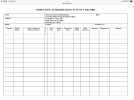
several different versions. Note pic lists Total Time. It seems some FSDO’s

developed their own versions of the Form while others did not require it.

The latest round is mandatory use of IACRA. It took quite a while to realize

that IACRA does not play well with Apple products.

So the application , testing and renewal policies have been shifting and

evolving with time and location.
 

Attachments

  • IMG_2978.png
    IMG_2978.png
    316.3 KB · Views: 3
The latest round is mandatory use of IACRA.
Last I heard it wasn't mandatory only preferred as I know several IAs who still renew with a trip to the FSDO or attend one the ongoing mx seminars put on every other March to provide recurrent IA training classes and renew paperwork by the local FSDOs.
 
There are a multitude of ways to qualify for renewal.

However; you still must do the application though.

For a while IACRA was “ strongly suggested” but now my FSDO says

mandatory. Less work for the feds but now you have folks struggling

with it every 2 years. Of course my password is only good for 3 months!
 
For a while IACRA was “ strongly suggested” but now my FSDO says mandatory.
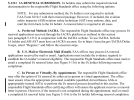
Straight from the FSDOs policy document below and nowhere does it state "mandatory" and only preferred. As I've stated in our other discussions on your FSDOs past actions, which I again find unique, there are routes you can take to ensure your FSDO is meeting their requirements if you so choose.

1775911193680.png
 
I have enjoyed a good relationship with my FSDO for many years. There is no way I want to follow the “ routes” you referred to. One finger typing on an iPad is not the best with IACRA . Since CFI’s make extensive use of the system finding one that is also an IA might be helpful.

My take is all FSDO’s are unique and their policies vary with their personnel.
Para C seems to say just that. Using “may” implies a “ may- not” option as well. “ Shall” is not used. My FSDO uses the in-person renewal option for folks that missed the deadline for any reason. That is good use of resources
in my book.

There have been various types of seminars for renewal such an evening sessions with adult beverages, day long , all morning etc. Most went away with Covid but support for reinstatement in growing. One of the best parts
was having IA’s bring samples for Show n Tell. This also works with current
“TEAMS” ( former ZOOM) on- line sessions.

EVOLUTION!
 
Last edited:
Para C seems to say just that. Using “may” implies a “ may- not” option as well. “ Shall” is not used.
"May" is used in all examples to include the 1st paragraph, but what's missing is the key word you brought up, "mandatory." However, if you believe the FSDO lying to you the IACRA is mandatory is the sign of a good relationship, well, rock on then. Not much more I can offer.;)
 
Back
Top