
You are using an out of date browser. It may not display this or other websites correctly.
You should upgrade or use an alternative browser.
You should upgrade or use an alternative browser.
Crash at Reagan National Airport, DC. Helicopter crash into airliner.
- Thread starter FlightmechH3
- Start date


Velocity173
Touchdown! Greaser!
- Joined
- Jul 3, 2012
- Messages
- 16,369
- Display Name
- Velocity173
Being a VIP has nothing to do with the accident. ATC wasn’t giving them priority.I think the 60 passengers and 4 crew were VIP to their families
This VIP stuff needs to sunset away, we are not a monarchy
I don’t care if they want to play VIP, up until it starts getting normal good Americans killed
I was making the distinction between a unit (160th) who might very well be lights out over a city and a unit (VIP) that would have no reason to be lights out over a city. Not only that, as I stated, per reg they are required to have lights on per host nation requirements. They do get relief just as any civ pilot does as in 91.209. A moot point since it was clearly flashing in the vid.

German guy
Cleared for Takeoff
Maybe they should reconsider whether this route is a good idea in the first place? Particular for when aircraft are approaching over the Potomac.PAT25 was flying on a published helicopter route.
Velocity173
Touchdown! Greaser!
- Joined
- Jul 3, 2012
- Messages
- 16,369
- Display Name
- Velocity173
I think some here are confused to the whole “VIP” thing. VIP is an official designation for certain individuals. Theres probably over 200 people (rank / civ title) listed as official VIPs that must be entered (code) on a military flight plan. Outside of the President and VP and minus an LOA with DCA (doubtful) their VIPs don’t get priority. It doesn’t affect the civ side of aviation at all.
Last edited:

Pinecone
Final Approach
DC has a bunch of helicopter routes and sectors. In a sector, you are free to fly anywhere in the sector. On a route, they clear you for the route and you don't talk to them until you get near the end and have to tell them what you want to do next.(BTW, in my limited Class B flying I can think of only one time where I was given free reign as to my direction of flight, and that only because I was well away from the approach paths and about to exit the airspace, but I suspect this lack of positive control is more common for helicopters than fixed-wing aircraft).

Kenny Phillips
Final Approach
- Joined
- Jul 29, 2018
- Messages
- 6,572
- Display Name
- Kenny Phillips
They have to be above the horizon, or they are part of the landscape.well, I'm questioning this, as a general statement. I regularly fly around the CLT bravo at night and I can see a gazillion planes that I would NEVER be able to spot during the day. however, I'm usually at 3k', I can't say I've ever flown at 400' around a metro area, I have to imagine it's a much, much different viewpoint. but to say it's hard to spot traffic at night, I've always had the opposite opinion.
Kenny Phillips
Final Approach
- Joined
- Jul 29, 2018
- Messages
- 6,572
- Display Name
- Kenny Phillips
Where in the world is a 300' error in altimeter reading allowed? Especially at the low end of the scale?PAT25 was flying on a published helicopter route.
He may have been too high but you don't know what altitude his altimeters were indicating. 200' vs 350' is not that much of a difference when altimeters just have to be within 300'.
RAs are inhibited below 1,000' radar altitude. Descending RAs inhibited below 1,100' RA. TA audio is muted below 500' RA.
The helicopter was told that the CRJ was maneuvering for Rwy 33, reported it in sight, and requested visual separation which was approved.
I agree.
They were. May have misidentified the CRJ.
They don't use that as vertical separation, although, in this case it would likely have worked. Visual separation was applied.

skyking3286
Line Up and Wait
- Joined
- Sep 29, 2012
- Messages
- 559
- Display Name
- skyking3286
ATC calling out the jet as “circling approach to 33, 1 mile at 3 o’clock” would have helped to make sure the visual separation. Wondering what the airport closure/curfew timing might have made for PAT. Very upset over wildly off focus WH “briefing” before NTSB even comments. It’s one thing here on the internet. Totally another to the nation who doesn’t know about aviation.
Last edited:

Half Fast
Touchdown! Greaser!
- Joined
- May 7, 2016
- Messages
- 21,193
- Location
- Central Florida
- Display Name
- Half Fast
- Home Airfield
- KGIF
I’m also curious why we route all that traffic over the rivers. I have always assumed it was for noise abatement but don’t know for sure.
I don't know the answer, but it's a good thing this one happened over the river. That's a very densely populated area and ground casualties could have made this disaster even worse.

midwestpa24
Final Approach
Largely to avoid overflight of security sensitive areas in DC.I’m also curious why we route all that traffic over the rivers. I have always assumed it was for noise abatement but don’t know for sure.
Lindberg
Final Approach
When approaching from the South?Largely to avoid overflight of security sensitive areas in DC.

bflynn
Touchdown! Greaser!
DC has a bunch of helicopter routes and sectors. In a sector, you are free to fly anywhere in the sector. On a route, they clear you for the route and you don't talk to them until you get near the end and have to tell them what you want to do next.
So when someone departs the route prematurely, say by climbing 250' and turning in front of a passenger jet on service, what then?

Ed Haywood
Final Approach
Too bad that Blackhawk did not have a Stratus and an iPhone with Foreflight.
I apologize for being a bit snarky, but serious question: I'll bet that VH-60 has a million dollars in avionics installed. Anyone know if that includes ADS-B In?
I apologize for being a bit snarky, but serious question: I'll bet that VH-60 has a million dollars in avionics installed. Anyone know if that includes ADS-B In?
What if the training is for familiarization with the local airspace?Why do we even allow for military choppers to be performing training flights in an airspace like that ?
ldhilljr13
Pre-Flight
- Joined
- Jun 16, 2021
- Messages
- 57
- Display Name
- ldhilljr13
The VASAviation replay of the ATC does have tower advising PAT25 (about 50 seconds before the collision) that there was CRJ traffic just south of the Woodrow Wilson bridge, at 1,200 feet and setting up for Runway 33.

mandm
Avionics Upgrade
Landing traffic has right of way, this guy in the helo does not. First you know you’re in another airspace then eyes up, second check your computers for traffic and maintain SA, third, don’t say you have traffic in sight if you don’t. Tragic and annoying. Several times I had military traffic coming above and below and at high speeds, I cannot see them or maneuver if needed to anyway so there’s a lack of control and unknown felt, they don’t show on adsb and they are not on your frequency. We can end this VIP scare tactics if they cannot play nicely. On training missions broadcast your position, in emergencies pop up a TFR.
Velocity173
Touchdown! Greaser!
- Joined
- Jul 3, 2012
- Messages
- 16,369
- Display Name
- Velocity173
Wonder if the 60 crew was hand flying. If they had a route selected and on AP, it wasn’t very accurate.
FO’s dad is actually a retired 60 pilot. Was in my old unit at one time.
FO’s dad is actually a retired 60 pilot. Was in my old unit at one time.

Huckster79
Pattern Altitude
- Joined
- Nov 22, 2018
- Messages
- 2,407
- Display Name
- Huckster79
- Home Airfield
- 6d6
Just listened to the official press conference. It ended up sounding like a Dan Grinder style conclusion before even all the bodies are recovered  . RIP to all lost…
Will be interesting to see what comes out as the investigation plays out, very sad.
. RIP to all lost… Will be interesting to see what comes out as the investigation plays out, very sad.
Velocity173
Touchdown! Greaser!
- Joined
- Jul 3, 2012
- Messages
- 16,369
- Display Name
- Velocity173
I think there’s a good chance they had iPad with some sort of ADS-B in. I know Huntsville approved IPads and from what I’ve heard from guys still in, it’s common to bring a Status.Too bad that Blackhawk did not have a Stratus and an iPhone with Foreflight.
I apologize for being a bit snarky, but serious question: I'll bet that VH-60 has a million dollars in avionics installed. Anyone know if that includes ADS-B In?
Basic 60 doesn’t have TCAS - ADS-B in but no telling what a VH version has. Kinda surprised they didn’t display ADS-B out though. I heard all the Mike models have it and most of the other models are equipped.

- Joined
- Dec 5, 2010
- Messages
- 6,582
- Display Name
- GeorgeC
Recently, I had some mil traffic fly at/over me with less separation than I cared for. I saw them visually and on ADS-B. There's always 121.5.Several times I had military traffic coming above and below and at high speeds, I cannot see them or maneuver if needed to anyway so there’s a lack of control and unknown felt, they don’t show on adsb and they are not on your frequency.
GeorgeC,
zero effort miss

Larry in TN
En-Route
- Joined
- Nov 16, 2013
- Messages
- 4,433
- Location
- Nashville, TN
- Display Name
- Larry in TN
- Home Airfield
- ORD
Vertical separation was not being used on the accident flights. They were applying visual separation.Codifying 200’ or thereabouts of vertical separation between helicopters and arrivals is insane and pretty much guaranteed a collision at some point.
Mode-C reporting. Under 300' difference from pilot altimeter and mode-C is acceptable in non-RVSM airspace.Where in the world is a 300' error in altimeter reading allowed? Especially at the low end of the scale?
The point being that we shouldn't attribute too much accuracy to those altitudes until the data is verified.

- Joined
- Oct 18, 2023
- Messages
- 171
- Display Name
- Princesspilot
A very sad situation. Those poor unsuspecting people thought they were about to land, then their lives were over...just like that. Makes me appreciate life even more.
Last edited:

CaptainDoug
Pre-Flight
- Joined
- Aug 18, 2022
- Messages
- 64
- Display Name
- Doug
Exactly. Part of the landscape of thousands upon thousands of other lights on the ground. Flying at night is a different animal - in fact, it's completely different. Like lots of the more complicated things in aviation (especially flying in real IMC), do it often. If not, your first mistake could be your last.They have to be above the horizon, or they are part of the landscape.
Flying a 172 around your home airport on a nice day (if it's not super busy) is much closer to a walk in the park compred to flying at night - particularly in a more complex aircraft.
Last edited:

Dana
Final Approach
One report I saw said the chopper was on an "annual proficiency flight".What if the training is for familiarization with the local airspace?
MauleSkinner
Touchdown! Greaser!
Depth perception has almost nothing to do with visual separation. Probably a little oversimplified, but If the aircraft is moving in your windshield, you’ll miss. If the aircraft is stationary in your windshield, you’ll hit.This is not the first time this has happened and tragically highlights the fallacy of visual separation. At night, depth perception is off and perhaps had the intention to pass behind but misjudged.

JackL-3J
Pre-takeoff checklist
- Joined
- Oct 25, 2024
- Messages
- 199
- Display Name
- Jack
Well, do you think, after seeing the traffic cam footage of the impact, that it occurred at or below 200' AGL?If the interpretation above about altitude is accurate, horizontally he was on a route but vertically he was not.
Velocity173
Touchdown! Greaser!
- Joined
- Jul 3, 2012
- Messages
- 16,369
- Display Name
- Velocity173
Some sort of cockpit traffic would help but when expectation bias is involved, it doesn’t do much. Personally I think they were focused on the AAL3130 inbound. That and if they had goggles down, 5342 would look like a tower. Bright green lights with little relative motion can easily get mixed in the city background.
JackL-3J
Pre-takeoff checklist
- Joined
- Oct 25, 2024
- Messages
- 199
- Display Name
- Jack
And it worked. So, let's move on to the next topic for discussion.. . . . Visual separation was applied.

wayneda40
Line Up and Wait
- Joined
- Jul 31, 2017
- Messages
- 682
- Display Name
- waynemcc
- Home Airfield
- KSBA
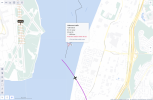
Here’s a FlySto image (from KML out of ADSBExchange) that shows the CRJ and a (my term) non-ADSB traffic 200’ below the CRJ. Maybe or maybe not did the CRJ see this on their traffic screen... and vice versa for if or if not the helo saw the CRJ:
… also on the HUD (although I don’t know if the CRJ had SynVis)…
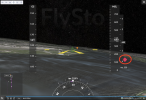
… also on the HUD (although I don’t know if the CRJ had SynVis)…
Velocity173
Touchdown! Greaser!
- Joined
- Jul 3, 2012
- Messages
- 16,369
- Display Name
- Velocity173
Just heard from a Mike guy. No TCAS or ADS-B in a Mike model.Too bad that Blackhawk did not have a Stratus and an iPhone with Foreflight.
I apologize for being a bit snarky, but serious question: I'll bet that VH-60 has a million dollars in avionics installed. Anyone know if that includes ADS-B In?
JackL-3J
Pre-takeoff checklist
- Joined
- Oct 25, 2024
- Messages
- 199
- Display Name
- Jack
So, the Army helicopter crew killed 67 people. That part is clear. The only questions remaining is to what extent other factors contributed, and how such incidents can be avoided in the future
JackL-3J
Pre-takeoff checklist
- Joined
- Oct 25, 2024
- Messages
- 199
- Display Name
- Jack
I have no way of knowing if this is in fact what happened. But, sady, now we all know "what then".So when someone departs the route prematurely, say by climbing 250' and turning in front of a passenger jet on service, what then?
CaptainDoug
Pre-Flight
- Joined
- Aug 18, 2022
- Messages
- 64
- Display Name
- Doug
That could very well explain why the pilot's altitude was off - I read here that he could have been off by 150 feet. Flying in that airspace takes precision. Yes, the pilot might be in training, but someone needs to know exactly what the altimeter is saying - particularly the check pilot. And that altimeter better be set correctly. I always cross check on the ground, so the altimeter reads the mean sea level altitude on the charts. Or close to it because one side of the airfield could be about 50 feet different. I'll come out and say it, if those helicopter pilots were indeed off by 150 to 200 feet, in such sensitive airspace, that's borderline criminal.One report I saw said the chopper was on an "annual proficiency flight".
I get that they could very well have gone completely visual (and taken their eyes off of the altimeter) to try to make sure if they were maintaining visual separation with the right aircraft - that's because they probably
misidentified the plane that they were avoiding. So, unfortunately, that's how accidents happen when there's very little room for error.
Lastly, once the RJ was called out as a potential traffic conflict, the FIRST thing that I would have done would have been to make sure that I was at 200 feet. Secondly, I would have made sure that I was as far away from the runway 33 threshold as the chart permits. I believe that should have taken the helicopter on the east end of the Potomac. Common sense would call that a margin of safety - because the further away from the runway threshold, the higher the plane that's landing will pass above.
Last edited:
skyking3286
Line Up and Wait
- Joined
- Sep 29, 2012
- Messages
- 559
- Display Name
- skyking3286
Track looks like PAT cut the corner too soon from the route. But if nothing else, no one in the PAT was even thinking of wake turbulence???

I have a simple question: If the helicopter is supposed to be in a VFR corridor at 200 feet, and it was flying at 300 or more, then why didn't ATC order them to descend and maintain 200? Why is it allowed that Helicopters in the area can ignore their vertical proximity to to the landing path of landing aircraft?
I’m also curious why we route all that traffic over the rivers. I have always assumed it was for noise abatement but don’t know for sure.
I always assumed routes were commonly created over rivers because its an easy visual route to follow. Similar to using highways and other landmarks.
Larry in TN
En-Route
- Joined
- Nov 16, 2013
- Messages
- 4,433
- Location
- Nashville, TN
- Display Name
- Larry in TN
- Home Airfield
- ORD
Not sure if you're saying that it has no ADS-B at all or that it doesn't have ADSB-IN but does have ADSB-OUT.Just heard from a Mike guy. No TCAS or ADS-B in a Mike model.
Velocity173
Touchdown! Greaser!
- Joined
- Jul 3, 2012
- Messages
- 16,369
- Display Name
- Velocity173
Because there were several hits on the radar tapes of 200. That and the fact as stated above, mode C is valid within 300 ft of reported. Could easily be showing up as 300 ft but the pilots altimeter showing 200 or even less.I have a simple question: If the helicopter is supposed to be in a VFR corridor at 200 feet, and it was flying at 300 or more, then why didn't ATC order them to descend and maintain 200? Why is it allowed that Helicopters in the area can ignore their vertical proximity to to the landing path of landing aircraft?
Larry in TN
En-Route
- Joined
- Nov 16, 2013
- Messages
- 4,433
- Location
- Nashville, TN
- Display Name
- Larry in TN
- Home Airfield
- ORD
You are assuming a level of accuracy in the Mode-C display which may not match reality.I have a simple question: If the helicopter is supposed to be in a VFR corridor at 200 feet, and it was flying at 300 or more, then why didn't ATC order them to descend and maintain 200?
Plus, even ATP standards are +/- 100'.