- Joined
- Jul 29, 2011
- Messages
- 1,466
- Display Name
- MountainDude
- Home Airfield
- KPDX
I wonder if there is a single root cause (the management?) of their incompetence over the last few years?


Back when I was at Boeing, the story went that to save money on the KC-46, they packed the program with less-experienced engineers (lower salaries) and expected the managers to take up the slack.They went from being an engineering centered company that hired some administrators to being a bean-counter company that hired a few engineers.

I wonder if there is a single root cause (the management?) of their incompetence over the last few years?
That makes sense. Thank you.If you want to get simple and explain it by one single root cause, you’d drill down into greed.

Textron did the same thing with us. They figured they could hire three guys for the price they were paying me, without bothering to figure out just what I was doing for the company. The managers couldn't program their way out of a paper bag. I was back a year later as a consultant at a extremely high rate, but my heart wasn't in the ruined company and I didn't stick around long.Back when I was at Boeing, the story went that to save money on the KC-46, they packed the program with less-experienced engineers (lower salaries) and expected the managers to take up the slack.

I wonder if there is a single root cause (the management?) of their incompetence over the last few years?
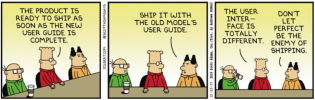
My philosophy as the engineering manager was to cherry pick guys....


Was fortunate in my last ~25 years there to work in a "skunk works" organization in Boeing. Highly classified, Government wouldn't clear more than a few upper level managers. Able to set up our own procedures and standards, for the most part. Had our own IT department that had a credit card and went to the retail stores to buy computers for us. Ticked off a lot of execs that felt that *they* should be aware of what we're doing.Of all the T1’s I worked with, Boeing was by far the worst. Arrogant, adversarial, and inflexible.
So Boeing is basically hoping to open doors with assets that they once owned but sold to the investors that started Spirit AeroWell, Boeing is hoping their acquisition of Spirit will open doors for them.

Rhetorical tone to that "question" aside, I'll play: because they purposely occluded MCAS from the technical manuals. You may not think that's relevant or fair, but that the reason good bad or indifferent. Don't wanna catch strays in life? Keep your books in order. It's what we tell the working poor (personal responsibility dogwhistles), should be good enough for the aerospace hegemons.not for nothing but how did boeing get blamed for 200 hour indonesian pilots not knowing how to deal with runaway trim

But, but, but.... Stock prices! P/E ratio! This quarter.If you want it in two words: Jack Welch.
Then how do you explain why 2 pilots involved with the Lion 737 were able work through the MCAS failure?I'll play: because they purposely occluded MCAS from the technical manuals. You may not think that's relevant or fair, but that the reason good bad or indifferent.

Couldn’t have said better myself. We saw the same thing within the Air Force Material Commands Aeronautical Systems Center, the procurement arm for the AF. It started in late 1990’s where Engineering lost their independence, reporting to PM’s. Guess where the technical excellence of the newly developed systems and quality went?"Greed" is a good one-word answer.
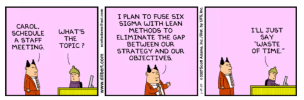
If you want it in cartoon form:
If you want it in two words: Jack Welch.
If you want that elaborated a bit:
When Boeing acquired McDonnel Douglas, part of the deal placed MD executives into key positions at Boeing. Stonecipher was one, of course, but not the only one. Many of these managers, including Stonecipher, were disciples or even proteges of Jack Welch, and they brought to MD and to Boeing that Welch style of cutthroat management that values stock performance over product quality. Slash & burn cost-cutting, extreme levels of outsourcing, and product development shortcuts became common.
One impartial mediator described the new executives from MD as "hunter-killer assassins" and the legacy Boeing executives as "boy scouts."
That type of management might work (for a while) when a company is producing lightbulbs or toaster ovens. It is wholly inappropriate for producing airplanes. If you want to understand what happened, this Stonecipher quote is quite telling:
This new orientation was encapsulated by something that Harry Stonecipher, who had been CEO of McDonnell Douglas and was CEO of Boeing from 2003 to 2005, said: “When people say I changed the culture of Boeing, that was the intent, so that it’s run like a business rather than a great engineering firm.”Stonecipher is a fool, both in business management, having wrecked two aerospace businesses, and in his personal life, having wrecked a 50-year marriage.
And it's not just the managers. It's also the organizational structure they put in place. Engineers report to program managers who have OSP responsibility, rather than reporting in an independant structure. This removes the engineers' professional autonomy and creates a culture where engineers are viewed as labor rather than as professionals.
By contrast, at Lockheed engineering has its own reporting chain, through chief engineers and VPs up to the CTO. Engineering and program management only converge at the CEO, and if engingeering and PM haven't worked out a solution by that level, heaven help everyone down below. At LockMart, I have personally held up deliveries, flight tests, and other items until the engineering was satisfactory, and PMs had no authority to override us.
If you want even more elaboration, read https://www.amazon.com/Flying-Blind-Tragedy-Fall-Boeing-ebook/dp/B08P98854S/ref=sr_1_1?crid=20CHW867P09RV&keywords=book+flying+blind&qid=1672435463&sprefix=book+flying+blind,aps,434&sr=8-1 . It's not a technical book; don't expect accurate descriptions of engineering issues. But it does dig deeply into the company's culture and how it got that way.
Boeing…. You can buy better, but you can’t pay more!Of all the T1’s I worked with, Boeing was by far the worst. Arrogant, adversarial, and inflexible.

A few months ago, I was driving on a divided highway. There was a car gradually passing me on the left. A deer ran out in front of us. The car next to me hit the deer. Luck, skill, or both saved my grill and some, but not all, plane loads of people sharing their fate with an MCAS fault.Then how do you explain why 2 pilots involved with the Lion 737 were able work through the MCAS failure?
Ah, yes, Jack Welch, high priest of the cult of Six Sigma. Relentless attention to standardization and near-zero defects.If you want it in two words: Jack Welch.
Ah, yes, Jack Welch, high priest of the cult of Six Sigma. Relentless attention to standardization and near-zero defects.
I was just thinking about the parallels of Boeing and GE. Have we stopped lauding neutron jack yet? Or are shows like 30 rock still needing kneepads"Greed" is a good one-word answer.
If you want it in cartoon form:
If you want it in two words: Jack Welch.
If you want that elaborated a bit:
When Boeing acquired McDonnel Douglas, part of the deal placed MD executives into key positions at Boeing. Stonecipher was one, of course, but not the only one. Many of these managers, including Stonecipher, were disciples or even proteges of Jack Welch, and they brought to MD and to Boeing that Welch style of cutthroat management that values stock performance over product quality. Slash & burn cost-cutting, extreme levels of outsourcing, and product development shortcuts became common.
One impartial mediator described the new executives from MD as "hunter-killer assassins" and the legacy Boeing executives as "boy scouts."
That type of management might work (for a while) when a company is producing lightbulbs or toaster ovens. It is wholly inappropriate for producing airplanes. If you want to understand what happened, this Stonecipher quote is quite telling:
This new orientation was encapsulated by something that Harry Stonecipher, who had been CEO of McDonnell Douglas and was CEO of Boeing from 2003 to 2005, said: “When people say I changed the culture of Boeing, that was the intent, so that it’s run like a business rather than a great engineering firm.”Stonecipher is a fool, both in business management, having wrecked two aerospace businesses, and in his personal life, having wrecked a 50-year marriage.
And it's not just the managers. It's also the organizational structure they put in place. Engineers report to program managers who have OSP responsibility, rather than reporting in an independant structure. This removes the engineers' professional autonomy and creates a culture where engineers are viewed as labor rather than as professionals.
By contrast, at Lockheed engineering has its own reporting chain, through chief engineers and VPs up to the CTO. Engineering and program management only converge at the CEO, and if engingeering and PM haven't worked out a solution by that level, heaven help everyone down below. At LockMart, I have personally held up deliveries, flight tests, and other items until the engineering was satisfactory, and PMs had no authority to override us.
If you want even more elaboration, read https://www.amazon.com/Flying-Blind-Tragedy-Fall-Boeing-ebook/dp/B08P98854S/ref=sr_1_1?crid=20CHW867P09RV&keywords=book+flying+blind&qid=1672435463&sprefix=book+flying+blind,aps,434&sr=8-1 . It's not a technical book; don't expect accurate descriptions of engineering issues. But it does dig deeply into the company's culture and how it got that way.
Then how do you explain why 2 pilots involved with the Lion 737 were able work through the MCAS failure?
Unfortunately in some cases it does and just as unfortunate there are a number of examples that shows that to include this one. Back to the question, why do you think a pilot in the jump seat was able to determined the necessary corrective action in previous Lion flight the crew flying could not? And why could the PIC for the next flight maintain control through 24 MCAS activations but the SIC crashed after 4?Surviving a systems fault should not depend on the identity of the pilot or his astrological sign.
Really? What airline do you fly for? Need to put that one on my personal DNF list.Sheer luck.

Really? What airline do you fly for? Need to put that one on my personal DNF list.
Which airlines are you aware of having trained flight crew on the existence of MCAS, much less abnormal procedures related to it, before the second fatal crash? I haven’t heard of one yet.Really? What airline do you fly for? Need to put that one on my personal DNF list.
What I found interesting is that the sensor that was required for the proper functionality of the MCAS was only dual redundant. For flight critical systems to get to the 10(-9) probability that airliners like to have, it almost always requires a triplex system. Relying on only a dual air data system for providing information to MCAS is a head scratcher. Of course, the redundancy and fault detection system of a triplex system AND the FMET testing of said system is costly. Hmmmm??Unfortunately in some cases it does and just as unfortunate there are a number of examples that shows that to include this one. Back to the question, why do you think a pilot in the jump seat was able to determined the necessary corrective action in previous Lion flight the crew flying could not? And why could the PIC for the next flight maintain control through 24 MCAS activations but the SIC crashed after 4?
As to fault tolerance, it merely provides a path to keep the aircraft in the air so the pilot has a chance to make a surviveable landing.
But I dont give Boeing a pass either. However, I agree with certain public assessments thats puts the root cause squarely on the FAAs and the airlines shoulders.
I had read that the MCAS AOA input being redundant was a customer option. Was the choice a customer made between single vs. dual input or between dual vs. triple?What I found interesting is that the sensor that was required for the proper functionality of the MCAS was only dual redundant. For flight critical systems to get to the 10(-9) probability that airliners like to have, it almost always requires a triplex system. Relying on only a dual air data system for providing information to MCAS is a head scratcher. Of course, the redundancy and fault detection system of a triplex system AND the FMET testing of said system is costly. Hmmmm??
I recall dual AoA baseline, but MCAS programmed to only use one sensor.Was the choice a customer made between single vs. dual input or between dual vs. triple?
Not quite. My DNF comment was directed at someone’s answer to my question above that it was sheer luck those 2 pilots were able to work through those unknown MCAS movements.Your DNF list concept requires you to know about bad engineering decisions that even the airlines on the list have no way to know about.

I was first told that quote in regards to Collins Radio. I've used it many times...Boeing…. You can buy better, but you can’t pay more!
Trusting to luck is never a good plan, but sometimes luck is the only difference. Sometimes you do everything right and lose.Not quite. My DNF comment was directed at someone’s answer to my question above that it was sheer luck those 2 pilots were able to work through those unknown MCAS movements.
Don’t know about you, but when someone flying for a living believes luck is the only reason a pilot successfully handles an emergency, I would prefer not to fly with them.
So do you have an answer for those questions?
This is a good summary.When Boeing acquired McDonnel Douglas, part of the deal placed MD executives into key positions at Boeing. Stonecipher was one, of course, but not the only one. Many of these managers, including Stonecipher, were disciples or even proteges of Jack Welch, and they brought to MD and to Boeing that Welch style of cutthroat management that values stock performance over product quality. Slash & burn cost-cutting, extreme levels of outsourcing, and product development shortcuts became common.
One impartial mediator described the new executives from MD as "hunter-killer assassins" and the legacy Boeing executives as "boy scouts."
That type of management might work (for a while) when a company is producing lightbulbs or toaster ovens. It is wholly inappropriate for producing airplanes. If you want to understand what happened, this Stonecipher quote is quite telling:
This new orientation was encapsulated by something that Harry Stonecipher, who had been CEO of McDonnell Douglas and was CEO of Boeing from 2003 to 2005, said: “When people say I changed the culture of Boeing, that was the intent, so that it’s run like a business rather than a great engineering firm.”Stonecipher is a fool, both in business management, having wrecked two aerospace businesses, and in his personal life, having wrecked a 50-year marriage.
I’m not a Part 121 pilot and have never been through or otherwise part of their training programs. Nor can I speak to what another poster meant. But regarding the question of luck, the reality is that some of those pilots either had the skill to treat this curveball in a way that saved the ship (whether thinking “runaway trim” or some other corrective action) or the luck to save the ship without taking proper corrective action (such as turning on the autopilot since MCAS was evidently bypassed when the AP was connected). For passengers, that’s all purely luck. As far as I can tell, no part of the outcome was improved by (1) fault tolerant engineering, (2) honest systems documentation and potential faults, or (3) training on the system that faulted. And, the reason I think Boeing bears a large part of the blame here is that I have never heard of any airline having had, prior to these crashes, sufficient information to do better for reasons other than the luck of a far above-average-skill pilot being at the controls that day.Not quite. My DNF comment was directed at someone’s answer to my question above that it was sheer luck those 2 pilots were able to work through those unknown MCAS movements.
Don’t know about you, but when someone flying for a living believes luck is the only reason a pilot successfully handles an emergency, I would prefer not to fly with them.
So do you have an answer for those questions?